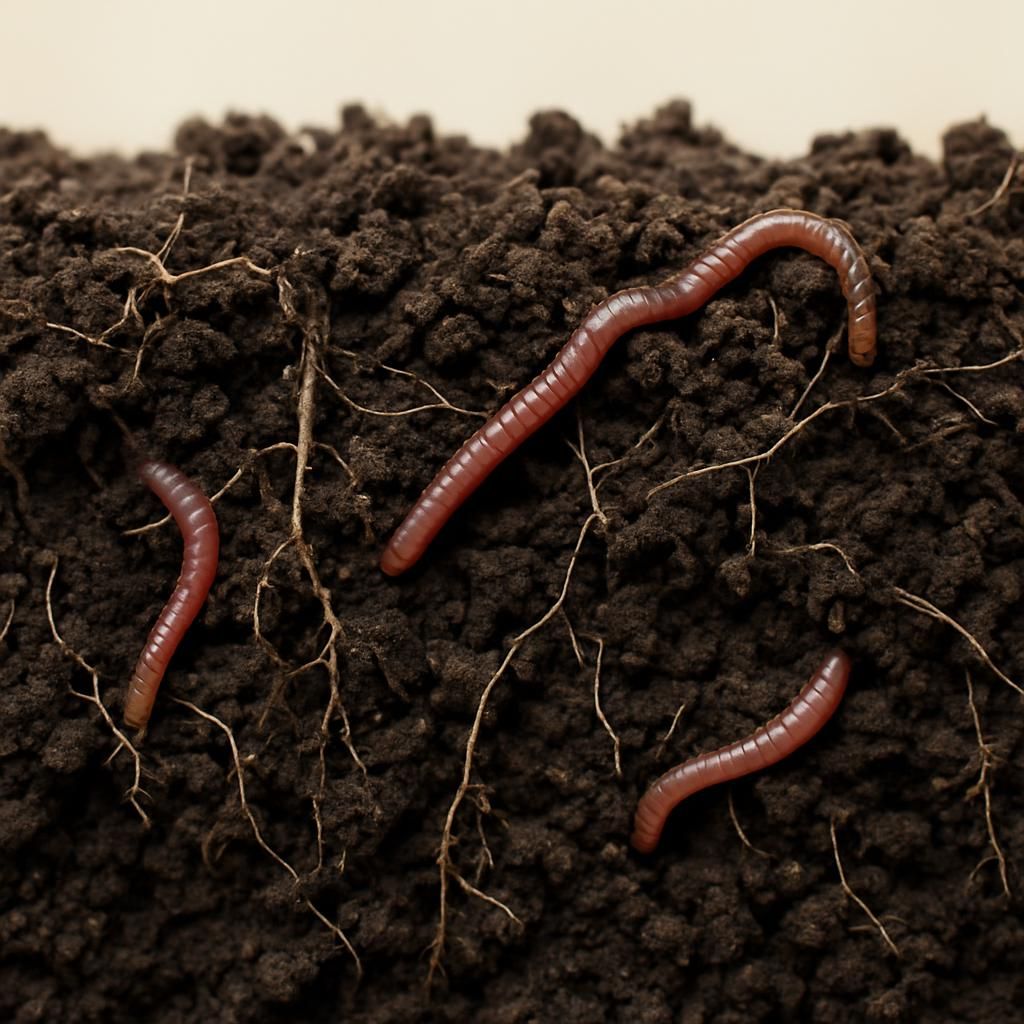
Introduction to Wikipedia entry on Soil
Soil is the living, dynamic interface between rock, water, air, and organic matter that supports virtually all agricultural production. Its texture (sand, silt, clay proportions), structure, pH, organic matter content, and biological activity govern root development, water retention, and nutrient cycling. When soil conditions deteriorate through compaction, erosion, salinization, or contamination, plants exhibit stress symptoms that closely resemble those caused by insects or pathogens, leading to misdiagnosis. Professional growers therefore begin every pest investigation by assessing soil health first.
Identifying Symptoms & Damage
Soil-related stress produces characteristic above- and below-ground symptoms. Above ground, plants display uniform wilting despite adequate irrigation, chlorosis or interveinal yellowing, stunted growth, and poor fruit set. Roots may appear discolored, swollen, or lacking fine feeder roots when excavated. In severe cases, entire field sections show patchy decline aligned with soil texture changes or compaction zones rather than random pest distribution. Soil pH outside the optimal range (typically 6.0–7.0 for most crops) induces nutrient lockout that mimics deficiency symptoms of pests such as aphids.
Lifecycle and Progression of Wikipedia entry on Soil
Soil degradation is not a biological lifecycle but a progressive deterioration of physical and chemical properties. The table below outlines key stages and observable indicators.
| Stage | Description | Typical Duration | Observable Indicators |
|---|---|---|---|
| Initial Compaction | Surface crusting and reduced infiltration | 1–3 months | Water ponding, poor seedling emergence |
| Nutrient Depletion | Loss of organic matter and cation exchange capacity | 6–24 months | Uniform yellowing, reduced vigor |
| Structural Collapse | Loss of aggregates and macropores | 1–3 years | Severe compaction, root restriction |
| Chemical Imbalance | pH drift, salinity buildup, or heavy metal accumulation | 2–5 years | Toxicity symptoms, dead zones |
| Biological Decline | Reduced microbial diversity and earthworm activity | Ongoing | Increased disease pressure, poor decomposition |
Environmental Triggers & Risk Factors
Heavy rainfall on bare soil accelerates erosion and crusting. Repeated tillage at the same depth creates hardpans. Irrigation with high-salinity water raises electrical conductivity above 4 dS/m, stressing roots. Over-application of ammonium-based fertilizers acidifies soil below pH 5.5. Monoculture without rotation depletes specific nutrients and favors buildup of soil-borne organisms. Climate change intensifies both drought-induced cracking and flood-induced anaerobiosis.
Organic Control & Treatment Plans
Remediation focuses on restoring structure, biology, and balanced chemistry. All interventions should be verified with soil tests before and after treatment.
| Treatment Option | Application Method | Frequency | Expected Outcome |
|---|---|---|---|
| Compost incorporation (5–10 cm depth) | Broadcast and lightly till or top-dress | Annually in fall or spring | Increases organic matter 1–2% over 3 years |
| Cover cropping (rye, clover, or buckwheat) | Drill or broadcast at 60–90 kg/ha | Every off-season | Improves aggregation and nitrogen fixation |
| pH adjustment with agricultural lime or elemental sulfur | Incorporate to 15 cm based on buffer index | Once per test cycle (2–4 years) | Brings pH to 6.2–6.8 range |
| Reduced tillage or no-till with roller-crimper | Leave residue on surface | Continuous | Maintains structure and earthworm populations |
| Biochar + compost blend (5–10 t/ha) | Incorporate or band | One-time establishment | Long-term carbon sequestration and water retention |
| Mulching with 5–8 cm organic material | Apply around crop rows | Renew seasonally | Suppresses weeds and moderates temperature |
Preventing Wikipedia entry on Soil in the Future
Maintain continuous living cover through cover crops or perennial strips. Rotate crops with differing root architectures and nutrient demands. Limit heavy equipment traffic to designated lanes and use low-pressure tires. Test soil every 2–3 years and adjust amendments accordingly. Integrate livestock grazing only when soil moisture allows to avoid compaction. Build windbreaks and contour buffer strips on slopes greater than 5%.
Crops Most Affected by Wikipedia entry on Soil
Nearly all crops suffer when soil conditions decline, but certain species show heightened sensitivity. Tomato, Potato, and Lettuce exhibit rapid wilting and nutrient deficiencies on compacted or low-pH soils. Carrot and Radish develop forked or stubby roots in heavy clay or stony profiles. Wheat and Corn suffer from poor tillering and lodging when soil structure collapses. Avocado and Citrus are particularly sensitive to salinity and poor drainage, showing leaf tip burn and root rot complexes. Strawberry and Blueberry require precise pH management (5.5–6.5) to avoid chlorosis and reduced fruit quality.