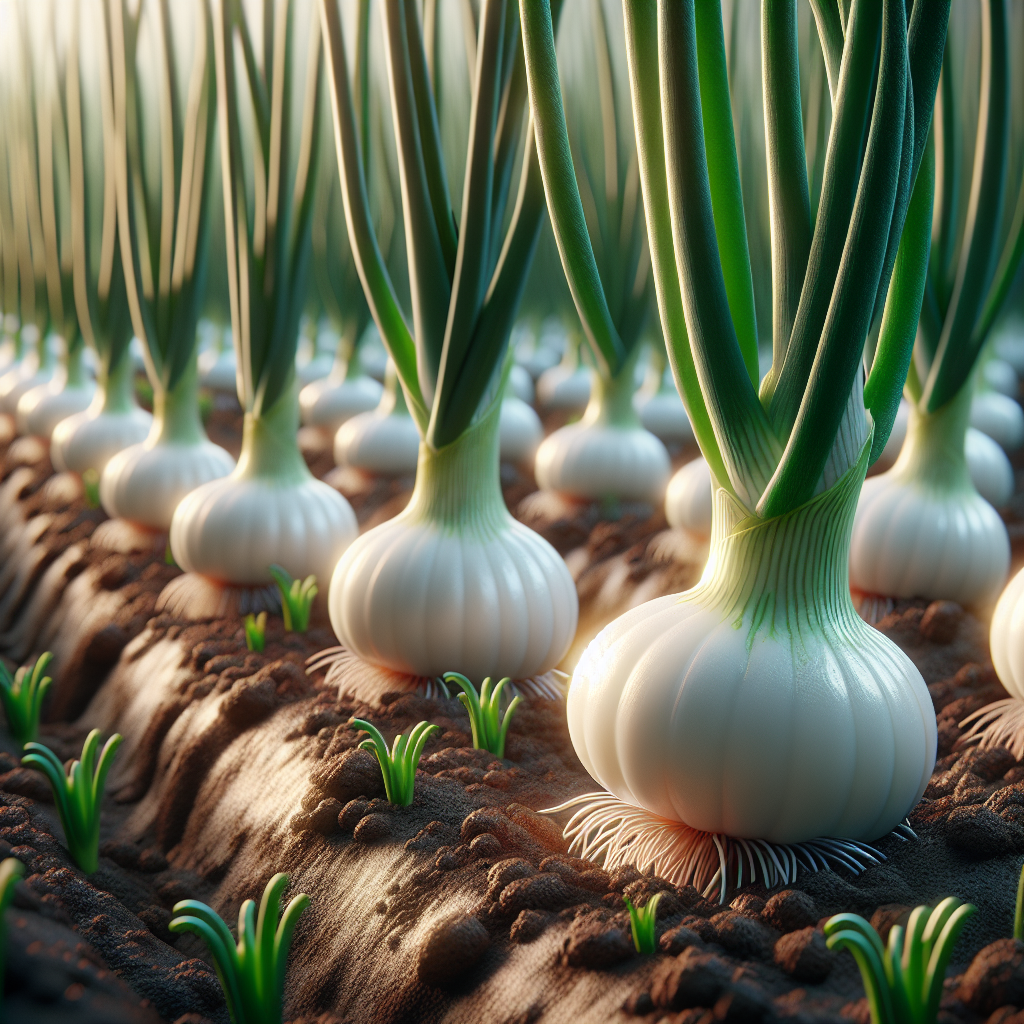
Introduction to White Onion (White Sweet Spanish)
A classic white bulb onion in the Spanish onion group, this variety is known for producing large, globe to slightly flattened bulbs with bright white flesh, thin to medium skins, and a notably mild, sweet flavor when grown under balanced fertility and even irrigation. Compared with sharper storage onions, White Sweet Spanish is prized more for fresh slicing, sandwiches, salads, grilling, and short-term kitchen use than for very long storage.
The term “Spanish onion” historically refers less to a single origin and more to a market class of large, mild onions selected for size, succulence, and culinary appeal. White Sweet Spanish types typically have lower dry matter than strong yellow storage onions, which explains both their tenderness and their shorter shelf life. For growers, that means success is not only about maximizing bulb size, but also about timing, water management, and careful curing to preserve a delicate bulb.
This is usually treated as a long-day to intermediate adaptation depending on the seed strain sold by suppliers, so variety-source details matter. In most temperate regions, it is grown as a spring-planted bulb onion from seed, transplants, or sets. For general onion production principles, see the broader Onion guide.
Botanical Profile of White Onion (White Sweet Spanish)
This crop belongs to the Amaryllidaceae family and is a biennial species usually grown as an annual for bulb harvest. In its full life cycle, onion forms a bulb in year one, then after vernalization sends up a flower stalk in year two. Commercial bulb production aims to avoid that second-year reproductive phase, because bolting reduces marketability and storage quality.
The onion bulb is not a true root structure but a compressed stem plate surrounded by enlarged leaf bases, often called scales. The edible bulb develops as day length and plant maturity trigger swelling at the base. White Sweet Spanish typically forms a large bulb with white internal scales and a pale neck that should dry down well if harvest is timed correctly.
Leaves are hollow, waxy, and blue-green to medium green depending on fertility and weather. Each healthy leaf contributes directly to bulb size; growers often use the rule that more leaves generally mean more bulb rings. Anything that reduces foliage area early in the season—Thrips, nutrient deficiency, hail, waterlogging, weed competition—usually reduces final bulb diameter.
Rooting is shallow and relatively sparse compared with many vegetable crops. Most active roots occupy the top 15-20 cm of soil, with the highest density often in the upper 7-10 cm. That shallow root system explains why onions are very sensitive to both drought stress and soil crusting, and why they respond strongly to precise irrigation and weed control.
White onions in the sweet class are generally lower in sulfur-derived pungent compounds than stronger storage types. If sulfur is excessive late in development, flavor can become more assertive, while insufficient overall nutrition can shrink bulb size and produce weak tops. The best result is a balanced crop: vigorous but not overly lush, steadily growing, and never checked by stress during bulb initiation.
Soil, pH, and Climate Requirements for White Onion (White Sweet Spanish)
This variety performs best in deep, friable, highly workable loam or sandy loam with excellent drainage and high biological activity. Heavy clay can grow onions, but only if drainage is exceptional and the surface is managed to prevent crusting and compaction. Misshapen bulbs, shallow rooting, and disease pressure increase dramatically in poorly structured soils.
An ideal pH range is 6.2 to 6.8, though the crop can tolerate about 6.0 to 7.0 if fertility is carefully managed. Below pH 6.0, nutrient availability becomes less reliable, root growth may slow, and herbicide or micronutrient issues can become more common. Strongly acidic conditions also increase the risk of poor vigor. Liming should be done well before planting so calcium is integrated and the soil has time to stabilize.
High organic matter is useful, but fresh, undecomposed manure immediately before planting is not ideal because it can increase nitrogen volatility, encourage uneven growth, and elevate disease risk. Well-finished compost incorporated in moderation several weeks before planting is better. Onions prefer soil that holds moisture evenly without remaining saturated.
The crop needs full sun, ideally at least 8 hours of direct light daily. Cool conditions during early leaf development are beneficial, while warm conditions during bulb expansion help finish the crop. Best early growth generally occurs between 13-24°C. Persistent high heat above about 30°C can stress plants, especially if paired with dry winds and low soil moisture. Severe freezing after plants are established can damage tissues and increase bolting risk if they have reached sufficient size.
Day length is critical. Bulbing begins when the plant senses the appropriate photoperiod for its genetic type. If the strain is mismatched to latitude, plants may bulb too early when still small or fail to bulb properly. That is one of the most common reasons growers get beautiful tops but disappointing bulbs, or vice versa.
Soil moisture should be kept consistently in the moderate range: moist enough that the root zone never fully dries, but never soggy long enough to exclude oxygen. Practically, the top 2-3 cm may dry slightly between irrigations, but the soil at 5-10 cm depth should remain cool and lightly moist during active growth. If squeezed, it should hold shape briefly without releasing free water. Chronic saturation causes yellowing, stunting, soft necks, and root disease; chronic dryness leads to bluish foliage, tip burn, slowed leaf emergence, and smaller bulbs with thicker skins.
Step-by-Step Planting & Propagation
White Sweet Spanish is usually grown from seed, transplants, or sets. Seed gives the best selection and often the best bulb quality, while transplants provide a head start in shorter seasons. Sets are convenient but may increase bolting risk depending on size and storage history.
Select the correct day-length strain for your region. This is the first decision, not an afterthought. Northern growers generally need long-day types, while milder or lower-latitude areas may need intermediate-day strains sold under similar names.
Prepare the bed thoroughly. Remove stones and clods, loosen soil to at least 20-25 cm, and create a fine, firm seedbed. Onions dislike fluffy, uneven ground because bulbs can heave or root poorly. Raised beds are especially useful in wetter climates.
Apply base fertility from a soil test. A practical target is adequate phosphorus and potassium before planting, with nitrogen split over the season rather than applied all at once. Overloading nitrogen at planting can cause rank tops and delayed maturity.
Start seed indoors if needed. Sow 8-12 weeks before transplanting. Seeds germinate best around 18-24°C. Provide bright light immediately after emergence to prevent weak, threadlike seedlings. Trim tops to about 10-12 cm if they become floppy; this encourages sturdier transplant growth.
Direct sow when soil is workable and temperatures are suitable. Sow shallowly, around 0.6-1.3 cm deep. Deeper sowing delays emergence and weakens seedlings. Keep the surface uniformly moist until emergence, which may take 7-14 days depending on temperature.
Space for intended bulb size. For large White Sweet Spanish bulbs, final in-row spacing of 10-15 cm is common, with rows 30-45 cm apart. Tighter spacing yields smaller bulbs; wider spacing favors exhibition-size bulbs if fertility and water are adequate.
Transplant carefully. Set seedlings so the white shank is just at or slightly below the soil surface. Do not bury deeply. Excess depth can elongate necks and slow bulb formation.
Thin promptly if direct sown. Delayed thinning means plants compete too long, permanently reducing bulb potential. Thin when seedlings are still young enough that root disturbance is minimal.
Mulch lightly after establishment. Clean straw or a fine organic mulch can reduce crusting and conserve moisture, but keep mulch from smothering tiny seedlings or holding excessive humidity against the neck in wet weather.
Maintain uninterrupted growth. Onion yield is built leaf by leaf. Any pause from weeds, drought, transplant shock, or nutrient deficiency echoes later in reduced bulb size.
Crop rotation is important. Avoid planting after onions, garlic, leeks, or chives for at least 3 years, and preferably 4, to reduce carryover of diseases such as White rot, Fusarium basal rot, and Downy mildew. Rotation with cereals or legumes can be particularly useful. A soil-building approach like those discussed in soil health strategies can improve onion bed performance over time.
Care & Maintenance regimes for White Onion (White Sweet Spanish)
Water should be supplied in a measured, regular pattern rather than in feast-or-famine cycles. During establishment, frequent light irrigation may be needed to keep the top few centimeters from drying out. Once roots extend, shift to deeper watering that moistens the main rooting zone. In many field situations, onions need roughly 25-40 mm of water per week, adjusted for rainfall, temperature, and soil type. Sandy soils may require smaller, more frequent irrigation; loams can go longer between applications.
The most important stages for consistent moisture are early leaf production and bulb enlargement. If the crop dries severely during bulbing, outer scales can toughen while the bulb stops sizing. If overwatered late, bulbs may become soft, necks stay thick, and storage disorders increase. Reduce irrigation as tops naturally lodge and harvest approaches, especially in dry weather. Do not force-mature the crop too early by withholding water prematurely; that sacrifices size.
Nitrogen management should support steady leaf production through the vegetative stage, then taper as bulbs size. A common professional approach is to apply a modest preplant amount, then 1-3 side-dressings before or around bulb initiation, depending on soil reserves and weather. Too little nitrogen gives pale, thin leaves and undersized bulbs. Too much late nitrogen delays maturity, keeps necks thick, and weakens storage quality.
Phosphorus supports early rooting, while potassium helps water regulation, tissue strength, and overall bulb finish. Sulfur influences flavor chemistry, but in sweet white onions it should not be pushed excessively if mildness is a priority. Calcium contributes to tissue integrity, especially in soils prone to imbalance.
Weed control must begin early because onions are poor competitors. Their upright, narrow foliage casts little shade, and shallow roots do not recover well from hoeing done too aggressively. Keep beds nearly weed-free from emergence through bulbing. Hand weeding, stale seedbed techniques, shallow wheel hoeing, and mulch can all help. Never allow weeds to dominate in the first 6-8 weeks; that period largely determines final yield.
Watch the foliage closely as a diagnostic tool. Healthy White Sweet Spanish plants should have erect, turgid leaves with a clean white neck region and steady new growth. Gray-green, twisted, or silvered leaves suggest Thrips or stress. General yellowing may indicate nitrogen shortage, poor drainage, root disease, or maturity depending on timing.
Bolting prevention depends on avoiding stress and oversized juvenile plants exposed to prolonged cold. Sets are most prone to this problem. If seedling transplants become too large before field setting and then encounter chilling, flower stalks may form. A bolted onion produces a hard central stalk and is unsuitable for storage.
Pests, Diseases & Organic Management
Thrips are often the most economically important insect pest. They rasp foliage and suck plant juices, creating silvery streaking, leaf curling, and reduced photosynthesis. Dry, hot weather favors outbreaks. Organic management includes reflective mulch in some systems, strong overhead rinsing where disease pressure is low, insecticidal soaps, neem-based products where permitted, and conserving beneficial insects. Good irrigation reduces plant stress and helps onions tolerate minor feeding.
Onion maggot is another serious pest, especially in cool spring conditions or fields with previous allium history. Larvae tunnel into the stem plate and bulbs, causing wilting, yellowing, and plant collapse. Rotation, sanitation, and exclusion fabrics after planting are among the best organic tools. Avoid cull piles and decomposing allium residues nearby.
Cutworms may clip young transplants at the base. Cardboard collars, evening scouting, and habitat management help in small-scale production.
Downy mildew causes pale lesions, leaf collapse, and a grayish-violet sporulation under humid conditions. Dense canopies, overhead irrigation late in the day, and poor airflow worsen the problem. Space plants appropriately, irrigate early, rotate crops, and destroy infected residues. White rot, caused by Stromatinia cepivora, is among the most devastating allium diseases; it leads to yellowing, wilt, and white fungal growth with black sclerotia at the base. Once present, it can persist in soil for many years, so exclusion and sanitation are critical.
Fusarium basal rot causes root decline and basal plate decay, often worsening in warm soils. Pink root leads to characteristic pink to purple root discoloration and chronic stunting. Bacterial soft rots are favored by bruising, excess nitrogen, saturated soils, and poor curing conditions.
Organic disease management relies on prevention more than rescue. Use clean seed or reputable transplants, maintain 3-4 year rotations out of alliums, improve drainage, avoid overirrigation, sanitize tools and storage areas, and remove obviously diseased plants quickly. Balanced fertility matters: lush, overstimulated foliage is often more disease-prone than steady, moderate growth.
Harvesting, Curing & Optimal Storage
Harvest timing is a major quality decision for White Sweet Spanish because sweet white onions are more delicate than firmer storage types. Bulbs are generally ready when they have reached marketable size and 50-80% of tops have fallen naturally. Natural lodging indicates the plant is shifting out of active growth and neck tissues are beginning to dry.
Do not yank bulbs carelessly from wet ground. Lift them gently with an undercutter fork or by loosening the bed first, then pull by hand. Minimize bruising because white onions show damage quickly and soft spots become entry points for rot organisms.
Cure in a warm, airy, shaded location out of direct sun. Ideal curing conditions are roughly 24-30°C with excellent ventilation and low to moderate humidity. Spread bulbs in a single layer or shallow racks so air reaches all sides. Cure until necks are tight and dry, outer scales are papery, and roots are shriveled. Depending on weather and neck thickness, this may take 10-21 days.
Trim tops only after curing unless conditions demand partial field drying first. Cut necks to about 2.5 cm for storage onions, or braid only if necks are narrow and fully dry. Brush off loose soil but do not wash bulbs intended for storage.
Because White Sweet Spanish is a sweet white onion with relatively high moisture and lower dry matter, storage life is limited compared with pungent yellow varieties. Best storage conditions are close to 0-4°C with low humidity adequate to limit condensation but not so low that bulbs desiccate rapidly. In home or farm conditions, expect best quality for several weeks to a few months rather than all winter. Inspect frequently and remove any bulb with softening, neck breakdown, black mold, or internal discoloration.
For fresh market, many growers intentionally sell this variety soon after curing, emphasizing tenderness and flavor rather than long holding ability. That is often the best use of its genetic strengths.
Companion Planting for White Onion (White Sweet Spanish)
This crop pairs especially well with shallow-rooted and quick-maturing companions that do not overwhelm its narrow foliage or compete heavily for light. Carrot is a classic partner because the differing canopy shape and root architecture make efficient use of space, and each crop can help confuse certain pests of the other. Lettuce works well between wider onion rows in cool seasons, providing a fast harvest before bulbs fully size. Beet can also share space effectively if planted with enough distance to reduce competition.
Chamomile is sometimes discussed in companion systems, but in practical production it is better to prioritize companions with predictable spacing and harvest windows. The main principle is to avoid aggressive crops that shade onions, such as sprawling cucurbits or tall dense cereals, and to keep allium rotations separate from other alliums like Garlic if disease pressure is a concern rather than companionship.
In mixed plantings, maintain airflow and avoid overcrowding. The companion should never reduce direct light to the onion foliage during the critical leaf-building stage. Onions gain more from reduced pest confusion and better bed utilization than from any mystical pairing effect; good spacing, sanitation, and water management still matter most.