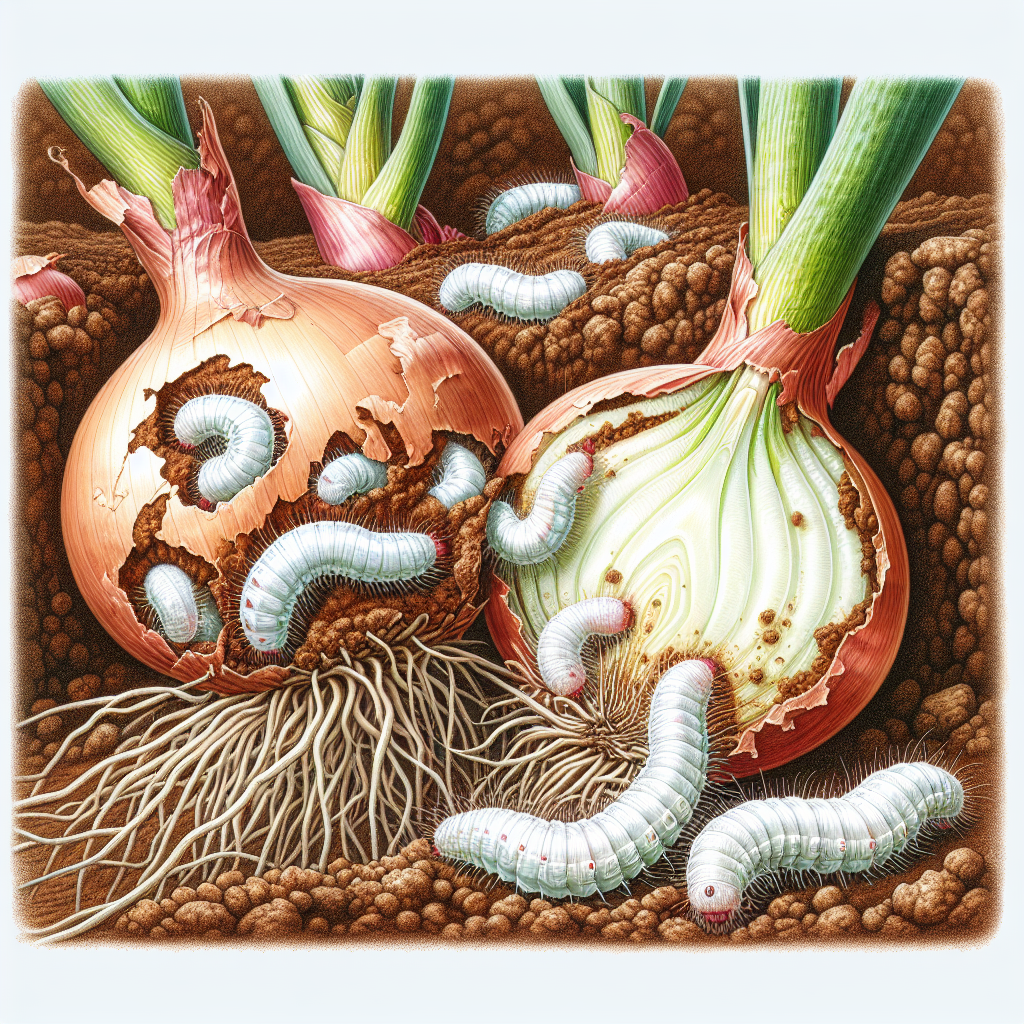
Introduction to Onion maggot
Onion maggots, scientifically known as Delia antiqua, represent one of the most persistent and damaging pests in allium cultivation worldwide. These small, white fly larvae target the roots and bulbs of onions, garlic, leeks, and shallots, often leading to stunted growth, wilting, and complete crop failure if left unchecked. Native to Europe but now widespread in North America, Asia, and other onion-growing regions, onion maggots thrive in cool, moist conditions, making spring and fall plantings particularly vulnerable.
Farmers and gardeners first notice issues when seedlings suddenly collapse or mature bulbs rot in the ground. A single infestation can destroy up to 100% of a planting in severe cases, with economic losses running into millions annually for commercial producers. Understanding this pest's biology is crucial for effective control. Adult flies resemble small houseflies, laying eggs near host plants, while the maggots feed voraciously underground. This guide provides comprehensive diagnostics, lifecycle insights, and proven management strategies to protect your onion crops. For more on integrated pest management, check out this Spring Pest Patrol resource.
Identifying Symptoms & Damage
Diagnosing onion maggot infestations requires keen observation of both above- and below-ground signs. The most telltale symptom is the sudden wilting and collapse of seedlings or young plants, often described as 'damping off' but distinct due to maggot presence. Affected plants appear healthy one day and flop over the next, with roots and bulbs riddled with slender, white tunnels.
Inspect the base of wilting plants: you'll find creamy-white maggots, about 1/3 inch long, wriggling in the soil or inside decaying tissue. Discolored, watery rot surrounds feeding sites, emitting a foul odor as secondary bacteria invade. In mature bulbs, damage manifests as soft, mushy interiors with exit holes where maggots pupate. Yellowing leaves, stunted growth, and premature flowering are secondary signs.
Differentiate from other issues: unlike root-knot nematodes, maggot damage features straight tunnels rather than galls; cutworms sever stems cleanly at soil level without root boring. Dig up suspect plants during early morning when maggots are active. Severe infestations show clusters of 5-20 maggots per plant, with pupae (brown capsules) nearby. Monitor fields weekly from planting through harvest, using yellow sticky traps for adults. Early identification prevents spread, as females lay hundreds of eggs per cycle.
Lifecycle and Progression of Onion maggot
The onion maggot completes 2-4 generations per year, depending on climate, with a lifecycle spanning 21-40 days. Adults emerge in spring (April-May in temperate zones), small gray flies (1/4-1/3 inch) with reddish eyes. Females lay 50-250 white eggs in batches of 10-30 near allium plants, preferring cracks in soil or at leaf bases. Eggs hatch in 2-4 days into tiny maggots that burrow immediately into roots or bulbs.
Larvae feed for 10-20 days, molting three times, growing from 1mm to 8-10mm. They create zigzag tunnels, rasping tissues and injecting digestive enzymes that cause rot. Fully fed maggots exit to pupate 1-3 inches deep in soil, forming reddish-brown puparia. New adults emerge after 10-14 days, repeating the cycle into fall. Overwintering pupae survive cold via diapause, triggered by shortening days.
Peak damage occurs in the first generation on seedlings, second on bulbs. In warmer regions like the southern U.S., four generations overlap, intensifying pressure. Track local emergence using degree-day models (base 43°F/6°C); adults active above 50°F. This predictable progression allows timed interventions, disrupting eggs before hatch.
Environmental Triggers & Risk Factors
Onion maggots flourish in cool (50-75°F), moist soils, with optimal egg-laying at 60-70°F. Early spring plantings coincide with first adult flights, while wet weather prolongs larval survival by slowing soil drying. Poor drainage, high organic matter, and compacted soils retain moisture, favoring maggots over plant roots.
Key risk factors include continuous allium cropping, volunteer onions from prior seasons, and nearby weed hosts like wild garlic. Acidic soils (pH <6.0) exacerbate issues, as do excessive nitrogen fertilizers promoting succulent growth. Overwintering pupae persist in debris, with tillage depth affecting survival—shallow burial (<4 inches) increases emergence.
Climate change extends seasons, boosting generations in northern areas. Proximity to infested fields (adults fly 1-2 miles) heightens risk. Scout high-risk sites: fields with garlic history or near cabbage rotations, as brassicas host related Delia species. Monitor soil moisture and temperature to predict flights.
Organic Control & Treatment Plans
Organic management emphasizes prevention but includes targeted treatments. Cultural: Rotate crops with non-alliums (3-4 years minimum), using carrot or potato as barriers. Till deeply post-harvest to expose pupae to predators and desiccation. Destroy cull piles to eliminate breeding sites.
Biological: Encourage natural enemies like ground beetles, rove beetles, and parasitic wasps (Ichneumonidae). Apply beneficial nematodes (Steinernema feltiae) at seeding (rates: 500,000/gallon water/acre), effective against young larvae in moist soil. Release predatory mites if thrips co-occur.
Physical/Mechanical: Use row covers (lightweight Agribon) from planting until bulbing, blocking adults. Yellow sticky traps (20/acre) monitor and reduce populations. Soil solarization in summer kills pupae via heat (soil >110°F for 4 weeks).
Organic Insecticides: Spinosad (Entrust, 0.2-0.4 oz/gal) drench at first signs, targeting larvae (apply evenings, 3-5 days pre-harvest). Neem oil or pyrethrins repel ovipositing females but have limited larval efficacy. Diatomaceous earth around transplants deters egg-laying.
Integrated Plan: Scout weekly; treat at 5% seedling loss. Combine rotation + nematodes + row covers for 90% control. Test soil for efficacy post-season.
Preventing Onion maggot in the Future
Long-term prevention hinges on breaking the lifecycle chain. Implement 4-year rotations excluding alliums: follow onions with grains like wheat or legumes. Plant late-season varieties after peak first-generation flights (post-June in north).
Choose resistant cultivars like 'Redwing' or 'Copra'. Use transplants over direct seed to bypass peak egg-lay. Maintain soil pH 6.2-6.8 with lime, improving drainage via raised beds or tile. Cover crops (mustard biofumigants) suppress pupae.
Sanitation is paramount: hot compost debris at 140°F+; flame-weed volunteers. Perimeter traps and companion plants like nasturtiums deter flies. Monitor with pheromone traps for precise timing. Annual soil tests guide fertility, avoiding lush growth. These strategies sustain yields without chemicals, building resilient systems.
Crops Most Affected by Onion maggot
Primary hosts are Allium species: onions (all types), garlic, leeks, shallots, chives. Onions suffer most, with bulb crops hit hardest (50-100% loss). Seedlings vulnerable universally.
Secondary: wild alliums, green onions. Related brassicas rarely affected. Avoid planting near these in rotations.