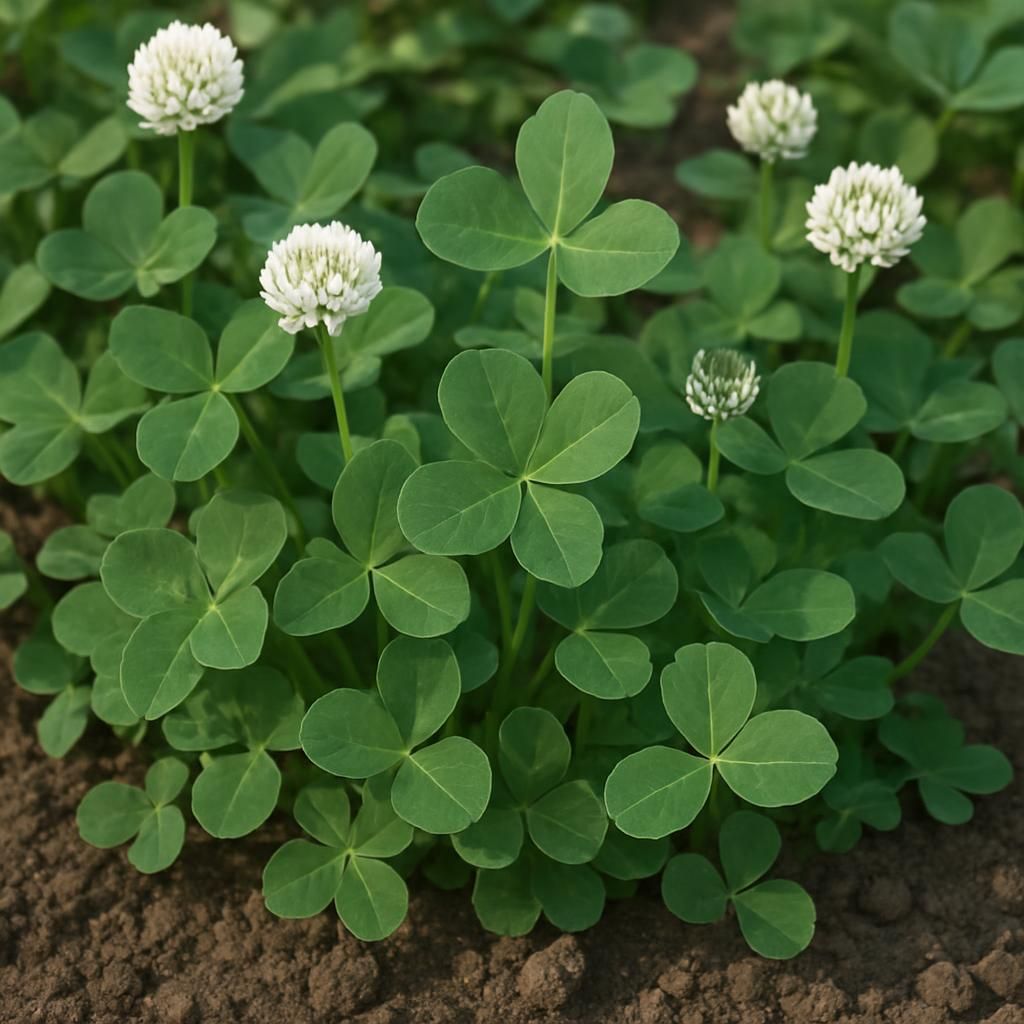
Introduction to White Clover
White clover (Trifolium repens) is one of the most versatile and widely adopted legumes in temperate agriculture. Farmers and gardeners value it for its ability to fix atmospheric nitrogen, reduce synthetic fertilizer inputs, and create a persistent living mulch that protects soil from erosion and compaction. Because it spreads via stolons and tolerates heavy grazing and regular mowing, white clover has become a staple in rotational grazing systems, orchard floors, and low-maintenance lawns.
Beyond soil health, white clover supports biodiversity by providing high-quality nectar for bees and other beneficial insects. Its dense canopy shades the soil, moderating temperature fluctuations and conserving moisture during dry periods. When managed correctly, white clover can remain productive for three to five years before requiring renovation.
Botanical Profile of White Clover
White clover is a stoloniferous perennial legume belonging to the Fabaceae family. It produces trifoliate leaves with characteristic white or light-green chevron markings and forms prostrate stems that root at the nodes. The plant typically reaches 5–20 cm in height, although flowering stems may extend to 30 cm.
Flowers are borne in dense, spherical heads containing 20–40 individual florets that range from white to pale pink. Each floret produces a small legume pod with 1–4 seeds. The root system is shallow and fibrous, with the majority of roots concentrated in the top 15 cm of soil, although taproots can extend deeper in loose profiles.
White clover exhibits strong phenotypic plasticity; varieties are generally classified by leaf size into small, medium, and large (ladino) types. Medium-leaf types such as 'Huia' and 'Grasslands Kopu' offer a balance of persistence and productivity, while ladino types excel in fertile, moist conditions.
Soil, pH, and Climate Requirements for White Clover
White clover performs best on well-drained yet moisture-retentive soils with moderate fertility. It is less tolerant of waterlogging than some other legumes but will not survive extended drought without irrigation.
| Parameter | Ideal Range | Notes |
|---|---|---|
| Soil pH | 6.0–7.0 | Below 5.5, nodulation and growth decline |
| Soil Texture | Loam to sandy loam | Avoid heavy clays without drainage |
| Organic Matter | 3–6% | Improves moisture retention and fertility |
| Temperature Range | 15–24 °C daytime | Tolerates light frost; growth slows below 5 °C |
| Annual Rainfall | 600–1200 mm | Supplemental irrigation needed below 500 mm |
| Drainage | Good to moderate | Standing water for >48 h causes root rot |
The crop is suited to USDA zones 4–9. In warmer climates, it may behave as a winter annual or require shade from taller companions to avoid heat stress.
Step-by-Step Planting & Propagation
- Site Preparation: Remove existing vegetation and relieve compaction with shallow tillage or aeration. Conduct a soil test and correct pH with lime if below 6.0 at least three months before planting.
- Seed Selection: Choose certified seed of regionally adapted varieties. Inoculate with Rhizobium leguminosarum biovar trifolii if the field has no recent history of clover.
- Seeding Rate: Broadcast 4–6 kg/ha of hulled seed or 6–8 kg/ha of coated seed. For overseeding into existing pasture, reduce to 2–3 kg/ha.
- Seeding Depth: Place seed 5–10 mm deep; light raking or rolling ensures good seed-to-soil contact.
- Timing: In temperate regions, sow in early spring or late summer when soil temperatures reach 10 °C. In Mediterranean climates, autumn sowing is preferred.
- Companion Seeding: Mix with perennial ryegrass or tall fescue at 15–20 kg/ha to provide immediate ground cover and reduce weed pressure.
Care & Maintenance regimes for White Clover
Consistent management maximizes nitrogen fixation and stand longevity.
| Task | Frequency | Details |
|---|---|---|
| Irrigation | As needed | Maintain top 10 cm moist during establishment; 25–30 mm/week thereafter |
| Nitrogen Fertilizer | Rarely needed | Apply 20–30 kg N/ha only if stand shows yellowing in first 6 weeks |
| Phosphorus & Potassium | Annual soil test based | Maintain 15–20 ppm P and 120–150 ppm K |
| Mowing/Grazing | Every 3–4 weeks | Clip to 5–8 cm to encourage branching and prevent flowering in forage stands |
| Weed Control | Spot treatment | Hand-pull or use selective broadleaf herbicides only if necessary |
| Renovation | Every 3–5 years | Overseed thin areas in autumn after soil test and pH correction |
Pests, Diseases & Organic Management
White clover is relatively pest-resistant but can be affected by several organisms. Aphids and Spider mites may colonize leaves during hot, dry spells; regular irrigation and releasing predatory mites provide effective control. Slugs can damage seedlings in cool, moist springs—use iron-phosphate baits or encourage ground beetles.
Major diseases include Sclerotinia crown and stem rot and root rot caused by Phytophthora and Pythium species in poorly drained soils. Rotate with non-host crops and improve drainage. Resistant varieties and avoiding excess nitrogen help reduce disease pressure.
Harvesting, Curing & Optimal Storage
White clover grown for forage is typically cut at 10–15% bloom for highest protein content. Wilt the crop to 40–50% dry matter in the field, then bale when moisture reaches 18–20%. Store bales under cover or wrap with plastic to prevent weathering losses. Seed production requires an additional 30–40 days after peak bloom; harvest when 80% of heads have turned brown. Clean and dry seed to 12% moisture before storage in cool, dark conditions.
Companion Planting for White Clover
White clover pairs well with many crops and forages. In orchards it serves as a living mulch beneath Apple and Pear trees, fixing nitrogen and attracting pollinators. It can be interseeded with Corn or Wheat in no-till systems to provide winter cover and early-spring nitrogen. Gardeners often combine it with Tomato or Strawberry beds for weed suppression and beneficial insect habitat. Avoid planting near Onion or Garlic where competition for shallow nutrients may reduce bulb size.
For additional strategies on building resilient small-farm systems, see The Forgotten Art of Fall Soil Revival: 8 Organic Strategies for Small Farm Resilience.