Introduction to Sclerotinia white mold
Sclerotinia white mold, caused by the soilborne fungus Sclerotinia sclerotiorum, ranks among the most destructive diseases in agriculture, impacting a broad spectrum of crops including soybeans, peas, and lettuce. Known also as white mold, stem rot, or cottony rot, it thrives in temperate regions with prolonged periods of cool, wet weather, causing annual global losses exceeding $1 billion. This comprehensive guide provides professional-grade diagnostic criteria, lifecycle insights, organic management strategies, and prevention tactics tailored for small to large-scale farmers. Early identification is crucial, as sclerotia—hard, black resting structures—can persist in soil for up to 10 years, making long-term rotation and sanitation essential. For in-depth strategies on timing interventions, check out Why Timing Kills Small Farm Profits - And How AI Task Scheduling Saves Your Harvests. Understanding this pathogen's biology empowers growers to minimize outbreaks and protect yields effectively.
Identifying Symptoms & Damage
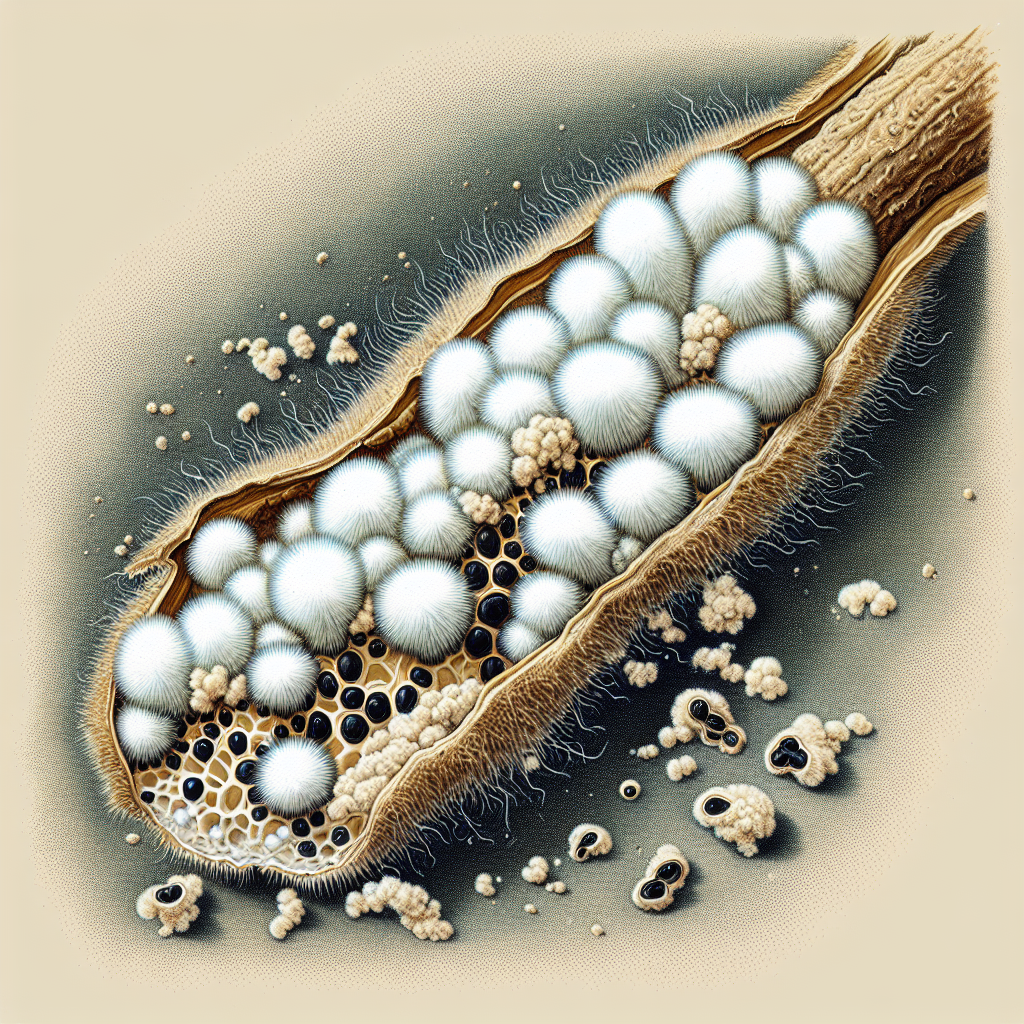
Recognizing Sclerotinia white mold early prevents widespread infection. Initial symptoms appear on lower stems, petioles, and branches during flowering or pod-setting stages, especially in dense canopies. Look for water-soaked lesions that expand rapidly under high humidity, developing into bleached, shredded stems covered in dense, white, cottony mycelium resembling puffed cotton. Black, irregular sclerotia (1-10 mm) form inside stems or on the soil surface, often dropping to infect future crops.
In soybeans, pods may abort or fill with white mold, reducing seed quality. On lettuce, heads wilt with internal rot and sclerotia resembling mouse droppings. Tomatoes show crown rot with mycelium at the soil line, while sunflowers exhibit head rot with drooping capitula. Secondary symptoms include rapid plant wilting, yellowing leaves, and premature senescence, mimicking drought stress. Yield losses range from 10-100%, with severe cases lodging entire fields.
Diagnosis confirmation involves slicing stems to reveal sclerotia and mycelium. Lab tests like PCR detect S. sclerotiorum DNA. Differentiate from Botrytis (gray mold) by white mycelium and sclerotia absence, or Phytophthora by warmer temperature optima. Field scouting at flowering, using a hand lens for mycelium, is vital. Economic thresholds vary: in soybeans, 1-5% incidence warrants action.
Lifecycle and Progression of Sclerotinia white mold
Sclerotinia sclerotiorum has a complex polycyclic lifecycle driven by sclerotia, its primary survival mechanism. Sclerotia germinate in spring under cool (10-20°C), moist soils, producing mycelium or apothecia—small, tan, mushroom-like structures releasing ascospores. Ascospores infect flowers, senesced tissues, or wounds, spreading via wind up to 1 km. Mycelium colonizes stems, producing oxalic acid to kill host tissue and enzymes to rot cells.
Inside infected plants, mycelium forms new sclerotia in 7-14 days under high humidity (>90%). Sclerotia mature in 3-4 weeks, drop to soil, and remain viable 3-10 years, deeper burial reducing longevity. Two infection pathways exist: direct mycelial from soil (carpet mycelium in wet conditions) and aerial via ascospores (dominant in row crops). Disease progression accelerates in dense canopies with poor airflow, peaking mid-season. Overwintering sclerotia initiate epidemics; one per square foot sustains outbreaks for years.
Environmental Triggers & Risk Factors
Sclerotinia white mold epidemics require specific conditions: cool temperatures (15-25°C daytime, <20°C night), prolonged leaf wetness (>48 hours), and high relative humidity. Free moisture on canopies from dew, rain, or irrigation triggers apothecia formation in 7-14 days. Soil pH 6-7 favors sclerotia germination; acidic soils suppress it.
Cultural risks include narrow row spacing (<30 cm), high plant density (>300,000 plants/ha), excessive nitrogen promoting lush growth, and continuous susceptible crops. No-till systems with residue retain sclerotia near surface, increasing risk. Irrigation timing matters—overhead systems extend wetness periods. Regional hotspots include Midwest U.S. soybean belts, European legume fields, and Australian canola regions during wet springs. Climate change may shift risks northward with milder winters. Monitor with weather stations for risk indices combining temperature, humidity, and plant stage.
Organic Control & Treatment Plans
Organic management integrates cultural, biological, and physical tactics, avoiding synthetic fungicides. Start with certified seed free of sclerotia. Apply solarization: cover moist soil with clear plastic for 4-6 weeks in summer (soil >40°C kills 90% sclerotia <2 cm deep). Deep tillage (20-30 cm) buries sclerotia beyond germination depth.
Biological controls shine: Coniothyrium minitans (Contans) parasitizes sclerotia, applied pre-plant at 10^9 CFU/kg soil, reducing viability 70-90% over 2 years. Trichoderma spp. compete effectively; T. harzianum sprays suppress foliar spread. Bacillus subtilis and Streptomyces strains produce antibiotics. Apply at flowering with good coverage.
Crop rotation is cornerstone: 4-6 years with non-hosts like corn, wheat, or grasses breaks cycles. Use partially resistant varieties: in soybeans, 'Archer' or 'Williams 82'; in dry beans, 'Evergreen'. Promote airflow with wider rows (50-75 cm), lower densities, and pruning lower leaves. Fungicides like potassium bicarbonate or sulfur provide foliar protection, timed at R1-R3 stages. Remove infected debris post-harvest, till under or burn. Integrate with cover crops like mustard biofumigants releasing isothiocyanates toxic to sclerotia.
Integrated plans: Scout weekly, apply biocontrols at 1% incidence, rotate rigorously. Trials show 50-80% control combining rotation, tillage, and C. minitans. Monitor efficacy with sclerotia counts in soil cores.
Preventing Sclerotinia white mold in the Future
Prevention focuses on excluding inoculum and disrupting lifecycle. Select fields with low sclerotia history via soil sampling (threshold <4/m²). Use clean equipment, avoiding infested field traffic. Promote drainage to reduce soil moisture; raised beds in vegetables cut risk 40%.
Resistant varieties are advancing: CRISPR-edited soybeans with oxalate oxidase genes show promise. Cover cropping with brassicas (mustard) before planting releases natural toxins. Foliar nutrition—silicon or calcium—strengthens cell walls. Precision irrigation (drip) minimizes wetness; cease 2 weeks pre-flowering.
Long-term: Diversify rotations (grains-legumes-grasses), soil testing annually, and predictive models forecasting apothecia based on weather. Farm hygiene: rogue infected plants, deep plow residues. Economic analysis favors prevention: rotation costs $50/ha but saves $200/ha losses. Community efforts like regional inoculum mapping aid area-wide suppression. Sustainable systems yield 20-30% higher with proactive IPM.
Crops Most Affected by Sclerotinia white mold
Over 400 species host S. sclerotiorum, but cool-season legumes and vegetables suffer most. Top crops include soybeans (global leader, 20-50% losses), dry beans, chickpeas, peas, lentils, peanuts, and alfalfa. Vegetables like lettuce (head rot), carrots, celery, cabbage, and brassicas are highly susceptible. Sunflowers, canola (rapeseed), and edible beans face epidemics in dense plantings.
Minor hosts encompass tomatoes, potatoes, cucumbers, and ornamentals like asters. Tropical crops rarely affected due to heat intolerance. Susceptibility peaks at flowering when petals provide entry. Regional variations: U.S. Corn Belt soybeans, Canadian prairies canola, European sugar beets. Breeding programs target tolerance, but complete resistance rare. Diversifying beyond these minimizes portfolio risk.