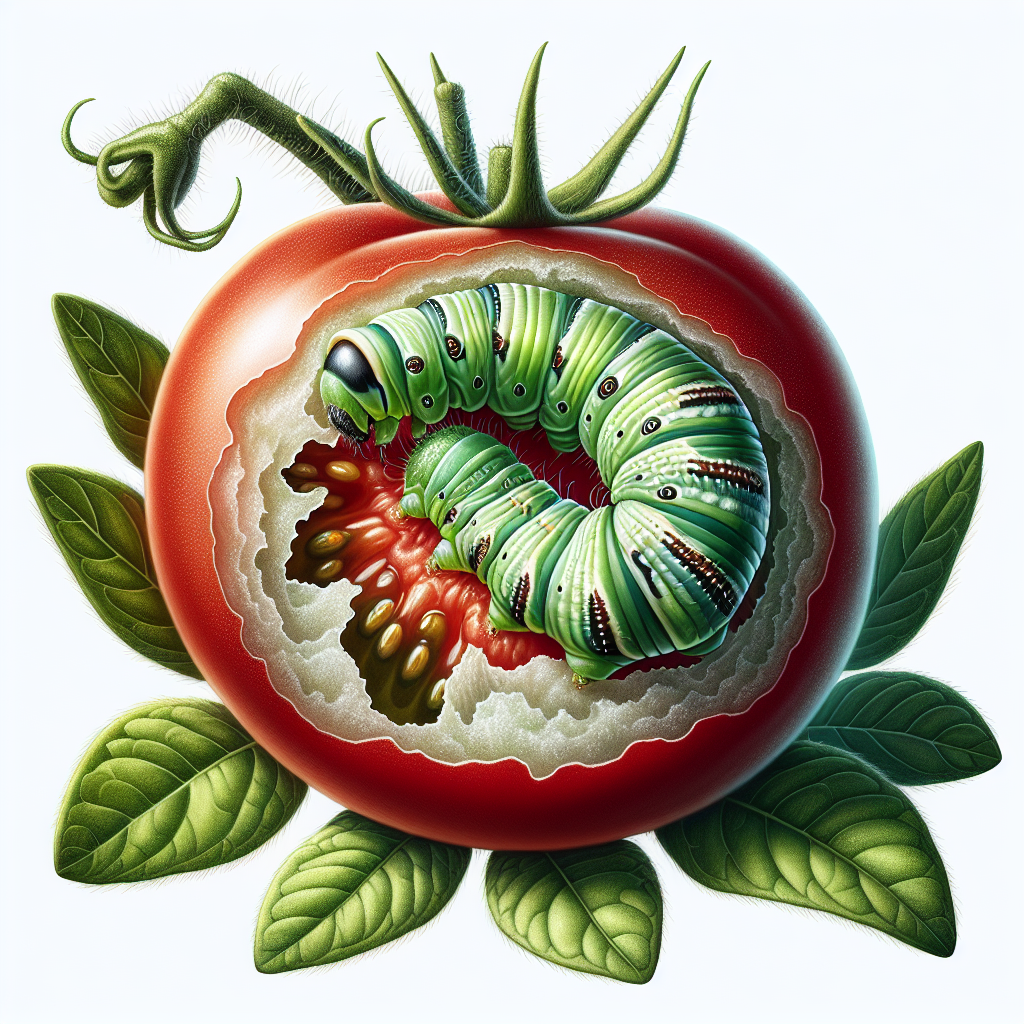
Introduction to Tomato Fruitworms
Tomato fruitworms represent one of the most destructive pests affecting tomato production worldwide, capable of inflicting severe economic losses through direct fruit damage and secondary infections. Primarily associated with Helicoverpa zea (also known as the corn earworm or bollworm in the Americas) and Helicoverpa armigera (Old World bollworm), these pests belong to the Noctuidae family of moths. Adult females lay eggs singly on leaves, stems, and developing fruits, from which highly voracious larvae emerge to tunnel into the fruit, leaving behind frass-filled entry holes that invite bacterial and fungal pathogens.
In commercial tomato fields and home gardens alike, fruitworm infestations can reduce yields by 20-50% or more if unmanaged, particularly during peak fruiting stages. Larvae grow rapidly, molting through five to six instars over 2-3 weeks, consuming vast amounts of tissue while evading detection inside fruits. Understanding their biology is crucial for timely intervention. For detailed insights into related pests, see Helicoverpa species. Tomatoes (Solanum lycopersicum) are prime targets, but vigilance is needed across nightshade family crops. Early scouting and IPM strategies can preserve harvests effectively.
Identifying Symptoms & Damage
Accurate diagnosis begins with recognizing characteristic damage patterns unique to tomato fruitworms. Small, pinpoint entry holes on green fruits, often surrounded by black frass (larval excrement resembling sawdust), are hallmark signs. Inside, a single large larva (up to 1.75 inches long, green to brown with longitudinal stripes and a dark head) feeds voraciously, creating extensive tunneling that leads to fruit rot. Affected fruits may drop prematurely or ripen unevenly with darkened, sunken lesions.
Examine foliage for eggs: creamy white, ribbed spheres (0.04 inches diameter) laid singly on upper leaf surfaces or calyces. Young larvae skeletonize leaves before moving to fruits, causing ragged holes. Unlike cutworms, which sever stems at soil level, fruitworms target reproductive structures. Differentiate from hornworms by size—fruitworms are smaller without prominent horns—and feeding habits; hornworms defoliate openly.
Secondary symptoms include mold growth (e.g., from Alternaria or Botrytis) entering via frass holes, amplifying losses. In heavy infestations, up to 90% of fruits show damage. Use a hand lens to confirm larvae presence; shake fruits over white paper to dislodge them. Regular scouting (twice weekly) during flowering to harvest is vital. Yield impacts are profound: marketable fruit loss correlates directly with larval density exceeding 5% infestation.
Lifecycle and Progression of Tomato Fruitworms
Tomato fruitworms complete multiple generations annually, with lifecycle duration varying by temperature: 30-40 days at 77-86°F, slowing in cooler conditions. Adults are robust moths with wingspans of 1-1.5 inches; H. zea tan with green wing markings, H. armigera more spotted. Moths are nocturnal, feeding on nectar, and females oviposit 500-3000 eggs over 10-14 days, preferring silks or fruits of corn, tomatoes, and other hosts.
Eggs hatch in 2-3 days into tiny larvae that initially feed externally before boring in. Larval stage dominates damage: first instars rasp leaf epidermis, later ones bore fruits. Pupation occurs in soil, lasting 12-20 days, producing overwintering pupae in temperate zones. In tropics/subtropics, 6-8 generations occur yearly. Migration via adults boosts local populations. Peak activity aligns with host fruiting; monitor using pheromone traps (10-20 per acre) for moth flights, correlating counts >5/trap/night with imminent egg-laying.
Understanding progression aids timing: scout pre-flowering for eggs, fruit-set for larvae. Lifecycle knowledge enables precise interventions, like targeting neonate larvae vulnerable to Bt sprays.
Environmental Triggers & Risk Factors
Warm temperatures (above 70°F) and humidity above 60% accelerate fruitworm development, with optimal egg hatch at 80°F. Proximity to alternate hosts like corn, cotton, sorghum, or peppers heightens infestation risk via moth dispersal. Overly lush, nitrogen-fertilized plants attract egg-laying, as do dense canopies reducing spray penetration.
Monoculture fields, delayed harvests, and nearby weedy margins harboring pupae exacerbate issues. Drought stress weakens plants, making fruits more susceptible. Regional outbreaks follow corn earworm cycles in grain crops. Soil types with poor drainage prolong pupal survival. Risk mapping via trap networks predicts influxes; fields near sweet corn face 2-3x higher pressure.
Organic Control & Treatment Plans
Organic management emphasizes IPM: prevention, monitoring, biologicals, and targeted organics. Deploy pheromone traps for early detection; threshold: 1-2 larvae/10 plants triggers action. Hand-pick eggs/larvae from small plots at dawn. Introduce predators like Trichogramma wasps (release 100,000/acre weekly for 4 weeks) parasitizing eggs, or green lacewings/polyphagous predators.
Bt kurstaki (e.g., Dipel, Thuricide) applied at 1-2 lbs/acre every 5-7 days to young larvae (within 48 hours of hatch) offers 90% control; rotate strains to prevent resistance. Neem oil/azadirachtin disrupts molting (0.5-1 gal/acre). Spinosad (Entrust) targets larvae effectively (4-6 oz/acre). For broader insights, check Spring Pest Patrol: Organic AI Strategies to Shield Your Crops from Common Invaders. Cover crops like buckwheat attract beneficials; reflective mulches deter moths. Scout diligently; combine methods for 80-95% reduction.
Preventing Tomato Fruitworms in the Future
Crop rotation (2-3 years away from nightshades/solanaceous crops like eggplant, bell pepper) disrupts pupal banks. Plant early-maturing varieties resistant to boring (e.g., 'Iron Lady', 'Mountain Merit'). Use row covers until flowering ends. Destroy crop residues promptly; deep till (6-8 inches) exposes pupae to predators/sun. Trap crops like sorghum border rows divert moths. Release sterile moths or pheromones for mating disruption in large fields. Maintain plant vigor with balanced fertility; avoid excess N. Perimeter sprays with pyrethrins at dusk. Long-term: enhance biodiversity with marigold or nasturtium intercrops repelling moths/attracting predators. Annual trap monitoring calibrates risks.
Crops Most Affected by Tomato Fruitworms
Tomatoes top the list, with Roma Tomato, Beefsteak Tomato, and Cherry Tomato varieties suffering heaviest due to fruit exposure. Corn (especially sweet corn ears), cotton bolls, sorghum heads, and peanuts pods follow. Nightshades like eggplant, bell pepper, chili peppers, and tobacco face similar boring. Field crops including soybeans, chickpeas, and okra report losses; even squash fruits are tunneled. Polyphagous nature spans 30+ hosts, amplifying field-wide threats.