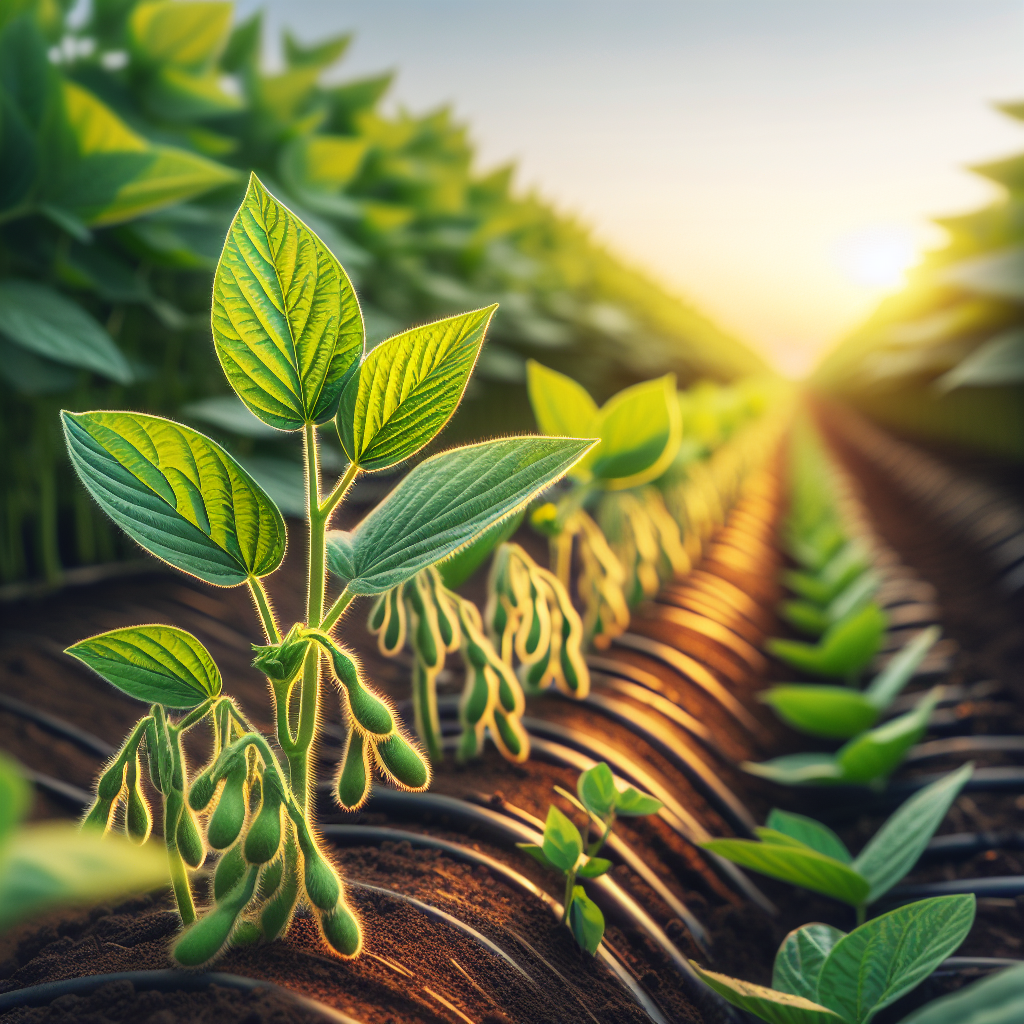
Introduction to Tofu Soybean
A tofu soybean is not merely any soybean harvested for human food; it is typically a food-grade type selected for tofu-making traits such as high protein, light seed coat and hilum color, clean flavor, good hydration capacity, and curd yield. In practical terms, growers are aiming for uniform, sound seed that can be soaked evenly, ground efficiently, and coagulated into tofu with a fine, consistent texture. Compared with oilseed soybean types, food-grade tofu lines are usually managed more carefully for seed appearance, purity, and postharvest handling because cracking, staining, weathering, and seed mixing all reduce value.
Historically, soybeans have been central to East Asian agriculture for millennia, with specialized culinary uses leading to distinct selection pressure. Tofu production favored beans that produce a white or cream-colored slurry and curd without dark flecks from pigmented hila. That means tofu soybean production sits at the intersection of agronomy and food processing: field decisions affect not just yield, but tofu texture, flavor, and manufacturing recovery. For a broader species-level foundation, see Soybeans.
Most tofu soybeans are grown as annual warm-season legumes. They are especially attractive in diversified farms because they fix nitrogen through symbiosis with Bradyrhizobium japonicum, fit well into grain and vegetable rotations, and can serve both local food markets and on-farm processing enterprises. Still, they are less forgiving than commodity soy when it comes to cosmetic quality. Seed purity, weed control, harvest moisture, and gentle storage matter more than many beginners expect.
Botanical Profile of Tofu Soybean
This crop belongs to the Fabaceae family. It is a short-day, self-pollinating annual with an erect to semi-bushy growth habit, trifoliate leaves, and pubescent stems and pods. Depending on cultivar and maturity group, plants typically grow 45-120 cm tall, though fertile soils and higher rainfall may push taller growth and increase lodging risk.
The root system begins with a strong taproot and rapidly develops lateral branching. In well-structured soils, roots commonly explore 60-90 cm deep, though most active nutrient uptake occurs in the top 15-30 cm. Root nodules, if inoculation and soil conditions are right, become visible early and should be pink to reddish inside when actively fixing nitrogen. White or greenish nodules may be immature or ineffective.
Flower color may be white or purple depending on genetics, and pods generally carry two to three seeds. Tofu types are often characterized by medium to large seeds, pale seed coats, and light hila, since these are preferred by processors. Compared with edamame types, tofu soybeans are harvested dry, not green. Compared with oilseed soybeans, tofu soybeans are often evaluated more strongly for protein concentration, tofu curd firmness, water absorption, and appearance after soaking.
Botanically, soybean development follows recognizable reproductive stages: flowering, pod initiation, seed fill, and physiological maturity. For tofu production, the seed-fill period is crucial. Stress during this window, especially drought or heat, can reduce seed size and protein functionality. Conversely, excessive late rain can increase disease pressure, delayed harvest, and seed staining.
Soil, pH, and Climate Requirements for Tofu Soybean
This crop performs best in deep, well-drained loam or silt loam with moderate water-holding capacity and good aeration. Sandy soils can work if irrigation is reliable and fertility is well managed, but they often produce greater moisture stress during flowering and pod fill. Heavy clays can also produce excellent yields if structured and drained properly, yet they pose higher risks of crusting at emergence and root stress when saturated.
Target soil pH is 6.2-6.8, with an acceptable working range of about 6.0-7.2. Below pH 5.8, nodulation and nutrient availability commonly decline, while manganese or aluminum toxicity may suppress early growth. Above about 7.5, iron chlorosis becomes more likely, especially in calcareous soils. If pH is too low, apply agricultural lime well ahead of planting, ideally several months in advance. Do not try to correct strongly acidic conditions at planting time alone.
A representative fertility target is medium phosphorus, medium to high potassium, and adequate sulfur. Although soybean fixes much of its nitrogen, it still needs excellent early root development and access to P, K, Ca, Mg, S, and micronutrients. Avoid high preplant nitrogen rates; these can suppress nodulation and promote lush, disease-prone vegetative growth. In most systems, 10-20 kg/ha starter N equivalent is more than enough if soils are cold or low in mineralization, and many growers use none at all.
Temperature is decisive. Sow when the top 5 cm of soil is consistently at least 12-15°C, with 15-18°C preferred for fast, even emergence. Optimal vegetative growth occurs around 25-30°C. Extended heat above 35°C during flowering can impair pollination efficiency and pod set, especially when paired with dry soil and hot winds. Frost is lethal to seedlings and damaging at all but the latest maturity stages.
Water demand is moderate early, then rises sharply from first flowering through full seed fill. A practical seasonal target is 450-700 mm total water, depending on climate, soil, and cultivar duration. The most important principle is consistency: avoid allowing the root zone to swing from saturated to dusty dry. In the upper 15-20 cm, aim to keep moisture around 60-80% of field capacity during active growth, and closer to 70-85% from bloom through pod fill. Signs that moisture is adequate include steady daily turgor, active new trifoliate expansion, and pods filling uniformly. Signs of drought stress include leaf flipping to expose the underside, midday wilting that persists into evening, aborted flowers, short pods, and flat seeds. Overwatering signs include yellowing lower leaves, slowed growth despite wet soil, brown roots, reduced nodulation, surface algal growth, and a sour smell in compacted zones.
Step-by-Step Planting & Propagation
This crop is propagated by seed. Use certified, food-grade seed with high germination, high purity, and no admixture with colored-hilum or oilseed lots. Seed size often varies by cultivar, so calibrate planting equipment by seed count and target population rather than by weight alone.
Prepare the field carefully. Create a firm, fine seedbed if using conventional tillage, or a residue-managed, evenly warmed surface in no-till. Uneven seed depth causes staggered emergence, which reduces stand uniformity and complicates harvest.
Test soil before planting. Correct pH, phosphorus, potassium, and sulfur deficiencies in advance. Food-grade soybean quality suffers when nutrition is imbalanced, even when plants appear reasonably vigorous.
Inoculate seed if needed. If soybeans have not been grown recently in the field, inoculate with the correct Bradyrhizobium japonicum strain. Even in fields with soybean history, reinoculation is often worthwhile where flooding, drought, acidity, or long rotation gaps may have reduced rhizobial populations.
Wait for warm soil. Plant after danger of frost and once soil temperatures at seeding depth are reliably above 12°C, ideally closer to 15°C. Cold, wet planting conditions slow emergence and predispose seed to rot.
Set planting depth precisely. Place seed 2.5-4 cm deep in moist soil. On lighter soils or in drying conditions, 4-5 cm may be acceptable, but avoid planting deeper than necessary because soybean expends considerable energy lifting cotyledons above ground.
Use proper spacing. Typical row spacing ranges from 25-75 cm depending on scale and weed strategy. Narrower rows close canopy faster and suppress weeds better; wider rows improve airflow and allow mechanical cultivation. Aim for a final stand of roughly 300,000-450,000 plants/ha for many food-grade systems, adjusted for local cultivar, rainfall, and lodging risk. Garden-scale spacing can be 5-8 cm between plants in rows 30-45 cm apart.
Ensure strong emergence. Seedlings usually emerge in 5-10 days under warm conditions. If crusting occurs after rain, emergence may be patchy. A rotary hoe or light surface disturbance can sometimes rescue the stand if done before hypocotyls are badly damaged.
Control weeds early. The first 4-6 weeks are critical. Tofu soybean does not compete well with early weed pressure, and weed seeds contaminating harvested grain are particularly undesirable in food-grade lots.
Because soybean is self-pollinating and grown from seed each season, there is no vegetative propagation in standard practice. Saving seed is technically possible, but for tofu markets it is usually better to buy professionally cleaned seed to maintain varietal purity and germination quality.
Care & Maintenance regimes for Tofu Soybean
Stand establishment is the first checkpoint. Count emerged plants 10-14 days after emergence and inspect roots for early nodulation 3-5 weeks after planting. Effective nodules should be numerous around the main root and upper laterals, with pink interiors when sliced. Poor nodulation may result from failed inoculation, waterlogging, very high residual nitrogen, soil acidity, or incompatible seed treatment.
Weed management should be layered. Begin with stale seedbed techniques, residue retention, pre-emergence cultivation or mulching where appropriate, and timely post-emergence passes. Once weeds exceed the cotyledon to first-true-leaf stage, competition increases fast. Late weed escapes are doubly harmful because they rob moisture during seed fill and contaminate harvested beans.
Irrigation, where used, should be scheduled by soil moisture rather than the calendar. Early vegetative plants can tolerate modest drying in the upper few centimeters, but the root zone should not be allowed to fall below about 50-55% of available water for long. From first flower through full pod, maintain more even moisture; many professional growers trigger irrigation when 35-45% of available water has been depleted in the top 30-45 cm. In plain terms, the soil should feel moist and cohesive below the surface, not powdery, and plants should not show repeated afternoon wilt. Apply enough water to recharge the active root zone, then allow aeration to recover. Frequent shallow sprinkling is inferior to deeper, less frequent irrigation because it encourages shallow rooting and can increase foliar disease.
Nutrient management is usually straightforward but should be evidence-based. Nitrogen topdressing is rarely beneficial if nodulation is healthy. Potassium becomes especially important where seed fill is heavy or soils are low; deficiency may appear as marginal leaf scorch on older leaves. Sulfur deficiency can reduce protein synthesis and may resemble general paling, often first on newer tissue in low-organic-matter soils. Foliar feeding has limited value unless correcting a confirmed micronutrient issue.
Lodging prevention matters for tofu soybeans because lodged plants are harder to harvest cleanly and experience more pod staining. Avoid excessive plant populations on fertile soils, limit unnecessary nitrogen, and select fields sheltered from strong late-season storms when possible. Uniform stands and balanced K nutrition also help stem strength.
For growers interested in broader fertility strategy, a practical reference is soil health tips.
Pests, Diseases & Organic Management
The main insect risks vary by region but commonly include aphids, bean leaf beetles, cutworms, caterpillars, stink bugs, and spider mites in hot dry periods. aphids cluster on stems and leaf undersides, causing curling, honeydew, and sooty mold under heavy infestations. stink bugs are particularly important in food-grade soy because they puncture pods and seeds, reducing quality and leaving shriveled or discolored grain.
Organic management starts with field hygiene and monitoring. Scout weekly from emergence, then twice weekly during flowering and pod fill if pest pressure is rising. Use edge checks and interior checks because some insects build first on borders. Encourage natural enemies by preserving flowering habitat nearby and avoiding unnecessary broad-spectrum sprays. Strong water management also matters: drought-stressed plants are more attractive to mites and less able to outgrow feeding.
Common diseases include damping-off, Phytophthora root rot, Rhizoctonia, frogeye leaf spot, bacterial blight, downy mildew, white mold in dense canopies, and several seed-quality diseases that intensify with wet harvest weather. The best organic defense is prevention: well-drained fields, crop rotation of at least 2-3 years out of soy or related legumes where disease pressure is high, resistant cultivars when available, clean seed, and good airflow.
Waterlogging is one of the most underestimated disease triggers. Saturated soil deprives roots and nodules of oxygen, leading to root browning, stunting, and yellowing that can be mistaken for nutrient deficiency. If wet areas recur in the same spots, drainage improvement will outperform any spray program.
For seed quality, harvest timing is also disease management. Repeated wet-dry cycles after maturity lead to pod weathering, seed coat cracking, purple stain, mold growth, and poor tofu performance. Food-grade soybeans should not be left in the field once mature simply for convenience.
Bird damage is usually minor compared with insect and disease issues, but deer and rabbits may browse young stands. Fencing or repellents may be justified in small plantings.
Harvesting, Curing & Optimal Storage
Harvest when plants have reached full maturity and most leaves have dropped naturally. Pods should be tan to brown, seeds hard, and seed moisture generally around 13-15% for harvest, with 14% often a workable compromise for minimizing field losses while reducing mechanical cracking. Harvesting too dry, especially below about 11-12%, greatly increases split beans and seed coat damage. Harvesting too wet increases smearing, storage risk, and the need for careful drying.
For tofu use, gentle combine settings are essential. Cylinder or rotor speed should be low enough to avoid cracking, while concave clearance and airflow should be adjusted for complete threshing without excessive abrasion. Every cracked seed lowers food-grade value. Harvest during moderate humidity, often morning or evening, if beans are otherwise too brittle in arid afternoons.
After harvest, clean promptly to remove green material, weed seeds, soil particles, and broken beans. If drying is necessary, use low-temperature air. As a rule, keep drying air conservative to protect protein functionality and germ integrity; excessive heat can stress seed coats and reduce processing quality. Bring beans down to about 12-13% moisture for short- to medium-term storage, or near 11-12% for longer storage in well-managed systems.
Storage conditions should be cool, dry, and stable. Ideal grain temperatures are below 15°C, and cooler is better for long holding. Relative humidity in the storage environment should remain low enough that the seed does not reabsorb moisture. Use sealed bins or clean food-grade containers protected from rodents and insects. Inspect monthly for condensation, hot spots, musty odor, caking, or insect presence. If a handful of beans feels slightly tacky, smells sour, or shows superficial mold, the lot is already at risk.
Unlike some cured produce, dry soybean is not "cured" in the traditional root-crop sense. Its postharvest success depends on careful drying, cleaning, and protected storage rather than wound-healing. Preserve identity throughout storage if marketing to tofu processors: separate lots by cultivar, field, and harvest date because protein, seed size, and tofu performance may differ.
Companion Planting for Tofu Soybean
In diversified farms and garden-scale production, companion planting should be approached as a system for pest balance, weed suppression, and spatial efficiency rather than as folklore. Good companions do not compete aggressively for the same niche during the soybean establishment window.
Buckwheat is one of the best support species nearby or in adjacent strips because it flowers quickly, attracts hoverflies and parasitic wasps, and helps occupy open ground. It should not be allowed to shade young soybean rows, so use it in borders or timed strips rather than direct interseeding unless you are experienced.
Clover can work in pathways or off-season rotations to protect soil structure and feed pollinators, but avoid dense living clover directly in the soybean row at establishment because it can compete for light and moisture before the soy canopy closes.
Radish is useful before soybean as a bio-drilling cover crop in compacted ground, helping water infiltration and root penetration. It is generally more valuable as a predecessor than as an in-season companion.
Sunflower can function as a border plant that attracts beneficial insects and supports farm biodiversity, but keep it on the north or windward side in smaller plots so it does not cast excessive shade. Tall sunflowers planted too closely can reduce soybean yield through light competition.
Avoid pairing tofu soybeans with very heavy feeders or sprawling crops that make harvest difficult. Also avoid repeated close association with other legumes if your goal is disease rotation. The best companion strategy is often sequential: a soil-improving cover before soy, insectary strips beside soy, and a contrasting non-legume crop after soy.