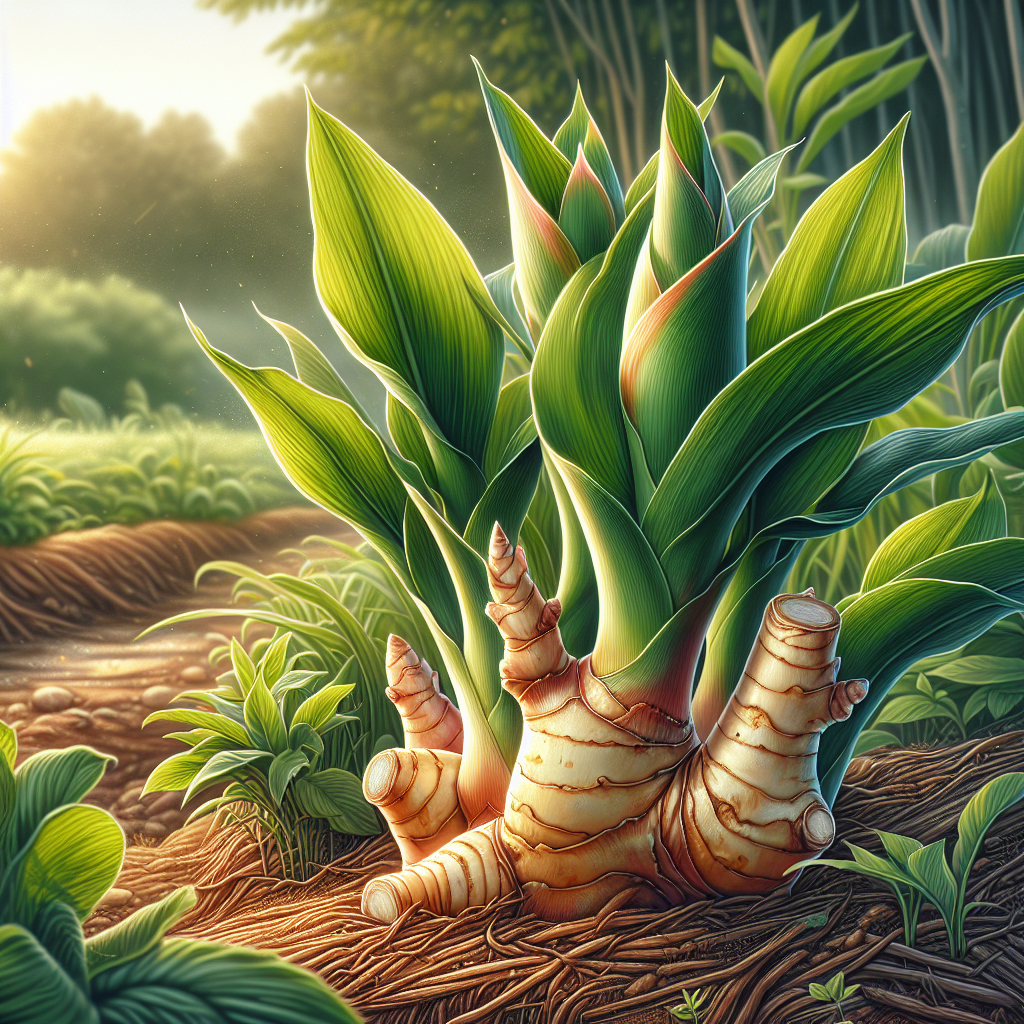
Introduction to Thai Ginger (Galangal)
A cornerstone of Southeast Asian food culture, galangal has been cultivated for centuries across Thailand, Indonesia, Malaysia, and neighboring regions where warm humidity and long rainy seasons allow rhizomes to bulk steadily. In English it is often called Thai ginger, but growers should understand that it is not simply a regional form of common ginger. Its flavor is sharper, more resinous, and more camphor-like, and its growth habit is typically more upright and robust.
For production purposes, galangal is best treated as a perennial tropical spice that is often grown as an annual harvest crop outside the deep tropics. It forms underground rhizomes that serve as both the marketable product and the planting material for the next cycle. Commercial success depends heavily on clean seed rhizomes, excellent drainage, steady moisture, high organic matter, and protection from cold stress. Even short exposure to temperatures below about 10°C can stall growth, while frost can destroy tops and damage rhizomes.
Galangal is especially valuable for small diversified farms because it occupies a niche spice market, stores reasonably well when handled correctly, and can be sold fresh, frozen, dried, or as seed rhizome. It also fits well into humid agroforestry or partially shaded tropical systems alongside crops such as Thai Basil and Banana, where filtered light and wind buffering improve leaf quality and soil moisture retention.
Botanical Profile of Thai Ginger (Galangal)
This crop belongs to the family Zingiberaceae, the same family as ginger, turmeric, and cardamom. The accepted scientific name for greater galangal is Alpinia galanga, though regional naming can be confusing because lesser galangal and related species are also traded in some markets. For growers, accurate identification matters because flavor profile, rhizome size, vigor, and market preference differ significantly among species.
Galangal is a clump-forming herbaceous perennial with thick, aromatic rhizomes and upright pseudostems formed by tightly wrapped leaf sheaths. Mature plants commonly reach 1.5 to 2.5 meters in favorable tropical conditions, making them taller and more architectural than most common ginger plantings. Leaves are lance-shaped, medium to deep green, and arranged alternately along the pseudostem. Well-grown plants develop a dense, vertical canopy that suppresses weeds once established.
Rhizomes are harder, paler, and more fibrous than common Ginger. Fresh galangal typically has a cream to pale yellow interior with a reddish or tan outer skin, depending on age and soil type. Young rhizomes are tender enough for slicing and pounding into curry pastes, while older rhizomes become woody and are better suited for simmering in soups or drying for powder.
Flowering is more common in perennial stands than in annual harvest systems. Inflorescences may emerge terminally or separately near the clump base, with white to greenish flowers often marked with red or pink streaking. Although ornamental, flowering is not the primary production goal. Most commercial propagation is vegetative because named lines and local landraces do not come reliably true from seed, and seed production is inconsistent.
Galangal has a relatively long crop cycle. Depending on temperature, fertility, planting material size, and market target, harvest may begin at 6 to 8 months for baby rhizomes, but full-sized mature rhizomes often require 8 to 12 months or longer. In perennial plantings, clumps can continue expanding for several seasons, though yield and quality are best maintained through division and replanting into fresh, fertile ground.
Soil, pH, and Climate Requirements for Thai Ginger (Galangal)
Galangal performs best in deep, friable, humus-rich loam or sandy loam with excellent drainage and strong moisture-holding capacity. The ideal soil feels loose in the hand, crumbles readily, and does not form a sticky, oxygen-poor mass after rain. Heavy clay can be used only if aggressively improved with compost, aged leaf mold, rice hulls, coarse sand, or raised beds. Waterlogging is one of the fastest ways to lose a planting because rhizomes require oxygen as well as moisture.
A practical target is 3 to 6% organic matter in field soil, or even higher in intensive garden beds. Well-decomposed compost improves both cation exchange capacity and tilth, allowing steady moisture without stagnation. Beds should be at least 20 to 30 cm high in wet climates, with drainage channels between rows during monsoon periods.
The preferred pH range is slightly acidic to neutral, roughly 5.5 to 7.0, with an optimum around 6.0 to 6.8. Below pH 5.3, nutrient availability becomes less balanced and calcium-magnesium deficiencies become more likely. Above pH 7.2, iron, manganese, and zinc can become less available, leading to interveinal chlorosis in young leaves. If soil is too acidic, use finely ground agricultural lime several weeks before planting. If too alkaline, elemental sulfur and repeated additions of composted organic matter can help gradually correct conditions.
Temperature is the key environmental driver. Growth is strongest between 22 and 35°C. Below about 18°C, emergence slows markedly; below 15°C, plants often sit nearly dormant. Frost is not tolerated. In subtropical climates, galangal can be grown during the warm season and lifted before cold weather. In the humid tropics, it may be maintained year-round.
Rainfall or irrigation should provide consistent moisture equivalent to roughly 25 to 40 mm per week in actively growing conditions, adjusted for soil type and evapotranspiration. The goal is evenly moist soil in the primary root zone, not constantly saturated soil. A simple field test: at 10 to 15 cm depth, soil should feel cool and lightly damp, holding together briefly when squeezed but falling apart with a gentle touch. If water can be squeezed out, it is too wet. If the soil is dusty or powdery at root depth, the crop is under stress.
Light requirements are flexible. Galangal can grow in full sun if soil moisture is abundant and temperatures are not excessively scorching, but the best quality often comes under 25 to 40% filtered shade, especially in hot lowland climates. Light afternoon shade reduces leaf scorch, lowers irrigation demand, and supports a cooler rhizosphere. Wind protection is also beneficial because tall pseudostems can tear or lodge in exposed sites.
For broader soil-building principles in spice beds and intensive tropical systems, see this soil health guide.
Step-by-Step Planting & Propagation
Start with disease-free, vigorous rhizomes from a trusted source. Choose pieces that are plump, firm, aromatic, and free from shriveling, dark sunken lesions, sour odor, or internal browning. Each seed piece should ideally weigh 40 to 80 grams and contain at least 2 to 3 visible buds. Larger propagules generally establish faster and produce stronger early shoots.
Before planting, cure cut seed pieces for 1 to 3 days in a shaded, airy place so the cut surfaces dry and callus slightly. In humid areas with a history of rot, dusting cuts with finely powdered wood ash or a biofungicidal treatment such as Trichoderma can reduce infection pressure. Avoid planting freshly cut, wet rhizome pieces directly into saturated soil.
Prepare beds deeply, loosening the top 25 to 35 cm. Incorporate abundant mature compost and, if needed, a basal organic fertilizer. A practical pre-plant target per square meter is 3 to 5 kg of compost plus a balanced amendment supplying moderate nitrogen, phosphorus, potassium, sulfur, and magnesium. Excess nitrogen at planting can create lush top growth before roots are ready, so avoid overly rich fresh manures.
Plant rhizomes horizontally or at a slight angle, 5 to 8 cm deep in light soils and 4 to 6 cm deep in heavier soils. Buds should face upward or sideways. Typical spacing is 30 to 45 cm between plants and 60 to 90 cm between rows, depending on whether the goal is baby galangal, mature rhizomes, or multi-season clump development. Wider spacing improves airflow and ease of harvest in humid climates.
After placing the rhizomes, backfill gently and water enough to settle soil without flooding the bed. Apply 5 to 10 cm of mulch immediately, keeping a small gap around the shoot emergence zone. Straw, shredded leaves, composted bark, rice straw, or chopped dried grass work well. Mulch is particularly important because galangal roots are shallow and benefit from stable temperatures and reduced evaporation.
Emergence can take 2 to 8 weeks depending on warmth and rhizome vigor. During this phase, keep the soil lightly moist, never sodden. Overwatering before active rooting is a common mistake. If no shoots emerge after several weeks, carefully inspect one planted piece; soft, foul-smelling tissue indicates rot, while firm tissue with swollen buds suggests delayed emergence due to cool conditions.
Container production is possible for specialty markets. Use a wide container at least 40 to 60 cm deep and broad, filled with a free-draining mix rich in compost and coarse material. Containers require more frequent watering and feeding but allow growers in cold climates to move plants under protection.
Care & Maintenance regimes for Thai Ginger (Galangal)
Once plants are established, irrigation should maintain even root-zone moisture. In practical terms, the top 2 to 3 cm of mulch may dry between waterings, but the soil below should remain consistently damp. In sandy soil during hot weather, this may mean watering 2 to 4 times weekly. In heavier loam under shade, once or twice weekly may suffice. Drip irrigation is preferred because it keeps foliage drier and reduces disease pressure.
The clearest signs of underwatering are leaf rolling during the hottest part of the day that does not recover by evening, dull gray-green foliage, slowed shoot emergence, and rhizomes that remain thin. Overwatering shows differently: yellowing lower leaves, weak soft stems, sour soil smell, fungal gnats around the bed, and rhizomes with translucent, water-soaked patches. If these symptoms appear, reduce irrigation immediately and improve aeration or drainage.
Galangal is a heavy feeder compared with many herbs. Apply side-dressings every 4 to 6 weeks during active growth. Nitrogen supports canopy development early, but potassium becomes especially important for rhizome bulking, tissue strength, and aroma development. Organic growers often use compost, vermicompost, fish hydrolysate, seaweed extract, and moderate amounts of feather meal or oilseed meals, balanced with sulfate of potash magnesia or wood ash where appropriate and safe for pH.
A useful feeding strategy is:
- Early growth: moderate nitrogen to stimulate strong leaf and shoot production.
- Mid-season: balanced feeding with emphasis on potassium and magnesium.
- Late bulking stage: reduce high-nitrogen inputs and focus on potassium-rich amendments.
Mulch should be replenished regularly to maintain a 5 to 10 cm layer. This suppresses weeds, buffers soil temperature, feeds beneficial soil life, and prevents rain splash that can spread pathogens. Weed pressure matters most in the first 8 to 12 weeks; after canopy closure, galangal becomes more competitive. Hand weeding is preferable to deep hoeing because feeder roots and shallow rhizome extensions are easily damaged.
Hilling or drawing a small amount of loose compost-rich soil around the base midway through the season can encourage rhizome expansion and protect swelling tissue from sun exposure. Avoid burying stems too deeply, as excessive soil piled against the pseudostem can increase rot risk.
In windy or very fertile sites, tall shoots may need support or strategic windbreaks. Remove dead or diseased leaves promptly, especially in dense humid plantings. Sanitizing knives and avoiding unnecessary cuts during wet weather helps prevent disease entry.
Pests, Diseases & Organic Management
Galangal is relatively resilient when grown in warm, biologically active soil, but it is not immune to pest and disease issues. The most serious problems usually stem from excessive moisture, contaminated planting stock, or poor rotation.
Rhizome rot is the primary production threat. It can be caused by Pythium, Fusarium, and other soilborne pathogens. Early symptoms include poor emergence, yellowing, stunting, stem collapse, and soft foul-smelling rhizomes. Prevention is far more effective than treatment: use clean seed, raised beds, rotation of at least 2 to 3 years away from other Zingiberaceae, careful irrigation, and biologically active composts. Biofungicides based on Trichoderma or Bacillus species can help suppress pathogens when integrated into a broader sanitation program.
Leaf spot diseases may appear during prolonged humidity, especially where air movement is poor. Small brown lesions with yellow halos can expand and reduce photosynthetic area. Remove heavily infected leaves, avoid overhead irrigation late in the day, and widen spacing if pressure is chronic.
Nematodes can damage roots and reduce vigor, especially in sandy tropical soils. Symptoms include patchy growth, nutrient deficiency appearance despite fertilization, and reduced rhizome size. Crop rotation, marigold border plantings, organic matter enrichment, and solarization in hot climates can lower pressure.
Common insect pests include Aphids, Spider mites, Scale, Mealybugs, and occasionally Caterpillars. Aphids and Mealybugs often colonize sheltered leaf bases and tender shoots. Spider mites become more problematic in hot, dry conditions under cover. Use strong water sprays early, conserve beneficial insects, and apply insecticidal soap or neem-based products carefully, coating hidden plant surfaces. Repeat at intervals because a single spray rarely breaks the life cycle.
Slugs and Snails may attack young shoots in shaded, heavily mulched beds. Hand collection, traps, and habitat reduction around the planting help. In severe cases, iron phosphate bait is compatible with organic management.
Field hygiene is critical. Never replant obviously diseased rhizomes. Remove and destroy severely infected clumps rather than composting them unless your compost system reliably achieves sanitizing temperatures. Clean tools between beds, especially after dividing clumps.
Harvesting, Curing & Optimal Storage
Harvest timing depends on the intended market. Young galangal for fresh culinary use can be harvested selectively at 4 to 6 months once rhizomes have formed but are still tender. Mature harvest generally occurs at 8 to 12 months, when stems begin to age, lower leaves yellow naturally, and aroma is strongest. In perennial systems, partial harvest from the edge of established clumps allows the center to continue producing.
To harvest, loosen soil well beyond the clump perimeter with a digging fork or broadfork to avoid slicing rhizomes. Lift the whole clump and shake or wash away loose soil. Separate marketable rhizomes from fibrous roots and reserve the healthiest, most vigorous sections for replanting.
Handle freshly dug galangal gently. Bruised rhizomes deteriorate faster and become entry points for rot organisms. If washing for market, use clean water and dry the rhizomes quickly in shade with strong airflow. Do not leave washed rhizomes in piles where surface moisture remains trapped.
Curing for short-term storage is lighter than for onion or garlic crops. The goal is not desiccation but surface drying and healing of minor abrasions. Hold rhizomes for 1 to 3 days in a shaded, well-ventilated area at roughly 20 to 28°C. Once surfaces are dry, trim remaining stems if needed.
For fresh storage, keep rhizomes at about 10 to 13°C with high relative humidity around 85 to 90%. This slows shriveling without encouraging condensation. Temperatures that are too low can cause chilling injury, while warmer conditions accelerate sprouting and weight loss. In home-Scale systems, perforated bags or crates lined with slightly damp packing material can help preserve quality, but airflow must remain adequate.
For long-term use, galangal can be sliced and dried at low temperatures until brittle, then sealed away from light and humidity. It also freezes well after cleaning and portioning. Seed rhizomes for next planting should be selected from disease-free, true-to-type plants and stored slightly warmer than culinary stock to avoid chilling damage.
Companion Planting for Thai Ginger (Galangal)
Galangal fits well into tropical polycultures where companion plants help moderate light, conserve soil moisture, reduce weed pressure, and diversify harvests. The best companions are not aggressive root competitors and do not share the same major soilborne disease complex.
Thai Basil is one of the most practical companions in culinary and market-garden systems. It attracts pollinators and beneficial insects, occupies a different rooting zone, and shares similar warmth preferences. It also creates strong cross-selling opportunities in fresh herb markets.
Banana works well as a nurse crop or edge planting in hot climates, offering filtered afternoon shade, wind buffering, and humidity moderation. The relationship is especially useful in young agroforestry layouts, though spacing must be generous so galangal does not become overly shaded as banana mats expand.
Clover can function as a living mulch in wider row systems or path edges where rainfall is not excessive. It helps protect soil structure, contributes organic matter, and can support beneficial insects. However, it should be managed carefully so it does not compete for moisture during early establishment.
Other good neighbors include lemongrass, chili peppers, and turmeric in well-managed tropical herb blocks, though rotations should still periodically move galangal away from related rhizomatous spices to reduce disease carryover. Companion planting works best when it improves the microclimate without increasing humidity to the point that leaf and rhizome diseases intensify.