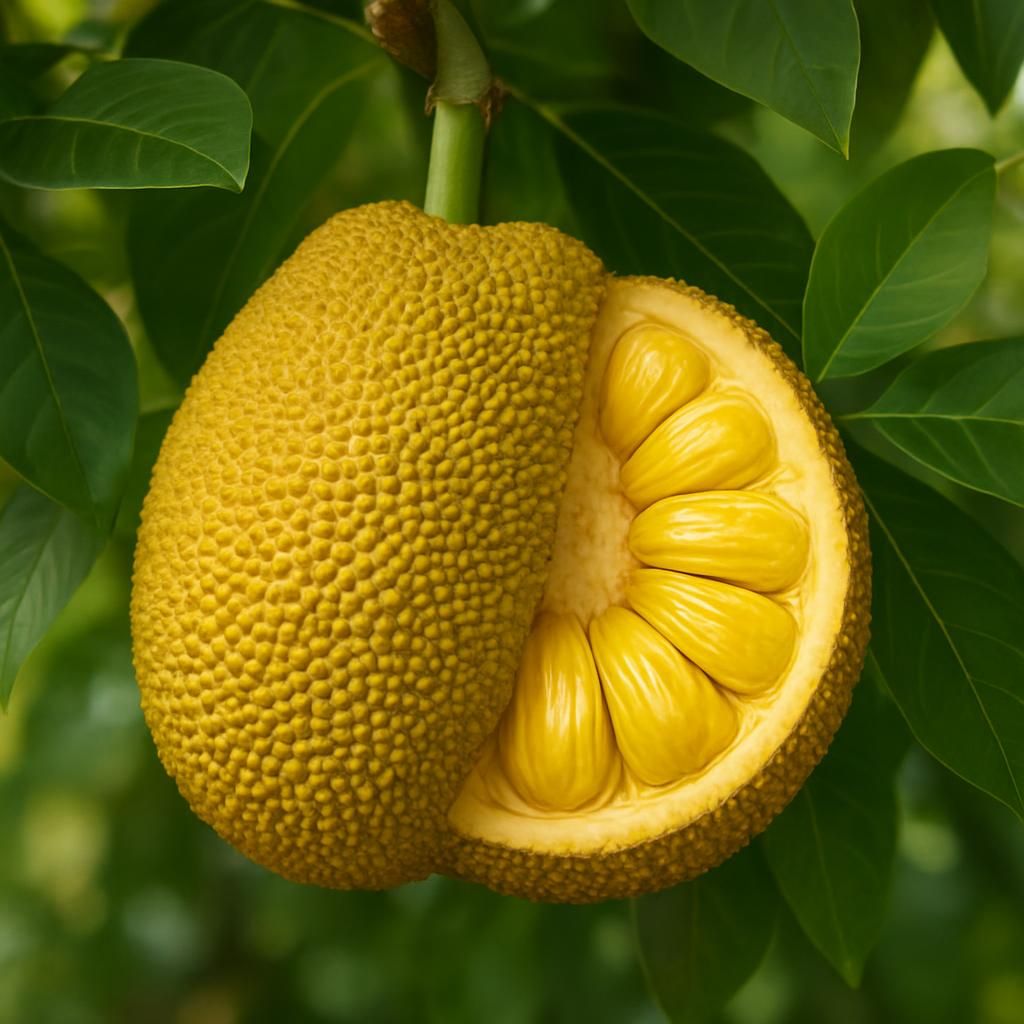
Introduction to Thai All-Time Jackfruit
Thai All-Time Jackfruit (Artocarpus heterophyllus 'Thai All-Time') is a premium tropical cultivar developed in Thailand for its reliable fruiting, superior sweetness, and compact growth habit compared to standard jackfruit varieties. This variety is favored by commercial and home growers alike for its ability to produce multiple harvests per year with minimal alternate bearing. Its fruits typically weigh 8–15 kg, feature golden-yellow, aromatic flesh, and offer excellent post-harvest shelf life when handled correctly.
The cultivar thrives in Southeast Asian growing regions and has been successfully introduced to similar tropical and subtropical climates worldwide. Its early maturity (often within 3–4 years from planting) and resistance to certain common fungal issues make it an attractive choice for intensive small-farm systems. When grown with proper spacing, irrigation, and nutrient management, Thai All-Time Jackfruit can deliver commercial yields of 40–80 fruits per mature tree annually.
Botanical Profile of Thai All-Time Jackfruit
Thai All-Time Jackfruit belongs to the Moraceae family and is botanically classified as a large evergreen tree with a spreading canopy. Leaves are dark green, glossy, and elliptic to obovate, measuring 10–20 cm in length. The tree produces separate male and female inflorescences on the same plant, with female flowers developing into the characteristic syncarp fruit.
The fruit is a multiple fruit (syncarp) composed of numerous fleshy perianths. Each fruit contains 100–500 seeds embedded in sweet, fibrous pulp. The cultivar is noted for its thin rind, reduced latex content, and consistent fruit shape. Trees typically reach 8–12 meters in height with a 6–8 meter spread when left unpruned, though commercial orchards often maintain lower heights through regular pruning.
Soil, pH, and Climate Requirements for Thai All-Time Jackfruit
Thai All-Time Jackfruit performs best in deep, well-drained loamy soils rich in organic matter. It tolerates a range of soil textures but suffers in heavy clay or waterlogged conditions. The ideal pH range is slightly acidic to neutral.
| Parameter | Ideal Range | Notes |
|---|---|---|
| Soil Type | Loamy to sandy loam | Deep, well-drained; avoid compacted clays |
| Soil pH | 5.5–7.0 | Optimal nutrient uptake at 6.0–6.5 |
| Temperature | 22–35 °C daytime | Minimum 10 °C; frost sensitive |
| Annual Rainfall | 1,200–2,500 mm | Supplemental irrigation needed in dry periods |
| Relative Humidity | 60–85 % | High humidity favors flowering and fruit set |
| Altitude | 0–800 m | Performs well in lowland tropics |
| Sunlight | Full sun (6–8 hours) | Partial shade reduces yield |
The tree is sensitive to salinity and requires protection from strong winds, which can damage branches and developing fruit. In marginal climates, microclimate modification through windbreaks or shade structures is recommended.
Step-by-Step Planting & Propagation
- Site Selection: Choose a location with full sun, protection from wind, and excellent drainage. Conduct soil tests for pH, nutrients, and nematodes before planting.
- Land Preparation: Clear vegetation, incorporate 20–30 kg well-rotted compost or manure per planting hole, and create raised beds or mounds in heavy soils.
- Propagation: Thai All-Time Jackfruit is best propagated by grafting onto seedling rootstocks of compatible jackfruit varieties. Use wedge or cleft grafting during the active growth period. Air-layering is an alternative for small-scale production.
- Spacing: Plant trees 8–10 m apart in rows 10–12 m wide for commercial orchards. Closer spacing (6 × 8 m) is possible with intensive pruning regimes.
- Planting Time: Establish new orchards at the start of the rainy season. Dig 60 × 60 × 60 cm holes, backfill with amended soil, and water thoroughly after planting.
- Initial Care: Mulch the planting area with 10–15 cm of organic material, leaving a 10 cm gap around the trunk. Install temporary shade for the first 4–6 weeks in intense sunlight.
Care & Maintenance regimes for Thai All-Time Jackfruit
Consistent irrigation, balanced nutrition, and strategic pruning are essential for sustained high yields. Young trees require more frequent watering, while mature trees benefit from deep, infrequent irrigation.
| Growth Stage | Watering Schedule | Fertilizer Application | Pruning Schedule |
|---|---|---|---|
| Year 1–2 (Establishment) | 2–3 times/week; 10–15 L per tree | 200 g NPK 15-15-15 every 2 months | Formative pruning at 6 and 12 months |
| Year 3–5 (Juvenile) | Weekly deep watering; 30–50 L | 500 g NPK 15-15-15 + 2 kg compost quarterly | Remove lower branches; tip prune leaders |
| Mature (>5 years) | Every 7–10 days; 80–120 L | 1–1.5 kg NPK 12-12-17-2 + micronutrients biannually | Annual post-harvest pruning; thin canopy |
Apply organic mulch year-round to conserve moisture and suppress weeds. Monitor leaf color and growth flushes to adjust fertilizer rates. Avoid excessive nitrogen during flowering to prevent fruit drop.
Pests, Diseases & Organic Management
Common pests include Aphids, Mealybugs, Scale insects, Fruit flies, and Spider mites. Major diseases are Anthracnose, Phytophthora, Root rot, and Bacterial leaf spot.
Organic management begins with cultural practices: maintain orchard sanitation, remove fallen fruit and leaves, and ensure good airflow through pruning. Introduce beneficial insects such as lady beetles and lacewings for aphid and mealybug control. Apply neem oil or horticultural oil sprays during early infestation stages. For fungal issues, use copper-based fungicides or Bacillus subtilis formulations at the first sign of symptoms. Regular monitoring and early intervention are key to preventing outbreaks.
Harvesting, Curing & Optimal Storage
Thai All-Time Jackfruit typically reaches harvest maturity 90–110 days after flowering. Indicators include a change in skin color from green to yellowish-green, a hollow sound when tapped, and a sweet, fruity aroma. Harvest by cutting the stalk with a sharp knife or pruning saw, leaving 5–10 cm of stem attached.
Cure harvested fruit at 25–28 °C for 2–3 days to enhance sweetness and aroma. Store ripe fruit at 10–12 °C with 85–90 % humidity for up to 7 days. For longer storage, separate the bulbs and freeze them in airtight containers. Avoid stacking heavy fruit to prevent bruising.
Companion Planting for Thai All-Time Jackfruit
Thai All-Time Jackfruit benefits from strategic companion planting that improves soil fertility, deters pests, and maximizes land use. Compatible companions include Thai Basil, Marigold, Pigeon pea, Sesame, and Gliricidia.
Leguminous companions such as pigeon pea fix nitrogen and provide light shade for young trees. Marigolds and Thai basil repel nematodes and aphids while attracting pollinators. Avoid planting heavy feeders like Banana or Mango in close proximity, as they compete for nutrients and water. Interplanting with low-growing herbs also creates beneficial microclimates and supports integrated pest management.
For additional guidance on microclimate tracking and seasonal planning, see Stop Relying on Calendar Planting: Track Your Own Microclimates Instead.