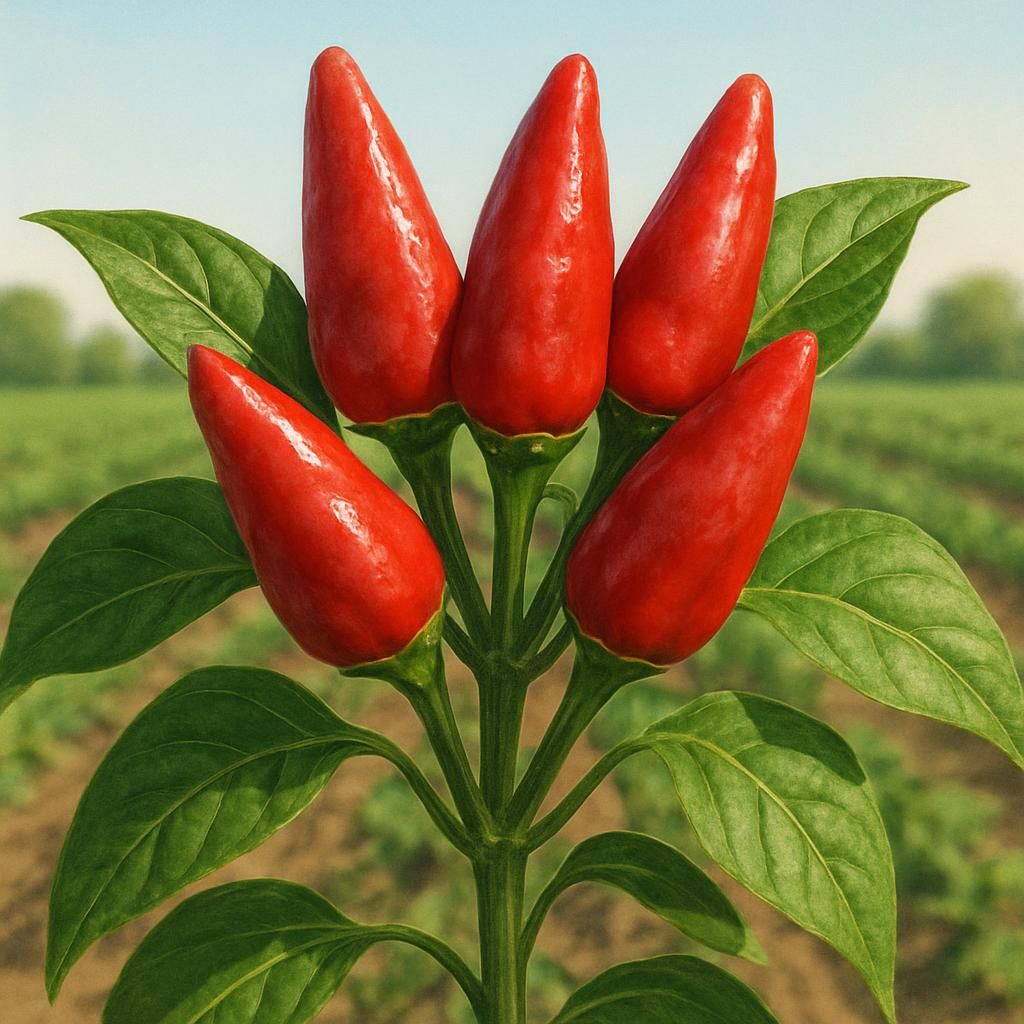
Introduction to Tabasco Pepper
Tabasco Pepper (Capsicum frutescens 'Tabasco') is the iconic chili responsible for the world-famous hot sauce of the same name. Originating from the Mexican state of Tabasco and refined on Avery Island, Louisiana, this perennial shrub produces upright clusters of small, tapered pods that ripen from pale yellow-green to fiery red. Its compact, branching architecture and continuous fruiting cycle make it a favorite among commercial processors and home gardeners seeking reliable heat and flavor.
Beyond its culinary fame, Tabasco Pepper offers significant agronomic advantages. Plants reach 3–5 feet in height, tolerate heat stress better than many bell peppers, and maintain productivity across multiple seasons when grown as short-lived perennials in frost-free zones. The variety’s resistance to certain viral complexes and its vigorous root system contribute to stable yields even under marginal conditions.
Commercial growers value Tabasco Pepper for its concentrated harvest windows and high capsaicin content, which commands premium prices in sauce, spice, and extract markets. This definitive guide synthesizes decades of agronomic research and field experience into actionable protocols for soil preparation, planting schedules, integrated pest management, and post-harvest handling.
Botanical Profile of Tabasco Pepper
Tabasco Pepper belongs to the Solanaceae family and the species Capsicum frutescens. Unlike the more common C. annuum types, C. frutescens exhibits a perennial growth habit in tropical and subtropical climates, developing woody stems over successive seasons. The plant produces small, lanceolate leaves and clusters of 2–3 cm fruits that stand erect on the branches.
Capsaicinoids, primarily capsaicin and dihydrocapsaicin, concentrate in the placental tissue, giving Tabasco its characteristic 30,000–50,000 Scoville Heat Units. The thin-walled pods dry rapidly and retain color and pungency when properly cured, making them ideal for both fresh sauce production and dehydration.
Flowering occurs continuously once plants reach 8–10 weeks of age. Self-pollination predominates, although insect activity can increase fruit set. The small white flowers feature green anthers and are less showy than those of many C. annuum cultivars.
Soil, pH, and Climate Requirements for Tabasco Pepper
Tabasco Pepper demands well-drained, fertile soils with moderate organic matter. Heavy clay soils should be amended with coarse sand or raised beds to prevent waterlogging, which quickly leads to Phytophthora root rot. Ideal soil texture is a sandy loam or loam with at least 2% organic matter.
| Parameter | Ideal Range | Notes |
|---|---|---|
| Soil pH | 6.0 – 6.8 | Below 5.8 increases aluminum toxicity |
| Soil Texture | Sandy loam to loam | Ensure >20% sand for drainage |
| Organic Matter | 2–4% | Incorporate aged compost pre-plant |
| Soil Temperature | 70–85 °F (21–29 °C) | Minimum 60 °F (16 °C) for transplanting |
| Air Temperature | Day 80–95 °F / Night 65–75 °F | Heat units accelerate capsaicin synthesis |
| Frost Tolerance | None | Protect below 50 °F (10 °C) |
| Annual Rainfall | 30–50 inches (762–1270 mm) | Supplemental irrigation in dry periods |
| Growing Degree Days | 2,200–2,800 GDD (base 50 °F) | Supports full red ripening |
Site selection should maximize full sun exposure (minimum 8 hours). In regions with intense afternoon heat (>95 °F), afternoon shade cloth (30%) can reduce blossom drop while maintaining fruit quality.
Step-by-Step Planting & Propagation
Seed Selection & Treatment: Source certified Tabasco Pepper seed from reputable suppliers. Soak seeds in 1% hydrogen peroxide for 10 minutes to reduce seedborne pathogens, then rinse.
Indoor Sowing: Start seeds 8–10 weeks before the last frost. Sow ¼ inch deep in sterile seed-starting mix at 80–85 °F (27–29 °C) bottom heat. Germination occurs in 7–14 days.
Seedling Hardening: When seedlings develop two true leaves, transplant into 3–4 inch pots. Maintain 70 °F nights and provide 14–16 hours of supplemental light.
Field Preparation: Two weeks before transplanting, incorporate 2–3 inches of well-aged compost and a balanced organic fertilizer (e.g., 4-4-4 NPK) at 2–3 lbs per 100 sq ft.
Transplant Timing: Move seedlings outdoors when soil temperature reaches 70 °F and nighttime air temperatures remain above 60 °F. Space plants 18–24 inches apart in rows 30–36 inches wide.
Direct Seeding Option: In warm climates (USDA zones 9–11), direct sow after soil warms to 75 °F. Thin to final spacing once seedlings reach 4 inches.
Container Culture: Use 5–7 gallon containers with drainage holes. Employ a peat-free potting mix amended with 20% perlite for aeration.
Care & Maintenance regimes for Tabasco Pepper
Consistent moisture without waterlogging is critical. Over-irrigation promotes Phytophthora while underwatering causes blossom-end rot and reduced capsaicin levels.
| Growth Stage | Watering Frequency | Fertilizer Schedule | Pruning & Training |
|---|---|---|---|
| Seedling (0–4 wks) | Keep evenly moist; mist twice daily | No fertilizer until true leaves appear | None |
| Vegetative (4–8 wks) | 1 inch/week; increase in heat | Side-dress ½ cup 4-4-4 per plant at week 5 | Pinch growing tip at 6–8 inches to branch |
| Flowering/Fruiting | Deep soak every 3–4 days | Apply fish emulsion (2-3-1) every 3 weeks | Remove lower leaves touching soil; stake |
| Mature (Perennial) | Reduce to ¾ inch/week in fall | Top-dress compost + 1 lb 5-3-3 per 10 plants | Cut back ⅓ after final harvest; renew mulch |
Mulch with 2–3 inches of organic straw or wood chips to moderate soil temperature and suppress weeds. Monitor leaf color weekly; pale foliage indicates nitrogen deficiency while purple stems suggest phosphorus shortage.
Pests, Diseases & Organic Management
Tabasco Pepper faces pressure from several common Solanaceous pests. Aphids cluster on new growth and transmit viruses; deploy yellow sticky traps and release lady beetles at first sighting. Spider mites thrive in hot, dry conditions—maintain humidity above 50% and apply neem oil weekly.
Major diseases include Bacterial spot, Phytophthora root rot, and Tobacco mosaic virus. Rotate crops on a 3-year cycle and avoid planting near Tomato or Potato. Copper-based sprays provide organic control of bacterial diseases when applied preventively.
Nematode pressure can be mitigated by solarizing beds for 4–6 weeks in summer or incorporating marigold (Tagetes) as a biofumigant. Remove and destroy infected plants promptly to limit spread.
Harvesting, Curing & Optimal Storage
Harvest Tabasco Pepper when pods reach full red color and glossy sheen, typically 80–100 days after transplant. Pick every 3–5 days during peak production to encourage continuous fruiting. Use clean pruners to avoid stem tearing.
For fresh sauce production, process within 24 hours. For drying, spread pods in single layers at 95–105 °F with good airflow until brittle (8–12% moisture). Store dried peppers in airtight glass jars away from light; retain pungency for 12–18 months.
Fermentation for traditional hot sauce requires 4–6 weeks at 68–72 °F with 2–3% salt brine. Finished sauce should reach pH ≤ 3.4 for safety and flavor stability.
Companion Planting for Tabasco Pepper
Strategic companions enhance Tabasco Pepper performance. Thai Basil repels thrips and improves fruit flavor through volatile compounds. Marigold roots exude alpha-terthienyl, suppressing Root-knot nematodes.
Onion and Garlic provide allium volatiles that deter Aphids. Avoid planting near Fennel or Dill, which can inhibit pepper growth through allelopathy.
Interplanting with Cucumber or Squash creates microclimates that moderate heat stress while maximizing bed utilization. Always maintain 18-inch buffers between pepper rows and heavy feeders to prevent nutrient competition.