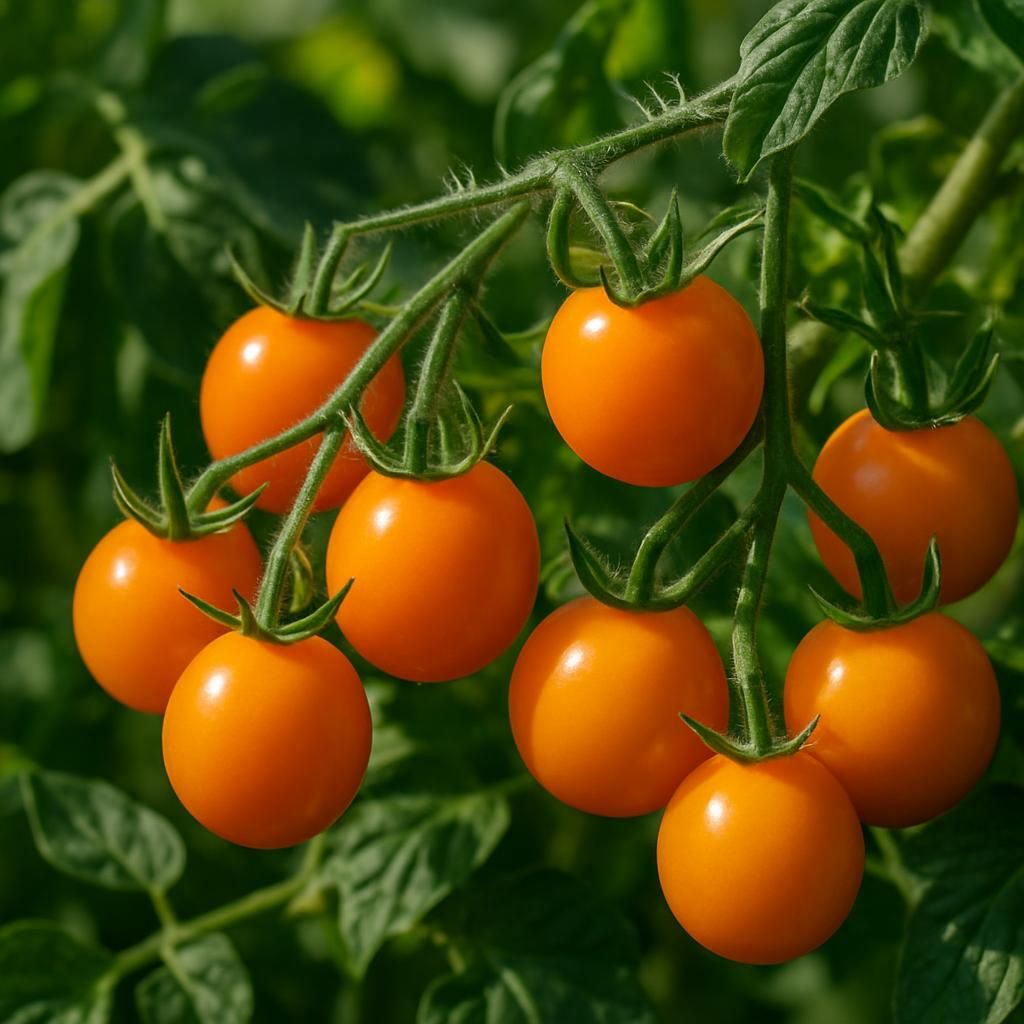
Introduction to Sunsugar Tomato
Sunsugar Tomato (Solanum lycopersicum 'Sunsugar') is an indeterminate cherry-type variety celebrated for its intense sweetness, crack resistance, and prolific yields of small golden-orange fruits. Developed for both commercial and home growers, this cultivar matures in approximately 60–65 days and produces clusters of bite-sized tomatoes that maintain flavor even under high heat. Its thin yet resilient skin and balanced sugar-acid profile make it a favorite for fresh eating, salads, and dehydration. Growers value its disease tolerance package and ability to set fruit reliably in warm conditions.
Botanical Profile of Sunsugar Tomato
Sunsugar belongs to the nightshade family (Solanaceae) and exhibits the classic indeterminate growth habit, continuing to produce new stems, flowers, and fruit until frost. Plants reach 5–7 feet in height with vigorous vining stems that benefit from strong trellising or caging. Leaves are compound and slightly serrated, while flowers are self-pollinating and typically appear in trusses of 8–12 blossoms. The fruit is cherry-sized (approximately 15–20 g), round to slightly oblate, and develops a bright golden-orange hue at full ripeness. Seeds are small, flat, and beige; each fruit contains 30–60 viable seeds.
Soil, pH, and Climate Requirements for Sunsugar Tomato
Sunsugar Tomato performs best in fertile, well-drained loam or sandy loam soils enriched with organic matter. The crop requires consistent moisture without waterlogging and benefits from slightly acidic conditions. Temperature management is critical during both vegetative and reproductive stages.
| Parameter | Ideal Range | Notes |
|---|---|---|
| Soil Type | Loam or sandy loam | High organic matter improves fertility |
| Soil pH | 6.2–6.8 | Avoid below 6.0 or above 7.2 |
| Soil Temperature | 65–85 °F (18–29 °C) | Minimum 55 °F (13 °C) for transplanting |
| Air Temperature (Day) | 70–85 °F (21–29 °C) | Optimal fruit set occurs within this range |
| Air Temperature (Night) | 60–70 °F (15–21 °C) | Below 55 °F reduces pollination |
| Sunlight | 8+ hours direct | Full sun maximizes sugar development |
| Spacing | 18–24 in (45–60 cm) | 4–5 ft between rows for airflow |
Step-by-Step Planting & Propagation
- Start seeds indoors 6–8 weeks before the last expected frost. Sow ¼ inch deep in sterile seed-starting mix at 75–80 °F.
- Provide 14–16 hours of supplemental light until seedlings reach 3–4 inches with two true leaves.
- Harden off transplants for 7–10 days, gradually exposing them to outdoor conditions.
- Transplant outdoors once soil temperature reaches 65 °F and night air temperatures remain above 55 °F.
- Plant deeply, burying the stem up to the first true leaves to encourage adventitious roots.
- Install cages, stakes, or trellises at planting to support the indeterminate vines.
- Water thoroughly after transplanting and apply a 2-inch layer of organic mulch to conserve moisture.
Care & Maintenance regimes for Sunsugar Tomato
Consistent irrigation, balanced nutrition, and regular pruning are essential for maximizing yield and fruit quality. The following table outlines recommended schedules.
| Week/Stage | Watering Schedule | Fertilizer Application | Pruning & Training |
|---|---|---|---|
| Transplant–Week 2 | 1–1.5 in/week; keep soil evenly moist | None; transplant solution only | Remove lower leaves touching soil |
| Weeks 3–6 | 1.5–2 in/week; deep watering 2–3× weekly | Side-dress with 5-5-5 organic fertilizer | Tie main stem to support; suckering begins |
| Flowering–Fruit Set | 2 in/week; avoid overhead irrigation | Apply calcium-rich foliar spray biweekly | Remove suckers below first flower cluster |
| Fruit Ripening | Reduce to 1.5 in/week if rainfall adequate | Switch to low-nitrogen, high-potassium feed | Continue selective pruning for airflow |
Pests, Diseases & Organic Management
Sunsugar Tomato can be affected by common tomato pests and diseases including Aphids, Spider Mites, Hornworms, Early Blight, and Tomato Spotted Wilt Virus. Implement integrated pest management: scout weekly, release beneficial insects such as lady beetles and lacewings, and apply neem oil or insecticidal soap at first sign of infestation. Rotate crops every 3–4 years and remove crop debris at season end to reduce overwintering pathogens. Mulching and proper spacing improve airflow and reduce fungal pressure.
Harvesting, Curing & Optimal Storage
Harvest Sunsugar Tomatoes when they reach full golden-orange color and slight softness. Pick daily during peak season to encourage continued production. Gently twist or cut fruit from the vine to avoid damaging the plant. For short-term storage, keep at room temperature away from direct sunlight; refrigeration diminishes flavor. For longer preservation, dehydrate at 135 °F or freeze whole on trays before transferring to airtight containers. Properly stored dried tomatoes retain quality for 6–12 months.
Companion Planting for Sunsugar Tomato
Pair Sunsugar Tomato with aromatic herbs such as Basil and Thyme to deter pests and enhance flavor. Marigold and Nasturtium provide additional pest-repellent benefits. Avoid planting near Fennel or Walnut trees, which can inhibit tomato growth. Lettuce and Radish make excellent understory companions that utilize space efficiently while tomatoes provide light shade.
Tomato varieties such as Cherry Tomato (Sungold) share similar growing requirements and can be rotated in successive seasons for disease management.