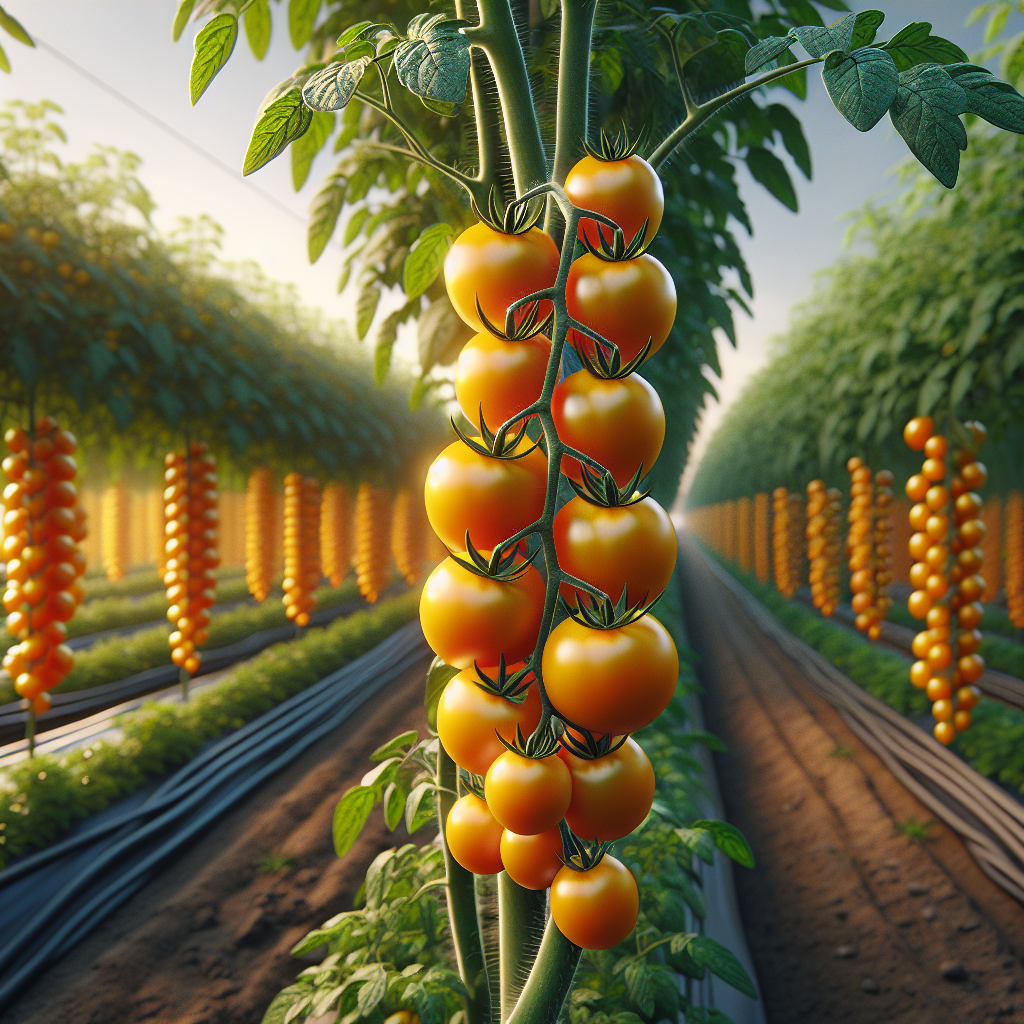
Introduction to Cherry Tomato (Sungold)
Among cherry tomatoes, Sungold has earned an almost cult-like reputation for flavor. Bred as an F1 hybrid, it is known for tangerine-orange fruits with a tropical, candy-sweet taste balanced by enough acidity to keep them lively rather than flat. Fruits are usually round to slightly oval, about 0.5 to 1 inch across, borne in generous trusses, and often begin ripening earlier than many larger indeterminate tomatoes.
This variety is especially valued because it combines premium eating quality with vigorous growth and heavy yield. Plants can become very large in warm, fertile conditions, often exceeding 6 to 8 feet if not topped or limited by season length. That vigor is both a strength and a management requirement: Sungold rewards attentive growers with extraordinary productivity, but it can quickly outgrow undersized cages, shade neighboring crops, and become more disease-prone if airflow is poor.
As an F1 hybrid, seed saved from Sungold fruit will not reliably produce true-to-type offspring. For growers who want the same fruit quality, crack resistance profile, and plant habit each season, fresh purchased seed is the standard. For broader background on tomato culture, see our Tomato guide. For foundational fertility principles that directly improve yield and fruit quality, review soil health strategies.
Botanical Profile of Cherry Tomato (Sungold)
This cultivar belongs to the nightshade family, Solanaceae, alongside peppers, eggplants, and potatoes. Taxonomically, cultivated tomato is usually listed as Solanum lycopersicum. Cherry tomatoes are often grouped botanically under var. cerasiforme, reflecting their generally smaller fruit size and ancestral affinity with wild or semi-wild cherry-fruited forms.
Sungold is an indeterminate plant, meaning the main stem continues vegetative growth while flowering and fruiting over a long period rather than stopping after a terminal flower cluster. This is why harvest can continue from early summer until frost in temperate climates or for many months in frost-free regions. Leaves are regular-leaf type rather than potato-leaf, and stems are pubescent, capable of producing adventitious roots when buried. That trait is agriculturally important because transplanting deeply encourages a larger root system and improved establishment.
Flowering is typically simple to compound in trusses, with yellow, self-fertile blossoms. Tomatoes are largely self-pollinating, but pollen release is strongly influenced by temperature and humidity. Ideal pollination usually occurs around 21-29°C (70-85°F) with moderate humidity. When daytime temperatures exceed about 32°C (90°F) or nighttime temperatures remain above 24°C (75°F), pollen viability declines and flower drop can increase. Conversely, cool conditions below about 13°C (55°F) can also interfere with fruit set.
The fruit itself is a berry botanically, with thin skin, juicy locules, and a high soluble solids content that contributes to its signature sweetness. Sungold fruits often have a more delicate skin than some thick-skinned shipping cherry tomatoes, which enhances fresh eating quality but also means careful irrigation management matters. Uneven water supply can still lead to splitting, especially after dry conditions are followed by heavy irrigation or rain.
Soil, pH, and Climate Requirements for Cherry Tomato (Sungold)
Sungold performs best in deep, friable, biologically active soil with excellent drainage and a high level of stable organic matter. The ideal texture is a sandy loam to loam, though clay soils can work if heavily amended and structured to prevent compaction. Root systems need oxygen as much as water. In chronically waterlogged soils, roots lose function, nutrient uptake becomes erratic, and diseases such as pythium root rot become more likely.
Target a soil pH of 6.2 to 6.8. Tomatoes tolerate roughly 6.0 to 7.0, but Sungold is especially productive when major and minor nutrients remain readily available in the mid-6 range. Below pH 5.8, calcium, magnesium, and phosphorus availability often become limiting; above pH 7.2, iron, manganese, and sometimes phosphorus can become less available, showing up as interveinal chlorosis on new growth.
Before planting, incorporate 2 to 4 inches of finished compost into the top 8 to 12 inches of soil. Avoid relying on uncomposted manure immediately before planting, as excessive available nitrogen can drive lush foliage at the expense of balanced flowering and can increase cracking and soft growth. A pre-plant soil test is ideal. For productive garden culture, a moderate fertility target often works well: adequate phosphorus for root establishment, moderate potassium for fruit quality, and controlled nitrogen to avoid overly rank vines.
Climate-wise, Sungold thrives in warm temperate to subtropical conditions with full sun. Aim for at least 8 hours of direct light daily; 10 or more is even better where heat is not extreme. The ideal growth range is about 18-29°C (65-85°F). In very hot climates, afternoon shade can reduce heat stress, sunscald, and pollen sterility, especially when temperatures regularly exceed 35°C (95°F).
Soil moisture should remain consistently moist but never saturated. A practical target is roughly 60-80% of field capacity in the active root zone. In real-world terms, soil 2 to 3 inches down should feel cool and slightly damp, forming a weak ball when squeezed, not dusty and not muddy. Overwatered Sungold plants often show yellowing lower leaves, edema-like blistering, reduced flavor intensity, and soft, overly vegetative growth. Underwatered plants wilt in the afternoon and may recover by evening, but repeated stress leads to blossom drop, smaller fruit, thicker skins, and increased splitting when water finally becomes abundant.
Step-by-Step Planting & Propagation
Start seed indoors 5 to 7 weeks before the last expected frost. Sow seed 1/4 inch deep in a sterile seed-starting medium at 24-28°C (75-82°F). Germination is usually fast, often 5 to 8 days under warm conditions. As soon as seedlings emerge, provide strong light immediately; insufficient light leads to stretched, weak transplants with narrow stems and poor early performance.
When seedlings develop their first true leaves, pot them up into cell packs or 3-4 inch pots if needed. Bury leggy stems up to just below the cotyledons, because buried tomato stems can root readily. Maintain daytime temperatures around 18-24°C (65-75°F) and slightly cooler nights to produce sturdy transplants. Feed lightly once the first true leaves are established using a diluted, balanced fertilizer.
Begin hardening off 7 to 10 days before transplanting by gradually exposing plants to outdoor sun, wind, and fluctuating temperatures. Never transplant until danger of frost has passed and soil temperatures are consistently above 15°C (60°F), with 18°C (65°F) being better for rapid establishment.
Prepare planting holes deeply. Remove lower leaves and bury 1/2 to 2/3 of the stem, or trench-plant long seedlings horizontally with only the upper cluster of leaves above the soil. This encourages a broad root system and greater drought resilience. Space plants 24 to 36 inches apart in-row, with 36 to 48 inches between rows. Use wider spacing in humid climates or when growing on a multi-stem system.
Install support at planting time. Sungold quickly becomes too vigorous for delayed staking. Strong options include tall stakes with Florida weave, heavy-duty tomato cages at least 5 feet tall, or trellised strings in protected culture. In containers, use a pot of at least 15 gallons, though 20 gallons is better for stable moisture and nutrient buffering. Ensure excellent drainage and use a high-quality potting mix rather than field soil.
Direct seeding outdoors is technically possible in very warm climates, but it is rarely preferred because season length, early vigor, and weed competition favor transplanting. Propagation by cuttings is possible because tomato stems root easily, but this is mainly useful for cloning an existing plant within a season rather than as a standard commercial practice.
After transplanting, water deeply to settle soil around roots and apply mulch once the soil has warmed. Organic mulches such as clean straw or shredded leaves help maintain even moisture, suppress weeds, and reduce soil splash, which can spread foliar pathogens.
Care & Maintenance regimes for Cherry Tomato (Sungold)
Irrigation should be deep and regular rather than frequent and shallow. A mature in-ground Sungold plant often needs roughly 1 to 1.5 inches of water weekly under moderate conditions, but demand rises sharply during heat, wind, sandy soil conditions, or heavy fruit load. In containers during midsummer, daily watering may be necessary. The goal is even moisture: not wet-dry cycles. Drip irrigation is superior to overhead watering because it reduces leaf wetness duration and disease pressure.
A practical irrigation check is to probe 4 to 6 inches down. If the soil is dry at that depth, the plant is already under stress. If it is sticky, airless, and smells sour, watering intervals are too tight or drainage is poor. Fruit cracking after rain or irrigation surges is a common sign that moisture has been uneven.
Nutrition should follow growth stage. At planting, use a balanced starter with some phosphorus for root establishment. Once plants begin vigorous vegetative growth, avoid overloading nitrogen. Excess nitrogen produces huge vines with delayed flowering and bland fruit. As flowering and fruiting accelerate, potassium and calcium become especially important. A side-dress every 2 to 3 weeks with compost, a balanced organic fertilizer, or a tomato-specific formulation usually works well. In containers, use a dilute liquid feed more frequently because nutrients leach faster.
Pruning depends on system and climate. Sungold can be grown with one, two, or several leaders. For maximum air circulation and easier harvest, many growers train 1 to 2 main stems and remove other suckers weekly when they are small. In dry climates, lighter pruning can protect fruit from sunscald. In humid climates, denser canopies raise disease risk, so stronger thinning is helpful. Remove leaves touching the soil and gradually clear lower foliage below the first ripening trusses to improve airflow and reduce splash-borne infection.
Support maintenance is essential. This variety is too vigorous for lightweight cages. Tie stems loosely with soft ties as they elongate. Unsecured plants topple, kink, and develop stem wounds that invite disease. If growth exceeds support height, either lower and lean in trellis systems or top the plant 4 to 6 weeks before the end of season to redirect energy into ripening existing fruit.
Blossom end rot is less common on cherry tomatoes than on larger-fruited types, but it can still occur under calcium-transport stress. The issue is usually inconsistent watering, root damage, salinity, or excessive ammonium nitrogen rather than a simple lack of calcium in the soil. Maintain even moisture and avoid root disturbance.
Pollination is usually automatic outdoors, but greenhouse or tunnel growers may need to shake support wires or flower trusses gently during dry mid-morning conditions to improve fruit set. High humidity can make pollen sticky and less mobile.
Pests, Diseases & Organic Management
Sungold is vigorous, but it is not immune to common tomato problems. Regular scouting is the difference between minor intervention and major crop loss.
Among insect pests, Aphids cluster on tender shoots and leaf undersides, causing curled growth and sticky honeydew. Whiteflies are more common in protected culture and can build rapidly in warm weather. Spider mites thrive in hot, dry conditions and create stippled, bronzed leaves with fine webbing. Tomato hornworms can defoliate plants quickly, while Flea beetles and Cutworms are more damaging to young transplants.
Organic control begins with prevention: crop rotation, weed control around the planting, reflective or insect barrier mulch where appropriate, and preserving beneficial insects. Strong sprays of water can suppress Aphids early. Insecticidal soap works well on Aphids and Whiteflies if complete coverage reaches leaf undersides. Neem-based products can help but should be applied carefully to avoid leaf burn in hot sun. Hand-pick hornworms. If pressure is high, Bacillus thuringiensis var. kurstaki is effective against small caterpillars.
Fungal and bacterial diseases are more serious than insects in many regions. Early blight causes target-like lesions on older leaves and progresses upward. Septoria leaf spot produces many small dark lesions with pale centers, often leading to severe defoliation. Late blight is a destructive water mold disease that can collapse plants rapidly in cool, wet weather. Bacterial spot and speck can mar foliage and fruit, especially after rain splash or overhead irrigation.
Cultural control is critical. Rotate away from tomatoes, peppers, potatoes, and eggplants for at least 2 to 3 years where disease pressure is significant. Water at the base of the plant, mulch the soil, stake and prune for airflow, and remove diseased lower leaves promptly. Do not work plants when foliage is wet. Sanitize pruners if moving among plants.
Physiological disorders also matter. Fruit splitting is especially relevant to Sungold because its sweet, thin-skinned fruit can crack after irregular watering. Yellow shoulders and poor color may reflect heat stress or potassium imbalance. Catfacing is rare on this type but can occur after cold injury during flower development. Sunscald appears as pale, leathery patches on exposed fruit after sudden leaf loss or over-pruning.
If companion flowers are used nearby, Thai Basil can help diversify the planting and attract pollinators and beneficial insects, while also fitting well into warm-season tomato beds.
Harvesting, Curing & Optimal Storage
Harvest begins when fruits reach a deep, even golden-orange color with a slight softness under gentle pressure. Sungold develops its best flavor when allowed to ripen fully on the vine, but fruit intended for transport should be picked just before peak softness to reduce splitting and bruising. The flavor difference between half-colored and fully colored fruit is substantial, so avoid premature harvest if eating quality is the priority.
Pick frequently, ideally every 2 to 3 days during peak production. Regular harvest encourages continued flowering and reduces losses from cracking, overripening, and pest feeding. Use scissors or gentle twisting to avoid tearing trusses or stems.
Tomatoes are not cured in the way onions, garlic, or winter squash are cured. Instead, postharvest handling focuses on gentle cleaning, sorting, and temperature management. Remove damaged, split, or diseased fruit immediately. Do not wash fruit until just before use unless it is being sold and must be cleaned; excess surface moisture shortens shelf life.
For best flavor, store at 13-21°C (55-70°F). Refrigeration below about 10°C (50°F) dulls aroma compounds, mealy texture can develop, and sweetness perception declines. If fruit becomes overripe and must be refrigerated, bring it back to room temperature before eating to recover some flavor.
At room temperature, Sungold usually keeps 3 to 6 days in prime condition, depending on harvest maturity and ambient heat. In cool, well-ventilated storage closer to 55-60°F, shelf life may extend slightly. Because the fruits are small and delicate, shallow containers in a single layer are better than deep bowls, which increase pressure damage.
Companion Planting for Cherry Tomato (Sungold)
The best companions are those that either improve pest balance, use space efficiently, or avoid competing heavily with the tomato root zone. Thai Basil is an excellent warm-season partner because it tolerates similar heat and irrigation schedules, attracts pollinators, and fits neatly along bed edges. Onion and Garlic are often used near tomatoes because their strong scent may confuse some pests and their upright growth does not heavily shade the crop. Lettuce can be interplanted early in the season as a short-lived living mulch before tomato canopy closure.
Keep companions low and noncompetitive. Shallow-rooted herbs and quick crops work better than sprawling vines. Avoid planting tomatoes immediately beside potatoes or other solanaceous crops where disease carryover is a concern. Also avoid dense, tall companions that reduce airflow around Sungold's already vigorous canopy.
The most effective companion strategy is not magical pest-proofing but intelligent bed design: maintain airflow, stagger root depth, support beneficial insects, and ensure that companion species do not interfere with harvest or pruning access. With Sungold in particular, that means respecting its exuberant growth and giving nearby plants enough distance to remain productive rather than overwhelmed.