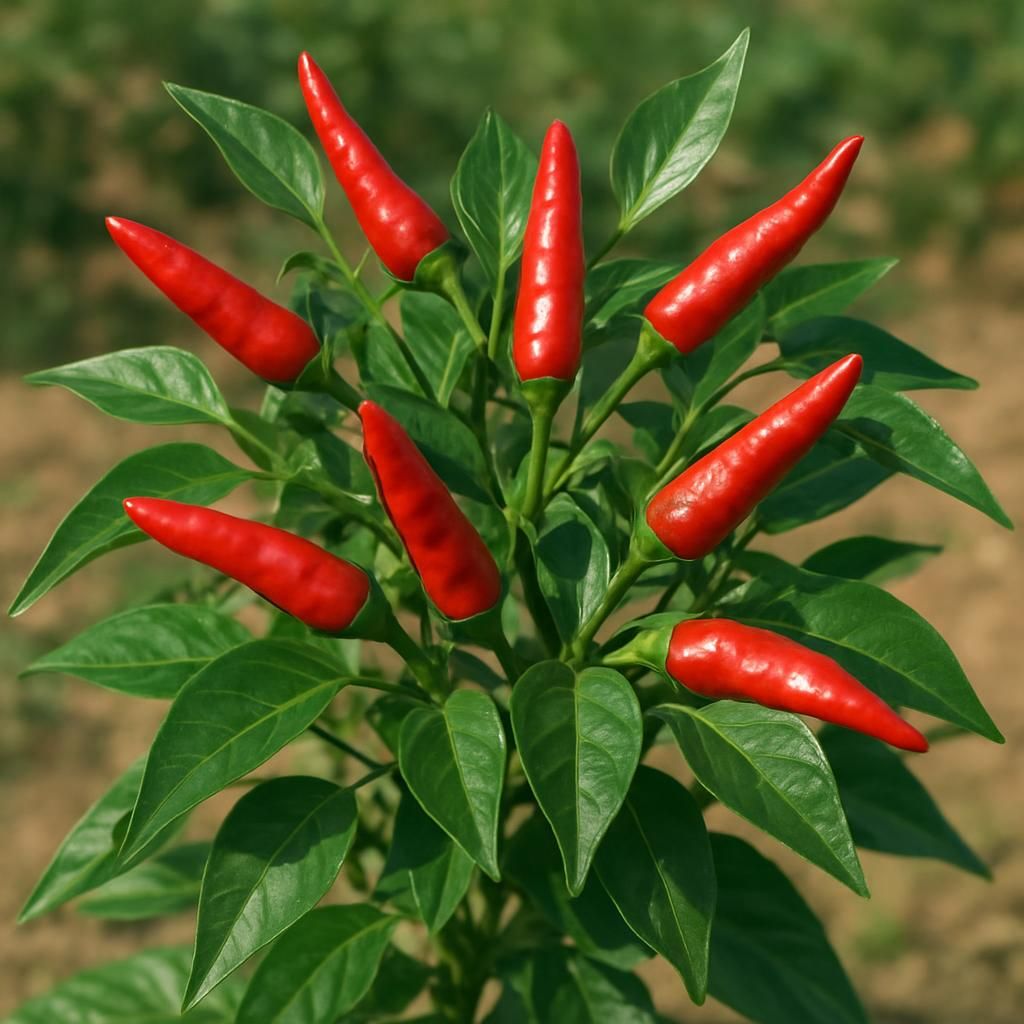
Introduction to Siling Labuyo
Siling Labuyo (Capsicum frutescens) is a compact, highly pungent chili pepper native to the Philippines and widely cultivated across Southeast Asia. Known for its small, upright fruits that mature from green to vibrant red, it delivers exceptional heat levels often exceeding 80,000 Scoville Heat Units. Farmers value its resilience, prolific fruiting, and ability to thrive with minimal inputs in tropical conditions.
Beyond its culinary importance as a staple spice in Filipino dishes, Siling Labuyo serves medicinal and ornamental purposes. Its high capsaicin content supports traditional remedies for pain relief and digestion. Commercial growers appreciate its year-round production potential when managed properly in well-drained soils.
Botanical Profile of Siling Labuyo
Siling Labuyo belongs to the Solanaceae family and grows as a woody perennial shrub reaching 0.6–1.2 meters in height. Its leaves are ovate to lanceolate, dark green, and arranged alternately along slender stems. Small white flowers with greenish-yellow anthers appear continuously, leading to clusters of erect, conical fruits measuring 2–4 cm long.
The plant develops a fibrous root system that supports rapid nutrient uptake in fertile soils. Fruits transition from glossy green to bright red at maturity, with thin walls and high seed count. Continuous flowering allows multiple harvests over 8–12 months under optimal management.
Soil, pH, and Climate Requirements for Siling Labuyo
Siling Labuyo performs best in warm, humid tropical and subtropical climates with temperatures between 20–32°C. It tolerates brief dry spells but requires consistent moisture during flowering and fruit set. Full sun exposure of at least 6–8 hours daily promotes vigorous growth and maximum capsaicin development.
The crop demands well-drained sandy loam or loam soils rich in organic matter. Waterlogging quickly leads to root rot, while heavy clay soils should be amended with compost and raised beds. Ideal soil pH ranges from 5.8–6.8 for optimal nutrient availability.
| Parameter | Ideal Range | Notes |
|---|---|---|
| Soil Type | Sandy loam to loam | Well-drained; avoid heavy clays |
| Soil pH | 5.8 – 6.8 | Slightly acidic to neutral |
| Temperature | 20 – 32°C day / 15 – 20°C night | Avoid prolonged exposure below 15°C |
| Rainfall | 1000 – 2000 mm annually | Even distribution preferred |
| Sunlight | Full sun (6–8+ hours) | Essential for fruit quality |
| Altitude | 0 – 1500 m | Performs well across lowland to mid-elevation |
Step-by-Step Planting & Propagation
Propagation is achieved primarily through seeds, though stem cuttings can be used for selected high-performing plants. Begin by soaking seeds in warm water for 12–24 hours to improve germination rates. Sow seeds in sterile seed trays or nursery beds 4–6 weeks before the intended transplant date.
Maintain nursery temperatures of 25–30°C and keep media consistently moist but not saturated. Seedlings typically emerge within 7–14 days. Transplant hardened seedlings when they reach 10–15 cm tall with 4–6 true leaves, spacing plants 45–60 cm apart in rows 75–90 cm wide.
Care & Maintenance regimes for Siling Labuyo
Consistent irrigation, balanced nutrition, and timely pruning ensure sustained productivity. Mulching with organic materials conserves moisture, suppresses weeds, and moderates soil temperature. Regular monitoring prevents nutrient deficiencies that reduce fruit quality.
| Task | Frequency | Details |
|---|---|---|
| Watering | 2–3 times per week (or as needed) | Maintain even moisture; increase during flowering/fruiting |
| Fertilizer (NPK) | Every 3–4 weeks | Apply 14-14-14 or balanced organic blend; side-dress with compost tea |
| Pruning | Monthly after establishment | Remove lower leaves, suckers, and damaged branches to improve airflow |
| Mulching | At planting and replenish quarterly | 5–8 cm layer of rice straw or dried leaves |
| Weeding | Weekly during early growth | Hand-weed or shallow cultivate to avoid root damage |
Pests, Diseases & Organic Management
Common pests include Aphids, Thrips, and Spider Mites, which can be controlled with neem oil sprays and reflective mulches. Whiteflies and fruit flies may also attack developing pods.
Major diseases include Anthracnose, Bacterial spot, and Phytophthora root rot. Practice crop rotation, remove infected plant debris, and apply copper-based organic fungicides when necessary. Companion planting with Marigold and Thai Basil helps repel pests naturally.
Harvesting, Curing & Optimal Storage
Harvest begins 60–75 days after transplanting when fruits reach full red color. Pick every 3–5 days to encourage continuous production. Use clean shears to avoid damaging branches.
For drying, spread fruits in single layers under shade or use solar dryers at 35–40°C until moisture content drops below 10%. Store dried chilies in airtight containers away from light and humidity. Fresh pods keep 1–2 weeks refrigerated or can be processed into sauces and pastes.
Companion Planting for Siling Labuyo
Siling Labuyo benefits from strategic companions that improve soil health, deter pests, and maximize space. Plant Tomato and Eggplant nearby as they share similar growing requirements and benefit from shared pest management.
Incorporate Coriander and Rosemary to repel aphids and whiteflies. Legumes such as Peas and Chickpeas fix nitrogen and improve soil fertility. Avoid planting near Fennel which can inhibit growth.
Strategic intercropping with Okra or Cucumber provides additional income while maintaining biodiversity and reducing disease pressure.