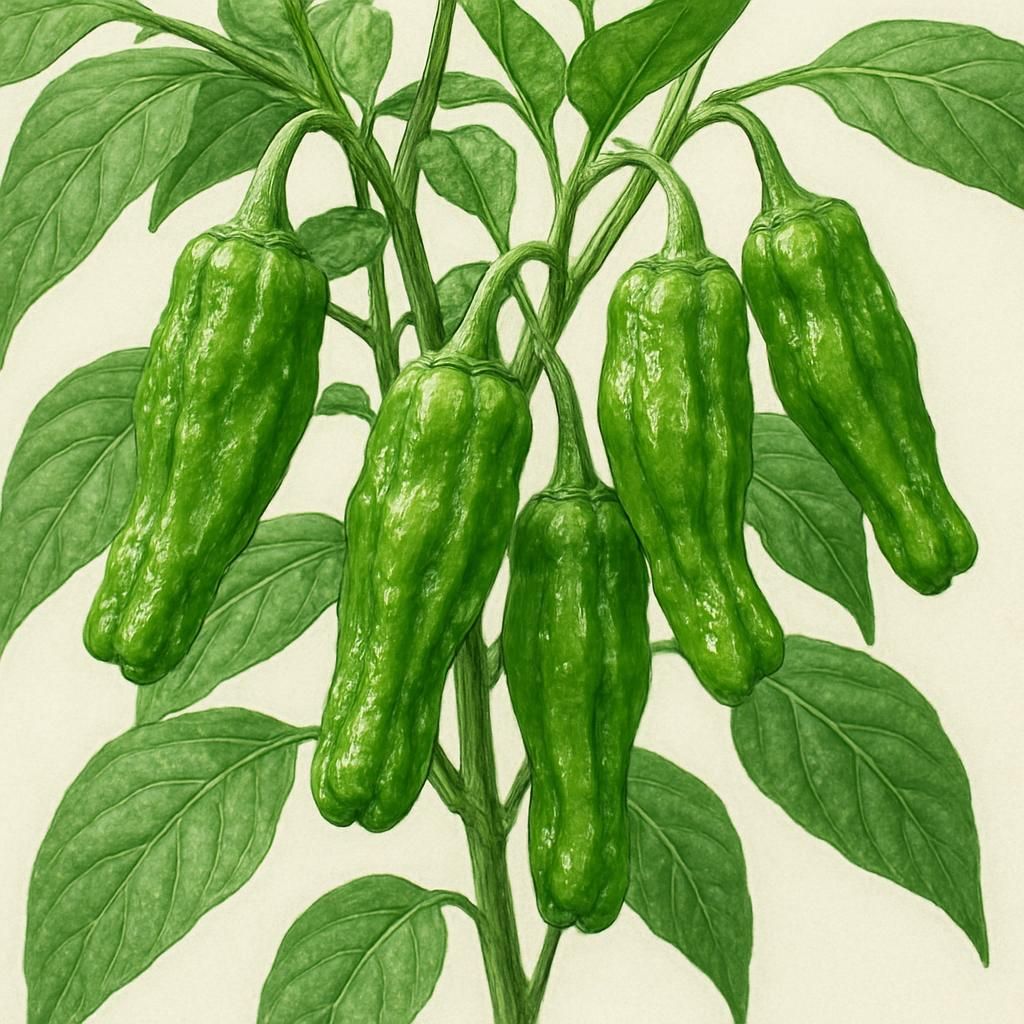
Introduction to Shishito (Lion Head)
Shishito (Lion Head) peppers have become a staple in high-end kitchens and home gardens alike due to their mild heat (typically 50–200 Scoville units) and thin, wrinkly skin that chars and blisters in minutes. Originally developed in Japan, the variety is harvested young at 3–4 inches long, delivering a sweet, grassy flavor with occasional spicy surprises in roughly one out of ten fruits. Commercial growers value its compact plant habit, high fruit set, and ability to produce continuously from early summer through frost.
Because the peppers are picked immature, the crop cycle is relatively short (55–65 days to first harvest), allowing multiple successions in a single season. Market prices remain strong year-round, particularly when sold as “blistered shishito” bunches at farmers’ markets or supplied to restaurants seeking locally grown Asian produce. The variety also stores and ships well compared with more delicate thin-walled peppers.
Botanical Profile of Shishito (Lion Head)
Shishito belongs to the species Capsicum annuum and is classified as a thin-walled, mildly pungent pepper. Plants reach 18–24 inches in height with a bushy, semi-determinate growth habit and medium-green, slightly wrinkled leaves. Flowers are small, white, and self-pollinating, although insect activity improves fruit set. Fruits are slender, slightly curved, and display a distinctive “lion’s mane” shoulder near the calyx—hence the marketing name Lion Head. The thin pericarp (1–2 mm) and high surface-to-volume ratio make the peppers ideal for quick blistering, while the mild capsaicin concentration remains low until fruits begin to ripen toward red.
Soil, pH, and Climate Requirements for Shishito (Lion Head)
Shishito thrives in well-drained sandy loam or loam soils rich in organic matter. The crop demands consistent warmth and performs poorly below 55 °F (13 °C). Avoid heavy clay soils that retain excess moisture and promote root rot.
| Parameter | Ideal Range | Notes |
|---|---|---|
| Soil Type | Sandy loam to loam | High organic matter improves drainage |
| Soil pH | 6.2–7.0 | Slightly acidic to neutral |
| Soil Temperature | 70–85 °F (21–29 °C) | Minimum 60 °F for transplanting |
| Air Temperature (Day) | 75–90 °F (24–32 °C) | Optimal fruit set 70–85 °F night |
| Air Temperature (Night) | 60–70 °F (15–21 °C) | Below 55 °F slows growth |
| Frost Tolerance | None | Protect or transplant after last frost |
| Sunlight | Full sun, 8+ hours | 30–40 % shade cloth in extreme heat (>95 °F) |
Step-by-Step Planting & Propagation
- Start seeds indoors 6–8 weeks before the last frost date. Use 72-cell trays with sterile seed-starting mix; maintain 80–85 °F soil temperature for 7–10 day germination.
- Harden off seedlings for 7–10 days once they reach 4–6 inches and have 4–6 true leaves.
- Transplant outdoors when soil temperature at 4-inch depth reaches 70 °F and nighttime air temperatures remain above 55 °F. Space plants 18 inches apart in rows 30–36 inches wide.
- Install drip irrigation and 2–3 inches of organic mulch immediately after transplanting to stabilize soil moisture and suppress weeds.
- For protected cultivation, transplant into high tunnels or low tunnels 2–3 weeks earlier; use black plastic mulch to raise soil temperature.
Care & Maintenance regimes for Shishito (Lion Head)
Consistent moisture and balanced fertility are essential for continuous fruit set. Over-fertilization with nitrogen produces excessive foliage at the expense of fruit. Prune lower leaves and suckers up to the first fork to improve airflow and reduce disease pressure.
| Task | Frequency | Details |
|---|---|---|
| Water | 1–1.5 inches/week | Drip irrigation preferred; maintain even moisture, avoid waterlogging |
| Fertilizer | Pre-plant + 3 side-dresses | 10-10-10 NPK at 300 lb/acre pre-plant; calcium nitrate at first flower and every 3 weeks thereafter |
| Pruning | Weekly starting week 4 | Remove lower leaves below first fork; pinch first flower to encourage branching |
| Mulch | At transplant + top-up | 2–3 inches straw or wood chips; replenish mid-season |
| Trellising | Optional but recommended | Single-string or Florida weave keeps fruit clean and improves harvest speed |
Pests, Diseases & Organic Management
Common insect pests include aphids, thrips, and spider mites. Monitor with yellow sticky cards and release beneficial insects such as lady beetles and predatory mites when thresholds are reached. Flea beetles can scar young leaves; floating row covers provide effective exclusion during the first four weeks after transplant.
Diseases of concern are bacterial spot, phytophthora blight, and powdery mildew. Practice strict crop rotation (minimum 3 years), use disease-free seed, and maintain wide plant spacing for airflow. Copper-based sprays and Bacillus subtilis products offer organic control when applied preventively. Drip irrigation rather than overhead watering reduces foliar disease incidence.
Harvesting, Curing & Optimal Storage
Harvest Shishito peppers when fruits reach 3–4 inches, are still bright green, and have a glossy sheen. Pick every 2–3 days to maintain production. Use scissors or pruners to avoid stem tearing. Immediately cool harvested peppers to 45–50 °F (7–10 °C) at 90–95 % relative humidity; they store 10–14 days under these conditions. For blistering markets, sort for uniform size and minimal blemishes. Excess fruit can be lightly roasted and frozen or dehydrated into mild pepper flakes.
Companion Planting for Shishito (Lion Head)
Pair Shishito with basil and marigold to repel aphids and nematodes. Tomato and eggplant share similar nutrient and water needs but require wider spacing to avoid shading. Avoid planting near fennel or members of the Brassica family, which can stunt pepper growth through allelopathy or shared pest pressure. Cucumber and squash provide living mulch that conserves moisture but should be trained away from pepper stems to prevent disease spread.