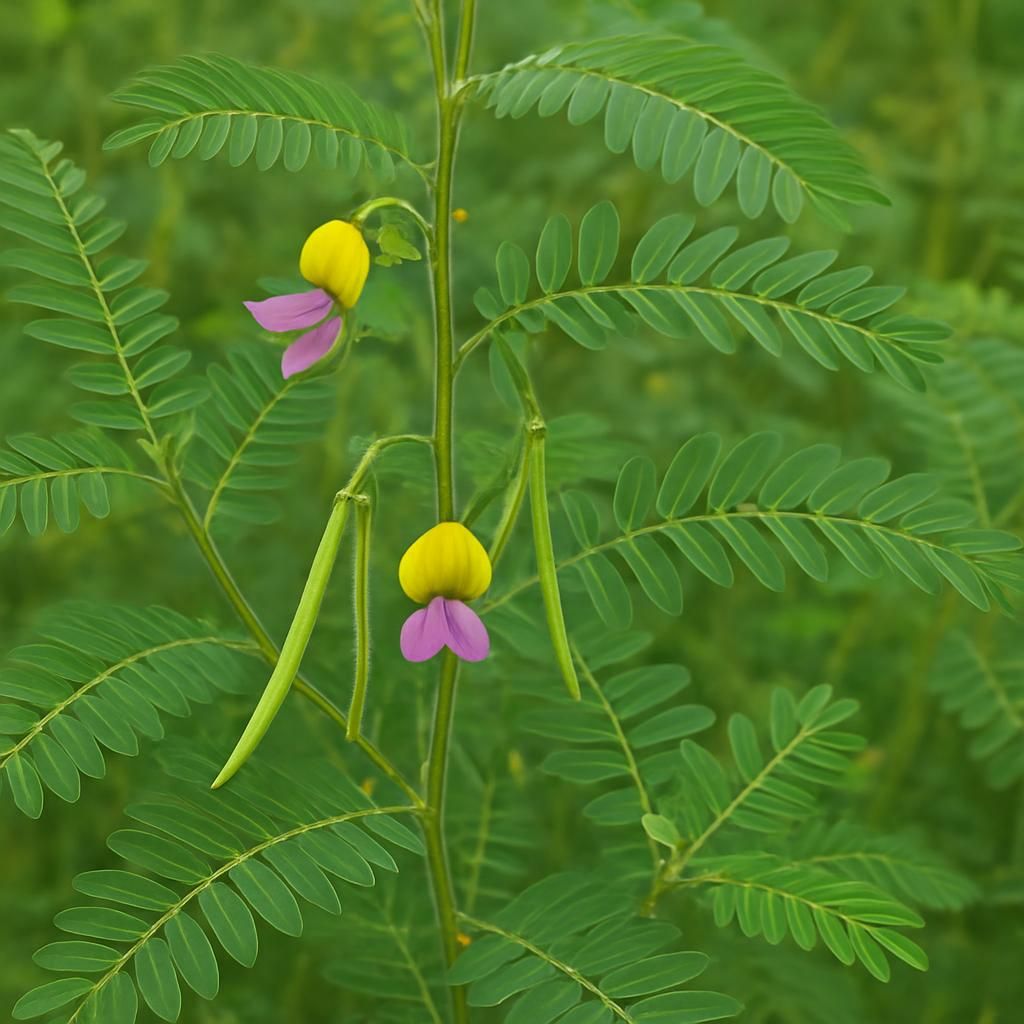
Introduction to Sesbania (cowpea)
Sesbania (cowpea), scientifically known as Sesbania bispinosa, is a multipurpose tropical legume prized by farmers for its rapid growth, nitrogen fixation, and utility as both green manure and livestock fodder. In regions where soil fertility is declining, this crop offers a practical, low-input solution that improves structure, suppresses weeds, and supports sustainable rotations. Its tolerance to waterlogging and saline conditions makes it especially valuable for marginal lands where other legumes struggle.
Botanical Profile of Sesbania (cowpea)
Sesbania bispinosa belongs to the Fabaceae family and grows as an erect, branched annual or short-lived perennial reaching 2–4 meters in height. It produces pinnate leaves with 20–40 pairs of linear leaflets and distinctive yellow flowers with purple spots that attract pollinators. The plant develops long, slender pods containing numerous small seeds and forms a deep taproot system that improves soil aeration and water infiltration. Its ability to nodulate effectively with native rhizobia contributes to substantial atmospheric nitrogen fixation, often exceeding 100 kg N/ha per season.
Soil, pH, and Climate Requirements for Sesbania (cowpea) (MUST INCLUDE A MARKDOWN TABLE OF IDEAL CONDITIONS)
Sesbania performs best on well-drained loamy to clay-loam soils but tolerates heavy clays and periodic flooding. It prefers a slightly acidic to neutral pH range and adapts to a wide temperature spectrum typical of tropical lowlands.
| Parameter | Ideal Range | Notes |
|---|---|---|
| Soil Type | Loam to clay-loam | Tolerates heavy clays and sandy soils |
| Soil pH | 5.5 – 7.5 | Optimum nodulation occurs near 6.0–7.0 |
| Temperature | 20–35 °C | Growth slows below 15 °C |
| Annual Rainfall | 600–2000 mm | Requires good drainage during heavy rains |
| Altitude | 0–1500 m | Best performance below 1000 m |
Step-by-Step Planting & Propagation
- Select certified seed free from bruchid damage and treat with the appropriate Sesbania rhizobial inoculant 30 minutes before sowing.
- Prepare a fine seedbed by incorporating well-decomposed compost or aged manure at 5–8 t/ha to support early root development.
- Sow seeds at 3–4 cm depth in rows spaced 45–60 cm apart with intra-row spacing of 15–20 cm, aiming for 25–30 kg seed per hectare.
- Plant at the onset of the rainy season or when soil moisture reaches field capacity; in irrigated systems, maintain consistent moisture for the first 10–14 days.
- For relay or intercropping systems, drill seed into standing Rice or Corn stubble immediately after harvest to capture residual moisture.
Care & Maintenance regimes for Sesbania (cowpea) (MUST INCLUDE A MARKDOWN TABLE OF WATER, FERTILIZER, AND PRUNING SCHEDULES)
Once established, Sesbania requires minimal intervention beyond moisture management and occasional weeding during the first 30 days. Its rapid canopy closure naturally suppresses weeds. Apply phosphorus at planting if soil tests indicate deficiency, and avoid excess nitrogen that can inhibit nodulation.
| Growth Stage | Water Schedule | Fertilizer Application | Pruning / Management |
|---|---|---|---|
| Establishment (0–30 days) | Light irrigation every 4–5 days if rain absent | 20 kg P₂O₅/ha banded at planting | None; focus on weed control |
| Vegetative (30–60 days) | 25–30 mm/week; reduce if rainfall adequate | None unless deficiency symptoms appear | Cut back 50% at 45 days for fodder |
| Flowering/Pod (60–90 days) | Maintain field capacity; avoid waterlogging | Optional 10 kg K₂O/ha on sandy soils | Harvest foliage for green manure |
| Post-harvest | Cease irrigation; allow natural drying | Incorporate residues 15–20 cm deep | Chop stems at base for soil amendment |
Pests, Diseases & Organic Management
Sesbania is relatively resistant to major pests, but Aphids and Pod borers may appear during dry spells. Monitor for Root-knot nematodes in sandy soils and rotate with non-host crops every two seasons. Fungal issues such as Cercospora leaf spot and Fusarium wilt are rare but can be managed with resistant varieties and improved drainage. Encourage natural enemies by planting Marigold borders and avoid broad-spectrum insecticides that harm beneficial insects.
Harvesting, Curing & Optimal Storage
Harvest foliage for fodder or green manure at 50–60 days when plants reach peak biomass but before heavy flowering. Cut stems 20–30 cm above ground to allow regrowth for a second cut in favorable conditions. For seed production, allow pods to mature and turn brown, then harvest and sun-dry to 10–12% moisture. Store clean seed in airtight containers with 1% diatomaceous earth to prevent Bruchids and maintain viability for up to two years.
Companion Planting for Sesbania (cowpea)
Sesbania pairs well with Corn and Sorghum in alley-cropping systems, providing nitrogen and wind protection while the cereals offer structural support. Interplant with Cowpea or Mung Bean to diversify canopy layers and reduce pest pressure. Border rows of Sesame or Sunflower attract pollinators and beneficial insects. Avoid planting near Onion or Garlic beds, as alliums can inhibit rhizobial activity. For additional soil health insights, review practical strategies outlined in The Hidden Power of Mulching: 8 Organic Strategies to Transform Small Farm Soil.