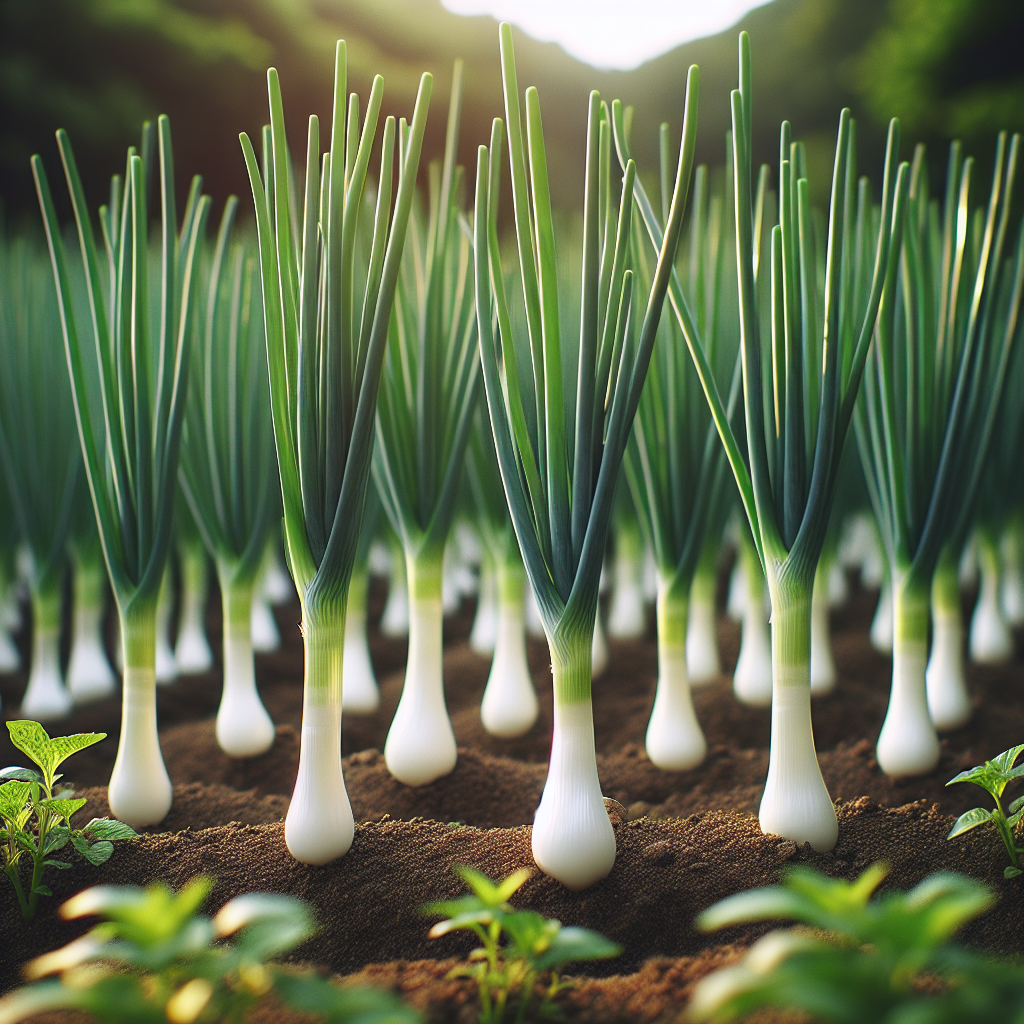
Introduction to Scallions (Tokyo Long White)
A dependable bunching onion with East Asian culinary roots, this cultivar is grown primarily for its elegant contrast between a blanched white stem and tender green tops. Unlike bulb onions, it is selected to remain slender and elongated rather than swelling into a large storage bulb, making it ideal for repeated sowings and quick turnover beds. Tokyo Long White is especially appreciated by growers because it combines uniformity, good stand establishment, and broad adaptability across cool and mild growing seasons.
In botanical and market terms, it is usually treated as a bunching onion rather than a true bulbing onion. Its flavor is milder and sweeter than many dry onions, with less sulfurous bite and more versatility for raw use. Professional growers often choose it for bunch sales, trim-packed retail, and cut-and-come-again green onion harvest because the stems are long, straight, and visually attractive.
Historically, long white bunching onions became important in Japanese and broader Asian food systems where fresh alliums are used daily in soups, grilled dishes, stir-fries, and garnishes. Tokyo Long White reflects breeding emphasis on stem length, leaf quality, and field performance rather than storage bulb formation. For growers wanting a productive, forgiving allium that can be direct-seeded densely and harvested young, it is one of the most efficient crops in the garden. For related allium culture, see our Onion guide.
Botanical Profile of Scallions (Tokyo Long White)
This crop belongs to the Amaryllidaceae family and is generally classified as Allium fistulosum, the Welsh onion or bunching onion. In practice, Tokyo Long White behaves as a non-bulbing or only slightly swelling onion, producing cylindrical hollow leaves and a pseudostem formed by overlapping leaf sheaths. That white lower portion is not a true stem in the woody sense; it is the blanched, elongated base of the leaf structure.
Plants grow in upright clumps with narrow, tubular leaves that are more delicate than leek foliage but more persistent than some common green onions derived from bulbing onion types. Mature harvest stage is often 12-18 inches tall, though longer growth is possible under fertile, cool conditions. The desired market trait is a long, smooth, white shaft, typically 4-8 inches depending on spacing, hilling, and light exclusion near the base.
Tokyo Long White is usually cultivated as an annual vegetable, but biologically it is a short-lived perennial bunching onion. If left in the ground, plants can divide, persist, and eventually send up flower stalks. Once reproductive growth begins, leaf texture becomes coarser and market quality declines. Bolting risk rises with prolonged cold exposure in young plants followed by warming conditions, though this cultivar is generally more reliable for scallion production than many common onion seedlings.
Rooting is shallow and fibrous. Most active roots occupy the upper 6-8 inches of soil, which is why steady moisture and surface fertility are so important. Because the crop lacks deep drought-foraging roots, growth checks from dry soil are common and directly reduce stem diameter, tenderness, and uniformity.
Soil, pH, and Climate Requirements for Scallions (Tokyo Long White)
This crop performs best in loose, stone-free, well-drained loam or sandy loam with high organic matter and good moisture retention. The ideal soil structure is friable enough for rapid root penetration yet stable enough to hold consistent moisture. Heavy clay can work if deeply amended and never waterlogged, but compacted soils often cause short, thick, poorly blanched stems and slow regrowth after stress.
The target soil pH is 6.2-6.8, though acceptable performance usually occurs from about 6.0-7.0. Below pH 5.8, nutrient uptake becomes less efficient, root vigor drops, and plants may show pale growth even when fertilizer is present. In alkaline soils above 7.2, iron and manganese availability may decline, leading to chlorosis in young leaves. If soil is acidic, apply finely ground agricultural lime several weeks to months before planting based on a soil test. Avoid guesswork with wood ash or excessive liming, as overly alkaline conditions can create their own deficiencies.
Tokyo Long White prefers cool to mild conditions and is especially productive at 55-75°F (13-24°C). Germination is strongest around 60-75°F (16-24°C), though seed can sprout more slowly at lower temperatures. Established plants tolerate light frosts and cool spring weather well. In hot weather above 85°F (29°C), growth often becomes tougher, leaf tips may brown faster, and moisture stress can trigger stringy texture. In warm regions, prioritize autumn through spring production; in temperate climates, use spring and late summer sowings.
Full sun is ideal for highest sugar accumulation, thicker shafts, and upright growth. A minimum of 6 hours of direct light is workable, but 8 or more is better. In very hot climates, light afternoon shade can reduce stress and preserve tenderness. Strong wind exposure can shred leaf tips and increase evaporative demand, so a sheltered site improves cosmetic quality.
Soil moisture should remain consistently in the range of evenly damp but never saturated. As a practical field benchmark, the top 1-2 inches should not be allowed to become powder dry for more than a brief period. At root depth, soil should feel cool and lightly moist when squeezed, forming a weak ball that crumbles easily rather than dripping or turning slick. Prolonged saturation is dangerous because shallow onion roots need oxygen; overwatered beds lead to yellowing, stalled growth, soft bases, and increased risk of Damping-off or basal rot.
Before planting, incorporate 1-2 inches of well-finished compost into the top 6-8 inches. Excessively raw manure is a poor choice because it can promote lush, weak growth and raise disease pressure. If fertility is low, a balanced pre-plant organic amendment with moderate nitrogen is appropriate. Scallions are relatively hungry for nitrogen compared with root crops, but too much at once can produce floppy tops and soft tissue susceptible to thrips and foliar disease. For broader bed preparation strategies, see soil health tips.
Step-by-Step Planting & Propagation
This cultivar is most efficiently grown from seed. Direct sowing is preferred for straight stems and uninterrupted growth, though transplanting is useful for very early production or where weed pressure is severe.
Prepare a fine seedbed. Break clods thoroughly, rake level, and remove stones or debris. Onion-family seeds are small and emerge weakly through crusted soil, so surface tilth matters more than many growers realize.
Time sowing to match cool growing conditions. In temperate climates, sow 2-4 weeks before the last frost for spring harvest and again in late summer for fall harvest. In mild winter areas, sow from autumn through late winter. Sequential sowings every 2-3 weeks create a continuous supply.
Sow shallowly. Place seed about 1/4-1/2 inch deep. Deeper sowing delays and reduces emergence, especially in heavier soils. If conditions are dry at the surface, irrigate before sowing so you do not need a heavy watering that compacts soil afterward.
Manage spacing according to harvest goal. For pencil-thin scallions, sow thickly in bands 2-4 inches wide or rows 4-6 inches apart. For premium bunching size with longer white shafts, use rows 8-12 inches apart and thin plants to 1-2 inches apart within the row. High density produces slender stems; lower density increases girth and ease of cleaning.
Keep the seed zone uniformly moist until emergence. Germination typically takes 7-14 days, longer in cool soil. The surface must never fully dry during this phase. Light, frequent irrigation is better than deep soaking until seedlings are established.
Thin early. When plants reach 3-4 inches tall, remove crowded seedlings to target spacing. Delayed thinning causes competition that permanently reduces stem uniformity. Thinnings can be used as micro-scallions.
Hill or trench for longer white stems. If maximizing blanching, either sow in a shallow trench 1-2 inches deep and gradually fill it as plants grow, or hill loose soil around the bases in stages. Do not bury the leaves deeply all at once, as trapped moisture can encourage rot.
Transplant production begins by sowing seeds in modules or dense nursery flats 6-8 weeks before field setting. Transplants should be about pencil-lead thickness at planting time, not oversized. Trim tops lightly if needed to reduce transplant shock, and set them 1-2 inches deep with roots spread downward. Water in immediately.
Propagation by division is possible if overwintered clumps are lifted and separated, but this is less common for uniform market production. Seed remains the standard for maintaining straight, clean, disease-conscious plantings.
Care & Maintenance regimes for Scallions (Tokyo Long White)
Once established, the crop responds best to steady, moderate growth without interruption. The core management principles are consistent moisture, shallow weed control, staged nitrogen feeding, and careful blanching.
Irrigate to keep the root zone moist to a depth of roughly 4-6 inches. In cool spring weather, this may mean one deep watering every 5-7 days in loamy soil; in sandy beds or summer conditions, watering may be needed every 2-3 days. Aim for approximately 1 inch of water per week as a baseline, then adjust upward in heat and wind. The plants will tell you when moisture is inadequate: leaves lose their taut, upright look, tips silver or dry prematurely, and stem elongation slows. Chronic underwatering produces thin, pungent, fibrous scallions.
Signs of overwatering are distinct and should not be confused with nitrogen deficiency. Overwatered plants often become dull green to yellow, bases feel soft rather than crisp, and growth stalls despite wet soil. Algae, fungus gnats, or a sour smell in the bed indicate poor aeration. If this occurs, reduce irrigation frequency immediately and improve drainage or bed height.
Fertilization should emphasize small, timely applications rather than one heavy dose. If compost and pre-plant fertility were adequate, begin side-dressing when seedlings are 4-6 inches tall. Use a nitrogen-forward organic fertilizer such as blood meal, feather meal blend, or fish-based product at a modest rate, repeating every 2-3 weeks during active growth. A practical field target is to maintain steady leaf color without driving excessively lush tops. Pale green, slow-growing plants often need nitrogen; dark, floppy plants usually have too much.
Weeding must be gentle because roots are shallow and easily damaged. Flame weeding before emergence can be effective in direct-seeded beds. After emergence, use a wire weeder, stirrup hoe, or careful hand weeding no deeper than the top inch. Even short-term weed competition can cut yield sharply because scallions do not shade the ground quickly.
Mulching with a thin layer of clean straw or shredded leaves can conserve moisture and suppress weeds, but keep mulch slightly back from the stem bases in humid conditions. In intensive market gardens, landscape fabric with dense seed lines can work, though it is less convenient for trenching and hilling.
For container production, choose pots at least 8 inches deep with excellent drainage. Use a fertile, fine-textured potting mix and water more frequently than in-ground beds. Container scallions often need diluted liquid feeding every 10-14 days because nutrients leach quickly.
Bolting management is important for quality. Avoid stressing seedlings with prolonged cold when very young, followed by rapid warming. Do not let plants become overmature in the field if premium tenderness is the goal. If flower stalks appear, harvest immediately; bolting reduces sweetness and market appeal.
Pests, Diseases & Organic Management
Although relatively straightforward, this crop is not pest-free. The most common insect issue is thrips, especially in warm, dry weather. Feeding causes silvery streaking, stippling, and reduced vigor. Severe infestations distort leaves and diminish marketable appearance. Organic control begins with prevention: maintain even soil moisture, avoid excessive nitrogen flushes, encourage airflow, and remove plant debris. Reflective mulches can reduce thrips pressure in some systems. If needed, insecticidal soap or spinosad can help, but thorough coverage inside the leaf axils is essential.
Onion maggot can be a serious problem in regions where it is established. Adults lay eggs at the soil line, and larvae tunnel into the base, causing wilting, yellowing, and easy pull-up from the soil. Prevention is more reliable than rescue. Use floating row cover immediately after sowing or transplanting, rotate away from alliums for at least 3 years, and never leave cull onions or decomposing allium waste in the bed.
Leaf miners may tunnel through foliage, creating winding translucent trails. Damage is often cosmetic but can lower bunch quality. Remove heavily affected leaves and use insect netting where pressure is chronic.
Damping-off affects seedlings in cold, wet, poorly ventilated conditions. Seedlings collapse at the soil line or fail to emerge evenly. Prevent it by sowing into clean, well-drained media, avoiding overwatering, and not burying seed too deeply.
Basal rots and other fungal or bacterial soft rots usually follow saturated soils, injury, or poor sanitation. Symptoms include yellowing, soft stem bases, foul odor, and root loss. There is no cure once advanced. Pull affected plants promptly, discard them away from the bed, and correct drainage issues.
Downy mildew and Purple blotch can develop in dense plantings under prolonged leaf wetness. Look for pale lesions, grayish mold under humid conditions, or purplish spotting. Space rows for airflow, water early in the day, and avoid overhead irrigation late in the evening. Copper-based organic fungicides may suppress spread when used preventively, but cultural control is the real foundation.
Rotation is critical. Do not follow scallions with Garlic, onions, leeks, or chives in the same soil if disease has been present. A 3-year break from alliums is ideal for reducing pathogen and Onion maggot carryover.
Harvesting, Curing & Optimal Storage
Harvest timing depends on the market standard you want. Baby scallions may be ready 45-55 days from sowing, while larger bunching stems often take 60-75 days. The best harvest stage is when stems are well elongated, leaves are fresh and green, and the base is still tender and non-fibrous. Waiting too long produces tougher texture and stronger flavor.
To harvest, loosen soil with a fork or harvest knife and pull plants gently to preserve the white shaft. Avoid yanking from dry, hard ground, which snaps roots and bruises the lower stem. Shake or rinse off soil, then trim roots close and remove any damaged outer leaves. For bunching, align stems by length and secure lightly so the bunch stays clean and ventilated.
Unlike dry bulb onions, scallions are not cured for long storage. They are a high-respiration fresh product and should be cooled quickly after harvest. Hydrocooling or washing in clean cold water is acceptable if followed by draining and rapid refrigeration. Field heat removal is especially important in warm weather because leaves lose turgor fast.
Ideal storage conditions are 32-36°F (0-2°C) with 95-100% relative humidity. Under these conditions, trimmed scallions may keep 1-3 weeks depending on harvest maturity and sanitation. At home refrigerator conditions, they usually hold quality for about 7-10 days. If stored too dry, leaves wilt and the white shaft becomes rubbery. If stored too wet without airflow, sliminess and bacterial breakdown develop.
Do not store near ethylene-producing fruits such as apples for extended periods, as yellowing may accelerate. For best flavor, market or use them promptly. Regrowth from leftover rooted bases in water is possible for kitchen novelty, but for real production quality, fresh sowings are superior.
Companion Planting for Scallions (Tokyo Long White)
This crop integrates well into mixed beds because it occupies little horizontal space, matures quickly, and emits sulfur compounds that can confuse or repel some pests. It is especially useful along bed edges or between slower-growing vegetables.
Carrot is one of the most practical companions. The scent of alliums can help interfere with carrot rust fly host-finding, while carrots occupy a different root architecture and make efficient use of shared bed space. Lettuce is another excellent partner because it matures quickly, shades the soil lightly, and benefits from the same even moisture levels required for tender scallions. Beet also pairs well in intensive plantings because its broader leaves eventually suppress weeds while scallions exploit the vertical niche.
Avoid pairing densely with legumes like peas or beans if the objective is maximum allium growth, as heavy shading and differing fertility priorities can complicate management. Also avoid repeated allium interplanting in the same bed year after year, since companion planting does not override the need for sound crop rotation.
In kitchen gardens, the best companion strategy is functional rather than mystical: combine scallions with crops that appreciate frequent irrigation, fine weed control, and quick harvest turnover. Used this way, Tokyo Long White becomes one of the most flexible support crops in an intensive vegetable system.