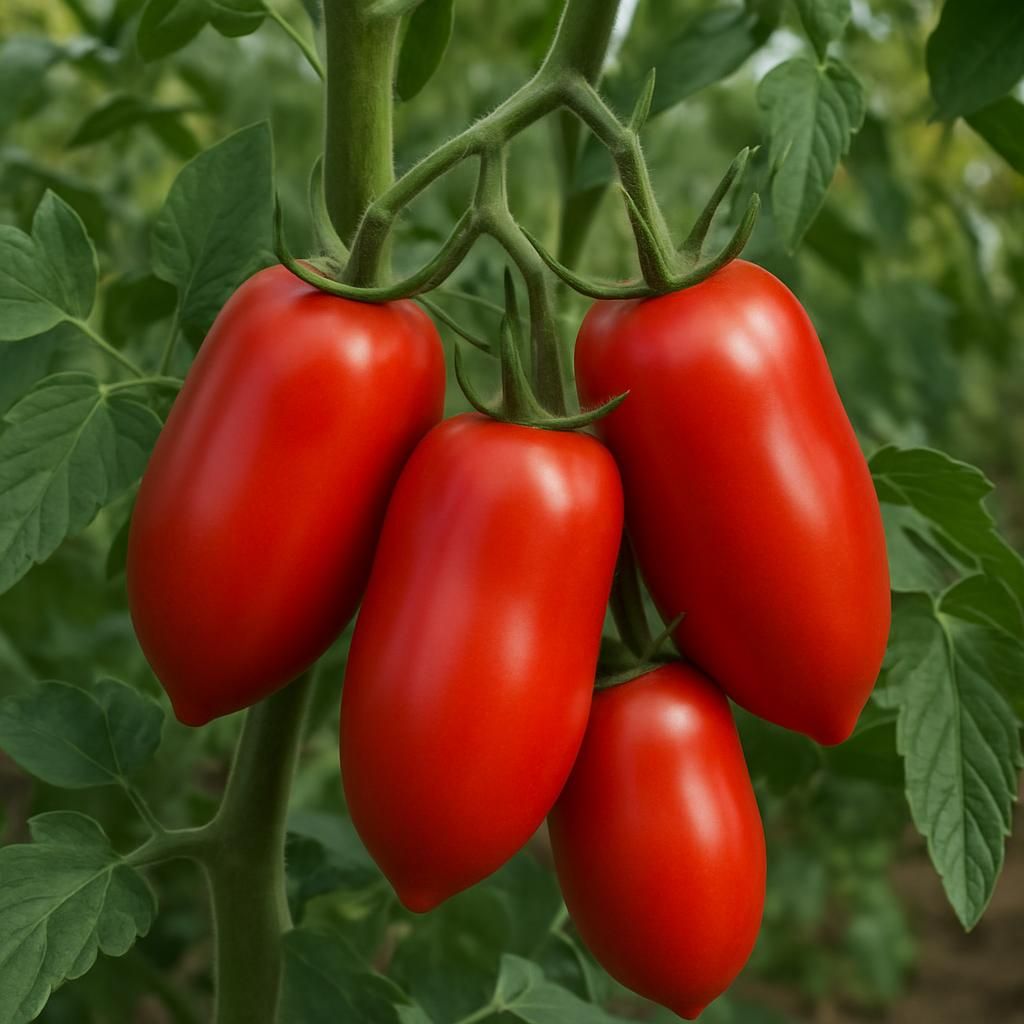
Introduction to San Marzano II Tomato
San Marzano II Tomato represents the refined evolution of the classic Italian plum tomato, delivering consistent elongated fruits with thick, meaty walls and minimal seeds. Developed for commercial processing and home canning, this indeterminate variety produces high-quality tomatoes ideal for sauces, pastes, and preserved products. Growers seeking reliable yields with improved disease tolerance choose San Marzano II for both open-field and greenhouse systems.
The variety maintains the traditional sweet-acidic balance that defines premium Italian tomatoes while offering stronger plant vigor and better fruit set under variable conditions. Its determinate-like fruiting habit within an indeterminate frame allows extended harvest windows without excessive vegetative growth. Commercial and small-farm producers value its uniform ripening and crack resistance.
Botanical Profile of San Marzano II Tomato
San Marzano II Tomato belongs to the Solanaceae family and exhibits classic indeterminate growth reaching 5–7 feet when properly supported. The plant produces compound leaves with serrated margins and clusters of 6–10 flowers that develop into cylindrical, slightly pointed fruits measuring 3–4 inches long. Fruits ripen from green to a deep red with minimal blossom-end scarring.
The variety features thick pericarp walls and a small locular cavity, resulting in high dry-matter content essential for concentrated sauces. Compared to Roma Tomato, San Marzano II produces longer, narrower fruits with fewer seeds. It also offers improved resistance to cracking relative to older San Marzano strains while maintaining the traditional flavor profile valued in Mediterranean cuisine.
Soil, pH, and Climate Requirements for San Marzano II Tomato (MUST INCLUDE A MARKDOWN TABLE OF IDEAL CONDITIONS)
Successful cultivation of San Marzano II Tomato begins with well-drained, fertile loam enriched with organic matter. The crop performs best in soils with consistent moisture retention yet excellent drainage to prevent root diseases. Raised beds or well-prepared in-ground rows help maintain optimal root zone conditions.
| Parameter | Ideal Range | Notes |
|---|---|---|
| Soil Type | Sandy loam to loam | High organic matter improves structure |
| Soil pH | 6.2–6.8 | Avoid below 6.0 to prevent nutrient lockup |
| Temperature (Day) | 70–85°F (21–29°C) | Optimal fruit set occurs in this range |
| Temperature (Night) | 60–70°F (15–21°C) | Cooler nights enhance flavor development |
| Spacing | 18–24 inches in-row | Rows 4–5 feet apart with trellis support |
| Sunlight | Full sun (8+ hours) | Essential for high brix and yield |
| Soil Temperature | 60°F+ (15.5°C+) at planting | Use black plastic mulch for early warming |
Step-by-Step Planting & Propagation
Start seeds indoors 6–8 weeks before the last expected frost. Sow seeds ¼ inch deep in sterile seed-starting mix at 75–80°F. Provide 14–16 hours of supplemental light daily to produce compact, sturdy transplants. Harden off seedlings for 7–10 days before transplanting.
Transplant outdoors once soil temperatures reach 60°F and all frost risk has passed. Space plants 18–24 inches apart in rows 4–5 feet wide. Install sturdy trellising systems such as the Florida weave or single-string method immediately after planting. Water transplants thoroughly and apply a balanced starter fertilizer high in phosphorus to encourage root establishment.
Care & Maintenance regimes for San Marzano II Tomato (MUST INCLUDE A MARKDOWN TABLE OF WATER, FERTILIZER, AND PRUNING SCHEDULES)
Consistent irrigation and balanced nutrition are critical for maximizing yield and fruit quality in San Marzano II Tomato. Drip irrigation combined with organic mulch maintains even soil moisture and suppresses weeds. Regular pruning to two main stems improves airflow and reduces disease pressure.
| Growth Stage | Water Schedule | Fertilizer Application | Pruning Schedule |
|---|---|---|---|
| Transplant to 1st flower | 1–1.5 inches/week; keep soil moist but not saturated | Side-dress with ½ cup balanced organic fertilizer (5-5-5) per plant | Remove suckers below first flower cluster |
| Flowering to fruit set | Increase to 1.5–2 inches/week; avoid overhead watering | Apply calcium-rich foliar spray weekly; side-dress with ½ cup high-potassium fertilizer | Continue removing suckers; tie main stems |
| Fruit ripening | Maintain 1.5 inches/week; reduce slightly near harvest | Apply seaweed or fish emulsion every 2 weeks | Final sucker removal; remove lower leaves |
| Post-harvest | Reduce watering as plants decline | Optional light compost tea application | Cut back to 2–3 feet to encourage regrowth |
Pests, Diseases & Organic Management
San Marzano II Tomato is susceptible to common tomato pests including aphids, hornworms, and flea beetles. Regular scouting and introduction of beneficial insects such as lady beetles and lacewings provide effective biological control. Reflective mulch and row covers protect young plants from early-season infestations.
Diseases such as early blight, late blight, and bacterial spot can affect the crop under humid conditions. Implement a strict 3–4 year crop rotation and remove crop debris at season end. Copper-based fungicides and neem oil offer organic options when applied preventively. Ensure good airflow through proper spacing and pruning to reduce foliar disease incidence.
Harvesting, Curing & Optimal Storage
Harvest San Marzano II Tomato when fruits reach full red color with slight softening at the shoulders. For sauce production, allow fruits to ripen fully on the vine for maximum flavor and sugar content. Pick in the cool morning hours to preserve quality.
Sort harvested fruits and remove any with cracks or blemishes. Store at 55–60°F with 85–90% humidity for up to 7–10 days. For long-term preservation, process into sauce or paste immediately after harvest. Avoid refrigeration of fresh fruit as it diminishes flavor and texture.
Companion Planting for San Marzano II Tomato
Pair San Marzano II Tomato with aromatic herbs such as Thai Basil and rosemary to deter pests and improve flavor. Marigold and nasturtium planted nearby attract beneficial insects while repelling nematodes. Avoid planting near potato or fennel as they compete for nutrients or attract shared pests.
Tall companions like corn provide wind protection when arranged properly, while low-growing lettuce or spinach utilize space beneath the canopy. Rotate tomato plantings with legumes such as peas or beans in subsequent seasons to restore soil nitrogen naturally.