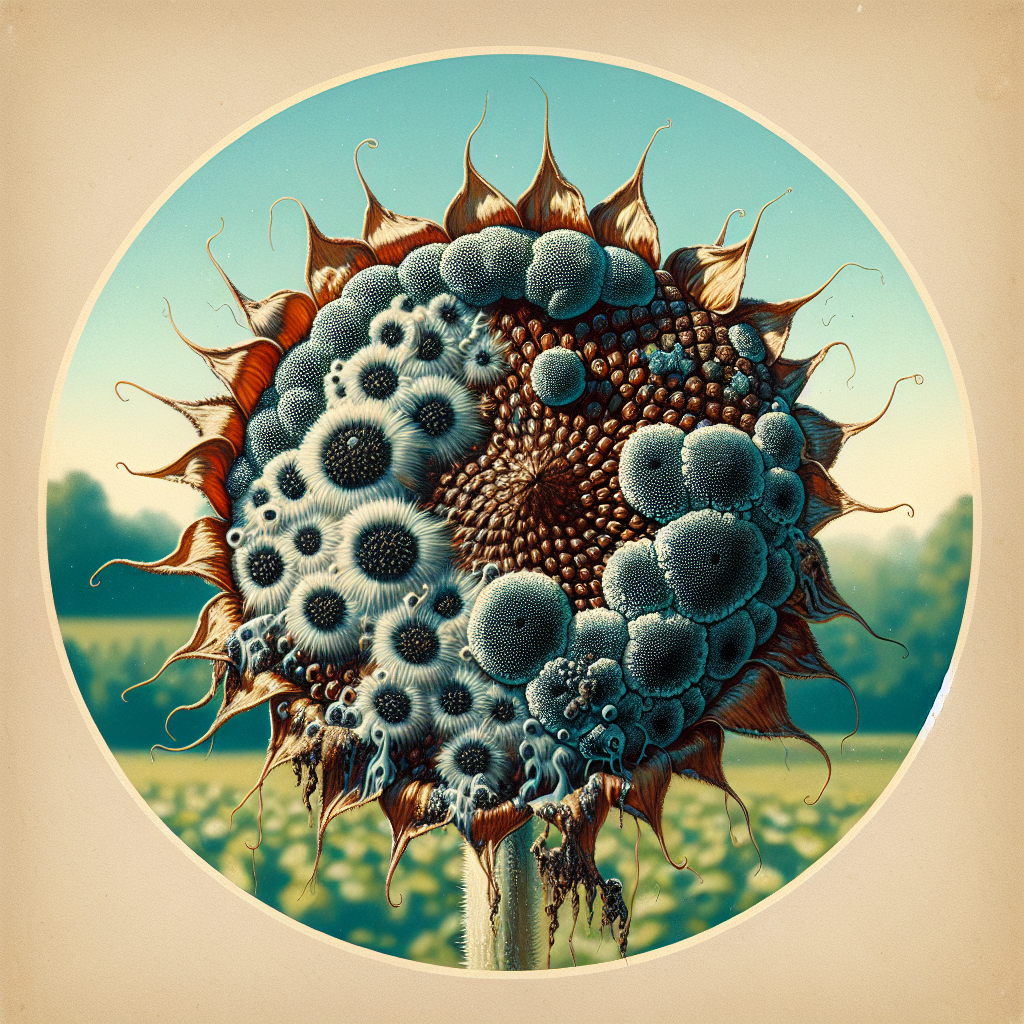
Introduction to Rhizopus head rot
Rhizopus head rot represents a significant threat to agricultural production, particularly in warm-season crops where high humidity and mechanical injury create ideal conditions for fungal invasion. Caused by species of the zygomycete fungus Rhizopus, most commonly R. stolonifer, this disease targets the reproductive structures of plants, leading to rapid rot and sporulation that renders heads unmarketable. Farmers worldwide, from small-scale operations to large commercial fields, face yield reductions of up to 50-100% in severe outbreaks, especially in sunflower and sorghum crops.
The pathogen's aggressive nature stems from its opportunistic lifestyle, exploiting wounds from insects, hail, or machinery. Unlike many foliar diseases, Rhizopus head rot progresses internally, producing sparse external symptoms until advanced stages when black, powdery sporangia erupt. Early detection is challenging, making prevention critical. This guide provides professional-grade diagnostic criteria, lifecycle insights, and organic management strategies tailored for sustainable farming. By understanding environmental triggers and implementing integrated practices, growers can safeguard harvests and minimize economic losses. Regular scouting during flowering and head development is essential, as post-infection control is limited.
Identifying Symptoms & Damage
Accurate diagnosis of Rhizopus head rot begins with recognizing its distinctive symptoms, which typically appear during late flowering or seed fill stages. Initial signs include water-soaked lesions on florets or bracts, often starting at injury sites. Affected tissues turn brown to black, emitting a foul, fermented odor due to mycelial growth and secondary bacterial invasion.
As the disease advances, heads develop a grayish-white mycelium that rapidly turns black with dense sporangia, resembling sooty mold but more powdery and fragile. In sunflower, the head may collapse inward, with seeds shriveling or mummifying. Damage extends to achenes, reducing seed quality, oil content, and germination viability. Yield losses correlate directly with infection incidence; even 10% affected heads can slash profitability.
Differentiate from similar diseases like Fusarium head blight (pinkish spores, mycotoxins) or head smut (galling). Rhizopus lacks mycotoxin production but spreads spores copiously, contaminating equipment and storage. Conduct field inspections during peak risk periods, using a hand lens to confirm sporangiophores. Laboratory confirmation via culturing on potato dextrose agar reveals characteristic columella and stolons. Economic damage includes not only yield loss but also downgraded seed lots unfit for oil extraction or planting.
Lifecycle and Progression of Rhizopus head rot
Rhizopus spp. are ubiquitous soil saprophytes with a rapid lifecycle adapted to warm, moist environments. The fungus persists as dormant sporangiospores in soil, crop debris, or on seeds, surviving harsh conditions for years. Infection initiates when airborne spores (up to 10^6 per gram of infected tissue) land on wounded heads, germinating in 4-6 hours at 25-35°C (77-95°F).
Mycelium colonizes vascular tissues, producing stolons that spread across the head surface. Within 48 hours, sporangia form, releasing trillions of spores via wind, rain splash, or insects. A single cycle completes in 3-5 days, enabling exponential spread in conducive weather. Progression from infection to sporulation takes 2-7 days, with peak severity during anthesis when nectar and pollen provide nutrients.
Unlike obligate parasites, Rhizopus is necrotrophic, killing host tissue quickly. Secondary cycles amplify damage, with spores infecting adjacent plants. Overwintering occurs in plant residues, emphasizing residue management. Understanding this polycyclic nature underscores the need for pre-flowering interventions, as curative measures post-symptom are ineffective.
Environmental Triggers & Risk Factors
Rhizopus head rot epidemics hinge on specific environmental cues: temperatures of 28-35°C (82-95°F), relative humidity >90%, and free moisture on heads for 6+ hours. Nighttime temps above 20°C (68°F) exacerbate infection by slowing tissue drying. Prolonged leaf wetness from dew, fog, or irrigation overlaps with flowering, amplifying risk.
Key agronomic factors include dense planting (>60,000 plants/ha), which traps humidity, and mechanical injury from hail, birds, or headworms. High nitrogen fertility promotes lush growth but delays maturity, extending susceptibility windows. Crop rotation gaps with non-hosts like grains reduce inoculum. Irrigation practices matter; overhead systems splash spores, while drip minimizes risk. Insect vectors like head-feeding insects create entry points. Soilborne spores splash up during rain, infecting low heads. Climate change may intensify outbreaks with warmer nights and erratic rains. Monitor forecasts and use disease models for precise risk assessment.
Organic Control & Treatment Plans
Organic management of Rhizopus head rot emphasizes prevention over cure, integrating cultural, biological, and approved botanical controls. Start with resistant hybrids where available, selecting varieties with tight heads and early maturity. For more on Why Companion Planting Feels Like Guesswork for Small Farms - And How AI Makes It Foolproof, which can reduce humidity by improving airflow.
Cultural Practices: Space plants for ventilation (aim for 20-30 cm between heads), prune lower leaves pre-flowering, and avoid overhead irrigation. Destroy infected heads promptly by burial or burning to curb spore dispersal. Rotate with corn or sorghum breaks exceeding 2 years. Tillage incorporates residues, exposing them to UV and antagonists.
Biological Controls: Apply Trichoderma viride or Bacillus subtilis (OMRI-listed) at 10^9 CFU/L, spraying at early bloom (2-3 applications, 7-10 day intervals). These mycoparasites colonize wounds, outcompeting Rhizopus. Enhance with compost teas rich in Pseudomonas fluorescens.
Botanicals & Biostimulants: Neem oil (1-2% EC) or garlic-chili extracts deter spore germination; apply preventively. Potassium phosphite boosts systemic resistance, applied as foliar at 2-3 L/ha. Baking soda (sodium bicarbonate, 0.5%) adjusts pH on heads, inhibiting growth.
Integrated Plan: Scout weekly from R5 stage; threshold 5% incidence triggers action. Combine with insect control for head bugs. Post-harvest, clean combines to prevent spread. Efficacy reaches 60-80% with timely execution; track via field maps.
Preventing Rhizopus head rot in the Future
Long-term prevention builds resilient systems minimizing inoculum and vulnerability. Select certified, fungicide-treated seed free of Rhizopus. Implement 3-year rotations excluding cucurbits or legumes, favoring wheat or barley. Maintain balanced fertility; excess N (>150 kg/ha) heightens risk—target 120 kg N/ha via soil tests.
Optimize planting: Sow early for head fill before peak humidity; use wider rows (75 cm). Promote biodiversity with border crops like marigold to disrupt spore clouds. Cover crops (clover) suppress soil inoculum via allelopathy. Mulch reduces splash; avoid residue on surface.
Forecasting tools predict outbreaks using temp/humidity models; act 7-10 days pre-risk. Train scouts on symptoms. Post-season audits refine practices. Clean equipment with 10% bleach dips. For small farms, check Soil Health Mastery: 5 Proven Strategies for Small Farms to Build Fertile Ground Without Breaking the Bank for enduring soil suppression. Sustained vigilance yields 90% control.
Crops Most Affected by Rhizopus head rot
Rhizopus head rot predominantly strikes crops with exposed, dense inflorescences in humid tropics/subtropics. Sunflower (Helianthus annuus) suffers most, with losses up to 70% in black oil sunflower and confectionery types. Sorghum (Sorghum bicolor), especially grain varieties like grain sorghum, sees head collapse in 30-50% cases.
Other hosts include millet (pearl millet), corn silks/ears, and cucurbits like pumpkin. Avocado flowers (Hass avocado) occasionally rot, mimicking Phytophthora. Wild hosts like pigweed harbor inoculum. Economic impact peaks in oilseed sunflowers ($100-300/ha loss). Regional hotspots: US Great Plains, India, Argentina during wet seasons. Diversify rotations to mitigate.