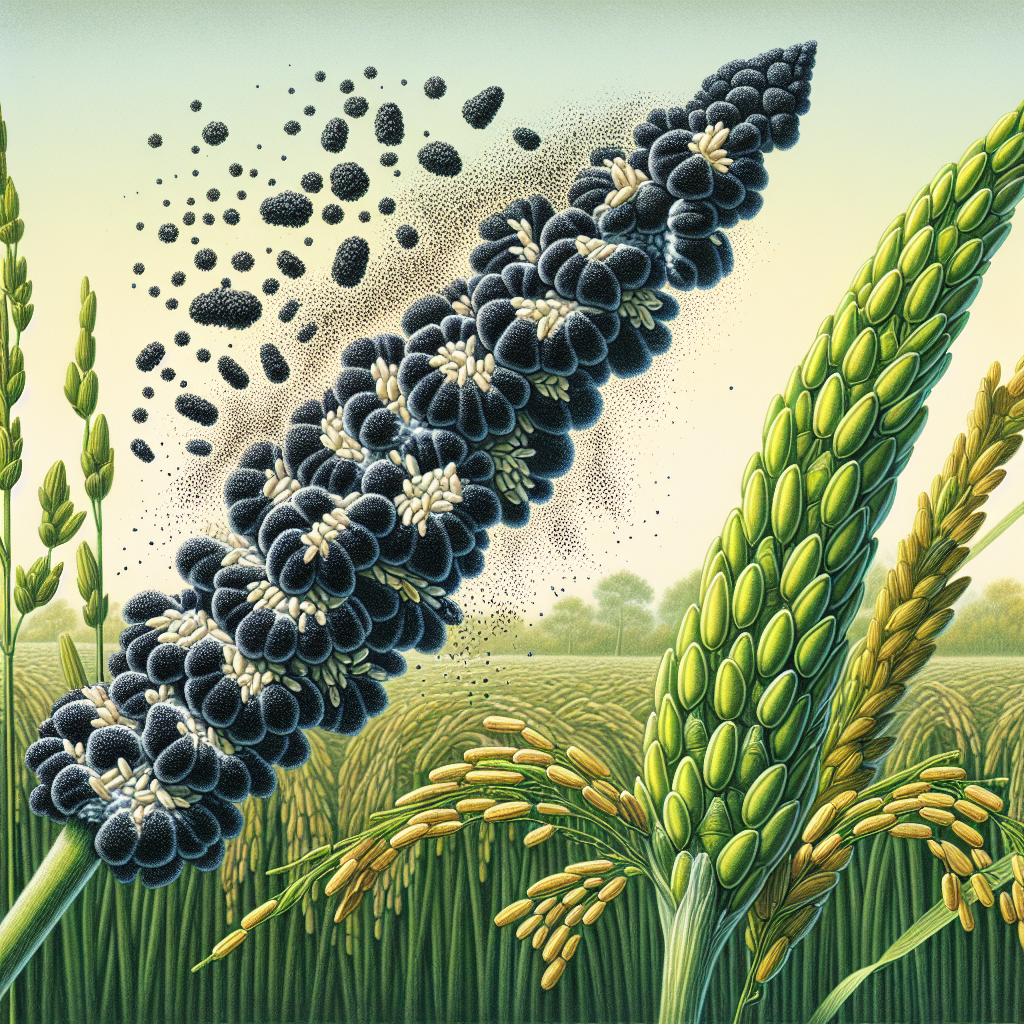
Introduction to Head smut
Head smut, scientifically known as Tilletia barclayana (formerly Ustilago esculenta) on rice and related species like Tilletia maclaganii on corn, is a soilborne fungal disease that devastates cereal crops worldwide. This basidiomycete pathogen infects plants systemically during early growth stages, remaining dormant until heading, when it replaces grain with powdery black spore masses called sori. First identified in Asia on rice in the early 1900s, head smut has spread to major production areas in China, India, Southeast Asia, and parts of Africa and the Americas, causing yield reductions of up to 100% in severely affected fields.
The disease's economic impact is profound, with global rice losses estimated at millions of tons annually. In rice crops, infected panicles become inedible, covered in a sooty black powder that contaminates harvests and spreads via wind, water, machinery, or trade. Corn varieties, particularly sorghum and certain maize hybrids, suffer similar transformations where ears develop into distorted, spore-filled heads. As climate change expands humid tropical zones, head smut poses an increasing threat to food security. Early detection and integrated management are crucial for minimizing damage. For more on related fungal issues, see our guide on smut.
This comprehensive diagnostic and management guide provides professional-grade advice for farmers, agronomists, and researchers. We'll cover symptoms, lifecycle, risk factors, organic treatments, prevention, and affected crops to help you safeguard your yields.
Identifying Symptoms & Damage
Head smut manifests subtly at first, making early diagnosis challenging. Initial signs appear during the seedling stage as slightly chlorotic or stunted plants, often indistinguishable from nutrient deficiencies or root rots. By tillering, infected plants may show minor leaf distortions or reduced vigor, but confirmation requires field scouting at booting or heading stages.
The hallmark symptom emerges at anthesis: instead of filling with grain, panicles or ears convert entirely into sori—elongated, boat-shaped structures filled with powdery black teliospores. On rice, these 'head smuts' are 5-15 cm long, splitting open to release masses of spores that resemble soot. Affected panicles remain erect, greenish at first, then turn black. Yield loss correlates directly with infection rate; 10% incidence can slash harvests by 20-30%, while 50%+ spells total failure.
Secondary damage includes spore contamination of healthy grain, reducing market value and milling quality. In storage, spores germinate, exacerbating losses. Differentiate from loose smut by the enclosed sori and from Fusarium head blight by the absence of mycotoxins and pinkish discoloration. Microscopic exam reveals pitted, reticulate teliospores (15-25 µm), confirming Tilletia spp. Damage thresholds: rogue plants at <5% incidence; consider field abandonment above 20%.
Lifecycle and Progression of Head smut
Head smut follows a complex soilborne lifecycle spanning 1-2 years. Teliospores overwinter in soil, persisting up to 10-20 years due to thick walls. Spring germination produces basidiospores (promycelia) under moist, warm conditions (20-30°C, >90% humidity). These airborne sporidia infect root tips or coleoptiles of germinating seeds, entering via wounds or natural openings.
Once systemic, mycelia colonize vascular tissues, growing asymptomatically through tillering and jointing. At booting (Panicle Initiation, PI stage), the fungus diverts nutrients to floral meristems, suppressing grain development. Sori form by milk stage, maturing 10-14 days post-anthesis. Mature sori rupture, releasing 10^6-10^7 teliospores per head, dispersing via wind (up to 1 km) or rain splash.
The pathogen thrives in anaerobic soils; flooding delays but doesn't prevent infection. Secondary cycles occur if spores reinfect nearby fields. Progression: 0-30 days post-planting (infection), 60-90 days (systemic spread), 100-120 days (sori formation). Understanding this timeline enables precise scouting: check 10% of plants weekly from boot to dough stage.
Environmental Triggers & Risk Factors
Head smut favors warm, humid tropics (25-35°C, 80-100% RH), with optimal infection at 28°C soil temps. High rainfall (>1500 mm/year) and poor drainage create anaerobic conditions ideal for spore germination. Acidic soils (pH 4.5-6.0) enhance survival, as do compacted, high-clay fields.
Key risk factors include continuous cereal monocropping, especially susceptible varieties like indica rice or Basmati types. Contaminated seed, floodwater, or machinery spreads spores. Crop rotation gaps (>3 years with non-hosts like legumes) reduce inoculum. Compromised plants from downy mildew or nematodes face higher infection. Over-fertilization with nitrogen boosts susceptibility by promoting lush growth. In corn, hybrids with tight husks trap humidity, exacerbating outbreaks. Monitor via soil sampling: >100 teliospores/g soil signals high risk.
Organic Control & Treatment Plans
No curative organic treatments exist post-infection, emphasizing prevention. For active management:
Cultural Practices: Rogue infected plants immediately, burning debris to cut inoculum 70-90%. Flood fields post-harvest to drown spores.
Biological Controls: Trichoderma spp. and Pseudomonas fluorescens suppress via antagonism. Apply 5-10 kg/ha seed treatment (10^9 CFU/g) pre-planting.
Resistant Varieties: Plant hybrids like IR36, PR106 (rice) or resistant corn lines; they reduce incidence 80-95%.
Soil Amendments: Lime to pH 6.5-7.0; incorporate green manures like clover to aerate soil.
Organic Fungicides: Bacillus subtilis (Serenade) or copper oxychloride as foliar sprays at boot stage (2-3 apps, 7-day intervals). Efficacy: 40-60% reduction.
Integrated plan: Seed treatment + rotation + scouting. Check our Spring Pest Patrol blog post for complementary IPM strategies. Monitor efficacy via trap plants.
Preventing Head smut in the Future
Long-term prevention hinges on breaking the soil-spore cycle:
Crop Rotation: 3-5 years with non-grass crops like soybeans, potato, or brassicas.
Certified Seed: Use smut-free seed; hot-water treat (52°C, 10 min) if needed.
Sanitation: Clean equipment; deep plow (20-30 cm) to bury spores.
Site Selection: Avoid low-lying, waterlogged fields; improve drainage with raised beds.
Resistant Cultivars: Adopt hybrids with Sm1 gene (rice).
Monitoring: Soil tests annually; scout at PI stage.
Nutrient Balance: Avoid excess N; maintain K:Ca ratios.
Implementing these reduces risk 90%+. Pair with weather-based alerts for timely action.
Crops Most Affected by Head smut
Primarily grasses:
Rice (Oryza sativa): Worst hit, especially tropical indicas.
Corn (corn): Sweet and dent varieties in humid zones.
Minor: Sorghum (sorghum), wheat (wheat), barley (barley). Rare on millet (millet). Global hotspots: Yangtze Basin (rice), US Corn Belt (maize). Yield impacts: Rice 10-80%, corn 5-50%.