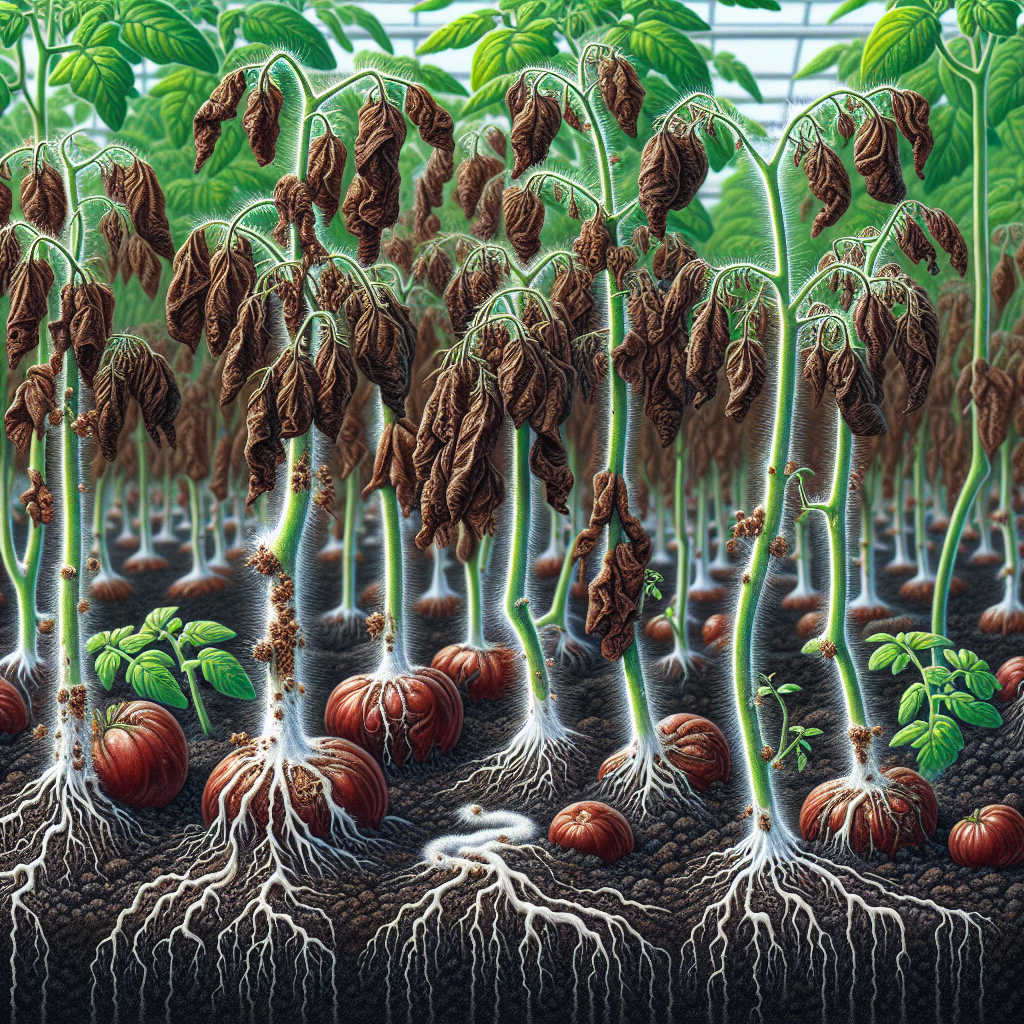
Introduction to Rhizoctonia damping-off
Rhizoctonia damping-off, caused by the soil-borne fungus Rhizoctonia solani, stands as one of the most destructive seedling diseases in agriculture worldwide. This pathogen targets the roots and lower stems of young plants, often resulting in complete stand failure within days of emergence. Farmers and gardeners encounter it frequently in high-value crops like vegetables, ornamentals, and field seeds, where uniform stands are critical for profitability.
The disease manifests in two primary forms: pre-emergence damping-off, where seeds rot before sprouting, and post-emergence damping-off, characterized by the sudden toppling of seedlings at the soil line. Rhizoctonia solani is ubiquitous in soils, persisting as dormant sclerotia or mycelium for years, awaiting ideal conditions to activate. Unlike water molds like Pythium, Rhizoctonia favors slightly drier, warmer soils but still exploits excessive moisture and poor aeration.
Understanding this disease is essential for sustainable farming. Annual global losses from damping-off exceed millions in crop value, particularly in organic systems lacking chemical fungicides. Early diagnosis and integrated management can salvage crops, emphasizing the need for vigilant monitoring during the vulnerable seedling stage. For more on related fungal issues, see our guide on Rhizoctonia root rots. This comprehensive guide equips growers with diagnostic tools, lifecycle insights, and proven organic strategies to combat and prevent outbreaks effectively.
Identifying Symptoms & Damage
Accurate identification of Rhizoctonia damping-off is crucial for timely intervention, as symptoms mimic other seedling blights like those from Fusarium or Pythium damping-off. Pre-emergence symptoms appear as poor germination rates, with seeds failing to sprout or emerging seedlings exhibiting brown, mushy radicles and hypocotyls. Affected seeds often decay in the soil, releasing a foul odor from secondary bacterial invasion.
Post-emergence damping-off is more dramatic: seedlings emerge normally but suddenly wilt, lean, and collapse at the soil line within 1-3 days. The hallmark is a dark brown to black lesion at the stem base, often constricted like a 'pinched' neck, with reddish-brown discoloration extending into roots. Unlike Pythium, Rhizoctonia lesions are dry and sunken, sometimes covered with fine white mycelium under humid conditions. Roots appear stubby, rotted, and lacking fine laterals, leading to water stress even in moist soils.
Damage escalates quickly in dense plantings. In greenhouses, entire trays may fail, while field crops show irregular 'skips' in rows. Secondary symptoms include stunted survivors with weakened vigor, predisposing them to root rot or cutworms. Microscopic confirmation reveals brick-red sclerotia or branching hyphae with 90-degree angles. Yield losses can reach 50-100% in severe cases, underscoring the economic imperative for rapid scouting. Use a hand lens to inspect stem bases daily during emergence for best results.
Lifecycle and Progression of Rhizoctonia damping-off
Rhizoctonia solani exhibits a complex lifecycle adapted for long-term soil survival, making eradication challenging. The fungus persists primarily as sclerotia—hard, irregular resting structures 1-2 mm in diameter, colored brown to reddish-black—that withstand drought, tillage, and flooding for 5-10 years. These sclerotia germinate under favorable moisture and temperature, producing mycelium that infects seeds or roots directly.
Infection begins with hyphal penetration of the radicle or hypocotyl through natural openings or enzymatic degradation. Optimal infection occurs at 20-30°C (68-86°F), slower below 15°C. Post-infection, the fungus girdles the stem base, releasing enzymes that macerate tissues. In advanced stages, it forms new sclerotia in dead plant debris, perpetuating the cycle.
Progression varies by crop stage: seeds rot in 2-5 days pre-emergence; post-emergent seedlings collapse in 24-72 hours. Under cool, wet conditions, airborne basidiospores from teleomorph Thanatephorus cucumeris can initiate infection, though soil contact dominates. Crop debris incorporation amplifies inoculum, with sclerotia concentrating in upper 5-10 cm of soil. Understanding this polycyclic nature informs rotation and sanitation strategies, breaking the debris-sclerotia loop.
Environmental Triggers & Risk Factors
Rhizoctonia damping-off thrives under specific environmental cues, primarily excessive soil moisture and compaction. Optimal conditions include water-saturated soils at 25-30°C, where oxygen depletion stresses seedlings, facilitating invasion. Cool springs (15-20°C) combined with overwatering in greenhouses mimic these triggers, as does heavy clay soils with poor drainage.
Key risk factors include high seeding density (>20 seeds/cm² in trays), leading to humidity pockets; cold, wet soils delaying emergence; and infested transplants. Acidic soils (pH <6.0) favor sclerotia germination, while residue from previous soybeans or corn crops harbors inoculum. Over-fertilization with nitrogen promotes succulent tissues, and no-till systems retain surface sclerotia. Greenhouses amplify risks via recycled trays and poor ventilation.
Climate change exacerbates issues with erratic rains promoting wet spells. Scout high-risk periods: post-rainy seeding or after flooding. Soil tests for compaction (penetrometer >300 psi) and moisture (field capacity +10%) predict outbreaks. Mitigate by adjusting planting timing to warmer soils.
Organic Control & Treatment Plans
Organic management of Rhizoctonia damping-off emphasizes cultural, biological, and physical tactics over curative sprays, as the pathogen is soil-borne. Immediate Actions: Remove and destroy infected seedlings to limit spread; solarize soil (clear plastic, 50-60°C for 4-6 weeks pre-planting) to kill 70-90% sclerotia. Avoid replanting in affected areas for 2-3 years.
Biological Controls: Apply Trichoderma harzianum or Gliocladium virens (e.g., RootShield) as seed treatments or drenches at 10^9 CFU/g; these mycoparasites colonize roots, outcompeting Rhizoctonia. Bacillus subtilis (Serenade) suppresses via antibiotics. Integrate mycorrhizal fungi for root protection.
Seed and Soil Treatments: Hot water treat seeds (50°C, 20 min) for ornamentals; use cornmeal (horticultural grade, 20 lbs/1000 sq ft) to stimulate Trichoderma. Aerate soil pre-planting; amend with compost (5-10% by volume) for microbial diversity.
Treatment Plans:
- Mild Infestation: Drench with hydrogen peroxide (3%, 1:10 dilution) or potassium bicarbonate weekly.
- Moderate: Combine biofungicides with reduced irrigation; mulch with straw to moderate moisture.
- Severe: Fumigate organically with mustard seed meal (allyl isothiocyanate release).
Monitor with baiting assays. Success rates exceed 80% with integrated approaches. Learn more about small farm strategies in Soil Health Mastery: 5 Proven Strategies for Small Farms to Build Fertile Ground Without Breaking the Bank.
Preventing Rhizoctonia damping-off in the Future
Prevention is the cornerstone of Rhizoctonia management, targeting inoculum reduction and resilience-building. Crop Rotation: Rotate out of host crops (e.g., avoid consecutive tomato or potato) for 3-4 years; incorporate brassicas or marigold as biofumigants.
Soil Management: Maintain pH 6.5-7.0 with lime; ensure drainage with raised beds (15-20 cm high) or tiling. Use sterile soilless mixes in greenhouses. Seed with pathogen-free stock treated with biofungicides.
Cultural Practices: Sow shallow (1-2 cm) in warm soils (>18°C); thin to 5-10 cm spacing. Promote fast emergence with row covers. Sanitize tools and trays (10% bleach). Mulch post-emergence to suppress splash dispersal.
Resistant Varieties: Select tolerant cultivars like 'Defiant' beans or 'Legend' tomatoes. Monitor forecasts to avoid risky planting windows. Long-term, foster soil biology with cover crops like clover. Annual prevention checklists reduce incidence by 90%.
Crops Most Affected by Rhizoctonia damping-off
Rhizoctonia damping-off strikes a wide array of crops, especially seedlings in the Solanaceae, Cucurbitaceae, and Fabaceae families. Vegetables like tomato, pepper, eggplant, cucumber, lettuce, and cabbage suffer high losses in nurseries. Legumes including peas, beans, and soybeans are vulnerable during direct seeding.
Field crops such as corn, wheat, rice, and cotton experience patchy stands. Ornamentals (petunias, impatiens) and turf seedlings are frequent victims in greenhouses. Turf grasses and forestry seedlings also report outbreaks. Susceptibility peaks in direct-seeded crops under cool, wet conditions, with economic impacts greatest in high-density production.