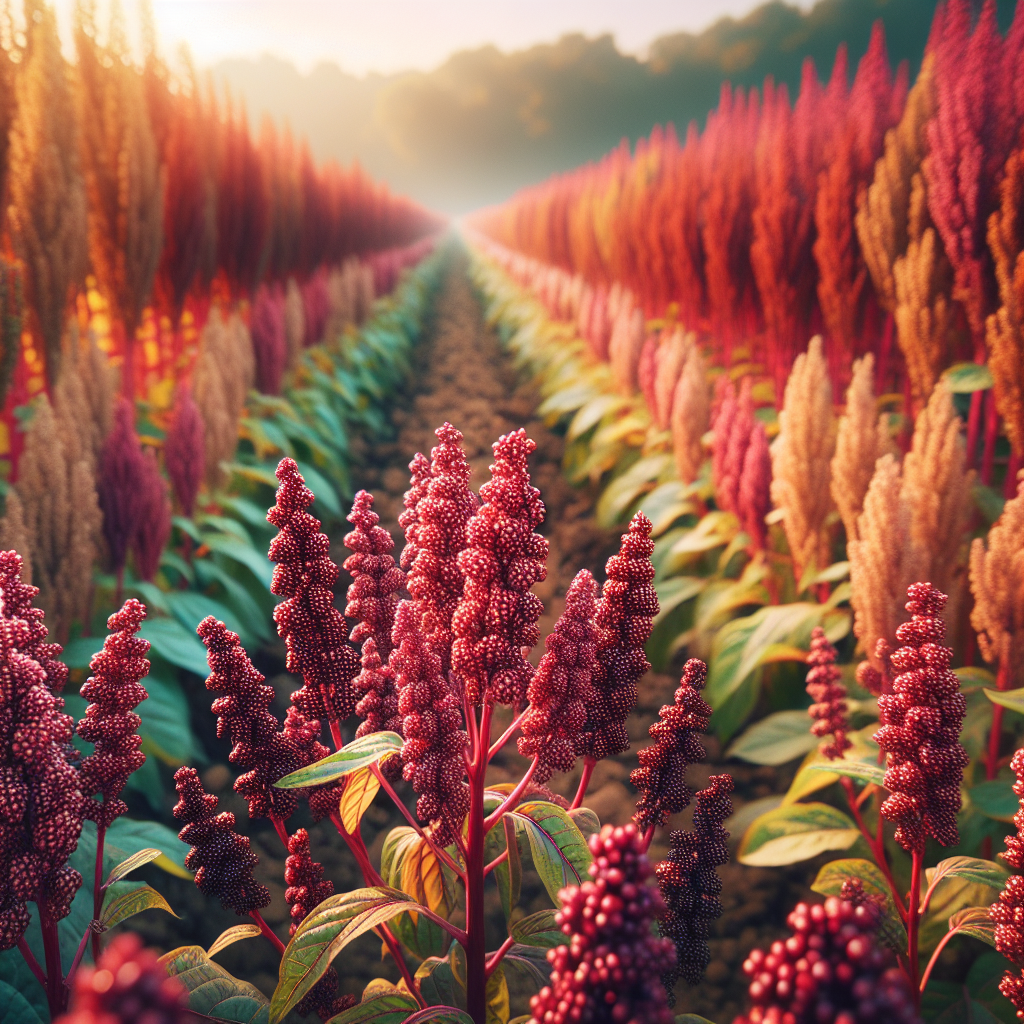
Introduction to Red Quinoa
Originating in the Andean region of South America, this seed crop has been cultivated for thousands of years at elevations and in climates where many conventional cereals struggle. The red-seeded forms are not a separate species, but a color class within quinoa, selected for pigmented seed coats rich in betalain-type compounds and for a distinct culinary texture that tends to remain slightly firmer after cooking than white types. That makes it valuable not only for grain production, but also for specialty food markets where appearance, mouthfeel, and whole-seed integrity matter.
In the field, it behaves more like a broadleaf grain crop than a true cereal. It is botanically closer to spinach and beet than to wheat, which explains some of its management quirks, including sensitivity to waterlogging, relative tolerance to cool temperatures, and susceptibility to certain leaf spot and Damping-off issues in wet conditions. For background on the species more broadly, see Quinoa.
Red quinoa is often described as drought tolerant, but that phrase is easily misunderstood. It tolerates intermittent dryness better than many small grains once established, yet yield and seed filling decline quickly when prolonged stress occurs during branching, flowering, or grain fill. High-quality production depends on even emergence, moderate fertility, and especially careful water management: never swamp the root zone, but do not let the crop stall during reproductive growth.
Botanical Profile of Red Quinoa
This annual broadleaf pseudocereal belongs to the family Amaranthaceae. Plants typically range from 0.8 to 2 meters tall depending on cultivar, fertility, spacing, moisture, and daylength response. The growth habit begins with a strong central stem, followed by lateral branching if spacing and fertility allow. Leaves are variable in shape even on a single plant, often triangular to lanceolate, sometimes with toothed margins, and commonly coated with a faint farinose or powdery bloom when young.
The inflorescence is a terminal panicle that may be compact, intermediate, or open. Red quinoa lines often show panicles with red, burgundy, rose, or pink pigmentation, though stem and leaf coloration can also intensify under cool nights, high light, and nutrient stress. Flowers are small, apetalous, and largely wind pollinated, though some outcrossing occurs. Seed color is determined by the outer layers and can vary from ruby red to brick red to reddish-brown depending on genotype and maturity.
Roots are generally fibrous with a penetrating central axis in friable soils, but they are much less tolerant of anaerobic conditions than rice-type crops. In heavy clay that remains saturated for more than 24 to 48 hours, roots lose function, lower leaves yellow, and plants can collapse despite adequate fertility. Red quinoa also contains saponins in the seed coat to varying degrees. These bitter compounds help deter birds and some pests, but they require post-harvest washing or processing if present at moderate to high levels.
From a physiological standpoint, quinoa is notably plastic. It can adapt to a broad range of elevations and temperatures, but each cultivar has a narrower optimum than the species reputation suggests. Red types grown outside their adapted latitude may flower too early under long or short days, producing short plants and reduced seed set. Choosing seed from a source already adapted to your daylength and season length is often the single biggest determinant of success.
Soil, pH, and Climate Requirements for Red Quinoa
This crop performs best in well-drained loam, sandy loam, or light silty soils with good structure and moderate organic matter. Ideal soil texture allows rapid emergence, deep rooting, and no standing water after rain. Heavy clay can be used only if beds are raised and surface drainage is excellent. In compacted soils, expect patchy stands, shallow roots, and a higher incidence of lodging and root disease.
The preferred pH range is about 6.0 to 8.5, with optimum commercial performance often seen around 6.5 to 7.8. One reason quinoa is valued globally is its relative tolerance to alkaline conditions and moderate salinity compared with many grain crops. That said, tolerance is not immunity. Electrical conductivity above roughly 8 dS/m can still reduce germination and stand establishment, especially in hot weather. Saline soils are best used only when there is enough residual moisture to support early growth without salt concentrating at the surface.
Temperature matters most at three stages. During germination, soil temperatures of 10-20°C are ideal; emergence becomes erratic above about 30°C, especially if the seedbed dries. During vegetative growth, daytime temperatures of 15-25°C support steady development. During flowering and early seed set, prolonged heat above 32°C can reduce pollen viability, increase flower abortion, and lower seed number. Mature plants tolerate light frost better than seedlings, but severe frost during flowering can still damage the crop.
Red quinoa is especially well suited to cool, semi-arid, high-light environments with low to moderate humidity. It can be grown in temperate lowlands, but disease pressure rises significantly where nights stay warm and leaf wetness persists. Areas with 300-600 mm of seasonal water from rainfall plus irrigation are often ideal, provided that the bulk of water is not concentrated in intense storms during flowering or maturity.
Full sun is essential. Shading reduces stem strength, delays drying, and lowers seed quality. Wind exposure is a mixed factor: moderate airflow helps reduce foliar disease, but strong winds can lodge tall, heavily fertilized crops. Avoid over-sheltered, humid pockets and overly fertile garden beds that produce rank vegetative growth at the expense of seed.
If you are building soil before sowing, broad principles in soil health strategies apply particularly well to quinoa because the crop responds strongly to structure, drainage, and balanced rather than excessive fertility.
Step-by-Step Planting & Propagation
Propagation is by seed. Direct sowing is strongly preferred because transplants often suffer root disturbance, delayed establishment, and irregular branching. Use only clean, viable seed with known adaptation to your region and a recent germination test if possible. Seed older than two to three years, or stored in warm, humid conditions, can lose vigor rapidly.
Prepare a fine, firm seedbed. Remove perennial weeds thoroughly before sowing because young quinoa seedlings are not highly competitive in the first few weeks. The surface should be crumbly, not fluffy. If your footprint sinks deeply into the bed, it is too loose and seeds may be planted too deep.
Time sowing for cool establishment. In most temperate climates, sow in early spring after the danger of severe hard frost has passed but while conditions remain cool. In mild winter climates, late winter to early spring can work. The key is to let the crop flower before summer heat peaks.
Plant shallowly. Sow seed 0.5-1.5 cm deep. The smaller the seed and heavier the soil, the shallower the sowing depth. In dry sandy soils, going slightly deeper is acceptable if uniform moisture exists below the surface. Seed planted deeper than 2 cm often emerges weakly or not at all.
Set row spacing according to management style. For hand-weeded gardens or small farms, rows 25-45 cm apart are practical. For larger plantings with mechanical cultivation, 50-75 cm may be preferable. In-row spacing after thinning should end up around 10-20 cm for grain production. Closer spacing promotes more uniform stands and fewer side branches; wider spacing creates larger plants but more variability in maturity.
Thin early. Seedlings usually emerge in 4-10 days under favorable conditions. Thin when plants are 5-8 cm tall. Delaying thinning beyond this stage increases competition and creates uneven stem diameters and maturity.
Irrigate lightly after sowing if needed. The goal is to keep the top 1-2 cm of soil consistently moist until emergence, never crusted and never saturated. If the surface forms a hard crust after rain, emergence may be poor; very shallow hoeing between rows can help if seedlings are not yet breaking through.
Protect the stand during establishment. The cotyledon and first true leaf stage is the most vulnerable period. Seedlings can resemble lambsquarters, which is both a close relative and a weed, so mark rows clearly. Rogue obvious off-types once the crop is identifiable.
Typical seeding rates range from roughly 4-8 kg/ha in precision-drilled systems to higher rates in broadcast or hand-sown systems. Home growers can estimate by sowing lightly and thinning to target spacing rather than trying to hit exact seed counts.
Care & Maintenance regimes for Red Quinoa
Irrigation should change with growth stage. At emergence, keep the seed zone uniformly moist, roughly equivalent to 60-80% of field capacity in the top few centimeters. After establishment, reduce frequency and water more deeply to encourage rooting. A good target is allowing the top 3-5 cm to dry between irrigations while maintaining moisture deeper in the root zone. Constantly wet surface soil encourages Damping-off and shallow roots.
During vegetative growth, one deep irrigation when the upper 5 cm are dry is usually better than frequent light sprinkling. As the crop enters branching and panicle initiation, avoid water stress severe enough to cause midday wilting that persists into evening. During flowering and grain fill, moisture should remain moderately even: not soggy, not powder dry. If leaves lose turgor in the morning, lower foliage scorches, or panicles feel papery before seeds have filled, the crop is too dry. If lower leaves yellow rapidly, soil smells sour, and stems feel soft near the crown, it is too wet.
Nitrogen management must be restrained. Excess nitrogen produces lush canopies, delayed maturity, lodging, and higher disease pressure. In soils of moderate fertility, 40-80 kg/ha available nitrogen is often adequate, with lower rates in fertile gardens amended with compost. If using compost, incorporate mature material well before sowing rather than side-dressing heavily during rapid growth. Phosphorus is most important for early root development; potassium supports stem strength and stress tolerance. Micronutrient deficiencies are uncommon in neutral soils, but iron chlorosis can appear on calcareous soils with poor root aeration.
Weed control is crucial in the first 30-40 days. Once canopy closure begins, quinoa competes much better. Use stale seedbed techniques before sowing, shallow wheel hoe cultivation between rows, or careful hand weeding. Do not cultivate deeply near stems because roots are relatively shallow in the upper profile during early growth. Mulch is possible in wider row systems, but keep it light and airy; thick, wet mulch around stems can increase disease in humid areas.
Lodging prevention depends on three things: moderate nitrogen, not overcrowding badly, and avoiding over-irrigation late in the season. Tall red quinoa with heavy panicles can bend after wind or rain. If growing on rich garden soil, err on the side of wider spacing and lower fertility. In exposed fields, orient rows with prevailing winds if possible to improve airflow.
Maturity is often uneven on highly branched plants. Uniform crops are produced by uniform emergence, even spacing, and avoiding feast-or-famine watering. If side branches are still green while the central panicle is mature, growers must decide whether to harvest early for cleaner grain or wait for later seed fill at the risk of shattering and bird loss.
Pests, Diseases & Organic Management
Birds are often the most serious pest, especially as panicles color and seeds harden. Finches and Sparrows can strip maturing heads quickly. Netting is highly effective in gardens. On larger plots, reflective tape, moving scare devices, and synchronized planting in blocks work better than isolated small rows.
Aphids may colonize tender growth, especially in cool springs followed by mild weather. Light infestations are often tolerable, but heavy feeding can distort panicles and promote sooty mold via honeydew. Encourage beneficial insects by planting nearby insectary species such as Yarrow and Nasturtium. A strong water spray or insecticidal soap can suppress Aphids when applied early and with good coverage.
Leaf miners, Flea beetles, and Caterpillars occur locally but are usually secondary problems unless the crop is stressed. Healthy, steadily growing plants can outgrow moderate cosmetic feeding. Avoid excessive nitrogen, which attracts sap-feeding pests and creates softer tissues.
Damping-off is the key seedling disease, caused by soilborne fungi and oomycetes favored by cool, saturated soil. Prevent it with shallow sowing, good drainage, clean seed, and avoiding overwatering before emergence. If seedlings collapse at soil level in patches, improve airflow and irrigation practices rather than reapplying water in hopes of recovery.
Downy mildew and Foliar leaf spots can become serious in humid climates. Symptoms include angular yellow lesions, grayish sporulation on the underside of leaves, and premature defoliation. Wide spacing, morning irrigation, crop rotation, and resistant or locally adapted seed lots are the primary controls. Avoid overhead irrigation late in the day. Remove heavily infected residues after harvest and do not plant quinoa or close relatives in the same bed repeatedly.
Root rots and Stem base rots are common where drainage is poor. Plants show stunting, yellowing, and sudden wilt despite moist soil. There is no good rescue treatment once roots are compromised. Raised beds, reduced irrigation frequency, and rotating away from spinach, beet, and amaranth relatives are the best organic measures.
Because quinoa is related to chenopod weeds, sanitation matters. Lambsquarters and related species can host pests and diseases and may cross with some quinoa populations under certain conditions, causing seed impurity. Keep field margins clean, especially in seed-saving operations.
Harvesting, Curing & Optimal Storage
Harvest timing is one of the most important quality decisions. Red quinoa is ready when most leaves have dropped, stems begin drying, and the panicles shift from pliable to dry and rustling. Seeds should be hard enough that they cannot be dented easily with a fingernail. Mature seed moisture in the field is often around 12-15%, though harvest may begin a bit higher if weather threatens.
A common sign of readiness is when the central panicle is dry and the seed rubs free readily from the head. If you harvest too early, green seeds and high moisture will complicate drying and increase the risk of molding. If you wait too long in hot, dry, windy weather, panicles may shatter and bird damage increases.
For small-scale harvest, cut stalks in the morning when slight dew reduces shattering. Bundle loosely and place under cover with strong airflow for 7-14 days. Do not pack bundles tightly; trapped moisture can heat the seed. Once fully dry, thresh by rubbing panicles over a clean tarp, beating gently in a bin, or using small-scale threshing equipment.
After threshing, winnow thoroughly to remove chaff. Multiple passes may be needed because quinoa seed is small and chaff can cling. Dry cleaned seed to about 10-12% moisture for short-term storage and closer to 8-10% for long-term storage. If you bite a seed and it crushes cleanly rather than flattening, moisture is usually low enough for safe storage, though a moisture meter is more reliable.
Store in airtight containers in a cool, dark, dry space. Temperatures below 15°C and relative humidity below 50% are excellent for preserving viability and food quality. Seed intended for planting should be protected from temperature swings and rodents. Properly dried quinoa can store for a year or more, but flavor and germination are best when used within the first season.
Before eating, many red quinoa lots benefit from rinsing or abrasion to remove residual saponins. If your seed tastes distinctly bitter after cooking, wash more aggressively before culinary use.
Companion Planting for Red Quinoa
This crop is best paired with species that either attract beneficial insects, occupy different rooting zones, or do not compete heavily for the same canopy space during early establishment. Because quinoa needs strong sun and airflow, companions should stay low or be planted on borders rather than intermingled densely through the stand.
Yarrow is one of the best companions because its umbels attract predatory wasps, hoverflies, and other beneficial insects that help suppress Aphids. Nasturtium works as a trap and distraction plant for some sap-feeding pests and also helps diversify the field edge. Clover can be useful as a living pathway cover or off-row strip in wider systems, where it reduces erosion and improves soil biology, but it should not be allowed to overrun young quinoa or compete directly in tight rows. Radish can be sown in adjacent strips or early borders to loosen surface soil and provide a fast harvest before quinoa reaches full size.
Avoid pairing with very tall, aggressive crops that shade the canopy, and avoid dense plantings of close relatives such as beet or spinach immediately adjacent if local disease pressure is high. The most successful companion strategy is usually perimeter planting or alternating strips rather than crowded polyculture within the row.
For professional production, remember that companion planting should never compromise harvest efficiency. If quinoa is being grown for grain, leave adequate room for weeding, airflow, and clean cutting at maturity.