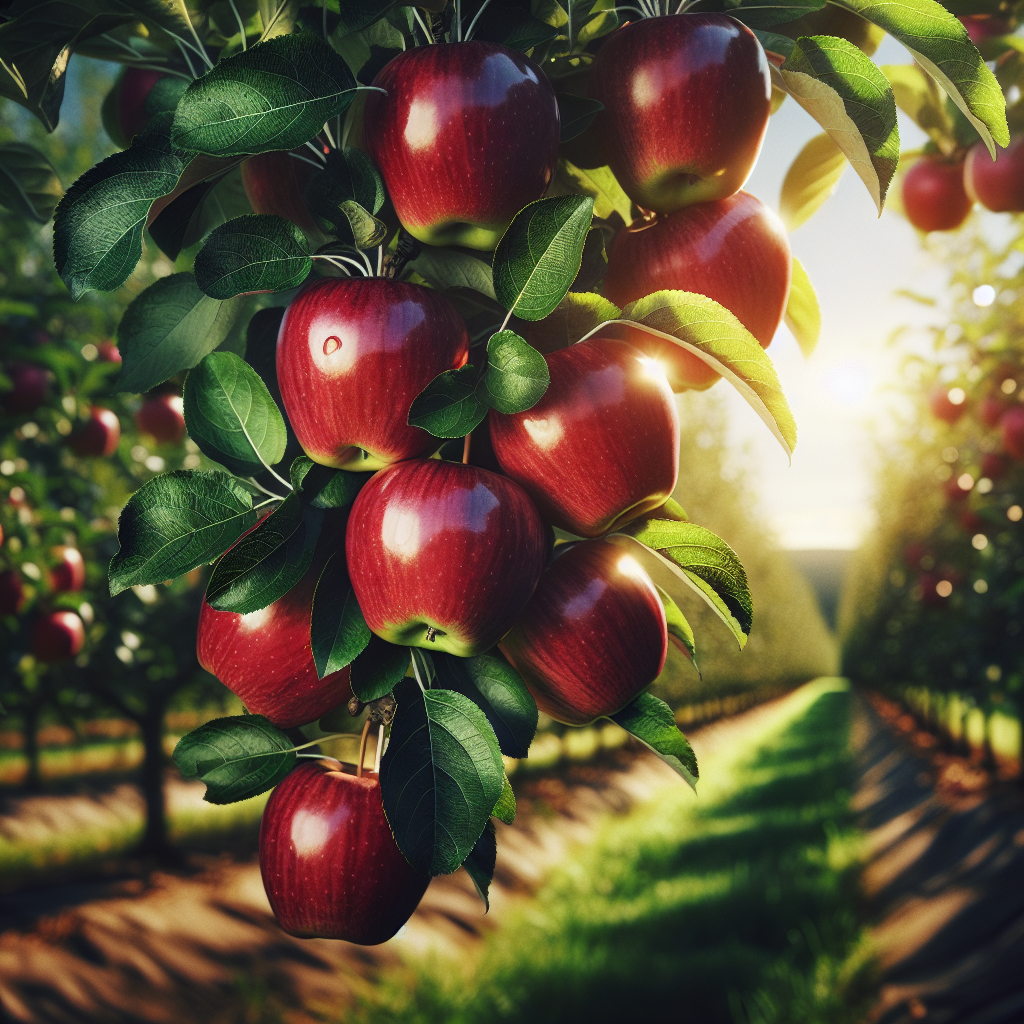
Introduction to Red Delicious Apple
Originating as a chance seedling in Iowa in the late 19th century, this cultivar became one of the most recognizable apples in the world and helped define the commercial apple industry for decades. Its distinctive five-lobed base, glossy deep red skin, and elongated shape made it a marketing success, but that popularity also led to a useful lesson for growers: appearance alone does not guarantee eating quality. Red Delicious performs best when grown in regions with warm days, cool nights, full sunlight, and disciplined canopy management that promotes color development without sacrificing sugar accumulation.
For orchardists, this variety is best understood as a spur-bearing, medium-vigor dessert apple that can overcrop if unmanaged. Fruit quality declines rapidly when trees are shaded, overloaded, harvested too late, or grown in climates that are too warm at night. Good Red Delicious should be sweet, mildly aromatic, crisp to the bite, and not coarse or mealy. If you want broader context on species-level orchard management, see the Apple guide. For orchard soil-building ideas, the principles in Soil health mastery are especially useful around long-lived fruit trees.
Botanical Profile of Red Delicious Apple
This cultivar belongs to the rose family, Rosaceae, and like other domesticated apples is typically grown as a grafted tree rather than from seed. Seed propagation does not produce true-to-type Red Delicious fruit because apple genetics are highly heterozygous; seedlings vary widely in vigor, fruit shape, flavor, disease resistance, and bearing habit. Commercial and serious home growers therefore rely on scion wood grafted onto a chosen rootstock.
The tree is usually moderately vigorous on semi-dwarf rootstocks and more restrained on dwarfing stocks. It has a naturally upright to spreading framework depending on rootstock, training, and pruning history. Red Delicious is strongly spur-bearing, meaning much of its fruit is produced on short, perennial fruiting spurs along two-year-old and older wood. This has two major implications: first, careless heading cuts can remove future fruiting sites; second, older spurs can become overcrowded, resulting in many small, poorly colored apples unless thinned.
Leaves are simple, alternate, oval, and serrated, with a medium green color. Blossoms appear in spring in clusters called corymbs, usually with five petals ranging from pale pink in bud to white-pink when open. Like most apples, it is self-incompatible and requires pollen from a compatible, overlapping-blooming cultivar for reliable fruit set. Pollination is carried primarily by bees. Fruit is botanically a pome, with the fleshy edible portion formed largely from floral tissue surrounding the ovary.
Red Delicious is noted for its tendency toward heavy red striping or solid coloration depending on sport selection and light exposure. Numerous strains and color sports have been selected over time, many emphasizing darker, earlier, or more uniform red finish. While these strains improve market appearance, growers should be cautious: some highly colored strains may produce fruit with less desirable flavor or texture if crop load and maturity are not carefully managed.
Soil, pH, and Climate Requirements for Red Delicious Apple
This variety performs best in deep, well-drained loam or sandy loam with moderate water-holding capacity and abundant soil oxygen. Ideal effective rooting depth is at least 75 to 100 cm, and more is better where subsoil drainage is good. Heavy clay can work only if internal drainage is excellent and the site is not prone to winter waterlogging. Saturated soils are especially dangerous because apple roots require oxygen; prolonged anaerobic conditions lead to root decline, Phytophthora risk, nutrient uptake problems, and poor vigor.
Target soil pH is 6.0 to 6.8, with 6.2 to 6.5 often ideal for balanced nutrient availability. Below pH 5.8, calcium and magnesium may become limiting and aluminum toxicity risk increases in some soils. Above pH 7.2, iron, manganese, and zinc can become less available, leading to chlorosis, weak shoot growth, and poor fruit finish. Before planting, test soil not only for pH but also cation exchange capacity, organic matter, phosphorus, potassium, calcium, magnesium, boron, and salinity.
Organic matter around 3 to 5% is highly beneficial. It improves aggregate stability, moisture buffering, and microbial activity. However, avoid the common mistake of planting into a small, highly amended hole surrounded by poor native soil; roots may circle or remain confined. It is better to improve the broader planting strip or orchard row over time with compost, chipped wood mulch, and cover crops.
Climate is one of the decisive factors in Red Delicious quality. This is fundamentally a temperate-zone apple with a winter chilling requirement typically in the range of roughly 700 to 1,200 chill hours depending on strain and local interpretation. It needs enough winter dormancy to ensure uniform bud break and bloom. Summers should be warm but not excessively hot, and cool night temperatures are especially important for red color development and sugar retention.
The best production zones usually have:
- Cold winters sufficient for dormancy
- Frost-free conditions during bloom or at least low frost risk
- Warm, sunny summers
- Cool autumn nights before harvest
- Low to moderate humidity if possible, because persistent humidity favors scab, sooty blotch, flyspeck, and fire blight pressure
Spring frost can devastate bloom. Flower buds at pink and open-bloom stages are vulnerable, and even brief exposure to subfreezing temperatures can reduce crop set. Low-lying frost pockets should be avoided. Choose slopes with good air drainage if possible.
In terms of water, established trees generally need the equivalent of about 25 to 40 mm of water per week during active growth, adjusted for soil texture, canopy size, temperature, and evapotranspiration. The root zone should remain evenly moist but never saturated. A useful practical target is to keep soil moist to a depth of 20 to 30 cm during spring and early summer and 30 to 45 cm during peak fruit enlargement on larger trees. Signs of underwatering include dull leaves, reduced shoot extension, premature fruit drop, and small fruit size. Signs of overwatering include persistently wet soil, yellowing leaves despite adequate fertility, reduced vigor, root disease, and fruit with diluted flavor.
Step-by-Step Planting & Propagation
Start with certified disease-free nursery stock. One-year feathered trees or well-formed two-year trees are common choices. Select rootstock based on your system:
- M.9 or similar dwarf stocks for high-density orchards with permanent support
- M.26 for semi-dwarf performance in smaller systems
- MM.106 for moderate vigor in well-drained soils
- MM.111 for more vigor and better drought tolerance, though larger final tree size
Because Red Delicious needs cross-pollination, plant with at least one compatible pollinizer cultivar that blooms at the same time. Pollinizer spacing must allow bees to move pollen efficiently across the block; in larger plantings, include pollinizer trees every few rows or graft pollinizer limbs within the orchard.
Plant while dormant, usually late winter to early spring in cold climates, or during the coolest suitable dormant period in milder temperate areas. Avoid planting when soil is smeared, frozen, or waterlogged.
Step-by-step planting process:
- Test and prepare the site 6 to 12 months ahead if possible. Correct pH, manage perennial weeds, and improve drainage first.
- Mark spacing according to rootstock and training system. Dwarf systems may use 0.9 to 1.5 m between trees and 3 to 4 m between rows; semi-dwarf systems often need 3.5 to 5 m between trees and 4.5 to 6 m between rows.
- Dig a hole wide enough to spread roots naturally, but no deeper than the root system. The final planting depth matters more than hole depth.
- Prune only damaged root ends on bare-root stock. Soak roots in water for a few hours before planting if they seem dry, but do not leave them submerged for a full day.
- Set the tree so the graft union remains 5 to 10 cm above the final soil line. Burying the graft can cause the scion to root, defeating rootstock size control.
- Backfill with native soil, firm gently to eliminate major air pockets, and water deeply to settle the root zone.
- Install a stake or trellis immediately for dwarf trees.
- Apply 5 to 10 cm of mulch over the root zone, keeping it 10 to 15 cm away from the trunk to avoid rot and rodent damage.
- Protect the trunk with a guard if rabbits, voles, or sunscald are concerns.
- Head the tree at planting according to your intended training system.
Propagation is almost always by bench grafting, whip-and-tongue grafting, chip budding, or T-budding onto rootstock. Hardwood cuttings are not a standard method for true commercial propagation. If you are topworking an existing apple tree, graft Red Delicious scion wood during dormancy onto compatible scaffold limbs, then manage vigorous regrowth carefully.
Care & Maintenance regimes for Red Delicious Apple
Training and pruning are central to quality. Red Delicious responds well to central leader systems and slender spindle systems, especially on dwarfing stocks. The aim is to create a conical canopy with strong light penetration. Fruit color, spur health, and bud initiation all decline in shade.
In the first three years, emphasize structure:
- Establish a dominant leader
- Select well-spaced scaffold branches with wide crotch angles
- Remove or spread overly upright limbs
- Avoid excessive nitrogen that pushes vegetative growth at the expense of early fruiting
Once bearing begins, shift toward renewal pruning. Thin out crowded spurs, remove shaded interior wood, and replace aging fruiting wood gradually. Red Delicious can become too spur-dense, resulting in biennial bearing tendencies, undersized fruit, and poor finish. Prune during dormancy for structure and use limited summer pruning to improve light and air movement if canopies become overly dense.
Nutrient management should be based on annual leaf analysis and soil testing. As a general pattern, apples need modest but consistent nitrogen, plus adequate potassium, calcium, boron, magnesium, and phosphorus where deficient. Excess nitrogen is one of the fastest ways to reduce fruit firmness, suppress color, increase shoot shading, and heighten susceptibility to certain disorders and fire blight. Mature trees often need only enough nitrogen to support 20 to 30 cm of annual extension growth on non-bearing wood, though desired vigor varies by age and system.
Calcium deserves special attention because it influences firmness, storability, and resistance to bitter pit-like issues in apples generally. Maintain even soil moisture and balanced cropping because irregular water supply and excessive vigor can reduce calcium delivery to fruit. Foliar calcium sprays are common in commercial systems during fruit development.
Watering should be adjusted by tree age and soil type:
- Newly planted trees: deep irrigation 1 to 2 times weekly in the absence of rain, wetting the root zone to roughly 20 to 25 cm
- Young bearing trees: maintain steady moisture, especially from bloom through early fruit sizing
- Mature trees: irrigate deeply enough to moisten 30 to 45 cm of soil, then allow mild surface drying before the next irrigation
Drip irrigation is preferred because it keeps foliage dry and reduces disease pressure. Tensiometers or soil moisture probes are ideal in professional orchards. In loam, irrigation often begins when matric potential approaches moderate dryness in the active root zone rather than waiting for visible stress. Avoid feast-or-famine watering, which promotes fruit cracking in susceptible conditions, erratic sizing, and reduced quality.
Thinning is essential. Red Delicious often sets heavily, and unthinned trees produce many small, poorly flavored apples while exhausting the tree. Thin chemically, by hand, or with a combined approach after natural fruit drop. A practical target is one fruit per cluster, or approximately one fruit every 15 to 20 cm of branch length, depending on branch strength and desired fruit size. Early thinning improves cell division, so fruit size and return bloom benefit when done promptly.
Mulch, weed control, and orchard floor management matter more than many growers realize. Keep a vegetation-free strip around young trees because grass competes strongly for moisture and nitrogen. In mature orchards, managed sod between rows with mulched or cultivated tree rows works well. Clover can be used in alleyways or adjacent strips as a bee-friendly, soil-supportive cover, but keep it from competing directly at the trunk line.
Pests, Diseases & Organic Management
This cultivar is not known as a standout for broad disease resistance, so integrated management is important. The major problems depend on region, but common threats include apple scab, fire blight, cedar apple rust, powdery mildew, codling moth, apple maggot, aphids, mites, scale insects, and borers.
apple scab causes olive-brown lesions on leaves and fruit and can severely reduce marketability. It thrives in wet spring conditions. Organic management relies on sanitation, airflow, resistant pollinizers where appropriate, and well-timed protective sprays such as sulfur or biological products permitted in your certification system. Remove fallen infected leaves or accelerate decomposition with orchard floor management to reduce inoculum.
fire blight is a bacterial disease that blackens blossoms and shoots, often producing the classic shepherd's crook symptom. It spreads rapidly in warm, humid bloom conditions. Avoid excessive nitrogen and overly vigorous late shoots. Prune out strikes well below visible symptoms during dry weather, sterilizing tools between cuts where pressure is high. Organic programs may use biological bloom sprays based on local regulations.
codling moth is among the most damaging insect pests because larvae tunnel directly into fruit. Use pheromone traps to monitor flights, mating disruption where scale allows, sanitation by removing infested fruit, and approved materials such as granulosis virus or spinosad in rotation as appropriate. Bagging fruit on small plantings can also be highly effective.
apple maggot causes internal tunneling and distorted fruit. Red sticky sphere traps can help monitor and suppress populations in smaller orchards. Remove dropped fruit frequently to interrupt life cycles.
aphids and mites are often secondary problems that flare after disruption of beneficial insects. Strong populations distort leaves, stunt shoots, and reduce tree vigor. Encourage predators such as lacewings, hoverflies, and lady beetles by avoiding unnecessary broad-spectrum sprays and maintaining flowering habitat near but not within the trunk competition zone. Garlic planted nearby as part of a diversified orchard edge can contribute to a companion-focused pest management strategy, though it is not a stand-alone control.
For organic disease management, the key principles are:
- Maximize sunlight and air circulation
- Keep foliage dry when possible
- Remove mummified or diseased fruit
- Sanitize dropped fruit and infected debris
- Use resistant support cultivars and healthy pollinizers
- Monitor weather-driven infection windows
- Spray preventively, not reactively, when conditions favor infection
Harvesting, Curing & Optimal Storage
Harvest timing determines whether Red Delicious is pleasantly sweet and crisp or disappointingly mealy. External red color alone is not a sufficient harvest indicator because fruit can color before internal maturity is ideal. Use a combination of background color shift, seed color, starch conversion, ease of detachment, soluble solids, and firmness.
Fruit are usually harvested from late season windows depending on region. Look for a background color transition from green to yellow-green beneath the red overcolor. Starch iodine tests, where used, help identify maturity more reliably than appearance. Overmature fruit quickly lose texture in storage and on the shelf.
Pick by lifting and twisting gently upward so the stem remains attached. Do not pull straight down or squeeze the shoulders of the fruit, as bruising reduces storage life. Harvest in multiple passes if color and maturity vary through the canopy, which is common when pruning and light distribution are uneven.
Unlike curing crops such as onions or sweet potatoes, apples are not cured in the same sense, but they do benefit from prompt field heat removal. Move fruit into shade immediately and cool as soon as possible. Ideal storage temperature is close to 0 to 1°C with relative humidity around 90 to 95%. High humidity reduces shrivel, but air circulation must remain sufficient to prevent condensation and decay.
Under good cold storage, Red Delicious stores well relative to many dessert apples. Controlled atmosphere storage with reduced oxygen and elevated carbon dioxide can greatly extend market life, though exact conditions must be carefully calibrated to avoid off-flavors or physiological disorders. For home or small-farm storage, a refrigerator or cold room just above freezing is effective.
Sort fruit before storage:
- Store only sound, unbruised apples
- Separate any fruit with punctures, scab lesions, or insect damage
- Use oversized or slightly soft fruit first
- Keep apples away from odor-sensitive produce because they emit ethylene and can accelerate ripening in nearby crops
Companion Planting for Red Delicious Apple
Companion planting in apple systems works best when it supports pollination, beneficial insects, soil cover, and reduced pest pressure without creating excessive competition at the root zone. The most useful companions are generally low-growing, non-invasive, and easy to manage in strips or borders rather than dense plantings right against the trunk.
Chives relatives are often used around orchard margins or in herbary strips because their pungent foliage may help confuse some pests while their flowers attract pollinators when allowed to bloom. Garlic is similarly popular in diversified orchards, especially for growers who like multifunctional companion beds near young trees. Clover is one of the best support species for alleyways and adjacent living groundcovers because it helps feed pollinators, reduces erosion, and contributes nitrogen biologically, though vigorous clover should be kept back from the immediate trunk area to prevent competition and rodent shelter.
Yarrow is another excellent orchard companion even though it is not listed as a crop page here; it attracts predatory insects and can improve biodiversity in the system. The guiding principle is separation by function: keep the first 30 to 60 cm around young trunks relatively clean, then position companions outside that circle where they can support the orchard without stealing the tree's establishment resources.
For small-scale growers, a practical pattern is a mulched trunk zone, a sparse herb ring beyond it, and a managed flowering alley or border. This supports bees during bloom, encourages natural enemies of aphids and caterpillars, and reduces bare-soil stress while still preserving the dry, airy trunk conditions that apples need.