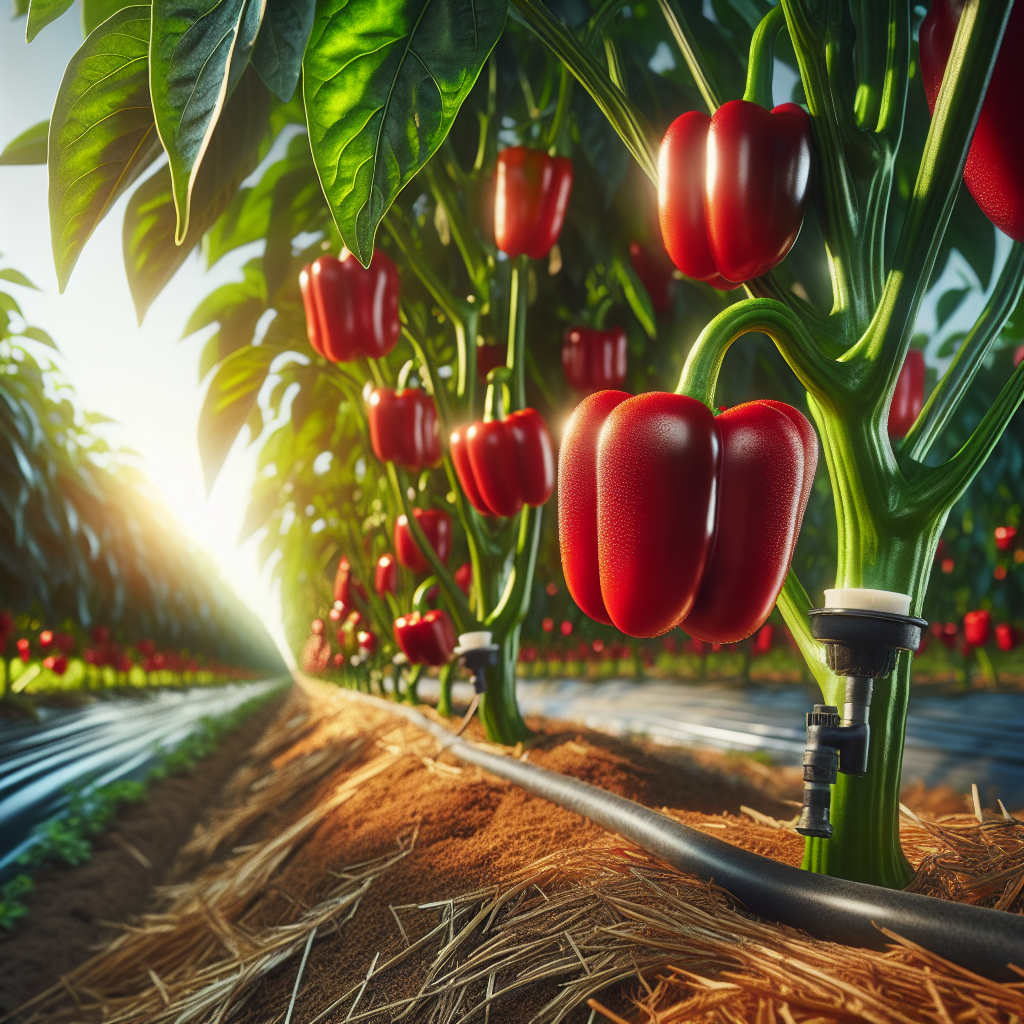
Introduction to Red Bell Pepper
A red bell pepper is not a separate species from green bell pepper; it is the mature, fully ripened stage of a sweet-fruited form of Capsicum annuum. The fruit begins green because chlorophyll dominates during early development, then transitions through a ripening phase in which chlorophyll breaks down and red carotenoid pigments accumulate, especially capsanthin and capsorubin. This maturity shift matters agronomically: red fruits require more days on the plant, greater nutrient consistency, and stronger disease protection than fruit harvested green.
Among sweet peppers, red bells are prized for blocky shape, thick pericarp, crisp texture, and elevated soluble solids compared with green fruit. They also contain more vitamin C and provitamin A carotenoids after full coloration. Commercial and home growers alike value them, but the crop is less forgiving than many warm-season vegetables because flowering, fruit set, and final ripening all respond strongly to temperature stress, irregular watering, and calcium transport problems.
Historically, sweet peppers trace their ancestry to Central and South America, where domestication of Capsicum began thousands of years ago. The bell-shaped, non-pungent market class emerged through long selection for larger fruit, reduced capsaicin, and uniform lobing. Modern red bell production reflects decades of breeding for firmness, shipping quality, disease resistance, and color uniformity. Growers who understand that a red bell is effectively a “green bell held longer” can better manage the extra field time required to achieve premium red fruit.
For comparison with another major solanaceous crop, see our Tomato guide. For broader soil-building practices that improve pepper performance, read soil health strategies.
Botanical Profile of Red Bell Pepper
The plant is a frost-sensitive, short-lived perennial grown as an annual in most production systems. It belongs to the Solanaceae family, alongside tomato, eggplant, and potato. Growth habit is typically upright to semi-bushy, with smooth green stems that become more woody with age. Depending on cultivar and growing conditions, plants usually reach 45-90 cm tall, though greenhouse specimens may grow larger.
Leaves are simple, entire, and ovate to lanceolate, with a medium to dark green surface indicating chlorophyll status and nitrogen sufficiency. Flowers are usually solitary or borne in small clusters at branch nodes, white to greenish-white, and largely self-pollinating, though wind vibration and insect activity can improve pollination efficiency. Poor pollen viability under high daytime heat or warm nights is one of the most common causes of blossom drop.
The fruit is botanically a berry. In bell types, fruit shape is blocky, often with 3-4 lobes, a thick flesh wall, and a hollow interior containing seeds attached to a central placenta. Unlike hot peppers, sweet bells contain little to no capsaicin due to genetic traits that suppress pungency expression. Fruit quality is judged by wall thickness, uniform shoulder fill, glossy skin, freedom from sunscald and cracking, and even red color development.
Root architecture is moderately deep but relatively sensitive to compaction and oxygen deficiency. Most active feeder roots occupy the top 20-30 cm of soil, which explains why fluctuating moisture causes such rapid stress responses. Plants branch repeatedly after the first fork or crown split. Early fruiting at the crown can reduce vegetative size if plants are stressed young, so many professional growers manage seedlings to establish enough canopy before heavy fruit load.
Cultivar nuance matters. Some red bell varieties are open-pollinated and valued for flavor, while many commercial fields rely on hybrids for disease resistance, fruit uniformity, and stronger set under suboptimal conditions. Thick-walled red bells generally need a longer season than thin-walled sweet peppers, often 75-95 days from transplant to first red harvest, depending on climate and cultivar.
Soil, pH, and Climate Requirements for Red Bell Pepper
This crop performs best in fertile, well-drained loam or sandy loam with high biological activity and good moisture retention. Ideal soil texture allows rapid drainage after rain while still holding steady water between irrigations. Heavy clay can work if deeply amended and formed into raised beds, but poorly drained soil greatly increases root stress, Phytophthora risk, and calcium-related disorders.
Optimal soil pH is 6.2-6.8. Growth declines below about 5.8 because phosphorus, calcium, and magnesium availability become less reliable and root health often suffers. Above pH 7.2, micronutrient deficiencies, especially iron and manganese, become more likely, appearing first as interveinal chlorosis on younger leaves. Before planting, test soil and correct pH gradually. Dolomitic lime can raise pH while adding magnesium; elemental sulfur can help lower pH in alkaline soils, though it should be applied well in advance.
Pepper is distinctly warm-season. Best vegetative growth occurs around 21-29°C during the day and 18-21°C at night. Flowering and fruit set are strongest when temperatures remain moderate. Day temperatures above 32-35°C, especially combined with nights above 24°C, can reduce pollen viability, increase blossom drop, and produce misshapen fruit. Cool temperatures below 15°C slow root activity and stunt plants; frost will kill them.
Soil temperature at transplanting should ideally be at least 18°C. In cooler regions, black plastic mulch, low tunnels, or row covers can increase early growth. In very hot regions, reflective mulch or light shade during heat waves can reduce sunscald and flower abortion.
Moisture management is central. Aim for evenly moist soil in the primary root zone, not saturated and not cycling between drought and flood. In practical terms, the top 2-3 cm may dry slightly between irrigations, but the soil at 5-15 cm depth should feel cool and lightly moist, not sticky or powdery. Chronic overwatering leads to pale foliage, slowed growth, edema, root rot, and nutrient leaching. Underwatering causes dull, drooping leaves in afternoon heat that fail to recover by evening, flower drop, smaller fruits, and blossom end rot due to interrupted calcium movement.
Peppers need full sun, ideally 8 or more hours daily. However, in desert or subtropical summer conditions, intense late-afternoon heat may benefit from temporary 20-30% shade cloth once fruit is exposed.
Step-by-Step Planting & Propagation
Most growers propagate from seed rather than cuttings. Start seed indoors 8-10 weeks before the last expected frost. Use a sterile, fine-textured seed-starting mix with good drainage and moderate water-holding capacity. Sow seeds 0.5-1 cm deep and maintain a rooting medium temperature of 26-30°C for rapid, uniform germination. Bottom heat is especially helpful; without it, germination can be slow and uneven.
Keep the medium consistently moist but never waterlogged. Pepper seed is prone to damping-off in stagnant, overly wet conditions. As soon as seedlings emerge, provide intense light for 14-16 hours daily. Day temperatures of 22-24°C and night temperatures of 18-20°C produce sturdy transplants. If seedlings are grown too cool, too dim, or too crowded, they become leggy and slow to recover after transplanting.
Pot up seedlings once they have their first true leaves if they were started in cells too small to sustain them. Use a well-drained potting mix enriched lightly with balanced fertility. Avoid overfeeding with nitrogen during propagation; lush, tender seedlings transplant poorly. A transplant is usually ready when it has 6-8 true leaves, a stem thickness close to a pencil, and a compact dark-green canopy.
Harden plants off over 7-10 days by gradually exposing them to outdoor light, wind, and cooler nights, but do not set them out if temperatures will drop below 13°C. Transplant after frost danger has passed and soil has warmed adequately.
Prepare beds with finished compost and a balanced pre-plant fertilizer based on soil test results. A general target for productive garden soils is moderate nitrogen with generous phosphorus and potassium availability, plus sufficient calcium. Fresh manure is not recommended immediately before planting because excess soluble nitrogen can drive rank growth and increase disease pressure.
Space plants 30-45 cm apart in rows 60-90 cm apart, depending on cultivar vigor and whether staking is used. In intensive raised beds, closer spacing works if fertility, airflow, and pruning are managed carefully. Plant at the same depth as the seedling was growing in its pot; unlike tomato, pepper does not benefit substantially from deep stem burial in cool soils.
Water transplants in thoroughly and, if possible, use a dilute starter solution containing phosphorus and seaweed or humic substances to reduce transplant shock. Mulch after soil has warmed. Organic mulch moderates moisture and suppresses weeds, though it should not be piled against stems. Plastic mulch can improve earliness and fruit cleanliness.
Direct seeding is possible only in very long, warm seasons, but it is generally less efficient for red bell production because the crop needs a long frost-free period to reach full red maturity.
Care & Maintenance regimes for Red Bell Pepper
Consistent irrigation is the backbone of premium fruit quality. Most field-grown plants need the equivalent of about 25-40 mm of water per week, though actual demand rises sharply once plants are flowering and filling fruit. Drip irrigation is strongly preferred because it keeps foliage dry and moisture stable. During fruit enlargement, avoid letting soil swing from dry to saturated. That pattern promotes cracking, blossom end rot, and uneven ripening.
A practical rule is to irrigate when the root zone begins to dry at 3-5 cm depth but before plants show lasting wilt. Morning irrigation is ideal. If leaves wilt slightly in extreme midday heat yet recover by sunset, that may be temporary heat response; if they remain limp into evening, the crop is under-watered or roots are compromised.
Fertility should be phased. Early growth needs enough nitrogen to build canopy, but once flowering begins, excessive nitrogen can cause dark, overly lush plants with delayed fruiting and softer tissue attractive to Aphids. Side-dress or fertigate in small, regular amounts rather than applying large doses. Potassium is essential for fruit fill, color development, and firmness. Calcium must be continuously available in soil moisture to support cell wall formation; foliar calcium sprays rarely correct blossom end rot if root-zone moisture remains erratic.
Magnesium deficiency can appear in long-season crops as interveinal yellowing on older leaves, especially in high-potassium soils. Micronutrient imbalances, particularly boron and zinc, can impair flowering and fruit quality, so a soil test or leaf tissue analysis is valuable in commercial systems.
Support plants if fruit load is heavy. Although bell peppers are more compact than indeterminate tomatoes, branches can snap under the weight of large blocky fruit. Stakes, weave systems, or low horizontal netting reduce breakage, improve airflow, and keep fruit off the soil.
Weed control is important because peppers compete poorly early on. Cultivate shallowly to avoid damaging roots. Mulches help substantially. Avoid root disturbance once plants are established.
Pruning is generally minimal outdoors. Remove damaged leaves, diseased tissue, and occasionally the first crown fruit on weak transplants if it is suppressing plant size. In protected culture, selective pruning may improve airflow and fruit uniformity. Rotate away from other solanaceous crops for at least 3 years where disease pressure is high.
Pests, Diseases & Organic Management
Aphids are common early-season pests, clustering on tender shoots and undersides of leaves. They distort growth, excrete honeydew, and vector viruses. Manage them with strong water sprays, insecticidal soap, reflective mulch, and conservation of beneficials. Thrips are especially problematic because they scar foliage and flowers and can transmit Tomato spotted wilt virus. Blue or yellow monitoring cards, weed control around production areas, and spinosad in organic programs can help, though resistance management is important.
Spider mites flourish in hot, dry conditions. Fine webbing, stippled leaves, and bronzing are classic signs. Overuse of broad-spectrum insecticides often worsens outbreaks by killing predatory mites. Increase humidity in tunnels where appropriate, rinse plants, and release or conserve biological controls.
Pepper weevil is a severe pest in some warm regions, causing premature fruit drop and larval feeding inside buds and fruit. Sanitation, trapping, and regional monitoring are essential. Cutworms can damage transplants at the soil line; collars and weed suppression reduce losses.
Among diseases, Bacterial leaf spot is one of the most destructive. It appears as water-soaked lesions that turn dark and necrotic on leaves and fruit. It spreads rapidly in warm, wet weather, especially overhead irrigation. Use certified clean seed, resistant cultivars where available, crop rotation, and copper-based sprays used preventively rather than curatively.
Phytophthora capsici causes root, crown, stem, and fruit rot, particularly in saturated soils. Sudden collapse after heavy rain is a classic warning sign. Raised beds, excellent drainage, strict sanitation, and rotation are critical; once established, the pathogen is difficult to suppress.
Anthracnose can infect ripening fruit, causing sunken lesions with concentric spore masses. Mulch, sanitation, crop rotation, and keeping fruit off wet soil reduce infection. Powdery mildew may appear in protected environments. Viral diseases such as Cucumber mosaic virus and Tomato spotted wilt virus cause mottling, ring spots, distorted leaves, and stunting. There is no cure; rogue infected plants promptly and manage insect vectors.
Organic management works best as an integrated system: clean transplants, resistant genetics, drip irrigation, mulch, airflow, scouting twice weekly, prompt removal of suspect fruit, and habitat for beneficial insects. Companion species such as Thai Basil, Onion, Garlic, and Nasturtium may help diversify the planting and confuse or attract certain pest species, but they supplement rather than replace active monitoring.
Harvesting, Curing & Optimal Storage
Harvest timing determines both flavor and market class. Fruit intended as red bell must reach full varietal color over the entire surface, including shoulders, with firm walls and glossy skin. Partial red blush is a transitional stage but not peak quality for fully ripe sales. Most fruit are cut rather than pulled to avoid snapping brittle branches. Use clean shears and leave a short stem attached if the market prefers it.
Frequent harvest, every 3-7 days during peak production, improves plant productivity and reduces the load on branches. Handle fruit gently. Even minor pressure bruises can become soft spots during storage. Avoid harvesting when plants are wet if disease pressure is high.
Unlike curing crops such as onion or sweet potato, bell peppers are not truly cured in the classic sense. What they benefit from is postharvest conditioning: shading immediately after picking, rapid field heat removal, and sorting before storage. Remove fruit with sunscald, cracks, insect entry holes, or soft spots, because they shorten the storage life of nearby peppers.
Store at 7-10°C with 90-95% relative humidity. Below about 7°C, chilling injury can develop, showing as pitting, water-soaked areas, poor color, and accelerated decay after removal from storage. At room temperature, fully ripe red bells lose firmness quickly and are best used within several days. Under ideal refrigerated conditions, they commonly store 2-3 weeks, sometimes longer if harvested at prime maturity and handled carefully.
Do not wash fruit before storage unless necessary; excess surface moisture encourages decay. If washing is required, dry thoroughly. For long-term preservation, red bell peppers freeze very well after slicing, and they also roast and dehydrate successfully, though dehydrated bells lose the fresh crisp texture that defines the crop.
Companion Planting for Red Bell Pepper
The most useful companions are those that either help suppress pest pressure, fit the same moisture regime without heavy competition, or make better use of space around a relatively upright crop. Thai Basil is valuable near peppers because its aromatic foliage may help confuse some pests while attracting pollinators and beneficial insects when allowed to flower. Onion and Garlic occupy a different root and canopy niche and are traditionally paired with peppers in diversified beds for possible pest deterrence and efficient spacing.
Nasturtium can serve as a living border or trap crop for Aphids in some gardens, while also drawing pollinators and beneficial predatory insects. Keep companion plants far enough from pepper stems to preserve airflow and reduce humidity around the canopy.
Avoid heavy-feeding or sprawling neighbors that shade the crop excessively. Fennel is widely considered a poor companion due to allelopathic effects. Large brassicas can crowd peppers if spacing is tight, and aggressive vines may reduce sunlight and complicate harvest. Also avoid repeated planting next to related solanaceous crops if local disease pressure is severe, since shared pests and pathogens can build up.
In intensive beds, the best companion strategy is often functional simplicity: peppers centered in warm, mulched rows; alliums along margins; basil interplanted selectively; and low flowering insectary plants at row ends. Good companion planting should never compromise sunlight, airflow, irrigation uniformity, or access for scouting and harvest.