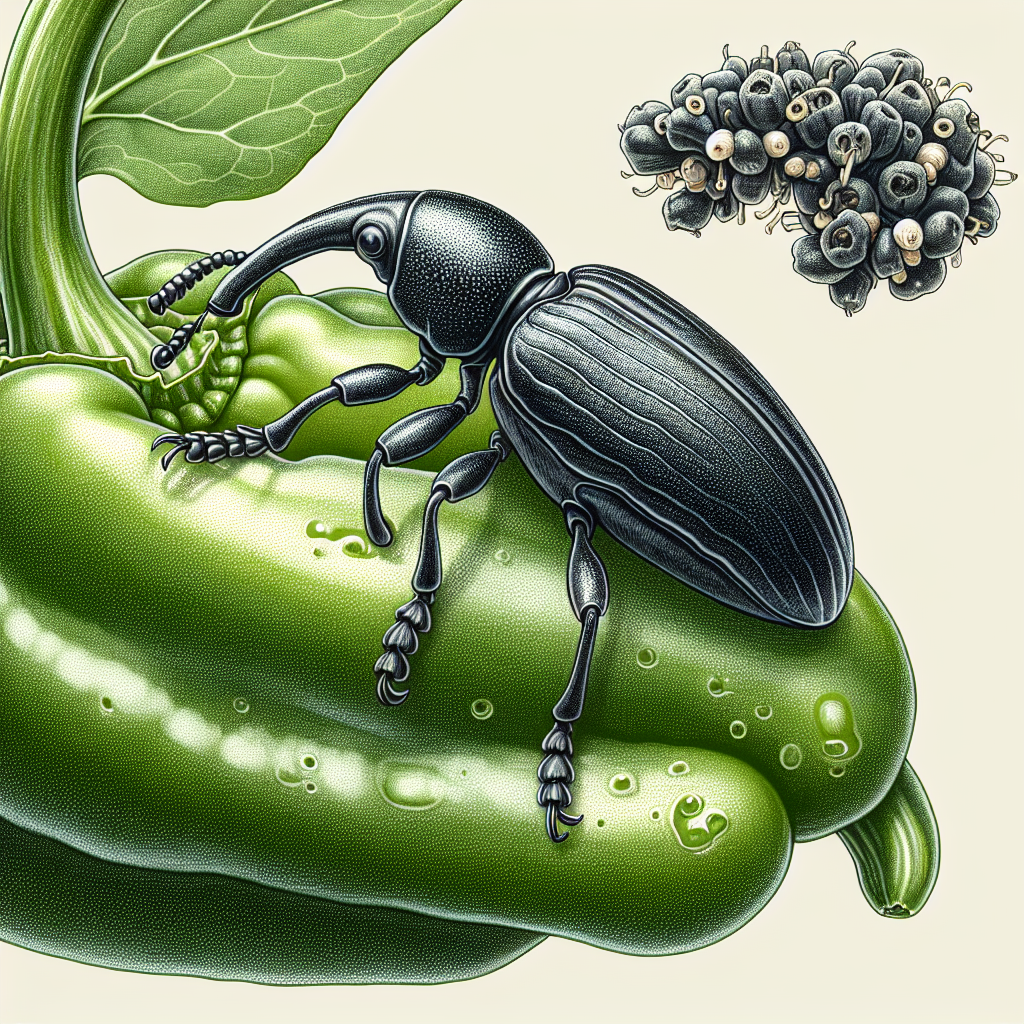
Introduction to Pepper weevil
The pepper weevil (Anthonomus eugenii) stands as one of the most destructive pests for pepper growers, particularly in warm climates like the southern United States, Mexico, and Central America. This small black beetle, measuring just 3-4 mm in length, targets the fruits, buds, and stems of peppers, leading to up to 90% yield losses in severe infestations. Unlike many pests that feed externally, the pepper weevil's larvae bore into plant tissues, making detection and control challenging. First identified in the U.S. in the early 1900s in Texas, it has since expanded its range to states like Florida, Georgia, and South Carolina, thriving in temperatures above 20°C (68°F).
Farmers often discover infestations too late, as adult weevils leave tiny puncture marks that are easily overlooked amid normal plant wear. The pest's life cycle, completed in as little as 20-30 days under optimal conditions, allows multiple generations per season, compounding damage rapidly. Economic impacts are severe: commercial pepper fields can lose millions in revenue annually, while home gardeners face ruined harvests. Understanding this pest's biology is crucial for timely intervention. For more on susceptible varieties, see the Bell Pepper page.
Integrated pest management (IPM) is the cornerstone of control, emphasizing prevention over reactive spraying. This guide provides diagnostic tools, lifecycle insights, organic strategies, and long-term prevention tactics to safeguard your peppers. Early scouting—checking buds and small fruits weekly—can prevent outbreaks, saving time and resources.
Identifying Symptoms & Damage
Pepper weevil damage manifests in subtle yet telling signs. Adult feeding creates shallow punctures on buds, leaves, and young fruits, appearing as small, circular holes (1-2 mm) often with gummy exudate. These 'shot-hole' marks are a hallmark, distinguishing them from flea beetles or other chewers. Infested buds drop prematurely, stunting plant growth and reducing flower set by 50-70%.
The most devastating damage occurs internally from larvae. Grubs tunnel through fruit walls, leaving frass-filled galleries that cause fruits to ripen unevenly, turn grayish-black, and drop. Sliced open, affected peppers reveal white, legless larvae (up to 3 mm) amid brown frass, often with a foul odor. Stems may show girdling or wilting from larval mining, mimicking root-knot nematodes but higher on the plant.
Heavy infestations lead to 'pinhole' peppers—riddled with exit holes from emerging adults—or mummified fruits that rot on the vine. Yield impacts vary: light pressure reduces fruit size by 20-30%; severe cases abort entire crops. Differentiate from diseases like bacterial spot by the presence of live larvae or adult weevils at dusk. Use a hand lens to spot reddish-brown adults with long snouts resting on undersides of leaves or calyces. Sticky traps baited with pepper fruit essence can confirm presence early.
Lifecycle and Progression of Pepper weevil
The pepper weevil completes 4-8 generations annually, depending on climate. Adults overwinter in crop debris, weeds, or nearby fields, emerging in spring when peppers bloom. Females lay 2-6 eggs daily into punctured buds or fruits, totaling 200-300 eggs lifetime. Eggs hatch in 3-5 days into creamy-white larvae that feed internally for 7-15 days, pupating within the host for another 3-5 days.
New adults emerge 20-30 days post-oviposition, feeding briefly before mating. Peak activity aligns with flowering and fruit set, with synchronized generations overwhelming defenses. Larvae rarely survive outside hosts, limiting natural spread, but adults fly up to 500 meters, invading new fields. Pupae are reddish, C-shaped in chambers within fruit.
Monitoring peaks in summer: adults cluster at dusk, dropping when disturbed. This lifecycle explains rapid buildups in monocultures. Sanitation disrupts it by eliminating pupation sites. For insights on related pests, check thrips.
Environmental Triggers & Risk Factors
Pepper weevils flourish in warm, humid conditions: optimal at 27-32°C (80-90°F) and 60-80% humidity. Infestations surge after mild winters (>10°C), allowing higher adult survival. Proximity to infested fields or volunteer peppers within 1 km poses the greatest risk—adults disperse readily.
Susceptible varieties like thin-walled Jalapeño Pepper or bell types amplify damage; thick-walled hybrids resist somewhat. Poor airflow in dense plantings traps humidity, favoring weevils over predators. Drought-stressed plants drop buds, concentrating eggs. Weeds like nightshades host weevils, bridging seasons. Soil types matter little, but no-till fields with residue harbor pupae.
Climate change extends ranges northward, with models predicting U.S. expansion by 2030. Read Spring Pest Patrol: Organic AI Strategies to Shield Your Crops from Common Invaders for predictive tools.
Organic Control & Treatment Plans
Organic management prioritizes IPM: scout weekly with yellow sticky traps (20-30/acre) and beat sheets, targeting 0.2 adults/trap/day for action. Remove and destroy infested fruits promptly—deep plow debris post-harvest kills 90% pupae.
Biologicals shine: release Catolaccus hunteri wasps (200/acre) or Anaphes iole for 70% parasitism. Neem oil (2% azadirachtin) deters oviposition; apply evenings to spare bees. Surround WP (kaolin clay) coats plants, repelling 60-80%. Spinosad targets larvae via drench or foliar (OMRI-approved, 0.5 oz/gal), rotating with BT kurstaki.
Trap crops like early jalapenos divert weevils. Mulches suppress soil pupae. Success metrics: <10% infested fruits. Combine for 85% control vs. 50% solo.
Preventing Pepper weevil in the Future
Prevention beats cure: rotate with non-hosts like corn (2-3 years), destroying volunteers. Plant resistant varieties (e.g., 'Paladin' bells). Time planting post-weevil peak; use row covers until bloom.
Border traps (pheromone-baited) intercept migrants. Enhance habitats for predators like big-eyed bugs via marigold interplants. Monitor via apps for hyper-local alerts. Post-harvest, flame-kill debris; solarize soil kills 95% pupae. Certified clean transplants essential. Long-term: diversify to eggplant blends.
Crops Most Affected by Pepper weevil
Primarily peppers: bell, chili, jalapeño, tabasco, cayenne. Chili Pepper suffers most (thin walls). Minor hosts: eggplant, nightshade weeds. No damage to tomatoes despite Solanaceae relation.