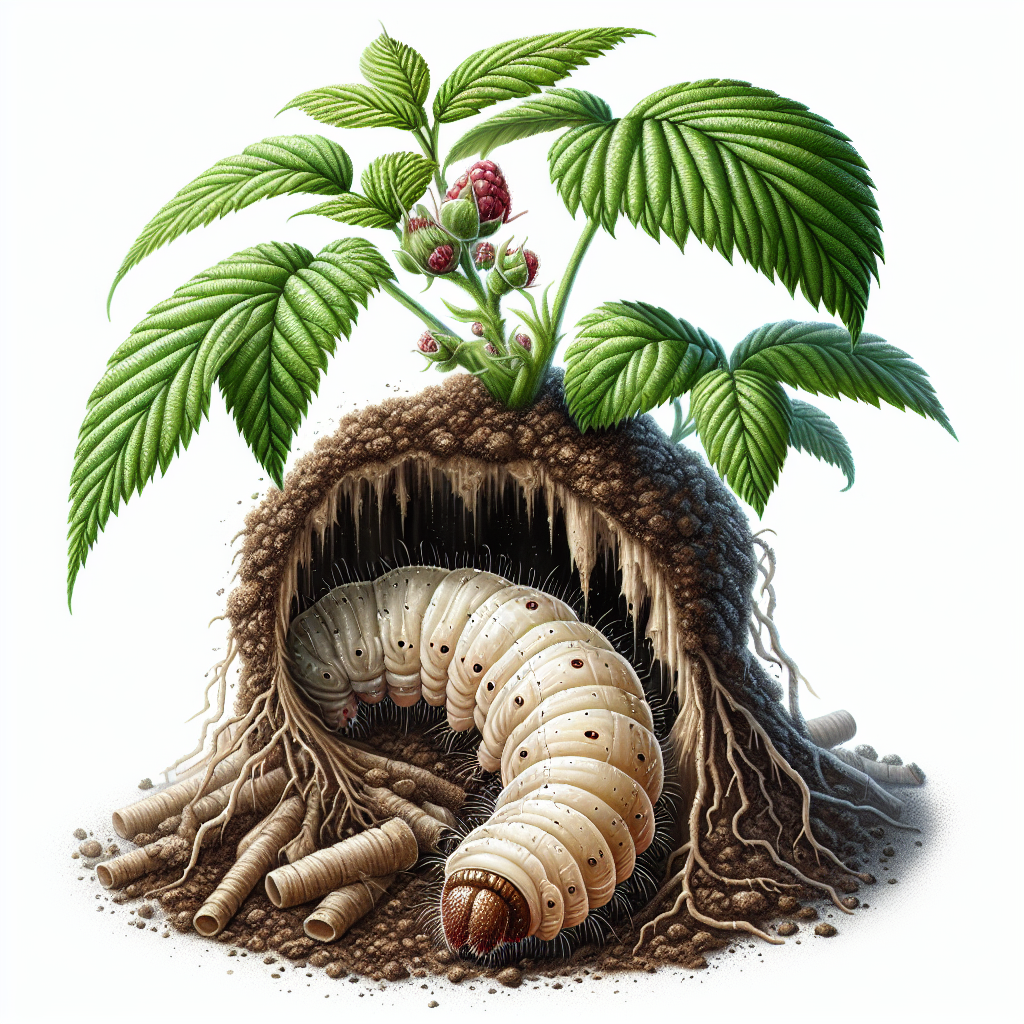
Introduction to raspberry crown borer
The raspberry crown borer, scientifically known as Pennisetia marginata, ranks among the most devastating pests affecting raspberry and blackberry plantations worldwide, particularly in North America. This clearwing moth species targets the crown and roots of bramble crops, leading to severe structural damage that often results in plant decline and death. Adult moths emerge in mid-summer, laying eggs at the base of canes, where larvae hatch and tunnel into vital plant tissues over two years. Growers face yield reductions of up to 50-100% in heavily infested fields, making vigilant monitoring essential. This definitive guide equips raspberry producers with professional-grade diagnostics, lifecycle insights, organic treatments, and prevention protocols to safeguard crops. Understanding this pest's biology enables timely interventions, preserving plant vigor and profitability. For small farms, integrating these strategies can prevent costly replanting. Learn more about effective Spring Pest Patrol: Organic AI Strategies to Shield Your Crops from Common Invaders to enhance your defense.
Identifying Symptoms & Damage
Accurate identification of raspberry crown borer damage is crucial for timely management, as symptoms mimic other issues like crown rot or drought stress. Early signs include wilting or yellowing of primocanes (first-year canes) starting from the top, progressing to a shepherd's crook appearance where tips droop and die. Affected canes often exhibit swollen, discolored areas at the base with visible sawdust-like frass (insect waste) near entry holes.
Inspect crowns by gently digging around the plant base: you'll find galleries tunneled 2-6 inches deep into roots and crowns, packed with creamy-white larvae up to 1 inch long with brown heads. In advanced infestations, multiple canes collapse, and plants produce sparse, weak fruiting laterals on floricanes. Entry holes, about 1/8 inch wide, appear just above soil line, often with reddish-brown sawdust. Severely damaged plants show basal girdling, leading to sudden death during fruiting.
Differentiate from similar pests: unlike cutworms, which sever stems at night, crown borer damage is internal and persistent. Compared to root-knot nematodes, borer galleries are larger and frass-filled. Use a knife to split crowns—larval tunnels confirm infestation. Scout weekly from July to September, focusing on field edges and stressed plants. Digital imaging tools can aid in rapid field diagnosis, improving accuracy for large operations.
Lifecycle and Progression of raspberry crown borer
The raspberry crown borer completes a two-year lifecycle, synchronizing with raspberry growth cycles for maximum damage. Adults are clearwing moths resembling wasps, with yellow and black bands on a 1-inch wingspan, active from July to August. Females lay 100-200 eggs singly at cane bases on dry, sunny days, hatching in 10-14 days.
First-instar larvae bore into the base of new primocanes, overwintering in shallow crown tunnels. In spring (year two), they resume feeding, enlarging galleries downward into roots and upward into older canes, overwintering again deeper in the crown. By mid-summer of the second year, mature larvae pupate in enlarged chambers, with adults emerging through exit holes (D-shaped) to restart the cycle.
Peak damage occurs during the second year, coinciding with fruit production. One generation every two years means populations build slowly but explode in neglected fields. Timing varies by region: northern areas see later emergence (late July), while southern sites peak in June. Monitor with pheromone traps starting June 1st, targeting 5-10 traps per acre. Understanding this progression allows precise scouting: check for eggs in summer, young larvae in fall, and large larvae in spring.
Environmental Triggers & Risk Factors
Raspberry crown borer thrives in specific conditions, exploiting bramble vulnerabilities. Poor air circulation from dense plantings (>4,000 plants/acre) and excessive nitrogen fertilization promote succulent growth, attracting egg-laying moths. Infestations spike in fields adjacent to wild brambles or abandoned patches, serving as reservoirs. Drought-stressed plants suffer higher mortality, as borer damage impairs water uptake.
Soil types influence spread: heavy clays retain moisture, favoring larval survival, while sandy soils allow deeper burrowing. Weedy fields with tall grass shield eggs from predators. Climate plays a role—mild winters reduce overwintering mortality, boosting populations 20-30%. New plantings from infested nurseries introduce the pest unknowingly. Risk escalates in black raspberry over red varieties due to susceptibility. Companion pests like aphids weaken plants, compounding damage. Mitigate by selecting certified stock and optimizing spacing (3-4 ft between plants, 8-10 ft rows).
Organic Control & Treatment Plans
Organic management of raspberry crown borer emphasizes cultural, biological, and mechanical tactics, avoiding synthetics for certified operations. Cultural Controls: Rotate crops with non-hosts like grapes or grains for 4-5 years to break lifecycle. Destroy wild brambles within 1/4 mile. Hill-drop soil 4-6 inches over crowns in fall to smother eggs and expose larvae to predators.
Biological Controls: Release beneficial nematodes (Steinernema carpocapsae) in late summer at 1 billion/acre, targeting young larvae (80% efficacy). Encourage natural enemies: birds, ground beetles, and parasitic wasps via hedgerows. Mechanical: Scout and hand-destroy infested crowns annually—split open, remove larvae, burn debris. Use pheromone traps (e.g., ISCA) to disrupt mating (10-20 traps/acre, replace lures monthly).
Treatment Timeline:
- June-July: Trap adults, remove weeds.
- August: Apply nematodes post-egg hatch.
- Spring: Dig and excise larvae.
- Post-harvest: Renovate, destroy old canes.
Integrate with sanitation: mow between rows, till lightly to disrupt pupae. For heavy infestations, rogue 20-30% plants yearly. Monitor efficacy via larval counts. These methods reduce populations 70-90% over 3 years. Avoid broad sprays preserving pollinators.
Preventing raspberry crown borer in the Future
Long-term prevention hinges on IPM fundamentals. Plant resistant varieties like Heritage raspberry or Meeker raspberry. Source virus-free, inspected nursery stock. Maintain vigor with balanced fertility (1-2% N), irrigation, and 20-30% cane thinning post-harvest.
Establish borders: 10-ft grass-free zones with mulch barriers deter moths. Annual monitoring with traps forecasts outbreaks—treat if >2 moths/trap/week. Solarize soil pre-planting kills pupae. Cover crops like buckwheat suppress weeds without hosting pests. Educate crews on symptoms for early reporting. Rotate insecticides sparingly, prioritizing BTK sprays (organic) on young larvae if thresholds hit. Long-term, biodiversity via interplanting marigold repels moths. Record-keeping tracks progress, adjusting plans yearly. Sustainable prevention yields healthy stands for 10+ years.
Crops Most Affected by raspberry crown borer
Primarily, red and black raspberries suffer most, with black raspberries most susceptible (90% mortality in untreated fields). Blackberries, especially trailing types like Chester blackberry, face moderate damage. Loganberries and boysenberries show similar vulnerability. Wild brambles (Rubus spp.) serve as reservoirs, amplifying spread to commercial plantings.
Other minor hosts include strawberry (rare crown attacks) and dewberries. Non-hosts like apple or blueberry provide rotation buffers. In mixed plantings, isolate brambles 100+ ft from wild edges. Economic impact hits hardest in Pacific Northwest and Midwest U.S., where raspberries dominate. Yields drop 30-70% first year, escalating without intervention. Prioritize monitoring in these crops for farm-wide protection.