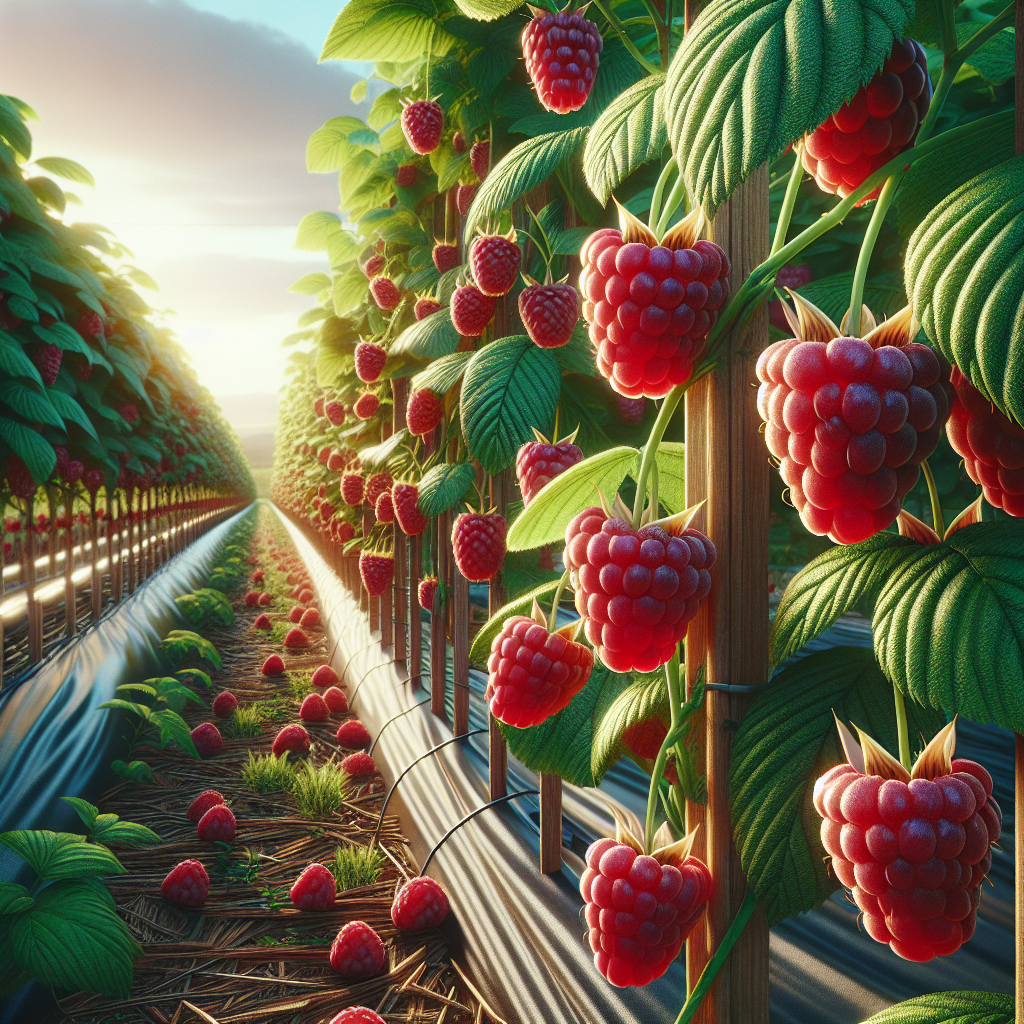
Introduction to Meeker Raspberry
Developed and widely adopted in the Pacific Northwest of North America, this cultivar became a benchmark red raspberry for commercial production because it combines excellent fruit quality with a strong, upright cane habit and consistent productivity. It is a summer-bearing, floricane-fruiting type, meaning it produces fruit primarily on second-year canes rather than on current-season growth. That distinction matters because pruning, fertility, and harvest planning are all built around a two-year cane cycle.
Meeker is best known for medium to large, bright red berries with a classic raspberry aroma, balanced sweetness and acidity, and a soft but still commercially useful texture when harvested at the correct stage. It has long been favored for freezing, jam, puree, and fresh market channels in cooler regions. Compared with some newer cultivars, it can be somewhat more disease-sensitive in poorly managed plantings, but under disciplined cultural practices it remains one of the most rewarding raspberries to grow.
Growers selecting Meeker should think like cane-fruit managers rather than generic berry gardeners. Site drainage, air movement, trellis design, cane renewal, and harvest timing directly determine whether fruit is premium-grade or soft and short-lived. For general species-level background, see our Raspberry guide.
Botanical Profile of Meeker Raspberry
This cultivar belongs to the rose family, Rosaceae, and more specifically to the red raspberry species complex centered on Rubus idaeus. Like other raspberries, it is a perennial plant with a long-lived crown and root system but biennial canes. First-year canes are called primocanes; these are vegetative in Meeker during their first growing season. In their second year they become floricanes, producing lateral branches, flowers, fruit, and then dying after harvest.
Meeker typically produces vigorous, fairly erect canes with moderate thorniness. Mature canes often reach 1.5 to 2.0 meters in height depending on fertility, irrigation, and pruning. Leaves are compound, usually with three to five leaflets, green above and paler beneath. The flowers are white, insect-pollinated, and borne in clusters on floricane laterals. Fruit is an aggregate of drupelets that separates cleanly from the receptacle when ripe, creating the characteristic hollow raspberry core.
Cultivar-specific strengths include high yield potential, strong flavor, relatively uniform ripening in the main season, and suitability for trellised row production. Fruit color is typically a deeper red than some lighter fresh-market cultivars, and the berries have a rich, traditional processing flavor. Meeker often performs especially well where summers are warm but not excessively hot, nights cool down reliably, and spring frost risk is managed.
One important nuance is that Meeker can be sensitive to cane diseases, root problems, and virus buildup if propagated carelessly or planted into old bramble ground. Certified disease-free planting stock is not optional for professional results; it is foundational.
Soil, pH, and Climate Requirements for Meeker Raspberry
This cultivar performs best in deep, well-drained loam or sandy loam with high organic matter and excellent internal drainage. Heavy clay can work only if extensively improved and planted on raised beds or berms. Standing water for even 24 to 48 hours during active growth can damage fine roots, reduce oxygen in the rhizosphere, and predispose plants to Phytophthora root rot. If soil remains sticky, gray-blue, or sulfur-smelling after rain, drainage is inadequate.
Target soil pH is 5.6 to 6.5, with an ideal working range around 5.8 to 6.2. Below about 5.5, nutrient availability can become unbalanced and root growth may slow; above 6.5, iron and manganese deficiencies become more likely, especially in calcareous soils. Conduct a full soil test before planting. If pH is low, apply agricultural lime several months in advance and incorporate it thoroughly. If pH is high, elemental sulfur is more effective when applied well ahead of planting rather than after the row is established.
Organic matter should ideally be above 3%, with 4% to 6% being excellent for moisture buffering and nutrient retention. Avoid fresh manure before planting because it can contribute excess soluble salts and overly lush cane growth. Well-finished compost is preferable, incorporated at moderate rates rather than in extreme amounts.
Climatically, Meeker is best suited to temperate regions with winter chilling, moderate summer heat, and low humidity during ripening if possible. It generally performs well in USDA zones roughly 4 through 8, though local conditions matter more than zone labels. Winter cold helps synchronize dormancy and bud break, but extremely severe winter lows can damage buds and canes without snow cover or wind protection. Summer temperatures between 18 and 27°C are ideal during flowering and fruit fill. Once daytime highs regularly exceed 30 to 32°C, berry size can shrink, sunscald risk increases, and fruit softening accelerates.
This cultivar needs full sun for maximum yield and sugar development, ideally at least 6 to 8 hours of direct light. In hotter inland climates, very light afternoon shade can reduce heat stress, but too much shade causes weak canes, longer internodes, and lower fruiting lateral development.
Water management should aim for consistently moist, never saturated soil. As a practical field standard, the root zone should feel cool and lightly damp at 10 to 15 cm depth, not muddy or bone dry. During rapid cane growth and fruit development, many plantings need 25 to 40 mm of water per week from irrigation plus rainfall, with more required in sandy soils. Overwatering symptoms include pale lower leaves, reduced vigor despite wet ground, root browning, and a plant that wilts in the heat even though the soil is wet because damaged roots cannot function properly.
Step-by-Step Planting & Propagation
Start with certified virus-indexed nursery stock from a reputable supplier. Avoid digging wild suckers or sharing plants from unknown gardens, as latent viruses and cane diseases often spread invisibly for years before yields crash.
- Choose a site where no raspberries, blackberries, or related brambles have grown for at least 3 to 5 years. This helps break cycles of soilborne disease and nematodes.
- Test soil 3 to 6 months before planting. Correct pH, phosphorus, potassium, calcium, and magnesium as recommended.
- Remove perennial weeds thoroughly. Quackgrass, bindweed, and thistle become severe long-term problems once raspberry rows are established.
- Form raised beds or berms 20 to 30 cm high in soils with less-than-ideal drainage.
- Incorporate compost and preplant nutrients evenly, not concentrated in planting holes.
- Install irrigation before or immediately after planting. Drip irrigation is strongly preferred because it keeps foliage drier and delivers precise moisture.
- Plant dormant bare-root canes or tissue-cultured plugs in early spring while conditions are cool and moist.
For spacing, home and market growers commonly use 45 to 60 cm between plants within the row and 2.4 to 3.0 meters between rows, depending on equipment access and training style. Commercial hedgerow systems may rely more on cane density than individual plant spacing once the row fills in.
Set plants so roots are spread naturally downward and outward, with the crown at or slightly below the soil surface. Planting too deep can reduce emergence and vigor; too shallow leaves roots exposed and prone to drying. Water in thoroughly to eliminate air pockets.
Immediately after planting, cut canes back if advised by the nursery, especially if roots are limited relative to cane height. Mulch with weed-free straw, leaf mold, or coarse compost, leaving a small gap around cane bases to reduce crown rot risk. Organic mulch moderates soil temperature and conserves moisture, but thick, wet mulch piled against crowns can encourage disease.
Trellising is highly recommended. A simple T-trellis or V-trellis improves air flow, light interception, spray penetration, and harvest efficiency. Even though Meeker has relatively upright growth, unsupported rows become tangled and harder to manage, especially under heavy crop load.
Propagation is usually by root suckers, tip-independent cane division, or nursery tissue culture rather than seed. For maintaining true-to-type, disease-free stock, tissue-cultured or certified sucker propagation is best. If propagating from your own planting, only select vigorous, symptom-free stools and never from rows showing crumbly fruit, mottled leaves, weak cane growth, or unexplained decline.
Care & Maintenance regimes for Meeker Raspberry
The first priority is cane management. Since Meeker fruits on floricanes, you must preserve strong primocanes each year to produce next season's crop. After harvest, remove spent floricanes at ground level as soon as practical. Do not leave them standing through winter; they harbor disease inoculum and shade new canes. Thin primocanes so the row does not become congested. A practical target is often 8 to 12 healthy canes per linear meter of row, adjusted for vigor and trellis style.
Dormant-season pruning should remove weak, broken, diseased, and overcrowded canes. Retain the strongest canes with good diameter, moderate internode length, and no purple lesions or cracking. In windy or snowy sites, tie canes to wires to reduce breakage.
Fertility should be based on leaf tissue and soil tests, but general red raspberry nutrition emphasizes moderate nitrogen, not excess. Too much nitrogen creates lush, soft growth that is more attractive to aphids and more vulnerable to spur blight and cane disorders. In mature plantings, split nitrogen applications are often effective: one at bud break and one shortly before harvest or immediately after, depending on local recommendations. Organic growers often use feather meal, blood meal blends, or composted poultry-based fertilizers carefully calibrated to avoid overapplication.
Watch plant signals. Nitrogen deficiency shows as pale green older leaves and thin canes. Excess nitrogen shows as dark green, rank primocanes with delayed hardening and dense shade inside the row. Potassium deficiency can appear as leaf margin scorch and reduced berry firmness. Calcium issues often worsen fruit softness indirectly through irregular water balance rather than obvious deficiency symptoms alone.
Irrigation is most critical during three windows: primocane establishment, bloom to fruit fill, and postharvest cane recovery. Drip systems should wet the upper 20 to 30 cm of soil where most feeder roots are concentrated. In sandy soils, shorter and more frequent irrigation cycles work better than occasional heavy watering. During harvest, avoid strong wet-dry swings because they contribute to crumbly fruit, poor size, and rapid postharvest collapse.
Weed control should be relentless but shallow. Raspberry roots are close to the surface, so aggressive cultivation can prune roots and stimulate unwanted sucker imbalance. Organic mulch, landscape fabric in aisles, hand weeding near crowns, and stale seedbed preparation before planting are effective. Living alley covers can help reduce erosion, but keep them from competing directly in the plant row.
Pollination usually relies on bees and other insects. Though red raspberries are partially self-fertile, good pollinator activity improves drupelet set and berry shape. Poor pollination contributes to misshapen or crumbly berries, especially in cool, wet bloom periods.
For broader fertility and bed-building concepts, the principles in soil health strategies are useful when preparing a long-lived cane fruit planting.
Pests, Diseases & Organic Management
Meeker can be highly productive, but it rewards preventative management more than rescue treatments. The most important rule is sanitation plus canopy openness.
Common insect pests include aphids, spider mites, raspberry crown borer, cane borers, Japanese beetles in some regions, and spotted wing drosophila where present. aphids matter not only for sap feeding but because they vector viruses. Inspect undersides of young leaves and shoot tips. If colonies build early, use strong water sprays, insecticidal soap, or horticultural oils compatible with local temperatures and bloom timing. Encourage predator populations by maintaining flowering borders and avoiding broad-spectrum insecticides.
spider mites thrive in hot, dusty, water-stressed conditions. Look for stippling, bronzing, and fine webbing on leaves. Keep plants evenly watered and reduce dust in row middles. Predatory mites can be highly effective in biologically managed systems.
spotted wing drosophila is a major late-season raspberry pest in many areas. Adults lay eggs in ripening fruit, and larvae quickly ruin berries. The best organic defenses are rapid, frequent harvest; immediate cooling; excellent sanitation; fine exclusion netting where practical; and removal of overripe fruit from the field.
Disease pressure often includes Phytophthora root rot, spur blight, cane blight, anthracnose, Botrytis fruit rot, and various viruses. Root rot risk rises sharply in heavy, poorly drained soils. Plants may appear stunted, with small leaves, weak cane emergence, and sudden collapse in warm weather. Once established, water mold diseases are difficult to reverse, so raised beds and careful site choice are the real control.
spur blight and cane diseases are favored by dense canopies, prolonged leaf wetness, and mechanical injury. Symptoms include purple to brown lesions near nodes, cracking bark, dead buds, and weak fruiting laterals. Prune for airflow, remove and destroy infected canes, avoid overhead irrigation, and sanitize pruning tools when disease is evident.
Botrytis fruit rot shows as gray fuzzy mold on berries, particularly in wet bloom and harvest periods. Trellising, narrow hedgerows, timely picking, and removal of cull fruit are essential. Avoid harvesting wet fruit whenever possible.
Virus complexes can cause mosaic symptoms, yellowing, crumbly fruit, weak vigor, and chronic decline. There is no cure. Rogue infected plants immediately and control aphid vectors. Never propagate from suspect rows.
Birds can also become a severe economic pest. Netting is often the only reliable solution once berries begin coloring.
Harvesting, Curing & Optimal Storage
Fruit is ready when berries separate easily from the receptacle, are fully colored, and have developed full aroma. Meeker berries should be picked when uniformly red and plump but before they soften excessively. For fresh market, harvest slightly firmer fruit; for processing, fruit can be allowed to reach fuller flavor maturity if cooling is immediate.
Pick every 1 to 3 days in warm weather. Delayed harvest reduces firmness dramatically and encourages Botrytis, drosophila infestation, and leakage. Harvest in the coolest part of the morning after dew dries, or in the evening if field temperatures remain high. Never stack deep containers in the field; raspberries bruise under their own weight.
Unlike onions or garlic, raspberries are not cured in the traditional drying sense. Postharvest handling is instead about fast field heat removal. Cool fruit to 0 to 2°C as quickly as possible, ideally within one hour of picking for premium quality. Relative humidity around 90 to 95% helps reduce shriveling, but free moisture on fruit surfaces should be avoided.
At ideal refrigeration temperatures, fresh Meeker raspberries typically hold only 2 to 5 days with good quality. Warmer storage, even at 5°C, shortens shelf life sharply. For longer preservation, freeze berries individually on trays before packing, or process immediately into jam, puree, or syrup.
Signs of overripe fruit include dull color, leakage, collapsed drupelets, and a fermented aroma. If berries consistently soften too quickly, investigate irrigation fluctuations, potassium status, overmaturity at picking, high nitrogen, and high field temperatures.
Companion Planting for Meeker Raspberry
The best companions are those that support pollinators, improve beneficial insect habitat, or occupy nearby space without aggressively competing in the raspberry root zone. Thyme works well along sunny margins because it attracts pollinators, stays relatively low, and does not cast heavy shade. Yarrow is valuable nearby for drawing predatory insects and parasitoids that help suppress aphids and other pests. Clover can be used in row middles as a managed living cover to reduce erosion and support soil biology, though it must be mowed and kept from creeping into crowns.
Garlic is another useful nearby companion, especially around the perimeter rather than directly in the root zone. Its upright habit makes it easier to fit into diversified plantings, and many growers appreciate its role in mixed pest-aware systems, though it should not be treated as a stand-alone pest cure.
Avoid planting raspberries adjacent to crops that share significant disease or pest overlap, especially poorly managed brambles. Also avoid heavy feeders or dense, shading species that compete for the same shallow moisture band. Companion planting should support the row ecosystem, not crowd it. In raspberry systems, plant spacing, air movement, and sanitation are still far more important than any companion effect.