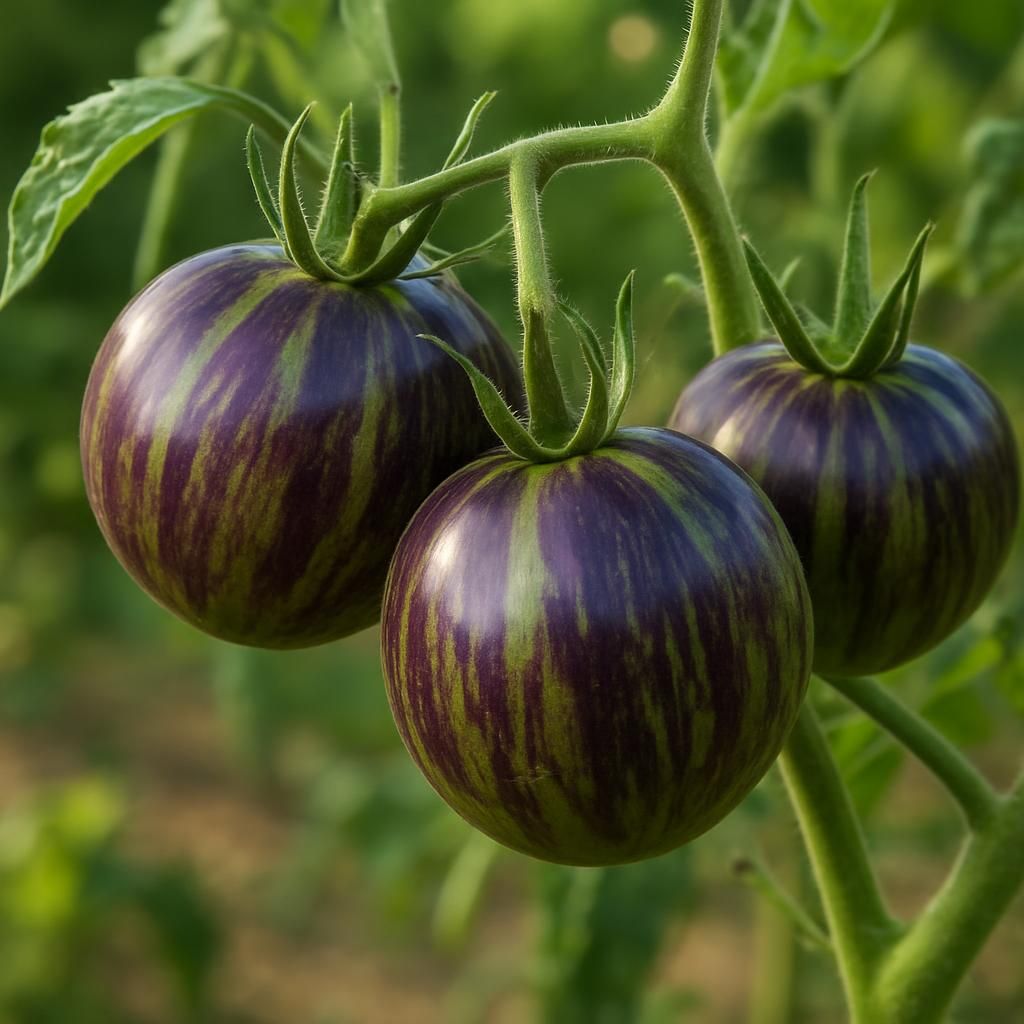
Introduction to Purple Bumble Bee Tomato
Purple Bumble Bee Tomato is a visually stunning cherry tomato cultivar distinguished by its deep purple skin streaked with green and occasionally gold highlights. Developed for both home gardeners and small-scale commercial growers, this variety combines ornamental appeal with excellent flavor and reliable yields. The fruits are bite-sized, typically 1–1.5 inches in diameter, and mature in approximately 60–70 days from transplant. Their complex sweet-tart profile with subtle smoky undertones makes them ideal for fresh eating, salads, and gourmet presentations. Because of its compact growth habit and high productivity, Purple Bumble Bee Tomato has become a favorite among urban farmers and market gardeners seeking both visual impact and culinary versatility.
Botanical Profile of Purple Bumble Bee Tomato
Purple Bumble Bee Tomato belongs to the Solanaceae family and is botanically classified as Solanum lycopersicum 'Purple Bumble Bee'. The plant exhibits semi-determinate growth, reaching 3–5 feet in height with a bushy structure that benefits from light staking or caging. Leaves are compound, dark green, and slightly fuzzy, typical of tomato morphology. The flowers are small, yellow, and self-pollinating, appearing in clusters along the stems. The fruit develops from these flowers and displays a distinctive anthocyanin-driven purple coloration that intensifies with sunlight exposure. Inside, the flesh is juicy with two to three locules and a balanced sugar-acid ratio. Seeds are small, flat, and light tan, numbering 30–60 per fruit. This variety shows moderate resistance to cracking and maintains firmness well after harvest.
Soil, pH, and Climate Requirements for Purple Bumble Bee Tomato (MUST INCLUDE A MARKDOWN TABLE OF IDEAL CONDITIONS)
Successful cultivation begins with understanding the precise environmental parameters that Purple Bumble Bee Tomato requires. The crop thrives in well-drained, fertile loam or sandy loam soils rich in organic matter. Soil pH should be maintained between 6.2 and 6.8 to optimize nutrient uptake, particularly calcium and magnesium. Temperature management is critical: daytime air temperatures of 70–85°F (21–29°C) and nighttime temperatures no lower than 55°F (13°C) promote vigorous growth and fruit set. The plant requires full sun exposure of at least 8 hours daily and benefits from protection against strong winds. Consistent moisture without waterlogging is essential; irrigation should supply 1–1.5 inches of water per week, adjusted for rainfall and evapotranspiration.
| Parameter | Ideal Range/Value | Notes |
|---|---|---|
| Soil Type | Well-drained loam or sandy loam | Incorporate 2–3 inches of compost annually |
| Soil pH | 6.2–6.8 | Test soil every season; adjust with lime or sulfur |
| Daytime Temperature | 70–85°F (21–29°C) | Avoid prolonged exposure above 90°F |
| Nighttime Temperature | 55–65°F (13–18°C) | Below 50°F slows growth and may cause blossom drop |
| Sunlight | Minimum 8 hours full sun | South-facing orientation maximizes yield |
| Water Requirement | 1–1.5 inches per week | Drip irrigation preferred to reduce foliar disease |
| Spacing | 18–24 inches between plants | 36–48 inches between rows for airflow |
Step-by-Step Planting & Propagation
Start seeds indoors 6–8 weeks before the last expected frost. Sow seeds ¼ inch deep in sterile seed-starting mix and maintain soil temperature at 75–80°F for optimal germination, which occurs in 7–10 days. Provide 14–16 hours of supplemental light daily to prevent leggy seedlings. Harden off transplants for 7–10 days by gradually exposing them to outdoor conditions. Transplant outdoors once soil temperature reaches at least 60°F and all danger of frost has passed. Dig holes twice the width of the root ball and amend with compost or well-aged manure. Space plants 18–24 inches apart in rows 36–48 inches wide. Install cages or stakes at planting time to support future growth. Water thoroughly after transplanting and apply a 2-inch layer of organic mulch to conserve moisture and suppress weeds.
Care & Maintenance regimes for Purple Bumble Bee Tomato (MUST INCLUDE A MARKDOWN TABLE OF WATER, FERTILIZER, AND PRUNING SCHEDULES)
Consistent care throughout the growing season ensures maximum yield and fruit quality. Begin with moderate nitrogen during vegetative growth, then shift toward phosphorus and potassium as flowering commences. Monitor soil moisture daily during peak summer heat and adjust irrigation accordingly. Remove suckers below the first flower cluster to direct energy into fruit production while maintaining airflow. Prune lower leaves that touch the soil to reduce disease pressure. Side-dress with compost tea or balanced organic fertilizer every 3–4 weeks during active growth.
| Growth Stage | Water Schedule | Fertilizer Application | Pruning Actions |
|---|---|---|---|
| Seedling (0–4 weeks) | Keep evenly moist; water daily if needed | Dilute fish emulsion every 10–14 days | None; focus on strong stem development |
| Vegetative (4–8 weeks) | 1 inch per week; increase in heat | Balanced 5-5-5 NPK every 3 weeks | Remove lower leaves touching soil |
| Flowering & Fruit Set | 1.25–1.5 inches per week | Switch to 5-10-10 or compost tea | Pinch suckers below first flower cluster |
| Fruit Ripening | Maintain consistent moisture | Reduce nitrogen; apply potassium tea | Continue removing diseased foliage |
| Post-Harvest Cleanup | Taper off as plants decline | None | Remove all plant debris to prevent overwintering pests |
Pests, Diseases & Organic Management
Purple Bumble Bee Tomato is susceptible to several common tomato pests and diseases. Aphids and whiteflies can rapidly colonize new growth and transmit viruses. Spider mites thrive in hot, dry conditions and cause stippling on leaves. Hornworms can defoliate plants overnight. Fungal threats include early blight, late blight, and septoria leaf spot. Implement integrated pest management by scouting weekly, using yellow sticky traps, and introducing beneficial insects such as lady beetles and lacewings. Apply neem oil or insecticidal soap at the first sign of infestation. For disease prevention, practice crop rotation, avoid overhead watering, and maintain proper plant spacing. Remove and destroy infected foliage immediately. Copper-based fungicides or Bacillus subtilis sprays provide organic protection during humid periods.
Harvesting, Curing & Optimal Storage
Harvest Purple Bumble Bee Tomatoes when the purple coloration is fully developed and the fruit yields slightly to gentle pressure. Pick in the morning when temperatures are cooler to preserve flavor and firmness. Use clean pruners to cut the stem just above the fruit, leaving a small calyx attached. For immediate use, store at room temperature away from direct sunlight. To extend shelf life, place unwashed fruits in a single layer in a cool, dark location (55–60°F). For longer storage, freeze whole or process into sauces and salsas. Avoid refrigeration of ripe fruit as it diminishes flavor. Green fruits harvested at season's end can be ripened indoors in a paper bag with an ethylene-producing fruit such as a banana.
Companion Planting for Purple Bumble Bee Tomato
Strategic companion planting enhances growth, deters pests, and improves flavor. Basil planted nearby repels aphids and whiteflies while potentially improving tomato taste. Marigold flowers attract beneficial insects and mask the scent of tomato plants from pests. Nasturtium acts as a trap crop for aphids and provides edible flowers. Garlic and onion deter spider mites and nematodes when interplanted. Avoid planting near fennel or walnut trees, which can inhibit tomato growth through allelopathy. Rotate tomatoes with legumes or brassicas in subsequent seasons to break pest and disease cycles and maintain soil fertility.