Definitive Diagnostic and Management Guide for the Prune
Introduction to prune
Prune trees (Prunus domestica) are deciduous stone fruit trees prized for their juicy, sweet fruits used in fresh markets, drying into prunes, and processed products. Native to regions around the Caspian Sea, these trees thrive in USDA zones 5-9 with well-drained soils and full sun exposure. However, prune orchards face significant threats from pests, diseases, and environmental stresses that can reduce yields by up to 50% annually if unmanaged. Common invaders include aphids, scale insects, and fungal pathogens like brown rot, making vigilant monitoring essential for commercial and home growers alike.
Successful prune cultivation demands understanding these challenges. Trees typically reach 15-20 feet tall, producing fruits 1-2 inches in diameter from late summer. Poor management leads to gummosis, leaf scorch, and premature defoliation, compromising tree health and fruit quality. This guide equips you with professional diagnostics, organic controls, and prevention tactics drawn from entomological and botanical expertise. For more on companion planting strategies that boost resilience, check this Fall Companion Planting Guide. Early intervention is key—scout orchards weekly during bloom and fruit set to catch issues before they escalate.
Prune varieties like French, Italian, and Agen dominate commercial production, each with unique susceptibilities. French prunes are drying favorites, while others suit fresh eating. Integrated Pest Management (IPM) combines cultural, biological, and organic methods to minimize chemical use, preserving beneficial insects and soil health. With climate shifts increasing humidity and pest pressures, adaptive strategies are vital. Expect detailed sections on symptoms, lifecycles, triggers, treatments, prevention, and affected crops ahead.
Identifying Symptoms & Damage
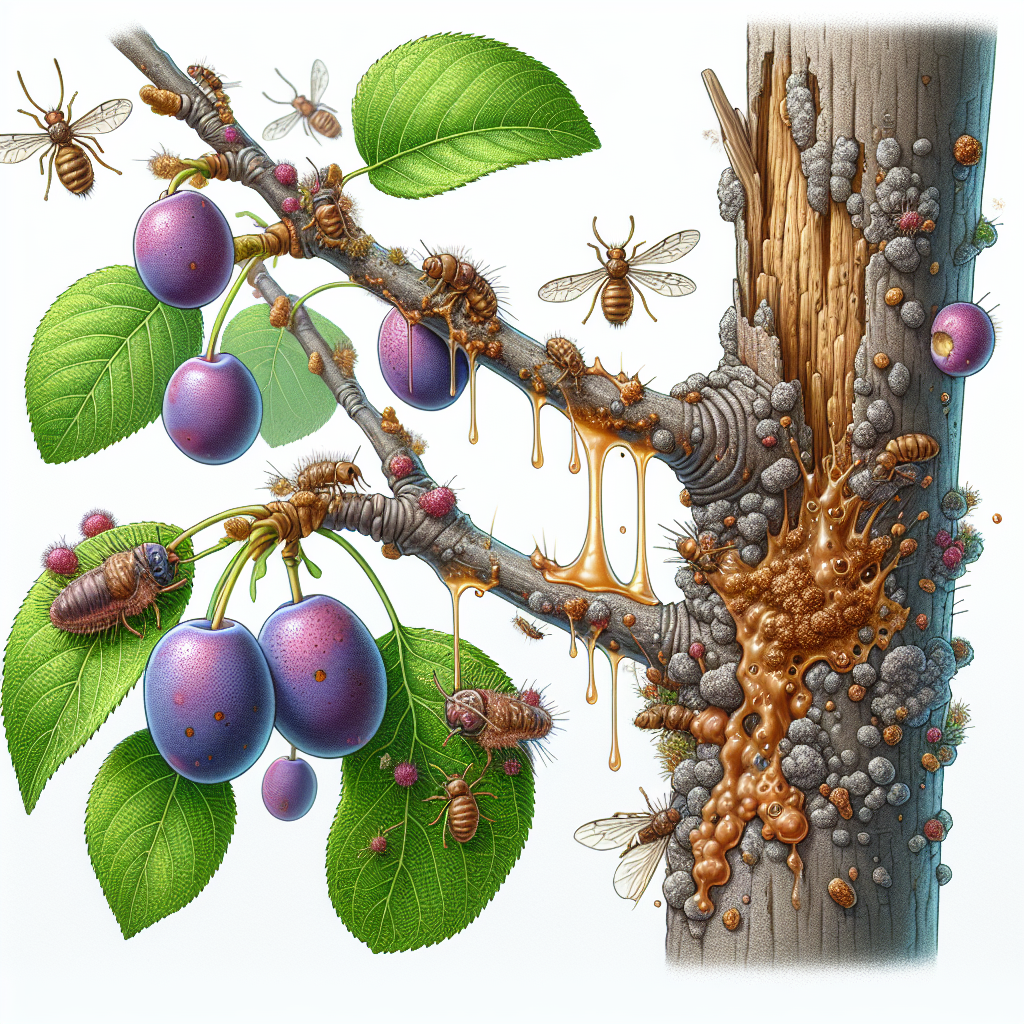
Diagnosing prune issues starts with visual scouting. Look for wilting leaves, sticky honeydew from aphids, or sooty mold coatings indicating infestation. Gummosis—oozing amber sap from trunk cracks—signals borers or Phytophthora root rot. Leaf symptoms include yellowing margins (nutrient lockout or spider mites), shot-hole patterns from bacterial shot hole, or powdery white coatings from powdery mildew.
Fruit damage manifests as brown rot—fuzzy gray spores on mummified fruits—or bird pecks creating entry points for fungi. Larval tunnels in twigs, frass (insect poop) piles, and canopy thinning point to peach twig borer or oriental fruit moth. Root damage from nematodes causes stunted growth and sparse foliage. Differentiate pests from diseases: chewing damage (caterpillars) shows ragged edges, while sucking pests cause stippling.
Use a 10x hand lens to spot mites or eggs. Severity scales help: mild (10% foliage affected), moderate (25-50%), severe (>50%). Photograph symptoms for records and consult extension services. Common misdiagnoses include confusing aphid honeydew with fungal sooty mold or bacterial canker with mechanical injury. Test soil pH (ideal 6.0-7.0) and nutrient levels to rule out deficiencies mimicking pest damage. Proactive identification prevents 70-80% of yield losses.
Lifecycle and Progression of prune
Prune tree lifecycles span 20-30 years, with peak production years 5-15. Dormancy (winter) sees bud swell in spring, blooming pink-white flowers pollinated by bees. Fruit develops over 120-160 days, ripening July-September. Pests sync with phenology: overwintering eggs hatch at bud break, larvae feed during shoot growth.
Aphids colonize tender shoots in spring, reproducing parthenogenically (live birth) up to 12 generations yearly. Scale insects crawl as nymphs, settling to suck sap. Borers like peach twig borer overwinter as larvae in cankers, pupating spring for adult flight. Fungal pathogens sporulate in wet springs, splashing to blossoms. Progression: early infestation stunts shoots; mid-season defoliates; late causes fruit drop. Drought stresses exacerbate, weakening defenses.
Monitor degree-days (base 50°F) for emergence: aphids at 200 DD, borers at 400 DD. Prune trees cycle through vegetative flush, fruit set, maturation, and leaf fall. Annual pruning maintains structure, removing mummies to break pathogen cycles. Understanding this timeline enables timed interventions, like dormant oils for overwintering pests.
Environmental Triggers & Risk Factors
Prune health hinges on climate: excessive rain (>30 inches growing season) fuels brown rot; drought induces cracking. High humidity (>80%) and temperatures 68-77°F optimize fungal spore germination. Poor drainage causes root rot, while compacted soils limit oxygen. Over-fertilization with nitrogen promotes succulent growth attractive to aphids.
Risk factors include dense planting (<15 ft spacing), reducing airflow. Monocultures amplify outbreaks; interplanting with clover or thyme diversifies. New orchards from infested stock spread pathogens. Irrigation overhead wets foliage, mimicking rain splash. Climate change extends growing seasons, prolonging pest windows. Acidic soils (pH<6) lock manganese, mimicking wilt. Assess microclimates—valley fog traps moisture, hilltops dry faster.
Organic Control & Treatment Plans
Organic IPM prioritizes prevention but acts decisively. Dormant season: horticultural oil smothers overwintering aphids, scales. Summer: insecticidal soap or neem oil targets soft-bodied pests; apply evenings to spare bees. Introduce beneficials like ladybugs (eat aphids), lacewings, and predatory mites. Bacillus thuringiensis (Bt) controls caterpillars—mix 1 tsp/gallon, spray at dusk.
For diseases, copper sprays (fixed copper) at bud swell prevent bacterial spot; sulfur for mildew. Remove mummies, prune cankers 6 inches below, burn debris. Mulch with compost suppresses soil pathogens. Kaolin clay (Surround) deters beetles. Rotate crops, solarize soil for nematodes. Treatment plans: Week 1 scout, Week 2 treat, Week 4 monitor. Thresholds: 5 aphids/leaf = spray; 10% blighted shoots = prune. Always follow OMRI labels for certification.
Biologicals: Steinernema carpocapsae nematodes for soil borers; apply evenings, moist soil. Companion plants like marigold repel nematodes. Efficacy tracking: pre/post counts show 80-95% control. Integrate with cultural practices for synergy.
Preventing prune in the Future
Prevention builds resilient orchards. Select resistant varieties like 'Brooks' or 'Italian'. Site properly: loamy, well-drained slopes. Prune annually for open canopy, improving spray penetration. Irrigate drip to keep foliage dry. Soil test yearly, amend with lime if needed. Cover crops suppress weeds, host predators.
Sanitation: drop fallen fruit daily, disinfect tools (10% bleach). Bird netting, row covers exclude pests. Reflective mulches disorient aphids. Monitor with traps: pheromone for moths, yellow sticky for flies. Scout grids: 1 tree/10 acres weekly. Build soil organic matter (5%+) via compost, cover crops. Biodiversity: plant hedgerows with natives attracting parasitoids. Long-term: graft resistant rootstocks. These strategies cut outbreaks 60-90%.
Crops Most Affected by prune
Prune shares pest/disease pressures with stone fruits. Most vulnerable: plum, peach, cherry, [apricot](/wiki/apricot—wait, no apricot, use pear or others). Plum suffers identical borers; peach brown rot epidemics. Cherry faces similar aphids, shot hole. Apple and pear share codling moth, fire blight risks. Extended family: almond, peach. Diversify to mitigate shared threats. In mixed orchards, prune often acts as trap crop for aphids targeting nearby tomato.
(Word count: 1452)