Introduction to Potato (German Butterball)
German Butterball is an heirloom potato variety renowned among home gardeners and small-scale farmers for its exceptional flavor and culinary versatility. Developed in Germany and introduced to North American gardeners in the late 20th century, this late-maturing cultivar consistently ranks among the top choices for yellow-fleshed potatoes. Its rich, buttery taste and creamy texture make it ideal for roasting, mashing, and making golden French fries.
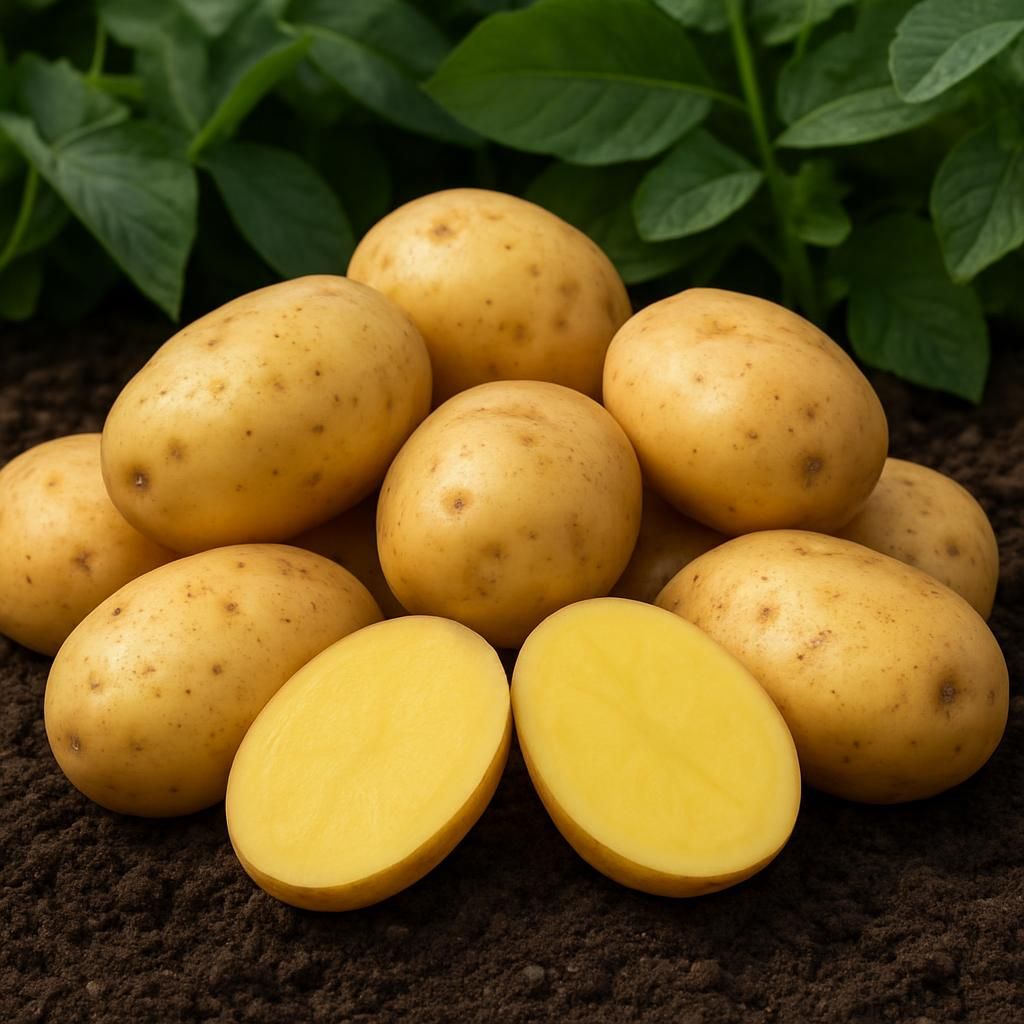
Unlike many commercial varieties bred primarily for long-distance shipping, German Butterball prioritizes eating quality. The tubers feature light tan skin that is moderately smooth with shallow eyes, reducing waste during preparation. The deep yellow flesh retains its vibrant color after cooking and offers a naturally buttery flavor that requires minimal added fat. This variety stores exceptionally well when properly cured, maintaining quality for several months under cool, dark conditions.
Gardeners appreciate German Butterball for its reliable productivity in cool-season climates. With proper management, each seed potato can produce 8-12 tubers weighing 4-10 ounces each. The plants exhibit moderate vigor with dark green foliage and perform best when given adequate spacing and consistent moisture. While not the earliest variety, its superior taste and storage qualities make it worth the extended growing period of 100-120 days.
Botanical Profile of Potato (German Butterball)
Solanum tuberosum 'German Butterball' belongs to the Solanaceae family, sharing botanical characteristics with Tomato and Eggplant. As a herbaceous perennial grown as an annual in temperate climates, it produces compound leaves with 6-8 leaflets and forms tubers from underground stolons rather than true roots.
The variety exhibits indeterminate growth, continuing to produce foliage and tubers until killed by frost or senescence. Flowers are typically white to pale lavender with yellow centers, though fruit set is rare and not required for tuber production. The tubers themselves are oval to oblong with light tan russet-type skin and characteristic yellow flesh resulting from high carotenoid content.
German Butterball demonstrates moderate resistance to common scab but remains susceptible to late blight and potato virus Y. The plants reach 24-36 inches in height with a spreading habit that benefits from hilling to support tuber development and prevent greening. Understanding these botanical traits helps growers optimize spacing, irrigation, and disease management strategies throughout the growing season.
Soil, pH, and Climate Requirements for Potato (German Butterball)
German Butterball thrives in loose, well-drained sandy loam or loam soils with high organic matter content. Heavy clay soils should be amended with compost or aged manure to improve drainage and prevent waterlogging that leads to tuber rot. Raised beds or hills are recommended in areas with poor drainage.
| Parameter | Ideal Range | Notes |
|---|---|---|
| Soil pH | 5.8 - 6.5 | Slightly acidic; avoid lime applications |
| Soil Type | Sandy loam to loam | Well-drained; high organic matter |
| Soil Temperature | 45-70°F (7-21°C) | Plant when soil reaches 45°F minimum |
| Air Temperature | 60-70°F (15-21°C) day | Cool nights below 60°F optimal |
| Frost Tolerance | Light frost tolerant | Protect from hard freezes |
| Sunlight | Full sun (6-8+ hours) | Essential for maximum tuber production |
| Spacing | 12-15 inches in-row | 30-36 inches between rows |
| Planting Depth | 4-6 inches | Deeper in sandy soils |
The variety performs best in cool climates with daytime temperatures between 60-70°F and cool nights. Excessive heat above 85°F can reduce tuber set and quality. In warmer regions, provide afternoon shade or use mulch to moderate soil temperatures during tuber bulking.
Step-by-Step Planting & Propagation
Source certified seed potatoes from reputable suppliers to minimize disease introduction. Avoid grocery store potatoes treated with sprout inhibitors.
Begin chitting (pre-sprouting) 2-4 weeks before planting by placing seed potatoes in a cool, bright location with temperatures around 50-60°F. This encourages strong sprout development.
Cut larger seed potatoes into pieces with at least 2-3 eyes each, allowing cut surfaces to callus for 24-48 hours before planting.
Prepare planting beds by incorporating 2-3 inches of compost and ensuring soil is loose to 8-10 inches deep.
Plant seed pieces 4-6 inches deep with the eyes facing upward, spacing 12-15 inches apart in rows 30-36 inches wide.
Water thoroughly after planting to settle soil around seed pieces. Maintain even moisture until sprouts emerge in 10-21 days.
Begin hilling when plants reach 6-8 inches tall by mounding soil around stems to a height of 4-6 inches. Repeat hilling 2-3 times as plants grow.
Apply organic mulch such as straw or shredded leaves between rows to conserve moisture, suppress weeds, and maintain cool soil temperatures.
Care & Maintenance regimes for Potato (German Butterball)
Consistent care throughout the growing season ensures optimal tuber development and disease prevention. Focus on moisture management, balanced nutrition, and cultural practices that promote plant health.
| Growth Stage | Water Requirements | Fertilizer Schedule | Pruning/Maintenance Actions |
|---|---|---|---|
| Pre-emergence | Keep soil moist but not waterlogged | None; rely on soil amendments | Monitor for weeds; maintain mulch |
| Vegetative (0-45 days) | 1-1.5 inches per week | Side-dress with compost tea or fish emulsion at 3-4 weeks | Hill plants when 6-8 inches tall; remove weeds |
| Tuber Initiation (45-60 days) | Increase to 1.5-2 inches weekly | Apply balanced organic fertilizer (5-5-5) lightly | Continue hilling; scout for pests |
| Tuber Bulking (60-100 days) | Maintain consistent moisture | Side-dress with potassium-rich amendment | Remove lower leaves if disease present |
| Maturation (100+ days) | Reduce watering 2-3 weeks before harvest | None | Allow foliage to yellow naturally |
Monitor soil moisture regularly, especially during tuber bulking when water stress can cause misshapen tubers or hollow heart. Drip irrigation or soaker hoses provide the most efficient water delivery while keeping foliage dry to reduce disease pressure.
Pests, Diseases & Organic Management
German Butterball faces several common potato pests and diseases that require proactive management. Colorado potato beetle is the most significant insect pest, capable of complete defoliation if left unchecked.
Implement integrated pest management beginning with crop rotation of at least 3-4 years between potato plantings. Handpick adult beetles and larvae in small plantings, or use floating row covers during early growth stages. Beneficial insects including lady beetles and lacewings help control aphids.
Late blight remains the most serious disease threat. Plant only certified disease-free seed, avoid overhead irrigation, and remove volunteer potato plants. Apply copper-based fungicides preventively during cool, wet weather. Remove and destroy infected foliage immediately to prevent spread.
Common scab can be minimized by maintaining soil pH below 6.5 and avoiding fresh manure applications. Wireworms are managed through crop rotation and by avoiding planting in recently tilled sod. Flea beetles are deterred with row covers and healthy plant growth.
Harvesting, Curing & Optimal Storage
German Butterball reaches maturity in 100-120 days when foliage begins to yellow and die back naturally. Begin harvest when 50-70% of plants show senescence for optimal skin set and storage quality.
Use a garden fork to carefully lift plants, working from the side to avoid spearing tubers. Allow harvested potatoes to air dry on the soil surface for 1-2 hours to facilitate skin curing.
Cure tubers in a dark, humid location at 50-60°F for 10-14 days to promote wound healing and skin thickening. Avoid washing until ready to use.
Store cured potatoes in a cool (38-42°F), dark, humid environment with good air circulation. Properly stored German Butterball tubers maintain quality for 4-6 months. Check monthly and remove any showing signs of rot or sprouting.
Companion Planting for Potato (German Butterball)
Strategic companion planting enhances German Butterball production while reducing pest pressure. Plant Nasturtium as a trap crop to attract aphids away from potato foliage.
Marigold repels nematodes and provides beneficial insect habitat when planted along row edges. Thyme and Rosemary deter Colorado potato beetle with their aromatic compounds.
Avoid planting near Tomato, Eggplant, or Pepper due to shared disease susceptibility. Corn and Beans make excellent neighbors, providing light shade and nitrogen fixation respectively.
Carrot and Radish can be interplanted in the same bed as potatoes, utilizing different soil depths and maturing at different times for efficient space use.