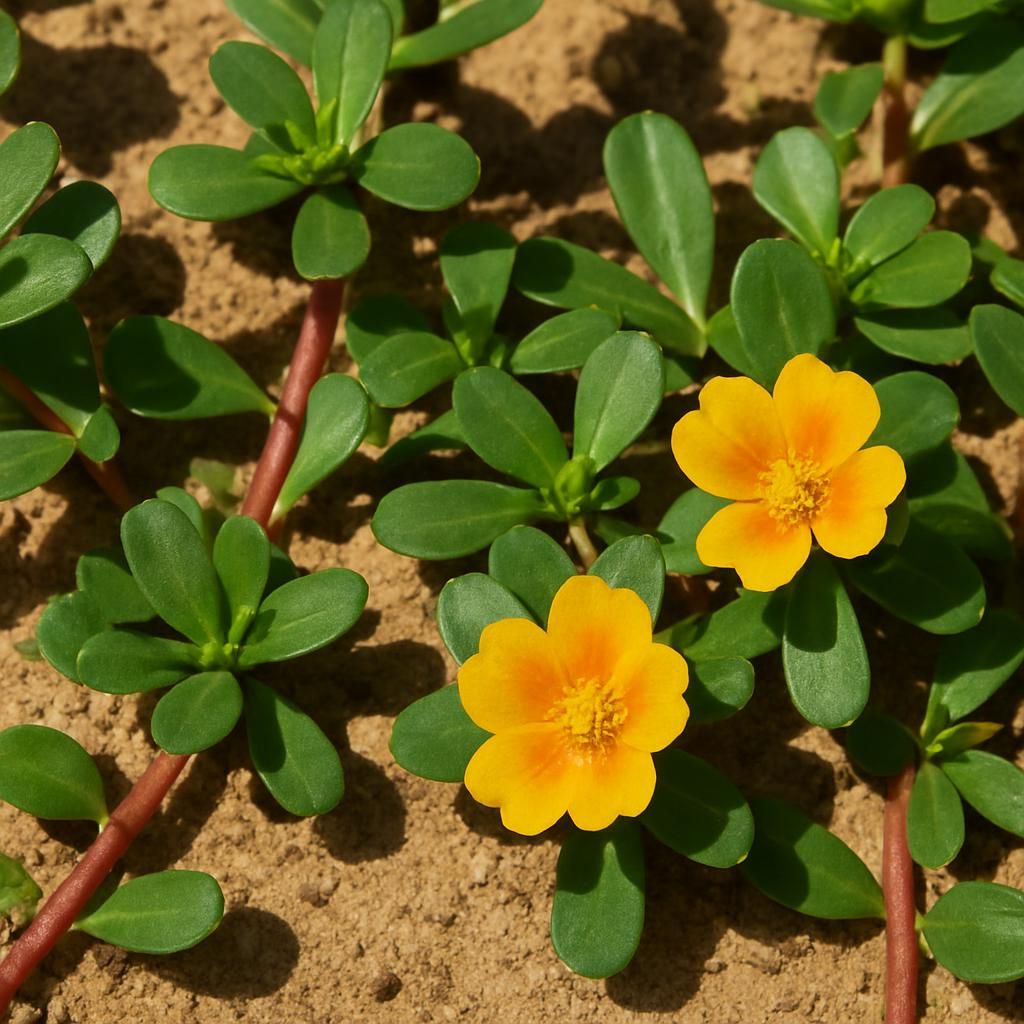
Introduction to Portulaca
Portulaca, also known as purslane or moss rose, is a versatile succulent annual that serves dual purposes as both a nutritious leafy green and a colorful ornamental groundcover. Native to regions with hot, dry climates, this crop has gained popularity among professional growers and home gardeners for its exceptional heat and drought tolerance, rapid growth cycle, and minimal resource requirements. The plant produces succulent, reddish stems and fleshy leaves that are rich in omega-3 fatty acids, vitamins, and antioxidants, making it a valuable addition to sustainable agricultural systems. In commercial settings, Portulaca is increasingly cultivated for its edible varieties, while ornamental types with large, brightly colored blooms are favored for landscaping and container production.
Botanical Profile of Portulaca
Portulaca oleracea belongs to the Portulacaceae family and exhibits a prostrate to ascending growth habit, typically reaching heights of 10-30 cm with a spread of up to 60 cm. The stems are fleshy, often reddish, and branch extensively from the base, forming dense mats that effectively suppress weeds. Leaves are alternate, obovate to spatulate, and measure 1-3 cm in length, with a smooth, succulent texture that stores water efficiently. Small, five-petaled flowers appear in shades of yellow, orange, pink, red, or white, opening only in direct sunlight and closing by late afternoon. The fruit is a small capsule containing numerous tiny black seeds that can remain viable in soil for several years. This botanical adaptability enables Portulaca to thrive in disturbed soils, roadsides, and agricultural fields across tropical, subtropical, and temperate zones.
Soil, pH, and Climate Requirements for Portulaca
Portulaca excels in well-drained, sandy or loamy soils with low to moderate fertility. The crop is highly sensitive to waterlogging and performs best when excess moisture drains rapidly from the root zone. Optimal soil conditions support vigorous growth while minimizing disease pressure associated with overly wet environments.
| Parameter | Ideal Range | Notes |
|---|---|---|
| Soil Type | Sandy loam to loamy sand | Excellent drainage essential |
| Soil pH | 5.5 - 7.5 | Tolerates slightly acidic to neutral |
| Temperature | 20-35°C daytime | Frost sensitive; minimum 10°C |
| Sunlight | Full sun (6-8+ hours) | Critical for flowering and compact growth |
| Spacing | 15-20 cm between plants | 30-40 cm between rows |
| Soil Fertility | Low to moderate | Excess nitrogen promotes leggy growth |
Step-by-Step Planting & Propagation
Portulaca is propagated primarily from seed, though stem cuttings root readily for rapid multiplication of desirable varieties. Begin by preparing a fine, weed-free seedbed with excellent drainage; raised beds or containers with drainage holes are ideal. Sow seeds directly outdoors after the last frost when soil temperatures reach 18°C or higher, pressing seeds lightly into the surface without covering as they require light for germination. Maintain consistent moisture during the 7-14 day germination period, then reduce watering as seedlings establish. Thin seedlings to 15-20 cm spacing once they develop true leaves. For faster establishment of specific cultivars, take 5-8 cm stem cuttings from healthy plants, remove lower leaves, and root in well-drained media under high humidity for 10-14 days before transplanting. Successive sowings every 3-4 weeks extend the harvest window throughout the growing season.
Care & Maintenance regimes for Portulaca
Portulaca requires minimal intervention once established, thriving on neglect compared to most vegetable crops. Focus on preventing competition from weeds during the first 3-4 weeks and ensuring excellent drainage throughout the season. Over-fertilization should be avoided as it reduces flavor and flowering quality.
| Aspect | Schedule | Details |
|---|---|---|
| Watering | Every 7-10 days once established | Deep, infrequent watering; allow soil to dry between irrigations |
| Fertilizer | At planting only | Low-nitrogen, balanced organic fertilizer or compost tea at 50% recommended rate |
| Pruning | Every 4-6 weeks | Pinch growing tips to encourage bushiness and prolong flowering; remove spent blooms |
| Mulching | At planting | 2-3 cm organic mulch to retain moisture and suppress weeds |
| Weeding | First 3-4 weeks | Hand-weed or shallow cultivation to avoid root damage |
Pests, Diseases & Organic Management
Portulaca is remarkably resistant to most pests and diseases due to its succulent nature and rapid growth. Occasional issues include Aphids, Spider Mites, and Slugs during periods of high humidity or cool weather. Fungal problems such as Root Rot or Botrytis may occur in poorly drained soils. Implement integrated management by maintaining proper spacing for air circulation, using reflective mulches to deter aphids, and applying neem oil or insecticidal soap for early infestations. Encourage beneficial insects like ladybugs and lacewings through diverse planting. Remove and destroy infected plant material promptly, and improve drainage to prevent recurrence of soil-borne pathogens.
Harvesting, Curing & Optimal Storage
Harvest Portulaca leaves and young stems when plants reach 10-15 cm in height, typically 30-45 days after sowing. Cut stems 2-3 cm above soil level using clean shears to allow regrowth for multiple harvests. For maximum nutritional value, harvest in the morning when omega-3 content is highest. Fresh leaves store in the refrigerator for 5-7 days in perforated bags. For longer storage, blanch leaves for 30 seconds, cool rapidly, and freeze in airtight containers for up to 6 months. Seeds can be collected when capsules turn brown and dry, then stored in cool, dark conditions for up to 3 years with 80%+ viability.
Companion Planting for Portulaca
Portulaca pairs effectively with other heat-tolerant, drought-resistant crops that share similar cultural requirements. Excellent companions include Tomato, Eggplant, Bell Pepper, and Okra, where its dense growth suppresses weeds and its flowers attract pollinators. Avoid pairing with heavy feeders or moisture-loving crops such as Lettuce or Cabbage that may compete for resources or create overly humid microclimates. Interplanting with Marigold or Nasturtium enhances pest deterrence while maintaining the low-water, full-sun conditions Portulaca prefers. In container systems, combine with Zucchini or Cucumber for efficient space utilization and improved biodiversity.