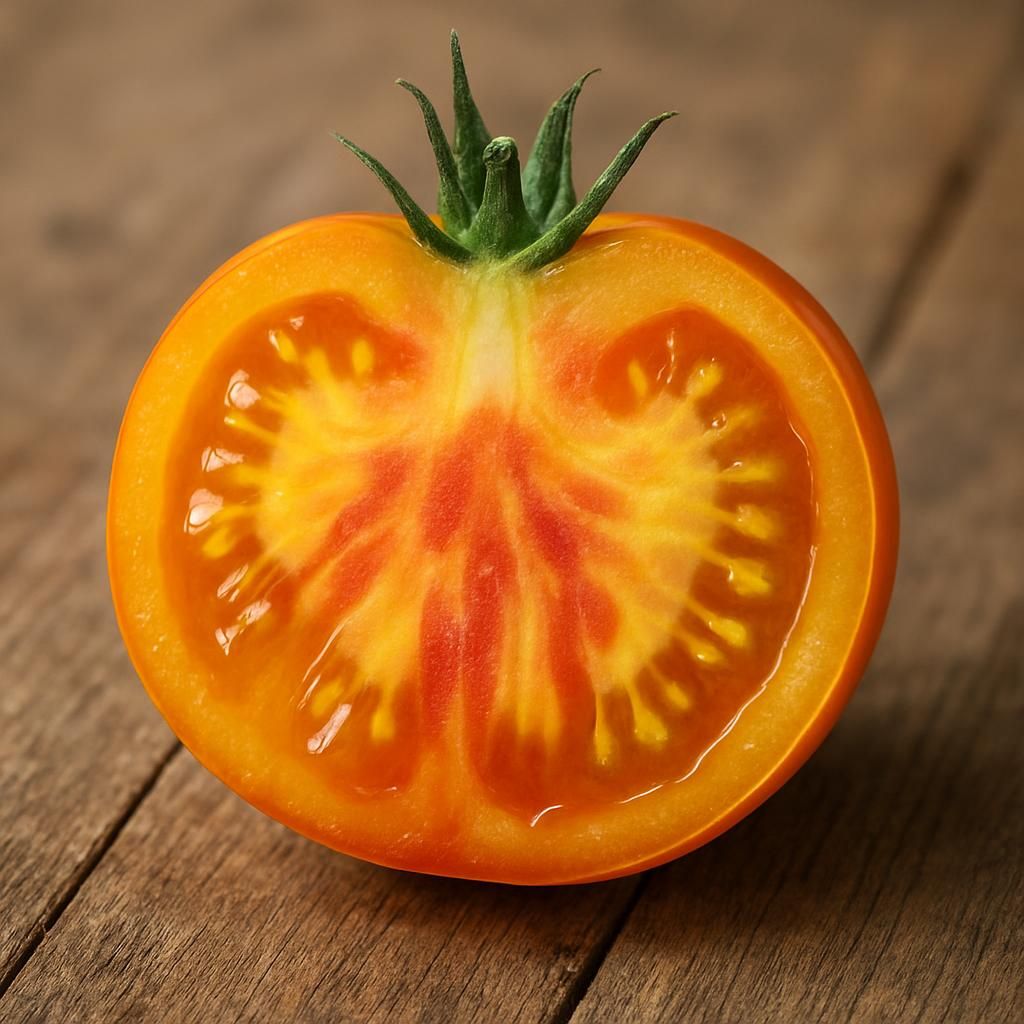
Introduction to Pineapple Tomato
The Pineapple Tomato stands out among heirloom tomatoes for its enormous fruit size, striking interior coloration, and sweet-tart tropical flavor profile. Originating as a rare, open-pollinated variety, it has earned a devoted following among market gardeners and home growers seeking something beyond standard red tomatoes. Its bicolored flesh ranges from deep gold to ruby red in a marbled pattern that resembles pineapple rings, giving the variety both visual appeal and culinary versatility.
Growers value Pineapple Tomato for its high productivity on indeterminate vines that can reach 6–8 feet when properly supported. The plants produce large, slightly flattened fruits weighing 1–2 pounds each, with relatively few seeds and a meaty texture ideal for fresh eating, grilling, and gourmet sandwiches. Because of its size and flavor intensity, Pineapple Tomato commands premium prices at farmers’ markets and specialty produce outlets.
Successful cultivation demands attention to soil fertility, consistent moisture, and disease prevention in regions with warm summers. With proper management, a single well-grown plant can yield 20–30 pounds of fruit over a 10–12 week harvest window. This guide provides professional-grade, field-tested recommendations for every stage of production.
Botanical Profile of Pineapple Tomato
Pineapple Tomato belongs to the nightshade family (Solanaceae) and is botanically classified as Solanum lycopersicum 'Pineapple'. It is an indeterminate, heirloom beefsteak type that continues vegetative growth and fruit set throughout the season until frost. The vines exhibit vigorous growth with large, compound leaves and prominent stems that require sturdy trellising or caging.
Flowers are typical tomato blossoms: yellow, five-petaled, and self-pollinating, although wind or insect activity improves fruit set. Fruit development follows the standard tomato pattern of double fertilization leading to locule formation; however, Pineapple Tomato tends to produce fewer locules and larger placental tissue, resulting in its characteristic meaty interior. The skin is thin yet resilient, and the fruit shoulders often retain a green tint even when fully ripe.
Because it is an open-pollinated heirloom, seed saved from isolated plants will breed true, allowing growers to maintain the variety over multiple seasons. Compared with modern hybrids, Pineapple Tomato shows moderate resistance to some foliar diseases but remains susceptible to Tomato mosaic viruses and soil-borne pathogens if rotation is neglected.
Soil, pH, and Climate Requirements for Pineapple Tomato
Pineapple Tomato thrives in fertile, well-drained loam with high organic matter content. The variety performs best in slightly acidic conditions that optimize nutrient availability while minimizing the risk of blossom end rot. Consistent warmth is essential; daytime temperatures between 75–85 °F (24–29 °C) and nighttime temperatures above 60 °F (15 °C) promote rapid fruit development and reduce catfacing.
The following table summarizes ideal growing conditions:
| Parameter | Ideal Range | Notes |
|---|---|---|
| Soil Type | Sandy loam to loam | High organic matter improves structure |
| Soil pH | 6.2–6.8 | Avoid pH below 6.0 or above 7.2 |
| Day Temperature | 75–85 °F (24–29 °C) | Optimal for fruit set and sugar development |
| Night Temperature | 60–68 °F (15–20 °C) | Prevents blossom drop |
| Spacing | 24–36 inches between plants | 4–5 ft between rows for airflow |
| Sun Exposure | Full sun, minimum 8 hours | South-facing exposure maximizes yield |
| Frost Tolerance | None; kill at 32 °F (0 °C) | Transplant after last spring frost |
Elevated beds or well-amended in-ground rows with 3–4 inches of compost incorporated prior to planting provide the best root environment. Heavy clay soils should be amended with aged manure and coarse sand to improve drainage and reduce the incidence of root rot.
Step-by-Step Planting & Propagation
- Seed Starting: Begin seeds indoors 6–8 weeks before the last expected frost. Sow ¼ inch deep in sterile seed-starting mix at 75–80 °F (24–27 °C). Germination occurs in 7–10 days.
- Hardening Off: Gradually expose seedlings to outdoor conditions over 7–10 days, increasing sun exposure and reducing watering frequency.
- Transplant Timing: Move plants outdoors once soil temperature reaches 60 °F (15 °C) and nighttime air temperatures remain above 55 °F (13 °C).
- Planting Depth: Bury stems up to the first true leaves to encourage adventitious root formation, improving drought tolerance and nutrient uptake.
- Support Installation: Install 6–8 ft stakes, Florida weave systems, or heavy-duty cages at transplanting to avoid root disturbance later.
- Initial Watering: Provide 1 inch of water immediately after transplanting and maintain even moisture for the first two weeks while roots establish.
Direct seeding is rarely recommended for Pineapple Tomato due to its long growing season and sensitivity to cool soils. Grafting onto disease-resistant rootstocks such as Beefsteak Tomato can extend production in fields with known soil-borne issues.
Care & Maintenance regimes for Pineapple Tomato
Consistent cultural practices directly influence both yield and fruit quality. The following table outlines recommended schedules for water, fertilizer, and pruning:
| Growth Stage | Watering Frequency | Fertilizer Application | Pruning & Training |
|---|---|---|---|
| Establishment (0–3 wks) | 1 inch every 3 days | Balanced 10-10-10 at transplant (½ cup/plant) | Remove lower suckers below first flower cluster |
| Vegetative (3–6 wks) | 1–1.5 inches weekly | Side-dress with ½ cup 5-10-10 at 4 wks | Continue sucker removal; tie main stem weekly |
| Flowering & Fruit Set | 1.5–2 inches weekly | Apply calcium nitrate foliar every 10 days | Maintain 2–3 main leaders; thin interior foliage |
| Ripening (last 4 wks) | Reduce to 1 inch weekly | Stop nitrogen; apply potassium sulfate | Minimal pruning; focus on airflow |
Mulch with 3–4 inches of straw or shredded leaves after soil has warmed to conserve moisture and suppress weeds. Monitor soil moisture with a tensiometer targeting 60–70% field capacity during peak fruiting. Avoid overhead irrigation to reduce foliar disease pressure.
Pests, Diseases & Organic Management
Common insect pests include aphids, hornworms, and flea beetles. Scout weekly and use Bacillus thuringiensis (Bt) for caterpillar control and insecticidal soap or neem oil for aphids and whiteflies. Spider mites can become problematic in hot, dry conditions; regular hosing of leaf undersides and release of predatory mites provide effective biological control.
Diseases of concern are early blight, late blight, and fusarium wilt. Rotate tomatoes with non-solanaceous crops every 3–4 years and remove crop debris at season’s end. Copper-based fungicides applied preventively every 7–10 days during humid periods offer organic suppression. Grafting onto resistant rootstocks and maintaining plant spacing for airflow further reduce disease incidence.
Harvesting, Curing & Optimal Storage
Harvest Pineapple Tomato when fruits reach full color with slight softening at the blossom end. Use pruning shears to clip stems, leaving a short calyx attached to reduce rot. For market sales, pick at the breaker stage (first color break) and ripen at 65–70 °F (18–21 °C) with 85–90% humidity to extend shelf life.
Store ripe fruit at 55 °F (13 °C) for up to 7 days. Avoid refrigeration below 50 °F (10 °C), which causes chilling injury and flavor loss. For long-term preservation, process into sauces or freeze in slices. Seed saving requires isolation from other tomato varieties by at least 25 feet or use of blossom bags.
Companion Planting for Pineapple Tomato
Strategic companions enhance pollination, deter pests, and improve soil health. Marigold planted at row ends repels nematodes and attracts beneficial insects. Basil interplanted between tomato plants improves flavor perception and reduces thrips damage. Nasturtium serves as a trap crop for aphids while adding edible flowers.
Avoid planting near potato or eggplant to minimize shared disease pressure. Clover or hairy vetch as living mulch between rows fixes nitrogen and suppresses weeds. Rotate companions annually following the same 3–4 year cycle used for the tomato crop itself.