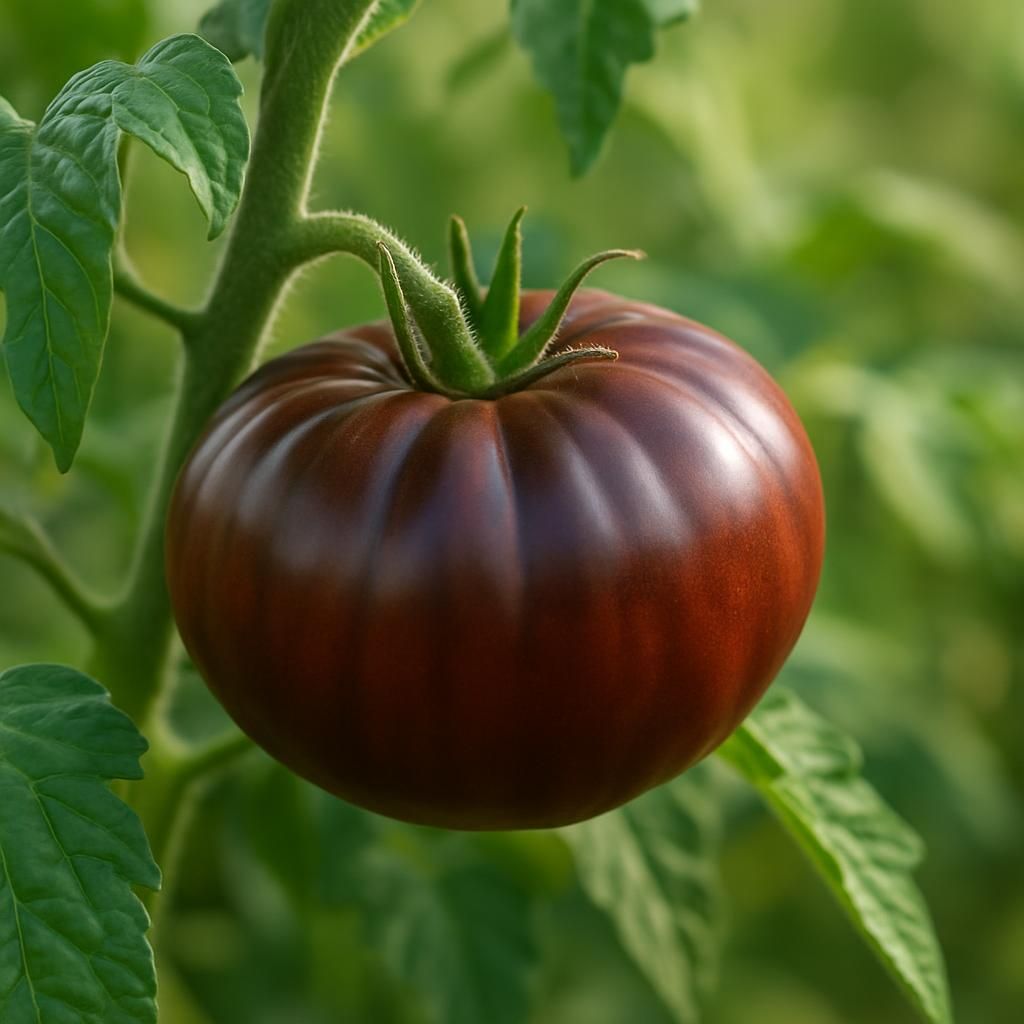
Introduction to Paul Robeson Tomato
The Paul Robeson Tomato stands as one of the most celebrated heirloom varieties among tomato enthusiasts and professional growers. Named after the famous African-American singer, actor, and civil rights activist, this indeterminate beefsteak-type tomato originated in Russia and has gained international acclaim for its unique dark coloration and complex flavor profile. Fruits typically reach 6–10 ounces, displaying a rich mahogany to nearly black hue with a deep, earthy sweetness and subtle smoky undertones. Because it is an open-pollinated variety, seeds can be saved year after year, preserving genetic diversity and making it a favorite among seed savers and organic growers.
Paul Robeson performs well in both greenhouse and outdoor settings, provided it receives consistent warmth and careful attention to soil fertility. Its indeterminate growth habit allows continuous production throughout the growing season when properly supported and pruned. Growers report strong disease resistance compared to many modern hybrids, although cultural practices remain essential for preventing common tomato ailments. The variety’s tolerance for cooler nights also makes it suitable for northern climates with shorter summers.
Botanical Profile of Paul Robeson Tomato
Paul Robeson belongs to the nightshade family, Solanaceae, and shares the standard morphological traits of cultivated tomatoes. Plants exhibit vigorous vining growth reaching 6–8 feet in height when staked or caged. Leaves are compound, dark green, and slightly rugose, providing ample photosynthetic surface area. Flowers are typical Solanaceous yellow blooms that self-pollinate but benefit from gentle shaking or pollinator activity for optimal fruit set.
Fruit development begins approximately 70–80 days after transplanting. The large, slightly flattened globes display pronounced shoulders and a distinctive dark coloration caused by high anthocyanin content. Flesh is dense and meaty with few seeds, making it ideal for slicing, sauces, and roasting. Skin remains relatively thin yet crack-resistant under proper irrigation management.
Soil, pH, and Climate Requirements for Paul Robeson Tomato
Successful cultivation begins with understanding the precise environmental parameters required by this variety. Paul Robeson thrives in well-drained, fertile loam enriched with organic matter. Consistent moisture without waterlogging prevents issues such as Blossom End Rot and fruit cracking.
| Parameter | Ideal Range | Notes |
|---|---|---|
| Soil Type | Loamy, well-drained | Incorporate 2–3 inches compost |
| Soil pH | 6.2–6.8 | Test annually; adjust with lime if needed |
| Temperature (Day) | 70–85°F (21–29°C) | Protect from frost below 50°F |
| Temperature (Night) | 55–65°F (13–18°C) | Cooler nights enhance flavor |
| Spacing | 24–36 inches between plants | Rows 4–5 feet apart |
| Sunlight | Full sun, 8+ hours | South-facing exposure preferred |
| Soil Temperature | Minimum 60°F (16°C) | Use black plastic mulch to warm soil |
Step-by-Step Planting & Propagation
Start seeds indoors 6–8 weeks before the last expected frost date. Sow seeds ¼ inch deep in sterile seed-starting mix and maintain soil temperature at 75–80°F for rapid germination, which occurs in 5–10 days. Provide 14–16 hours of supplemental light daily to prevent leggy seedlings.
Harden off transplants gradually over 7–10 days by increasing outdoor exposure. Transplant outdoors once nighttime temperatures consistently exceed 55°F and soil has warmed to at least 60°F. Dig planting holes 12 inches deep and wide; amend each hole with ½ cup balanced organic fertilizer and a handful of crushed eggshells for calcium. Bury stems up to the first true leaves to encourage adventitious root development.
Install sturdy cages or trellises at planting to support the heavy fruit load. Mulch immediately with 3–4 inches of straw or shredded leaves to conserve moisture and suppress weeds.
Care & Maintenance regimes for Paul Robeson Tomato
Consistent cultural practices ensure maximum productivity and fruit quality. Water deeply once or twice weekly, aiming for 1–1.5 inches of moisture per week. Avoid overhead irrigation to reduce foliar disease pressure.
| Growth Stage | Water Schedule | Fertilizer Schedule | Pruning Schedule |
|---|---|---|---|
| Seedling/Transplant | Keep evenly moist | Light fish emulsion at 2 weeks post-transplant | Remove lower leaves touching soil |
| Vegetative | 1 inch/week, deep soak | Side-dress with compost tea every 3 weeks | Remove suckers below first flower |
| Flowering/Fruiting | 1.5 inches/week during heat | Apply balanced organic fertilizer monthly | Continue sucker removal weekly |
| Late Season | Reduce slightly to concentrate sugars | Stop nitrogen applications 4 weeks before frost | Remove lower foliage for airflow |
Monitor leaf color and growth rate to adjust feeding. Yellowing lower leaves often indicate nitrogen deficiency, while dark, lush foliage with few fruits may signal excess nitrogen.
Pests, Diseases & Organic Management
Paul Robeson exhibits moderate resistance to many common tomato pathogens, yet integrated pest management remains necessary. Scout plants twice weekly for signs of Aphids, Spider Mites, and Hornworms. Introduce beneficial insects such as lady beetles and lacewings at the first sign of infestation.
Prevent fungal diseases including Early Blight and Septoria Leaf Spot through proper spacing, mulching, and drip irrigation. Apply preventive sprays of neem oil or Bacillus subtilis products every 7–10 days during humid periods. Remove and destroy infected foliage promptly to limit spread.
Crop rotation on a three-year cycle reduces soil-borne pathogens such as Fusarium Wilt and Verticillium Wilt. Solarize soil in late summer by covering moist beds with clear plastic for 4–6 weeks between seasons.
Harvesting, Curing & Optimal Storage
Harvest Paul Robeson fruits when they reach full color and yield slightly to gentle pressure. For peak flavor, allow fruits to ripen fully on the vine. In regions with early frost risk, pick mature green fruits and ripen indoors at 65–70°F.
Store ripe tomatoes at room temperature away from direct sunlight for up to one week. Never refrigerate whole tomatoes, as cold temperatures degrade flavor and texture. For longer storage, process into sauces, salsas, or dehydrate slices for winter use.
Companion Planting for Paul Robeson Tomato
Strategic companion planting enhances growth, deters pests, and improves soil health. Plant Basil nearby to repel insects and improve tomato flavor. Marigold and Nasturtium provide natural pest barriers while attracting pollinators.
Avoid planting near Fennel or Walnut trees, which release allelopathic compounds inhibitory to tomato growth. Interplant with Carrot and Parsley to maximize space and diversify the garden ecosystem. Deep-rooted companions such as Comfrey can be chopped and dropped as dynamic accumulators of nutrients.
Tomato cultivation benefits from thoughtful crop rotation and soil-building practices. For additional guidance on harvest timing, consult The Overlooked Art of Seasonal Harvest Timing for Small Farm Profit.