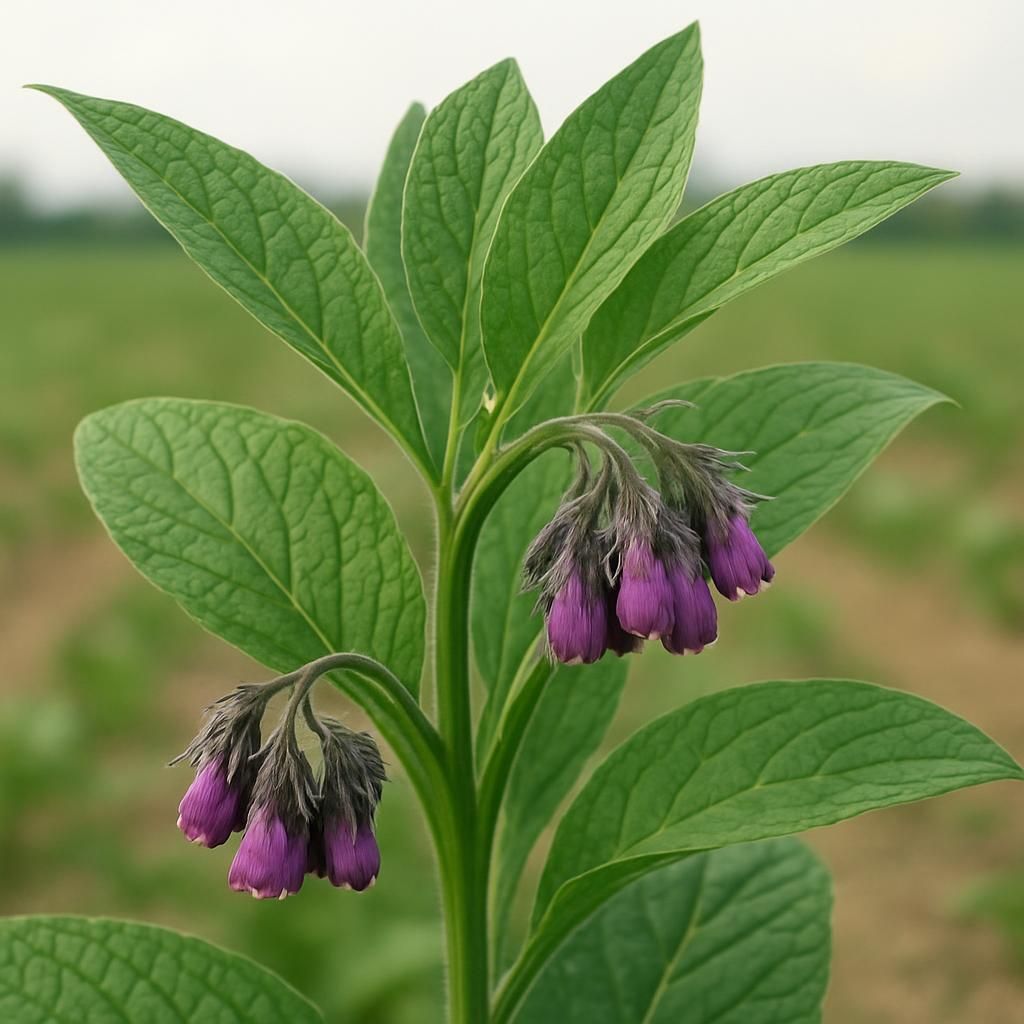
Introduction to comfrey
Comfrey (Symphytum officinale) is a vigorous herbaceous perennial long valued in permaculture and regenerative farming systems. Its extensive taproot system mines deep soil layers for minerals, making it an exceptional dynamic accumulator and green manure crop. Growers prize comfrey for its rapid biomass production, high potassium content, and utility as a natural fertilizer tea or mulch. Historically used in European folk medicine, modern cultivation focuses on soil improvement, livestock fodder, and pollinator support.
Botanical Profile of comfrey
Comfrey belongs to the Boraginaceae family and features large, hairy, lance-shaped leaves up to 30 cm long. Mature plants reach 60–120 cm in height with branched stems bearing clusters of bell-shaped flowers in shades of purple, pink, or white. The plant produces a deep, fleshy taproot that can extend 1–3 meters, enabling access to subsoil nutrients unavailable to shallow-rooted crops. Comfrey spreads via root fragments and self-seeding, forming dense clumps over time.
Soil, pH, and Climate Requirements for comfrey
Comfrey tolerates a wide range of conditions but performs best in fertile, moisture-retentive soils. The following table outlines ideal growing parameters:
| Parameter | Ideal Range | Notes |
|---|---|---|
| Soil Type | Loamy to clay loam | Avoid waterlogged or extremely sandy soils |
| Soil pH | 6.0–7.5 | Slightly acidic to neutral is optimal |
| Temperature Range | 10–30 °C (50–86 °F) | Hardy to -15 °C (5 °F) once established |
| Annual Rainfall | 600–1500 mm | Supplemental irrigation needed in dry spells |
| Sun Exposure | Full sun to partial shade | More shade reduces leaf yield |
| Spacing | 60–90 cm between plants | Rows 90–120 cm apart |
Step-by-Step Planting & Propagation
Comfrey is most reliably propagated from root cuttings or crown divisions taken in early spring or autumn. Select healthy 5–10 cm root segments with at least one bud and plant horizontally 5–8 cm deep in prepared beds. Seed propagation is possible but slower and less uniform; sow in spring at 1 cm depth and keep consistently moist. Transplant young plants after the last frost once they have 4–6 true leaves. Ensure soil is loosened to 30 cm depth and amended with well-rotted compost prior to planting.
Care & Maintenance regimes for comfrey
Established comfrey requires minimal intervention but benefits from structured care to maximize leaf production. The table below details recommended water, fertilizer, and pruning schedules:
| Season | Watering Schedule | Fertilizer Application | Pruning Schedule |
|---|---|---|---|
| Spring | 25–40 mm/week if rainfall low | Top-dress with 2–3 cm compost | Cut back to 10 cm after flowering |
| Summer | 40–50 mm/week during heat | Optional comfrey tea foliar spray | Harvest leaves every 4–6 weeks |
| Autumn | Reduce to 15–25 mm/week | Light compost layer before dormancy | Final cut before first frost |
| Winter | Minimal; protect from waterlogging | None | Remove dead foliage for hygiene |
Mulch with 5–8 cm of organic material to conserve moisture and suppress weeds. Divide clumps every 4–5 years to maintain vigor.
Pests, Diseases & Organic Management
Comfrey is generally pest-resistant due to its hairy foliage and high allantoin content, yet aphids and slugs may occasionally appear. Monitor leaf undersides in spring and apply insecticidal soap or strong water sprays for aphids. Hand-pick slugs at dusk or use beer traps and diatomaceous earth barriers. Fungal issues such as powdery mildew are rare but can be prevented by ensuring good airflow and avoiding overhead irrigation. Remove and compost affected leaves promptly. Root rot can occur in poorly drained soils; improve drainage rather than using chemical fungicides.
Harvesting, Curing & Optimal Storage
Harvest comfrey leaves from spring through autumn when plants reach 45–60 cm. Cut stems at the base with clean shears, taking no more than one-third of the foliage at once to allow regrowth. For mulch or fertilizer, wilt leaves 24–48 hours to reduce moisture and concentrate nutrients. Dry additional leaves in a shaded, well-ventilated area or dehydrator at 35 °C until brittle, then store in airtight containers away from light. Fresh leaves can be used immediately for comfrey tea by steeping 1 kg chopped leaves in 10 L water for 2–3 weeks.
Companion Planting for comfrey
Comfrey excels as a dynamic accumulator when paired with nutrient-demanding crops. Plant near tomato, pepper, and fruit trees to supply potassium-rich mulch. Its flowers attract pollinators and beneficial insects that support nearby cucumber and squash plantings. Avoid planting directly over shallow-rooted annuals that may be crowded by comfrey’s vigorous spread. Use comfrey as a living barrier or chop-and-drop mulch in perennial guilds with blueberry or raspberry.