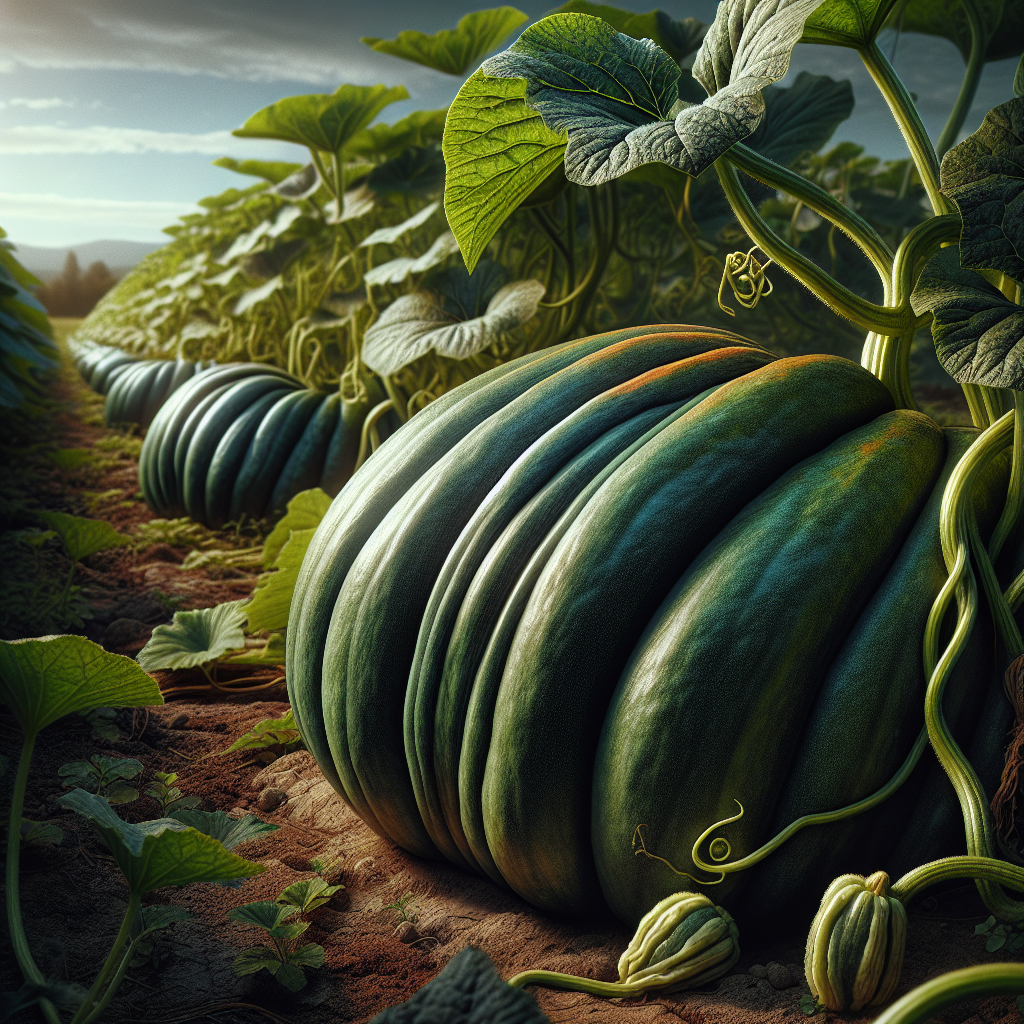
Introduction to Musquee de Provence Pumpkin
An old French heirloom, this variety is renowned for its dramatic wheel-shaped fruits, heavy ribbing, and color transformation from dark green to deep tan as it matures. It belongs to the moschata group, which generally offers better tolerance to heat, humidity, and Squash vine borer pressure than many pepo-type pumpkins, though it still requires careful management to reach its full potential.
This is not a quick crop. It is a long-season winter squash typically needing about 110 to 125 frost-free days, and often more in cooler regions before fruits fully color and sweeten. Mature fruits commonly weigh 10 to 20 pounds, though well-grown specimens can exceed that. The flesh is dense, fine-textured, aromatic, and richly colored, with excellent culinary value once cured.
For growers selling to chefs, specialty grocers, or fall markets, it has strong visual appeal and premium potential. For home gardeners, it is one of the most satisfying storage pumpkins because flavor often improves after several weeks in storage. If you already grow other cucurbits, compare its growth habit and pest profile with general Pumpkin culture, but note that this heirloom particularly benefits from a longer, warmer finish than many small pie pumpkins.
Botanical Profile of Musquee de Provence Pumpkin
This cultivar is a selection within Cucurbita moschata, the same species that includes certain butternuts and tropical-adapted squash. Plants are vigorous, sprawling annual vines with coarse stems, large lobed leaves, tendrils, and separate male and female flowers on the same plant. Pollination is primarily by bees, especially squash bees and honeybees.
Several characteristics distinguish it from common jack-o'-lantern pumpkins. The fruit is flattened rather than round, with pronounced ribs that create a sculptural appearance. Immature fruits are dark green and often mottled. As they ripen, they turn through bronze and ochre shades into a warm brownish tan. Internally, the flesh becomes deep orange, thick, and relatively low in stringiness compared with many carving pumpkins.
Its moschata genetics matter agronomically. The peduncle is hard and flared, vines are typically more heat-tolerant, and foliage often holds up better in late summer stress. However, Musquee de Provence still has a substantial nutrient demand and large canopy footprint, so underfeeding or crowding leads to poor fruit sizing, blossom drop, and immature harvests.
Because the fruits are large and the season is long, each vine usually carries fewer marketable fruits than smaller pumpkin varieties. In many garden settings, two to five mature fruits per plant is a realistic range. Commercially, yield depends heavily on spacing, pollination, irrigation consistency, and whether the season remains warm enough for full ripening.
Soil, pH, and Climate Requirements for Musquee de Provence Pumpkin
This crop performs best in deep, fertile, moisture-retentive but well-drained loam with high organic matter. A target soil pH of 6.2 to 6.8 is ideal. It can tolerate slightly more acidity or alkalinity, but nutrient uptake, especially calcium, magnesium, and phosphorus, is most reliable in that range. Below about pH 5.8, growth may become sluggish and nutrient imbalances become more likely; above 7.2, micronutrient lockout can show up as interveinal chlorosis on newer leaves.
Soil depth matters because vigorous root systems need both oxygen and stable moisture. Avoid shallow, compacted ground or places where water stands after rain. Even brief saturation can predispose roots to rot, reduce oxygen availability, and trigger uneven fruit development. If drainage is imperfect, use raised beds or mounded hills 8 to 12 inches high and 18 to 24 inches across.
Before planting, incorporate 2 to 4 inches of finished compost into the top 8 to 12 inches of soil. Well-rotted manure can be used if applied far enough ahead of planting to avoid excessive soluble salts and rank vegetative growth. A pre-plant soil test is strongly recommended. For pumpkin production, moderate nitrogen at establishment, ample phosphorus for rooting, and high potassium for fruit sizing and storage quality are more effective than heavy nitrogen alone. Excess nitrogen produces lush vines, delayed fruit set, and softer fruit with poorer storage potential.
This variety thrives in warm temperate to Mediterranean-like summers and also performs well in humid summer regions if disease management is strong. Optimal daytime temperatures are roughly 75 to 90°F (24 to 32°C), with nighttime temperatures above 60°F (16°C). Growth slows sharply in cool soil; seeds germinate best when soil temperatures are 70 to 95°F (21 to 35°C), though emergence is strongest and most uniform around 80 to 90°F (27 to 32°C).
Frost is intolerable at any stage. Plan for a season with at least 4 months of frost-free weather. In short-season climates, use black plastic mulch, low tunnels early on, and transplants rather than direct sowing. Wind exposure should be moderated where possible because broad leaves tear easily and pollinator activity drops in exposed sites.
For broader fertility strategies, the principles in soil health are highly relevant to long-season cucurbits like this one.
Step-by-Step Planting & Propagation
Use fresh, high-quality seed from a reliable source. Since this is an open-pollinated heirloom, saved seed can remain true if isolated from other Cucurbita moschata varieties. Isolation is important for seed saving because moschata types cross readily with each other but not typically with C. pepo or C. maxima.
Time sowing carefully. Plant only after danger of frost has passed and soil is truly warm. A common benchmark is 1 to 2 weeks after the last frost, when 4-inch soil temperatures are consistently above 65°F (18°C), though warmer is better.
Choose direct sowing or transplants. In warm regions, direct sowing is preferred because cucurbits dislike root disturbance. In cool or short-season climates, start seeds indoors 2 to 3 weeks before transplanting. Use 3- to 4-inch biodegradable pots or deep cells to minimize transplant shock.
Prepare hills or rows. Traditional hills work well: make mounds 3 to 5 feet apart in rows 8 to 12 feet apart, sowing 4 to 6 seeds per hill, later thinning to the best 2 plants. In row culture, space plants 36 to 60 inches apart, depending on fertility and whether vines can run into alleys.
Sowing depth. Plant seeds 1 to 1.5 inches deep in lighter soils and closer to 1 inch in heavier soils. Seeds planted too deeply in cool ground often rot before emergence.
Thin aggressively. Once seedlings have 1 to 2 true leaves, remove weaker plants rather than letting too many compete. Overcrowding creates a humid canopy, reduces airflow, and increases Powdery mildew pressure.
Transplant with care. Harden seedlings for 5 to 7 days before planting out. Transplant when they have 1 to 2 true leaves and before roots circle heavily. Plant at the same depth as in the pot, water immediately, and protect from cold nights with row cover if needed.
Mulch and warm the soil. Organic mulch can be added after the soil has warmed. In cool climates, black plastic or biodegradable film often improves early vigor and earlier maturity.
Support pollination. If pollinator numbers are low, hand pollination can improve fruit set. Transfer pollen from a freshly opened male flower to the stigma of a female flower in the morning, ideally before 10 a.m.
A practical target for home gardens is to allow at least 50 to 80 square feet per plant. These vines are substantial, and underestimating space is one of the most common reasons for disappointing yields.
Care & Maintenance regimes for Musquee de Provence Pumpkin
Consistent soil moisture is the key management factor after warmth. Aim for evenly moist soil in the upper 6 to 8 inches during establishment, then deeper moisture through flowering and fruit bulking. As a practical benchmark, provide about 1 to 1.5 inches of water per week under moderate conditions, increasing to 2 inches during prolonged heat, sandy soils, or peak fruit fill. Drip irrigation is strongly preferred over sprinklers because wet foliage increases disease pressure.
Do not water by calendar alone. Check the root zone. Soil should feel cool and slightly moist, not sticky or swampy. If the top 2 inches are dry but moisture remains below, delay irrigation slightly. If leaves appear limp in early afternoon yet recover by evening, that can be normal heat response; if wilting persists into morning, the plant is likely under drought stress. Signs of overwatering include chronically pale foliage, slowed growth despite adequate fertility, soft stems near the base, persistent wilting in wet soil, algae on the surface, and fruit developing on plants with yellowing lower leaves from root stress.
Nutrient management should shift through the season. At planting, use a balanced organic fertilizer or a soil-test-based pre-plant amendment. Once vines begin to run, side-dress lightly with nitrogen if foliage is pale and growth is weak, but avoid heavy doses after flowering begins. At early fruit set, emphasize potassium and calcium availability. In fertile soils, one pre-plant amendment plus one side-dressing may be enough. In sandy or intensively cropped soils, split applications every 3 to 4 weeks are often more effective and less leachable.
Weed competition is most damaging during the first 4 to 6 weeks. Keep the planting clean early, then let the expanding canopy shade the ground. Shallow cultivation is safer than deep hoeing because pumpkin roots spread widely near the soil surface. Mulches suppress weeds and stabilize moisture, but keep thick mulch a few inches away from the crown to reduce stem rot risk.
Fruit management can improve quality. Once fruits form, avoid moving vines unnecessarily because secondary rooting along the nodes supports water and nutrient uptake. If a fruit is resting on wet soil, place it on straw, a tile, or a slatted support to reduce rot and improve rind finish. In very cool late seasons, growers sometimes prune the latest secondary vines and remove tiny new fruits so the plant directs energy into maturing existing pumpkins.
If aiming for especially large fruit, limit each plant to 2 or 3 well-set pumpkins and maintain uninterrupted irrigation. If aiming for total yield and storage, let the plant carry its natural load but ensure pollination is strong.
Pests, Diseases & Organic Management
The major insect pests include Squash vine borer, Squash bugs, Cucumber beetles, Aphids, and sometimes Spider mites in hot, dry weather. Although moschata types often show somewhat better tolerance to vine borer than susceptible summer squash, they are not immune.
Squash vine borer: Look for sudden wilting of a runner or whole plant despite moist soil, often with frass resembling sawdust at the stem base. Use floating row cover until flowering if borers are common, then remove for pollination. Wrapping lower stems with foil or fabric collars can reduce egg-laying. Some growers mound soil over nodes along the vine to encourage extra rooting, helping plants survive partial stem damage.
Squash bugs: Adults and bronze egg clusters are commonly found on leaf undersides. Nymphs suck sap, causing stippling, yellowing, and plant decline. Hand-remove eggs early, use trap boards at night, and keep field edges free of debris where adults shelter.
Cucumber beetles: These chew foliage and flowers and can vector bacterial diseases. Yellow sticky traps help with monitoring, while row cover provides early protection. Diverse flowering borders support predatory insects that suppress populations.
Aphids and mites: These often increase under stress. Strong plants with even moisture are less vulnerable. Insecticidal soap or neem can help when applied thoroughly, especially to leaf undersides, but spray only when beneficial insects are least active and never during full pollinator activity.
Disease pressure is often greatest from Powdery mildew, Downy mildew, Anthracnose, Bacterial wilt in beetle-heavy regions, and various Fruit rots.
Powdery mildew: A white powdery growth on leaves, usually beginning on older foliage in late season. Preventive spacing, morning irrigation, good airflow, and removal of heavily infected debris are fundamental. Organic control options include potassium bicarbonate, sulfur products where climate permits, or biofungicides, applied early rather than after full canopy infection.
Downy mildew: Angular yellow lesions and gray-purple sporulation on leaf undersides in humid conditions. It can move quickly in rainy periods. Improve air circulation and avoid prolonged leaf wetness.
Fruit rots: Often linked to soil contact, splashing rain, wounds, or excess moisture late in the season. Keep fruits off bare soil and avoid rough handling.
Crop rotation is essential. Do not grow pumpkins, squash, melons, or cucumbers in the same spot more than once every 3 to 4 years if disease is a recurring issue. Remove and destroy crop residues after harvest unless composting can reliably achieve hot temperatures. Sanitation around the patch often matters more than many growers realize.
Harvesting, Curing & Optimal Storage
Patience at harvest makes a major difference in eating quality. These pumpkins are best harvested fully mature, when the rind has shifted from green to buff-tan or bronze-tan over most of the fruit, the ribs are pronounced, the skin is hard enough to resist fingernail puncture, and the stem begins to cork and toughen. Days to maturity from sowing are useful, but fruit color and rind hardness are better indicators.
Harvest before frost or prolonged cold rain. Light frost can damage vines and compromise storage even if fruit appears intact. Use pruners or a knife to cut fruits with 3 to 5 inches of stem attached. Never lift by the stem, as stem breakage creates an entry point for rot organisms.
Curing is especially important for this variety because flavor and texture improve significantly after harvest. Cure fruits for 10 to 14 days at 80 to 85°F (27 to 29°C) with good airflow if possible, or at least in a warm, dry, shaded place. This helps harden the rind, heal minor abrasions, and stabilize internal sugars.
After curing, store at 50 to 55°F (10 to 13°C) with relative humidity around 50 to 70%. Too much humidity encourages mold; too little causes shriveling and weight loss. Do not refrigerate. Temperatures below 50°F can cause chilling injury, resulting in poor flavor and breakdown.
Inspect stored fruits every 1 to 2 weeks. Remove any with soft spots, seepage, or stem-end decay immediately. Under good conditions, Musquee de Provence often stores 3 to 6 months, sometimes longer, while flavor continues to mellow and sweeten. Many cooks consider it at its best after several weeks of storage rather than immediately after harvest.
Companion Planting for Musquee de Provence Pumpkin
The most useful companion strategy combines pollinator support, pest distraction, and efficient use of vertical or edge space rather than crowding the root zone. Traditional interplanting with Corn can work well when spacing is generous and fertility is high, echoing the logic of broad mixed plantings where tall crops provide structure and wind buffering.
Nasturtium is one of the best flowering companions along patch margins. It attracts pollinators, can draw Aphids away from the main crop, and provides a living border without aggressively competing with the pumpkin root zone. Radish can be sown early around the outer edge as a quick trap or catch crop before vines expand, while Thyme near bed edges may help attract beneficial insects and keep the area biologically diverse.
Companions should never be allowed to shade young pumpkin plants or monopolize water. Keep the immediate crown area open, especially during the first month after planting. Avoid interplanting with other cucurbits nearby if pest and disease pressure is high, since similar hosts can amplify beetles, mildew, and vine borers.
For this crop, the best companion planting layouts usually place flowering herbs and trap crops at the perimeter, not directly in the planting hole. That preserves airflow, simplifies irrigation, and keeps harvest lanes accessible when the vines reach full size.