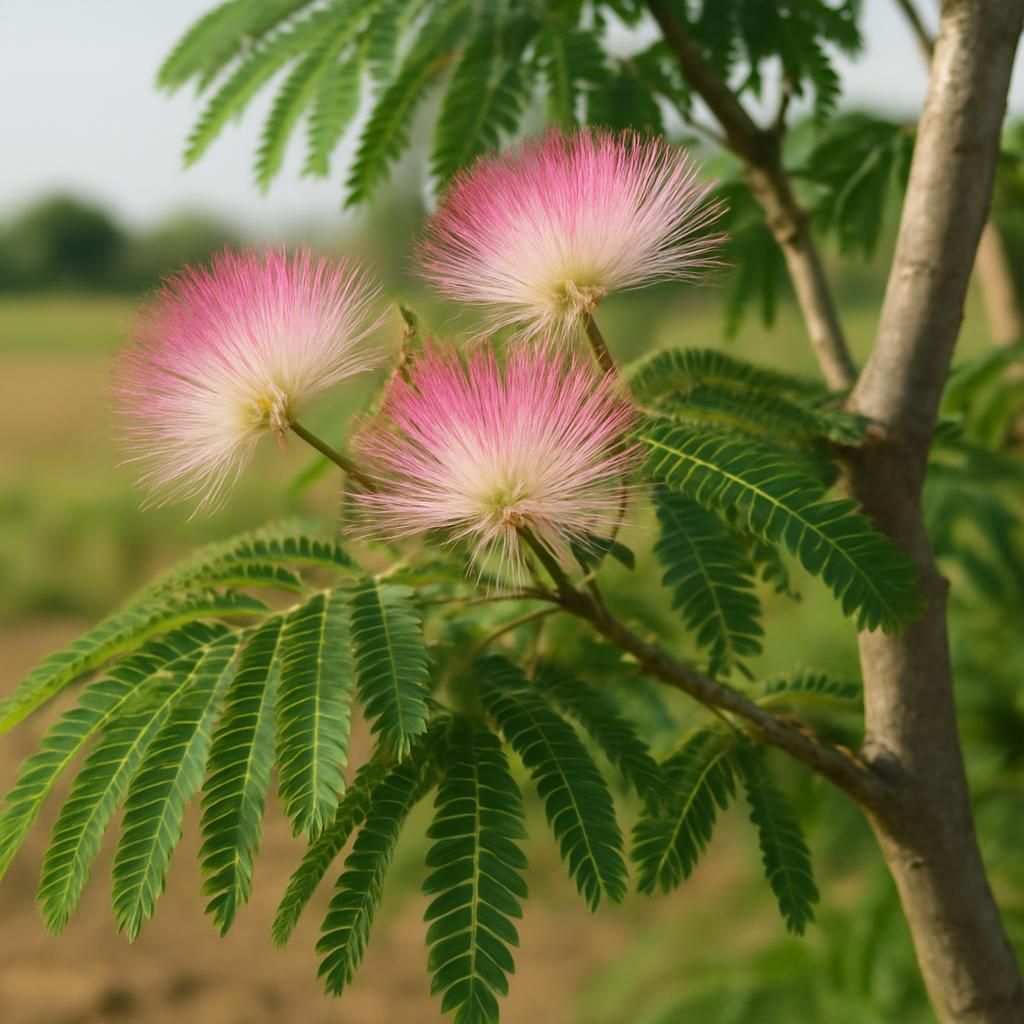
Introduction to mimosa
Mimosa, botanically known as Albizia julibrissin, is a nitrogen-fixing legume tree native to Asia that has become valued in sustainable agriculture systems worldwide. Its rapid growth, attractive pink powder-puff flowers, and ability to improve soil fertility make it an excellent candidate for agroforestry, silvopasture, and ornamental plantings. Growers appreciate its drought tolerance once established and its relatively low maintenance requirements compared to many timber or fruit species.
This comprehensive guide covers every stage of mimosa cultivation from site selection through harvest and storage. Professional producers use mimosa for erosion control, livestock shade, and biomass production while hobbyists value its ornamental qualities and pollinator support. The following sections provide detailed, actionable recommendations based on current agronomic best practices.
Botanical Profile of mimosa
Albizia julibrissin belongs to the Fabaceae family and is commonly called the silk tree or mimosa tree. It is a small to medium deciduous tree reaching 20–40 feet in height with a broad, spreading canopy. The bipinnately compound leaves are fern-like and sensitive to touch, folding at night or when disturbed. Flowers appear in early to mid-summer as fluffy clusters of pink stamens followed by flat, elongated seed pods that persist into winter.
The species is fast-growing, often reaching reproductive maturity within 3–5 years under favorable conditions. Mimosa exhibits strong coppicing ability, allowing repeated harvests of biomass or forage. Its root system forms symbiotic relationships with rhizobia bacteria, enabling atmospheric nitrogen fixation that benefits both the tree and neighboring plants.
Soil, pH, and Climate Requirements for mimosa
Mimosa performs best on well-drained soils with moderate fertility. It tolerates a wide range of soil textures but struggles in heavy clay or waterlogged sites. The tree is adaptable to slightly acidic to mildly alkaline conditions and shows good performance across USDA zones 6–9.
| Parameter | Ideal Range | Notes |
|---|---|---|
| Soil Type | Loam to sandy loam | Good drainage essential; avoid compacted clays |
| Soil pH | 6.0–7.5 | Tolerates 5.5–8.0 but growth slows outside ideal |
| Temperature | 20–35 °C daytime | Frost tender when young; established trees hardy to –15 °C |
| Annual Rainfall | 600–1200 mm | Drought tolerant once established |
| Sunlight | Full sun to partial shade | Full sun maximizes flowering and growth |
| Elevation | 0–1500 m | Performs well in lowland tropics to temperate foothills |
Step-by-Step Planting & Propagation
Mimosa is most commonly propagated from seed, though air-layering and root cuttings are viable for clonal reproduction. Fresh seed should be scarified by soaking in hot water (80 °C) for 12–24 hours or by mechanical abrasion of the seed coat. Sow scarified seed 1–2 cm deep in well-drained media at 20–25 °C; germination occurs in 7–21 days.
Field planting is best done in early spring after the last frost. Select sites with full sun and well-drained soil. Dig planting holes twice the width of the root ball and backfill with native soil amended with aged compost. Space trees 4–6 m apart for timber or 8–10 m for silvopasture systems. Water thoroughly after planting and apply a 5–8 cm layer of organic mulch to conserve moisture and suppress weeds.
Care & Maintenance regimes for mimosa
Young mimosa trees benefit from supplemental irrigation during the first two growing seasons. Once established, the tree is highly drought tolerant. Fertilization is rarely required on fertile soils because of nitrogen fixation, but phosphorus and potassium may be applied based on soil tests. Pruning should focus on developing a strong central leader and removing crossing branches during dormancy.
| Task | Frequency | Details |
|---|---|---|
| Water | Weekly first year; then as needed | Deep watering every 7–10 days in dry periods for young trees |
| Fertilizer | Annual soil test; low N | Apply P-K only if deficiency confirmed; avoid high-nitrogen formulas |
| Pruning | Late winter/early spring | Remove dead wood, shape canopy, coppice every 3–5 years for biomass |
Pests, Diseases & Organic Management
Mimosa is relatively pest-resistant but can be affected by webworms, scale insects, and spider mites during hot, dry periods. Fungal issues such as Fusarium wilt and root rot occur primarily in poorly drained soils. Organic management emphasizes cultural practices: proper spacing for airflow, avoidance of overhead irrigation, and removal of infested debris.
Beneficial insect releases (lady beetles, lacewings) and neem oil sprays provide effective control of soft-bodied pests. For fungal pathogens, improve drainage and apply compost teas or beneficial microbes. Regular monitoring during summer months allows early intervention before populations reach damaging levels.
Harvesting, Curing & Optimal Storage
Mimosa pods are typically harvested in late summer to early autumn when they turn brown and begin to split. For seed production, collect pods before they fully dehisce and dry them in a well-ventilated area for 7–14 days. Clean seeds by threshing and store in cool, dry conditions (below 10 °C and 40 % RH) in airtight containers; viability remains high for 2–3 years.
For biomass or forage, coppice stems at 0.5–1 m above ground during dormancy. Dry wood in covered stacks for 4–6 months before use as fuel or mulch. Leaves can be harvested fresh or dried for livestock fodder, providing a high-protein supplement.
Companion Planting for mimosa
Mimosa integrates well with understory crops that benefit from increased nitrogen and partial shade. Compatible species include clover, thyme, and nasturtium as ground covers. In silvopasture systems it pairs effectively with grasses and legumes such as hairy vetch. Avoid planting heavy feeders like corn or tomato directly beneath the canopy without supplemental fertility.
Mimosa also serves as a nurse tree for slower-growing species such as walnut or pecan, providing early shade and soil improvement. Its flowers attract pollinators that benefit neighboring fruit crops including peach and plum.