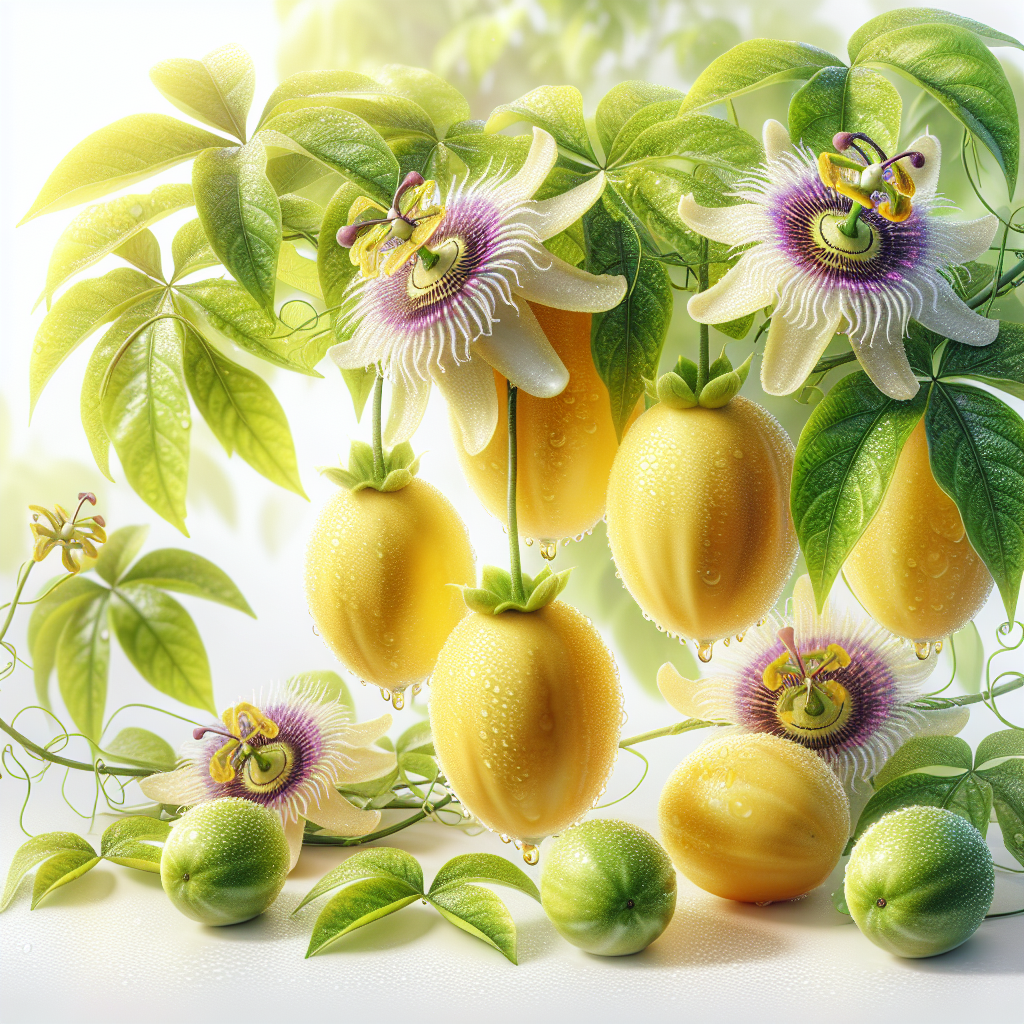
Introduction to Maypop (Passiflora incarnata)
Maypop (Passiflora incarnata), also known as purple passionflower or wild passion vine, is a fast-growing, deciduous perennial vine native to the southeastern United States. Reaching 10-25 feet in a single season, it produces stunning 2-3 inch white-and-purple flowers with intricate filaments that attract butterflies, bees, and hummingbirds. The plant yields egg-shaped, yellow-orange fruits (maypops) filled with tangy pulp and crunchy seeds, edible fresh, in jams, or for herbal teas due to its sedative properties from flavonoids like vitexin.
This resilient crop excels in home gardens, permaculture systems, and small farms, tolerating poor soils and deer browsing while fixing nitrogen through root associations. Commercial interest grows for its ornamental value, fruit production (up to 100 fruits per vine), and herbal supplements. With proper support and minimal care, maypop delivers high yields in 120-150 days from planting. Learn why companion planting feels like guesswork for small farms – and how it boosts maypop success.
Botanical Profile of Maypop (Passiflora incarnata)
Passiflora incarnata belongs to the Passifloraceae family, characterized by tendril-climbing stems, alternate lobed leaves (3-5 inches wide), and axillary flowers blooming June to September. Each bloom lasts 1-2 days, featuring ten white sepals, purple coronal filaments in three rings, and a central stigma. Fruits mature 60-80 days post-pollination, measuring 1-3 inches, with aromatic pulp rich in vitamin C, antioxidants, and 2-5% arbutin for urinary health.
Roots form extensive rhizomes, enabling aggressive spread (up to 20 feet laterally), making it ideal for groundcover or erosion control but potentially invasive in non-native areas. Dioecious or self-fertile cultivars exist; 'Blue Crown' and 'Incarnata Compacta' offer compact growth for containers. Pollinated by carpenter bees and hawk moths, it supports Gulf Fritillary caterpillars as a host plant. Hardiness spans zones 6-10, with top growth dying back in winter but roots surviving -10°F.
Soil, pH, and Climate Requirements for Maypop (Passiflora incarnata)
Maypop thrives in well-drained, loamy soils with pH 6.0-7.5, tolerating clay, sand, or rocky conditions if drainage is excellent – amend heavy soils with 30% compost and gravel. Avoid waterlogged sites to prevent root rot. Full sun (6-8 hours) maximizes flowering and fruit set; partial shade reduces yields by 40-50%.
Optimal climate: USDA zones 6-10, with 30-50 inches annual rainfall. Heat-tolerant to 100°F, it prefers humid summers (70-85°F days) and mild winters. Mulch roots for zone 6 cold protection. Drought-resistant once established (after year 1), irrigate young vines weekly (1 inch water). Wind protection aids fruit retention; coastal sites suit its salt tolerance.
Soil test annually; incorporate 2-4 inches aged manure or 10-10-10 slow-release fertilizer at planting. Maintain 4-6% organic matter for microbial activity supporting vine vigor.
Step-by-Step Planting & Propagation
Propagation Methods
- Seeds: Scarify fresh seeds (sow immediately post-harvest, 85% germination). Cold stratify dried seeds 30 days at 40°F. Sow 1/4 inch deep in 70-80°F soil mix; germinates 2-4 weeks. Transplant at 6 inches.
- Root Cuttings: Dig rhizomes in dormant season (late winter), cut 4-6 inch sections with buds, plant horizontally 2 inches deep. 90% success rate.
- Stem Cuttings: 6-inch semi-hardwood tips in summer, root in perlite under mist (high phosphorus hormone). Pot in 1-gallon containers.
- Layering: Bend stems to soil, cover with 2 inches soil; roots form in 4-6 weeks.
Planting Steps
- Site Prep (Spring, after frost): Choose trellis/arbor (8-10 ft tall, sturdy wire/mesh). Space vines 10-15 feet apart.
- Planting Hole: 2x2 ft wide, 18 inches deep; mix 50% native soil + compost + 1 cup bone meal.
- Plant: Set crown 2 inches above soil; water deeply. Install support immediately.
- Mulch: 3-4 inches organic mulch, keeping clear of stem.
- Density: 1 vine per 100 sq ft for fruit production.
Transplants outperform seeds by 30 days to fruit. Thai Basil interplanted enhances pollination.
Care & Maintenance regimes for Maypop (Passiflora incarnata)
Watering: Deep soak weekly first year (1-2 inches); reduce to biweekly. Drip irrigation prevents foliar wetting.
Fertilizing: Spring: 5-10-10 at 1 lb/100 sq ft. Mid-summer: fish emulsion for blooms. Avoid excess nitrogen to prevent leafy overgrowth.
Pruning: Late winter, cut to 2 ft above ground to encourage fruiting spurs. Remove suckers annually to control spread. Train to support; pinch tips for bushiness.
Training: Weave tendrils on trellis; annual renewal pruning boosts yields 25%.
Winter Care: Zone 6-7: mulch 6 inches straw over roots. Cut back dead canes.
Weed Control: Mulch suppresses 80%; hand-pull around base. Monitor for nutrient deficiencies: yellow leaves indicate iron (pH >7.5).
Pests, Diseases & Organic Management
Pests:
- Aphids: Neem oil or ladybugs; hose blasts.
- Swallowtail larvae: Handpick; beneficial as pollinator hosts.
- Scale insects: Horticultural oil in dormant season.
- Japanese beetles: Milky spore bacteria, row covers.
- Leafminers: Yellow sticky traps.
Diseases:
- Powdery mildew: Improve air circulation, potassium bicarbonate spray.
- Fusarium wilt: Resistant rootstock, solarize soil.
- Anthracnose: Copper fungicide, prune infected parts.
- Root rots: Ensure drainage; beneficial mycorrhizae.
Organic IPM: Companion plant marigold for nematodes; release predatory wasps. Scout weekly. Why 90% of small farms fail at pest management details scalable strategies.
Harvesting, Curing & Optimal Storage
Harvest fruits late summer-fall when yellow, slightly soft (July-Oct, 60-90 days post-bloom). Twist off or clip with pruners; yield 50-100/vine. Ripe fruits drop naturally.
Post-Harvest: Consume fresh (scoop pulp, discard seeds) or juice. For jams: cook pulp with sugar/pectin. Dry leaves for tea (shade-dry, 100°F oven).
Storage: Refrigerate fruits 1-2 weeks (32-40°F, 90% humidity). Freeze pulp 6 months. Dried leaves store 1 year in airtight jars, cool/dark.
Process immediately to avoid fermentation; high pulp yields (60% fruit weight).
Companion Planting for Maypop (Passiflora incarnata)
Maypop benefits from nitrogen-fixers and pollinator attractors:
Good Companions:
- Clover: Nitrogen boost, groundcover.
- Nasturtium: Traps aphids, edible flowers.
- Yarrow: Attracts beneficial insects.
- Thyme: Repels beetles.
- Beans (Kentucky Wonder Pole Bean): Shared trellis, soil enrichment.
Avoid: Potatoes (Russet Burbank Potato) – shared pests like Colorado potato beetle.
Guild planting increases fruit set 20-30%; mulch with companions for weed suppression. Fall Companion Planting Guide expands on seasonal pairings.