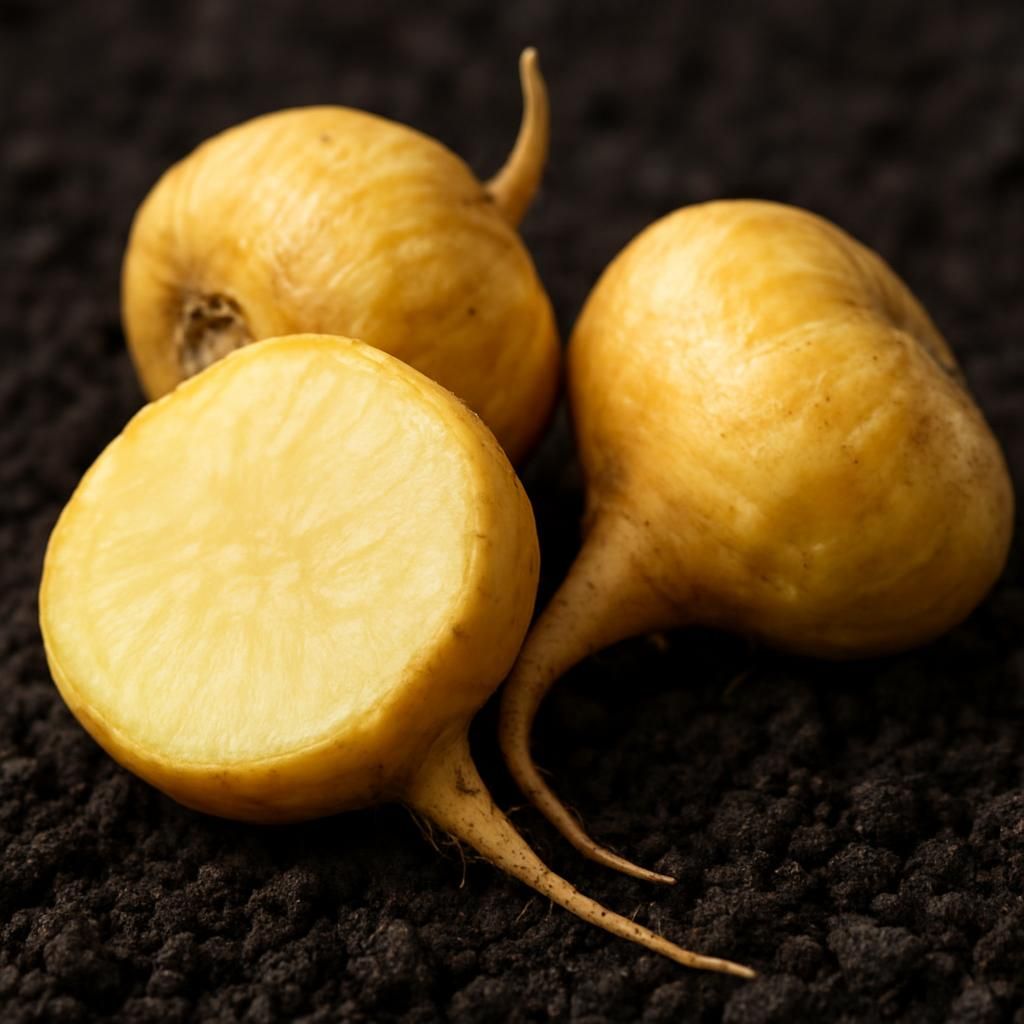
Introduction to Maca (Lepidium meyenii - Yellow)
Yellow maca is a biennial herbaceous plant native to the high plateaus of Peru and Bolivia. It produces a swollen hypocotyl that is harvested for its dense concentration of carbohydrates, proteins, and bioactive compounds. Farmers prize the yellow variety for its balanced flavor profile and reliable performance at elevations above 3,500 m. Commercial demand has expanded globally, driving interest in replicated high-altitude growing systems.
Successful cultivation depends on replicating the cool, intense sunlight, and well-drained volcanic soils of the Andes. The crop completes its vegetative growth in 7–9 months before entering dormancy. Because maca is highly sensitive to temperature fluctuations and soil compaction, site selection and soil structure are critical from the outset.
Botanical Profile of Maca (Lepidium meyenii - Yellow)
Lepidium meyenii belongs to the Brassicaceae family. Plants form a basal rosette of pinnatifid leaves that reach 10–15 cm. The edible portion is the swollen hypocotyl, which can weigh 20–150 g at maturity and ranges from cream to deep yellow. Flowers are small, white, and self-pollinating, producing siliques with numerous tiny seeds.
The yellow phenotype is genetically stable and produces fewer bitter notes than black or red maca. Roots contain macamides, macaenes, glucosinolates, and high levels of calcium and iron. The plant exhibits a strong taproot system that penetrates 30–40 cm, making loose, aerated soil essential.
Soil, pH, and Climate Requirements for Maca (Lepidium meyenii - Yellow)
Maca demands cool temperatures, intense solar radiation, and fast-draining substrates. It performs poorly below 2,500 m or in humid lowland tropics.
| Parameter | Ideal Range | Notes |
|---|---|---|
| Soil Type | Sandy loam to volcanic ash | High porosity prevents waterlogging |
| Soil pH | 6.0–6.8 | Slightly acidic to neutral; avoid liming |
| Organic Matter | 3–5 % | Incorporate aged compost or peat |
| Elevation | 3,500–4,500 m | Essential for proper hypocotyl formation |
| Day/Night Temperature | 15–20 °C / 0–5 °C | Cool days and cold nights required |
| Annual Rainfall | 400–700 mm | Supplemental irrigation if dry spells occur |
| Frost Tolerance | Hardy to –5 °C | Young plants tolerate light frost |
Step-by-Step Planting & Propagation
- Site Preparation: Clear weeds and incorporate 5–8 cm of well-aged compost. Create raised beds 20 cm high to improve drainage.
- Seed Treatment: Soak seeds in 1 % hydrogen peroxide for 10 minutes, rinse, and stratify at 4 °C for 14 days to break dormancy.
- Sowing Window: Direct-seed in early spring when soil reaches 8–10 °C. Sow 3–5 mm deep at 15 cm between plants and 30 cm between rows.
- Germination: Maintain consistent moisture; seedlings emerge in 10–18 days. Thin to one plant per station when true leaves appear.
- Transplant Option: Start seedlings in 5 cm plugs 6 weeks before last frost; transplant at the 4-leaf stage, disturbing roots minimally.
Care & Maintenance regimes for Maca (Lepidium meyenii - Yellow)
Consistent moisture during hypocotyl expansion and balanced mineral nutrition are key. Avoid high-nitrogen fertilizers that promote foliage over roots.
| Growth Stage | Watering Schedule | Fertilizer (NPK) | Pruning / Other Tasks |
|---|---|---|---|
| Establishment (0–6 wk) | 10–15 mm every 3–4 days | 5-10-5 at 50 kg/ha incorporated pre-plant | Weed weekly; mulch 5 cm straw |
| Vegetative (6–20 wk) | 15–20 mm weekly if rainfall <10 mm | Side-dress 8-4-12 at 80 kg/ha at wk 8 | Remove flower stalks to redirect energy |
| Hypocotyl Fill (20–32 wk) | Reduce to 8–10 mm weekly | Optional 2-4-8 foliar at 1 % solution | Maintain mulch; monitor soil moisture |
| Pre-Harvest (32+ wk) | Withhold irrigation 2–3 wk before lift | None | Cease cultivation to avoid bruising |
Pests, Diseases & Organic Management
Maca is relatively pest-resistant at high altitude, yet several issues can arise in replicated lowland systems. Aphids may colonize leaf undersides during warm spells; release lady beetles or apply insecticidal soap. Root-knot nematodes can distort hypocotyls—rotate with Garlic or Onion and solarize beds between cycles. Powdery mildew appears in humid microclimates; improve airflow and apply potassium bicarbonate sprays. Pythium root rot is prevented by strict drainage and raised beds. Monitor for Slugs after rain and use iron-phosphate baits.
Harvesting, Curing & Optimal Storage
Harvest when leaves begin to senesce and hypocotyls reach 5–8 cm diameter, typically 7–9 months after sowing. Lift carefully with a digging fork to avoid bruising. Cure roots in a shaded, ventilated area at 10–15 °C for 7–10 days until skins are dry and papery. Store at 4–7 °C and 65–70 % RH in ventilated crates; properly cured roots remain viable for 8–12 months. For longer preservation, slice and dehydrate at 40 °C until brittle, then vacuum-pack.
Companion Planting for Maca (Lepidium meyenii - Yellow)
Pair maca with shallow-rooted Lettuce or Spinach to maximize bed space. Nasturtium and Marigold deter aphids and nematodes. Avoid planting near Brassica crops to reduce shared pest pressure. Deep-rooted Comfrey (if available) provides dynamic nutrient accumulation when used as mulch. Rotate maca with Potato or Quinoa to break disease cycles and improve soil structure.