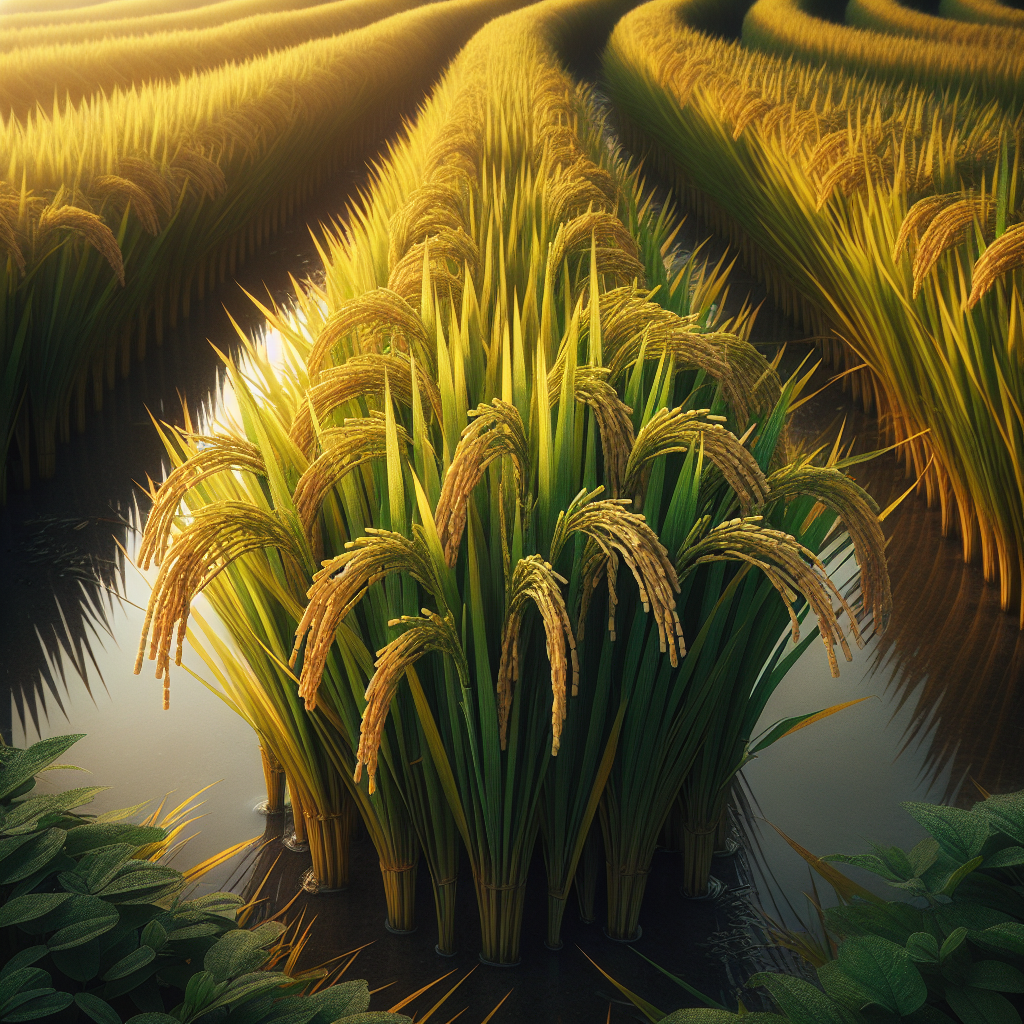
Introduction to Koshihikari Rice
Developed in Japan in the mid-20th century, this cultivar became one of the country’s most influential table rices because of its excellent flavor, sheen, and texture after cooking. It was bred from Norin 22 and Norin 1 and rapidly earned a reputation for superior palatability, especially in regions with warm days, cool nights during grain filling, and reliable irrigation. In culinary terms, it is prized for its balance of sweetness, stickiness, and resilience on the palate, making it a standard for sushi rice and premium steamed rice.
From a grower’s perspective, it is a high-value but somewhat exacting variety. Yields can be good, but the crop is more sensitive than many commodity rices to excessive nitrogen, lodging, and blast in poorly managed systems. Compared with more generalized production advice in a broad Rice guide, Koshihikari deserves tighter attention to transplant timing, panicle support through balanced nutrition, and uniform flood depth. Success depends less on simply keeping fields wet and more on controlling the right amount of water at each growth stage.
This is fundamentally a lowland paddy rice, though it can be raised in non-flooded systems with significantly more risk and lower grain quality. Its defining market advantage comes not merely from producing grain, but from producing grain with strong milling quality, low chalkiness, and mature kernels harvested at the proper moisture. For that reason, professional growers often treat Koshihikari as both an agronomic crop and a quality-sensitive specialty product.
Botanical Profile of Koshihikari Rice
This cultivar belongs to Oryza sativa within the japonica group, characterized by relatively short, plump grains and a compact cooked texture due to starch composition rich in amylopectin. Plants typically show medium stature, though actual height varies with fertility, water regime, and local climate. In fertile paddies with heavy nitrogen application, stems can elongate excessively, increasing lodging risk before harvest.
Leaves are generally erect to semi-erect during vigorous vegetative growth, medium green when adequately nourished, and may become overly lush and dark under nitrogen excess. Productive tillering is important because panicle number per unit area is a major yield component, but too many weak tillers often create a dense canopy that favors humidity-loving pathogens. Strong Koshihikari stands have uniform tillers, moderate internode length, and enough sunlight penetration to keep the lower canopy from remaining constantly saturated.
Flowering occurs through panicle emergence from the flag leaf sheath, followed by anthesis that is usually most active during the warmer part of the day. Grain set is sensitive to cold stress at booting and flowering, and also to heat stress if daytime temperatures become extreme. The hulled grains mature from green to golden straw as starch deposition finishes and plant moisture declines. Like many premium eating-quality japonicas, the crop’s culinary performance is strongly influenced by grain filling conditions, especially stable water and moderate temperatures late in the season.
Physiologically, Koshihikari tends to convert excessive nitrogen into vegetative growth rather than grain stability if fertility is poorly timed. That means growers must think in terms of sink-source balance: enough early nitrogen for tiller formation, restrained midseason vigor to prevent lodging, and carefully timed reproductive feeding only if tissue color and growth indicate need. It is a variety where appearance in the field can be misleading; the most beautiful dark-green canopy is not always the best predictor of premium grain quality.
Soil, pH, and Climate Requirements for Koshihikari Rice
The ideal soil is a fertile, level, puddled clay loam to silty clay loam with strong water-holding capacity. Heavy enough texture is useful because it limits seepage and helps maintain a shallow standing flood, but the soil should not be so compacted that root oxygenation collapses for long periods. Well-structured paddy soils with decent organic matter allow fine roots to explore the reduced zone while still accessing nutrients released under flooded conditions.
A target pH of 5.5 to 6.8 is optimal. The crop tolerates somewhat more acidic conditions than many upland crops, but when pH drops below about 5.2, aluminum and manganese issues may intensify, microbial balance shifts, and nutrient availability becomes less predictable. In alkaline soils above about 7.2, zinc, iron, and manganese deficiencies become more likely, especially in continuously flooded systems. If pH correction is needed, apply lime well before puddling so it has time to react. For zinc-prone soils, zinc sulfate incorporated before transplanting is often beneficial.
Climate should be warm-temperate to subtropical during active growth, with a frost-free growing season of roughly 120 to 150 days depending on local adaptation. Ideal temperatures are around 20 to 30°C during vegetative development, 22 to 28°C through reproductive stages, and slightly cooler nights during grain fill to improve grain quality and flavor expression. Prolonged temperatures below 15°C stunt seedlings and slow tillering. Temperatures below about 17°C at booting can reduce fertility and increase blank grains. Sustained temperatures above 35°C during flowering can impair pollination and raise chalkiness.
Water management is central. During land preparation and early establishment, saturated to shallow-flooded conditions are preferred. During active vegetative growth, a standing water layer of about 2 to 5 cm is usually sufficient. Floods deeper than 7 to 10 cm can suppress young tillers and weaken early plants unless the crop is already well established. Constantly deep water is a common mistake; it reduces oxygen diffusion, encourages soft growth, and wastes irrigation. Conversely, muddy soil with surface cracking between irrigations causes root stress and inconsistent tillering.
A well-leveled field is essential because Koshihikari responds poorly to uneven water depth. High spots dry and underperform; low pockets stay too deep, become excessively soft, and lodge. Laser leveling is ideal on larger holdings, but even small paddies should be carefully graded by hand or board leveling. For broader principles on building resilient fertility in wet and dry rotations, see soil health strategies.
Step-by-Step Planting & Propagation
This cultivar is propagated by seed, usually through nursery raising followed by transplanting. Direct seeding is possible, but transplanting gives better stand uniformity, weed suppression, and quality control in most traditional Koshihikari systems.
Select high-quality seed. Use certified, fully mature seed with high germination percentage and varietal purity. Discard light, floating, damaged seed by salt-water or clean-water sorting, then rinse thoroughly if a salt solution was used.
Pre-soak and pre-germinate. Soak seed in clean water for 24 to 48 hours depending on temperature, changing water if it becomes foul. After soaking, incubate the seed in a warm, moist condition until the radicle just emerges, usually 1 to 2 mm. Over-sprouted seed is harder to handle and more vulnerable during sowing.
Prepare the nursery. Seedlings can be raised in wet-bed, dry-bed, or mat nursery systems. The nursery soil should be fine-textured, fertile, and free from weed seed. Sow evenly and avoid excessive density, which creates elongated weak seedlings prone to transplant shock and disease.
Raise healthy seedlings. Maintain moist but not stagnant conditions initially, then shallow water after establishment. Seedlings are usually ready in 20 to 30 days, or slightly older under cooler conditions. Ideal seedlings are stocky, 4 to 5 leaves old, with white active roots and no yellowing.
Prepare the field. Plow, incorporate residues, flood, and puddle thoroughly to create a soft, level, weed-suppressive planting surface. Repair bunds and ensure inlets and outlets allow precise water control. Basal phosphorus and potassium should be incorporated before final puddling if soil tests call for them.
Transplant at the correct spacing. Plant 2 to 4 seedlings per hill at about 20 x 20 cm spacing in moderate fertility fields. In richer soils prone to lodging, slightly wider spacing such as 25 x 20 cm improves air movement and stem strength. Avoid deep transplanting; 2 to 3 cm is ideal. Seedlings buried too deeply tiller poorly and mature unevenly.
Manage water after transplanting. Keep water very shallow, about 1 to 2 cm, for several days so seedlings anchor and recover. Once plants resume growth, increase to 2 to 5 cm. If leaves remain rolled by midday several days after transplanting, establishment is uneven and water depth may need adjustment.
Thin or replant gaps promptly. Missing hills reduce uniformity and encourage weed escape. Fill gaps within 7 to 10 days while neighboring hills have not yet dominated the space.
Direct seeding should be reserved for growers with strong weed management and precision water control. In that system, seed is sown onto prepared mud or moist soil and lightly incorporated, but bird pressure, patchy emergence, and weed competition are typically higher than in transplanting systems.
Care & Maintenance regimes for Koshihikari Rice
Nutrient management should start with a soil test rather than a generic program. Koshihikari often performs best under moderate nitrogen, not maximum nitrogen. As a general framework, apply a restrained basal nitrogen dose, then split the remainder between early tillering and panicle initiation only if leaf color, tiller density, and soil fertility indicate need. Excess nitrogen after mid-tillering often leads to soft culms, delayed maturity, increased blast pressure, and reduced grain quality.
Phosphorus is most important early for root development and seedling vigor, especially in cooler soils where availability is limited. Potassium is critical for stem strength, disease tolerance, and grain filling. Silica, while often overlooked, is especially useful in rice because it strengthens epidermal tissues and can improve resistance to lodging and some pests and diseases. In depleted paddy systems, rice hull ash, silicate slag where permitted, or natural silica-rich amendments may be valuable.
Water should be managed by growth stage. During establishment, maintain shallow water. During active tillering, keep 2 to 5 cm of floodwater. At maximum tillering, many professional growers practice a brief midseason drainage or soil-aeration phase until hairline surface cracks just begin to appear, then re-flood. This controlled drying discourages excessive vegetative growth, stimulates deeper rooting, and reduces methane emissions. Do not let the soil crack deeply or plants wilt severely; that level of stress can reduce panicle initiation and final yield.
During panicle initiation through flowering, avoid water stress completely. Maintain a stable 3 to 5 cm flood because this is the most yield-sensitive phase. Any interruption here can cause spikelet sterility, especially if accompanied by hot wind or cool nights. During grain filling, steady moisture remains important, but standing water can gradually be reduced late in the period. Drain the field 10 to 20 days before harvest depending on soil type and weather. Proper pre-harvest drainage improves footing, supports uniform ripening, and reduces lodging in storms.
Weed control is easiest when nursery hygiene, puddling, transplanting density, and water depth all work together. Early weeds are the most damaging. Hand weeding, rotary cono weeding between rows, or integrated duck-rice systems may be used. Weeds that emerge above the flood line often indicate poor leveling or insufficient water depth. Sedges and aquatic broadleaf weeds can become severe if fields are not puddled thoroughly.
Lodging prevention is a defining management concern. Signs of over-fertilization include very dark foliage, floppy leaves, elongated lower internodes, and a canopy that remains humid well into the morning. If these signs appear, stop further nitrogen, maintain moderate rather than deep floodwater, and avoid any late topdress unless tissue analysis shows a true deficiency. Wind-exposed fields particularly benefit from balanced potassium and silica nutrition.
Pests, Diseases & Organic Management
The most important disease concern in many regions is Rice Blast, caused by Magnaporthe oryzae. It appears first as spindle-shaped lesions with gray centers on leaves, then may attack nodes and panicles, causing neck blast and severe yield loss. Koshihikari is valued for quality but is not universally the most blast-tolerant cultivar, so prevention is far better than rescue. Keep nitrogen moderate, avoid dense overcrowded stands, improve air movement, and use clean seed. Destroy volunteer rice and infected residues where practical.
Bacterial Leaf Blight can appear as water-soaked lesions that expand into yellow to straw-colored streaks starting at leaf tips or margins. It is favored by warm, wet weather and wounds from wind or handling. Balanced nutrition and sanitation help, but varietal susceptibility and weather are major drivers. Avoid excessive nitrogen and unnecessary leaf injury.
Sheath Blight thrives in thick, humid canopies and appears as oval green-gray lesions near the waterline that spread upward. Wider spacing, restrained nitrogen, and good residue management reduce pressure. Continuous rice monoculture increases inoculum carryover.
Insect pests vary by region but may include Stem Borers, Rice Leaf Folders, Planthoppers, Stink Bugs, and Rice Water Weevils. Stem Borers cause deadhearts in the vegetative stage and whiteheads later when panicles fail to fill. Planthoppers weaken plants by sap feeding and can transmit viruses. Organic management relies on habitat balance, monitoring, and timing. Preserve beneficial predators such as spiders, dragonflies, damselflies, parasitoid wasps, and aquatic insects by minimizing broad-spectrum interventions.
A practical organic program includes seed sanitation, field-edge mowing, removal of volunteer hosts, and regular scouting twice weekly during vulnerable stages. Use light traps cautiously for monitoring rather than mass killing beneficials. Neem-based products may suppress some soft-bodied insects when used early, but they are not a universal solution. Bacillus thuringiensis can help with certain caterpillar pests like leaf folders if applied at young larval stages. Beauveria and Metarhizium formulations may aid biological suppression in humid conditions.
Snails can damage direct-seeded or newly transplanted paddies, especially in warm shallow water with abundant algae. Reduce refuge habitat on bunds, hand collect where feasible, and avoid over-enrichment of nursery and field water. Birds may feed on sprouting seed and ripening panicles; netting small plots or synchronized planting on larger landscapes reduces concentrated attack.
Crop rotation with upland species, winter drainage, and off-season cover management can interrupt pest cycles. Rotational crops such as Soybeans are particularly useful in some farming systems because they break flooded-rice pest sequences and contribute nitrogen biologically when residues are managed correctly.
Harvesting, Curing & Optimal Storage
Harvest timing strongly influences eating quality and milling yield. Aim to harvest when roughly 85 to 90% of grains on the panicle are straw-colored and grain moisture is about 20 to 24% for combine harvest, or slightly drier for manual harvest and field bundling depending on weather. Harvesting too early results in immature green kernels, higher breakage, and lower flavor development. Harvesting too late increases shattering, weather damage, lodging losses, and fissuring in alternating wet-dry conditions.
Drain the paddy in advance so the field surface firms and plants finish ripening evenly. Cut plants cleanly and avoid rough handling, especially if premium whole-grain milling quality is the goal. Thresh promptly after cutting. Delays in humid conditions can discolor grain and encourage molds.
Drying must be gentle. For seed or top-grade table rice, target gradual drying to about 14% moisture for safe short-term storage, then 12 to 13% for longer storage where conditions are less controlled. High-temperature drying can create stress cracks that later reduce head rice recovery during milling. If using mechanical dryers, keep temperatures conservative and airflow even.
After drying, cure the grain by allowing moisture to equalize in clean bins or bags before milling. Store paddy rice in cool, dry, dark, pest-free conditions with good ventilation. Ideal storage is below 15°C and at stable humidity. Warm storage accelerates oxidation, flavor loss, and insect development. Because Koshihikari is prized for eating quality, freshness matters; many growers mill in batches rather than all at once so the bran layer protects flavor until sale or use.
For home or artisan production, hull only what will be consumed in a reasonable period. Brown rice retains more oils and therefore turns stale faster than paddy or fully polished white rice under warm conditions. Watch for weevils, condensation, and stale odor. Any musty smell indicates moisture problems that can quickly ruin premium lots.
Companion Planting for Koshihikari Rice
In flooded or semi-flooded systems, companion planting is less about conventional side-by-side beds and more about ecological support around bunds, margins, nursery edges, or rotation windows. The best companions are species that attract beneficial insects, repel some pests, stabilize bunds, or fit into rice-based rotations without competing for standing water.
Thai Basil is useful along drier paddy edges and access paths where its flowers attract pollinators and beneficial insects, while its aromatic foliage may help confuse some pest movement around nursery zones. It should not be planted in flooded sections, but it performs well on raised bunds with moderate drainage.
Garlic is another excellent bund crop. Its strong scent and compact root system suit narrow raised edges, and it can provide additional farm income from land that would otherwise be underused. Like basil, it must remain above flood level. Good spacing and sun exposure prevent fungal issues on the bund itself.
Onion works similarly on elevated margins, especially where growers want a quick secondary crop with manageable root spread. It is best in paddies with clearly defined dry shoulders and should be kept separate from constantly saturated soils.
Leguminous rotations are often even more valuable than true in-season companions. Short-duration legumes grown before or after rice improve soil structure, diversify the microbial community, and help moderate nitrogen fertilizer needs in the following cycle. In traditional integrated systems, companion strategy should be viewed as landscape design: beneficial flowers on bunds, clean water channels, rotational legumes after harvest, and minimal unmanaged weed refuges that harbor pests.