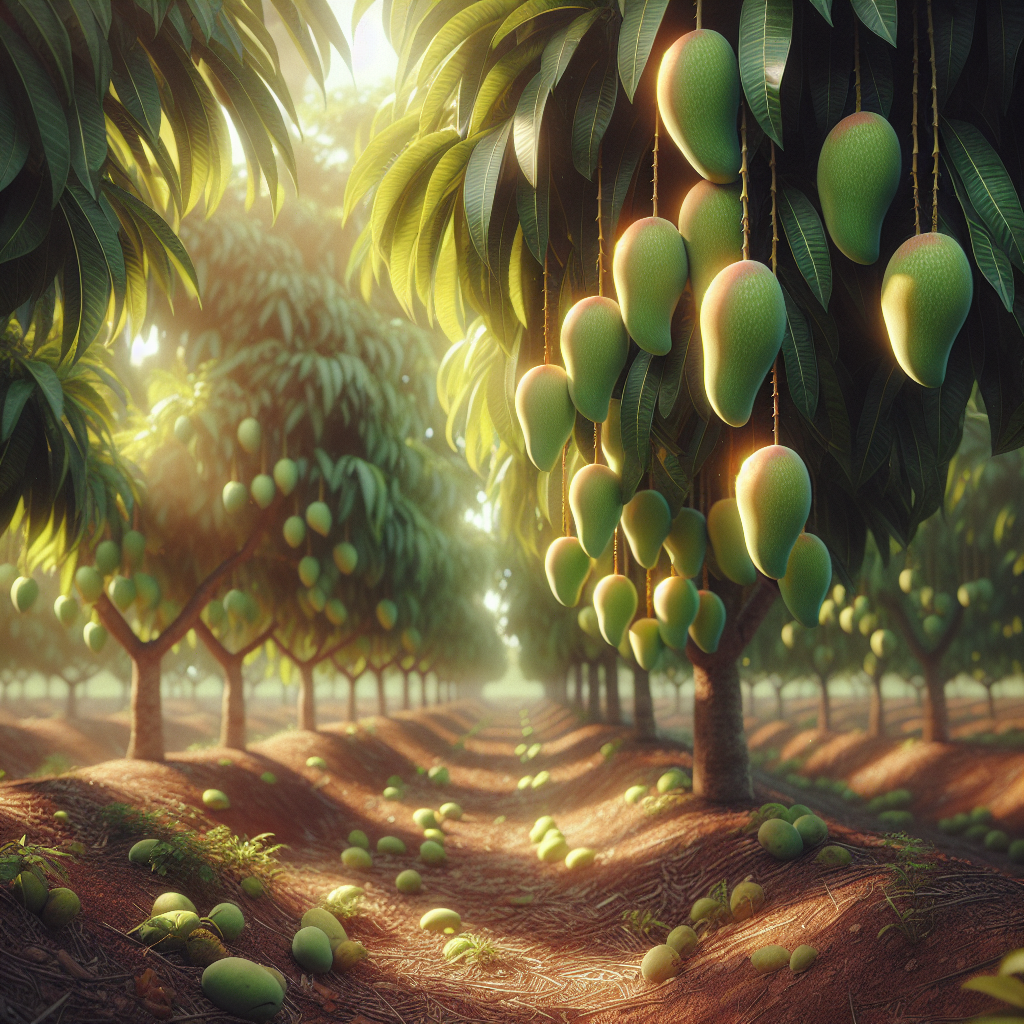
Introduction to Kesar Mango
Originating from the Gir region of Gujarat, India, this cultivar is widely regarded as one of the finest table mangoes for its bright pulp color, intense fragrance, and smooth, nearly fiberless texture. The name “Kesar” refers to saffron, a nod to the fruit’s characteristic orange flesh. It is commercially important because it combines strong consumer appeal with good pulp recovery, making it valuable for fresh consumption, slicing, nectar, puree, and premium dessert products.
Compared with some export-focused mangoes bred for shipping toughness, Kesar is grown primarily for eating quality. Fruit are typically medium sized, rounded to oblong, with greenish-yellow skin that develops golden hues on maturity rather than a dramatic red blush. Trees can be productive and long-lived, but like many superior dessert mangoes, they demand disciplined orchard hygiene, controlled irrigation, and regular canopy management to maintain fruit quality and reduce disease pressure.
In India, Kesar is often harvested from late spring into early summer depending on locality, tree age, and seasonal weather. In broader tropical production systems, timing shifts with rainfall pattern and temperature. Its flowering and fruit set are especially influenced by dry weather, moderate winter cooling without frost, and balanced nutrient status. Growers seeking excellent flavor should understand that Kesar performs best when vegetative vigor is controlled; overwatering and excess nitrogen frequently result in rank growth, poor flowering, spongy or watery fruit, and higher pest incidence.
For broader background on species-level management, see the general Mango guide. Good orchard outcomes also depend heavily on long-term soil structure and organic matter management; the principles in soil health strategies are particularly relevant for perennial fruit systems.
Botanical Profile of Kesar Mango
This cultivar belongs to the Anacardiaceae family. Like other mangoes, it is an evergreen tree with a deep-rooting habit when grown in well-drained soils, though a substantial proportion of feeder roots remain in the upper 15-45 cm of soil where oxygen, moisture, and nutrient balance are critical. That shallow feeder-root zone is why mulching, drainage, and careful fertilizer placement matter so much.
Kesar trees are moderately vigorous to vigorous depending on rootstock, soil fertility, and irrigation regime. Young flushes often emerge bronze to reddish before turning glossy green. Panicles are terminal and bear many small flowers, most of which are male; only a small percentage are hermaphrodite and capable of setting fruit. Pollination is primarily insect-assisted, especially by flies, bees, and other small foraging insects. Even under good conditions, heavy flower production does not guarantee a large crop because temperature swings, rain during bloom, Powdery mildew, poor pollinator activity, or nutrient imbalance can sharply reduce fruit set.
The fruit is known for:
- Medium size, often around 200-300 g under commercial conditions, though this varies with crop load and orchard management.
- Rich yellow to saffron-orange flesh.
- Pleasant sweetness with moderate acidity and strong aroma.
- Low to moderate fiber, making it desirable for fresh eating and pulp extraction.
- Relatively thin skin compared with some shipping cultivars, which means gentle handling is essential.
Kesar is usually propagated vegetatively so that orchards remain true to type. Seedling-grown trees are genetically variable and unsuitable for commercial planting where uniformity of fruit quality, maturity, and tree structure is required. Grafted trees also come into bearing much earlier than seedlings.
Botanically, mango has periodic flush cycles. In Kesar, excessive vegetative flushing close to the flowering season often suppresses bloom. Mature, hardened shoots of the previous season are the most reliable bearers, so orchard practices should aim to produce healthy post-harvest flushes that mature fully before floral induction.
Soil, pH, and Climate Requirements for Kesar Mango
Kesar performs best in deep, well-drained loam to sandy loam soils with good aeration and moderate water-holding capacity. It can grow in medium black soils and even heavier profiles if drainage is excellent, but persistent waterlogging is one of the fastest ways to weaken roots, trigger Gummosis, and reduce productivity.
Ideal soil characteristics include:
- Depth of at least 1.5-2 m for unrestricted root development.
- pH between 5.5 and 7.5, with best nutrient availability typically around 6.0-7.0.
- Electrical conductivity below 1.0 dS/m for best performance; prolonged salinity reduces leaf health, panicle emergence, and fruit size.
- Organic matter above 1.5% preferred, though many orchards can perform below this if mulched and amended consistently.
When pH rises above 7.8, micronutrient deficiencies become more likely, especially zinc and iron. Common field symptoms include interveinal chlorosis on younger leaves, shortened internodes, smaller leaves, and reduced flowering vigor. In very alkaline calcareous soils, repeated soil applications of manure alone will not fully solve the issue; foliar micronutrient correction is often necessary.
Climate is decisive. Kesar prefers:
- Mean growing temperatures around 24-32°C.
- A dry spell before flowering.
- Little to no rain during flowering and early fruit set.
- Frost-free conditions; damage can begin near 0°C, especially on young trees.
- Low relative humidity during bloom and moderate humidity during fruit development.
Rainfall of 750-2500 mm can be tolerated if it is seasonal and drainage is excellent. However, rainfall distribution matters more than total annual amount. Frequent winter or spring showers during bloom can wash pollen, reduce pollinator flight, and favor Powdery mildew and Anthracnose. High humidity plus cloudy conditions during flowering often leads to poor fruit set.
For moisture management, aim to keep soil in the root zone evenly moist but never saturated. In practical terms, the top 5 cm of mulched soil may dry slightly between irrigations, but the soil at 15-30 cm depth should remain lightly moist during active growth and fruit sizing. If a squeezed handful from root depth feels sticky, shiny, or forms a wet ribbon, the tree is too wet. If it falls apart as dust and feeder roots are brittle or sparse near the surface, irrigation is too infrequent.
Young trees are especially sensitive to both drought stress and waterlogging. Mature Kesar trees benefit from mild pre-flowering moisture stress in climates where controlled irrigation is possible; this can help suppress vegetative growth and encourage bloom. Severe drought, however, causes leaf curl, panicle desiccation, fruit drop, and reduced return bloom.
Step-by-Step Planting & Propagation
Commercial Kesar orchards should be established with healthy grafted plants from reputable nurseries. Veneer grafting, epicotyl grafting, and softwood grafting are commonly used. Select plants with:
- A clearly visible, well-healed graft union.
- Scion diameter matched reasonably well to rootstock.
- No bark cracking, gum exudation, or stem cankers.
- Dark green leaves without chlorosis, hopper damage, or Sooty mold.
- A height of roughly 60-100 cm with hardened growth, not soft, lush nursery growth.
Site preparation:
- Choose elevated or gently sloping land with no standing water after heavy rain.
- Remove perennial weeds, old stumps, and compacted layers if possible.
- Deep rip or subsoil hardpan zones before orchard layout, especially in mechanized fields.
- Mark spacing based on system. Traditional orchards often use 8 m x 8 m to 10 m x 10 m. In fertile irrigated soils, wider spacing helps airflow. Moderate-density systems may use 6 m x 6 m with strict pruning.
Pit preparation:
- Dig pits about 1 m x 1 m x 1 m in poorer soils; smaller pits may suffice in friable loams.
- Refill with topsoil mixed with 20-30 kg well-decomposed farmyard manure or compost, 1-2 kg neem cake, and if needed, rock phosphate or bone meal based on soil test.
- Avoid fresh manure, which can burn roots and attract termites.
- In termite-prone areas, incorporate organic deterrents and keep woody debris away from planting holes.
Planting procedure:
- Plant at the onset of the rainy season in regions with reliable but not excessive monsoon rainfall, or in post-monsoon/early spring where irrigation is available.
- Water the pit lightly a day before planting so the medium is settled but not soggy.
- Remove the nursery bag carefully without disturbing the root ball.
- Set the plant so the graft union remains at least 15-20 cm above the soil surface.
- Backfill gently and press lightly to eliminate air pockets.
- Create a shallow basin around the tree, then water thoroughly once.
- Stake if winds are strong, tying loosely with a soft material.
- Mulch with 5-10 cm organic material, keeping mulch 10-15 cm away from the trunk.
Initial training:
- Remove shoots arising from below the graft union immediately.
- Allow the plant to grow to about 70-100 cm, then encourage 3-4 well-spaced primary scaffold branches.
- Avoid low crotch angles; wide branch angles are stronger and support fruit load better.
Propagation for advanced growers: Top-working can be used to convert inferior seedlings or old mixed-variety trees to Kesar. Healthy scaffold limbs are beheaded and grafted during active sap flow. Success depends on disease-free stock, careful bark management, and protection of grafts from desiccation and sunburn.
Care & Maintenance regimes for Kesar Mango
Young orchard care differs sharply from bearing-tree management.
Irrigation:
- Newly planted trees: irrigate every 3-5 days in hot dry weather for the first few weeks if rain is absent, then gradually move to 7-10 day intervals depending on soil texture.
- Trees 1-3 years old: typically every 7-15 days in dry periods; sandy soils need more frequent irrigation than loams.
- Bearing trees: irrigate after fruit set and during fruit enlargement, but reduce or withhold irrigation before expected flowering to encourage floral induction where climate permits.
As a rule, mango roots require oxygen as much as water. Chronic overwatering causes yellowing leaves, reduced flush quality, blackened fine roots, sour-smelling soil, and increased incidence of stem Gummosis. Fruit from overwatered trees may be bland, watery, softer, and more susceptible to postharvest breakdown. Underwatering, by contrast, causes dull leaves, marginal scorch, undersized fruit, and excessive fruit drop, especially when the crop is marble to egg sized.
Nutrition: Exact fertilizer rates should follow a soil and leaf analysis program, but the general pattern is:
- Young trees: modest, split applications of nitrogen with smaller amounts of phosphorus and potassium to establish canopy without forcing lush growth.
- Bearing trees: a balanced schedule emphasizing post-harvest recovery, pre-flowering restraint on nitrogen, and adequate potassium for fruit quality.
Typical nutrient approach:
- Apply major organic matter annually under the canopy dripline, not against the trunk.
- Split nitrogen into 2-3 doses where rainfall or irrigation leaches nutrients.
- Ensure potassium is sufficient; low potassium often shows as poor fruit fill, weak color, and lower sweetness.
- Correct zinc and boron deficiencies before flowering, as both influence flowering quality, pollination, and fruit retention.
Pruning and canopy management: Kesar benefits from light but regular pruning rather than severe sporadic cuts. Remove:
- Dead, diseased, crossing, and inward-growing branches.
- Rootstock suckers.
- Excessively upright water shoots after harvest.
The main objectives are light penetration, spray coverage, and reduction of humid pockets in the canopy. Trees allowed to grow too dense tend to flower unevenly and suffer more Anthracnose, hopper infestation, and internal shading. After harvest, prune lightly enough to stimulate a synchronized vegetative flush that can mature before the next bloom cycle.
Mulching and orchard floor management: Organic mulch helps stabilize temperature, conserve moisture, and improve feeder-root activity. Maintain a weed-free basin around young trees, because grass competition can dramatically reduce establishment. In mature orchards, managed living covers are useful between rows, especially legumes such as Clover, provided they are controlled so they do not compete heavily for water during fruit development.
Flower and crop-load management: In young trees, remove flowers for the first 1-2 years after planting so the tree directs energy into canopy and root establishment. On heavy-bearing mature trees, fruit thinning is not always practiced commercially, but where panicles set excessively, selective thinning can improve fruit size and reduce limb breakage.
Pests, Diseases & Organic Management
Kesar is vulnerable to several classic mango problems, especially in humid bloom periods.
Major insect pests:
- Mango hopper: causes sap sucking on panicles and tender leaves, leading to flower drop and sticky honeydew that fosters Sooty mold.
- Mealybugs: cluster on shoots and panicles, weakening growth and interfering with fruit set.
- Fruit flies: puncture maturing fruit, leading to larval feeding, rotting, and market loss.
- Stem borers and Bark-eating caterpillars: damage trunk and branches, reducing vigor.
- Scale insects: weaken leaves and shoots, often accompanied by black Sooty mold.
Major diseases:
- Anthracnose: causes black lesions on flowers, leaves, and fruit; often latent in fruit and appears after harvest.
- Powdery mildew: white fungal growth on panicles and tiny fruitlets, causing severe blossom loss in dry but humid nights.
- Bacterial black spot in some regions: angular lesions on leaves and fruit.
- Gummosis and Dieback: often linked to stress, injury, or poor drainage.
- Sooty mold: secondary growth on honeydew from sucking insects.
Organic and integrated management practices:
- Sanitation is foundational. Remove mummified fruit, diseased twigs, and fallen infected debris.
- Keep the canopy open for airflow and better spray penetration.
- Avoid overhead irrigation during flowering and fruiting.
- Install fruit fly traps before color break and maintain field hygiene by collecting fallen fruit daily.
- Use trunk bands or barriers against crawling mealybug populations where this pest overwinters in soil cracks.
- Encourage beneficial insects by reducing broad-spectrum insecticide use and maintaining flowering intercrops away from direct trunk competition.
Organic spray tools often used in mango systems include neem-based products for hoppers and soft-bodied insects, sulfur for Powdery mildew where legally permitted and temperature-safe, and copper-based protectants for Anthracnose in preventive programs. Timing matters more than intensity: preventive sprays just before bloom, at early panicle emergence, and during early fruit set are generally more effective than waiting for severe infection.
Watch for these field signals:
- Panicles turning black after humid weather: likely Anthracnose.
- White dusty coating on bloom with fruitlet drop: likely Powdery mildew.
- Sticky panicles with ant activity: often hoppers or Mealybugs.
- Small punctures and soft spots on near-ripe fruit: suspect fruit fly.
Physiological issues: Fruit drop occurs naturally in stages, but excessive drop may indicate poor pollination, boron deficiency, moisture stress, hopper injury, or cloudy wet bloom conditions. Spongy tissue and internal breakdown are aggravated by erratic watering, heat stress, and delayed harvest.
Harvesting, Curing & Optimal Storage
Kesar should be harvested at physiological maturity, not tree-ripe softness. Proper maturity is essential because immature fruit may color externally yet never develop the signature aroma and sweetness. Mature fruit usually show filled shoulders, a change from deep green to lighter green or yellowish undertones, and a well-developed beak depending on the strain and season. Days from fruit set to maturity vary by climate, but local harvest indices should always be established from experience.
Harvesting best practices:
- Harvest in the cool morning when field heat is low.
- Use clippers or harvest poles with nets; never shake branches.
- Retain a short pedicel initially to reduce latex burn, then trim after sap flow declines.
- Place fruit gently in padded crates, not sacks.
Latex management is particularly important in premium mangoes. Sap burn causes black streaking and reduces market value. After harvest, de-sapping fruit stem-end down on racks for 20-30 minutes, then wash and dry carefully.
Curing and ripening:
- Pre-sort to remove damaged, diseased, or undersized fruit.
- Cure in a clean shaded area with good ventilation.
- Ripen at around 20-24°C for best flavor development.
- Avoid very high temperatures, which produce uneven softening and poor aroma.
Storage parameters:
- Mature-green fruit for short-term holding: about 12-13°C with 85-90% relative humidity.
- Ripe fruit: 8-10°C only for short durations if the fruit is already softened, but chilling injury risk rises if fruit are held too cold for too long.
Symptoms of chilling injury include skin pitting, dull color, poor ripening, grayish flesh, and off-flavors. Kesar is prized for aroma, so excessive cold storage often diminishes its best qualities. For local premium markets, a shorter supply chain with careful handling usually gives better eating quality than prolonged storage.
For processing, harvest at full mature-green to early ripe stage depending on the intended product. High-quality pulp requires fruit free from Anthracnose lesions, fiber clumps, and fermentation notes.
Companion Planting for Kesar Mango
In mango orchards, companion planting should support soil health, pollinators, beneficial insects, and weed suppression without creating excessive root competition or humid disease-prone conditions near the trunk. The best companions are usually low-growing, manageable species rather than tall intercrops that shade young trees or compete heavily for moisture.
Useful companions include Clover, Peas, and Thai Basil. Clover works well as a living mulch between rows, helping reduce erosion, moderate soil temperature, and contribute some biologically fixed nitrogen when managed properly. Peas are valuable as a seasonal legume intercrop in young orchards where sunlight still reaches the ground; they improve soil structure and can provide additional income before canopy closure. Thai basil attracts pollinators and beneficial insects while adding an aromatic herb crop to orchard margins or designated beds.
Another strong option in wider-spaced orchards is Turmeric, especially in semi-shaded systems with irrigation. It suppresses weeds reasonably well and monetizes inter-row space, though it should not be planted so densely that it competes with young mango roots for water.
Companion planting guidelines for Kesar:
- Keep a vegetation-free ring 50-100 cm around newly planted trees.
- Place companion crops outside the immediate feeder-root concentration of very young trees.
- Prefer legumes and shallow-rooted herbs over tall cereals or exhaustive crops.
- Avoid dense humid undergrowth near trunks during flowering and monsoon periods.
- Terminate or mow living covers before they set excessive seed or compete during fruit enlargement.
Poor companions include aggressive grasses, water-demanding annuals planted too close to the trunk, and crops requiring frequent overhead irrigation. In commercial orchards, the goal is not simply biodiversity but functional biodiversity that improves pollination, soil biology, and orchard accessibility without compromising mango fruit quality.