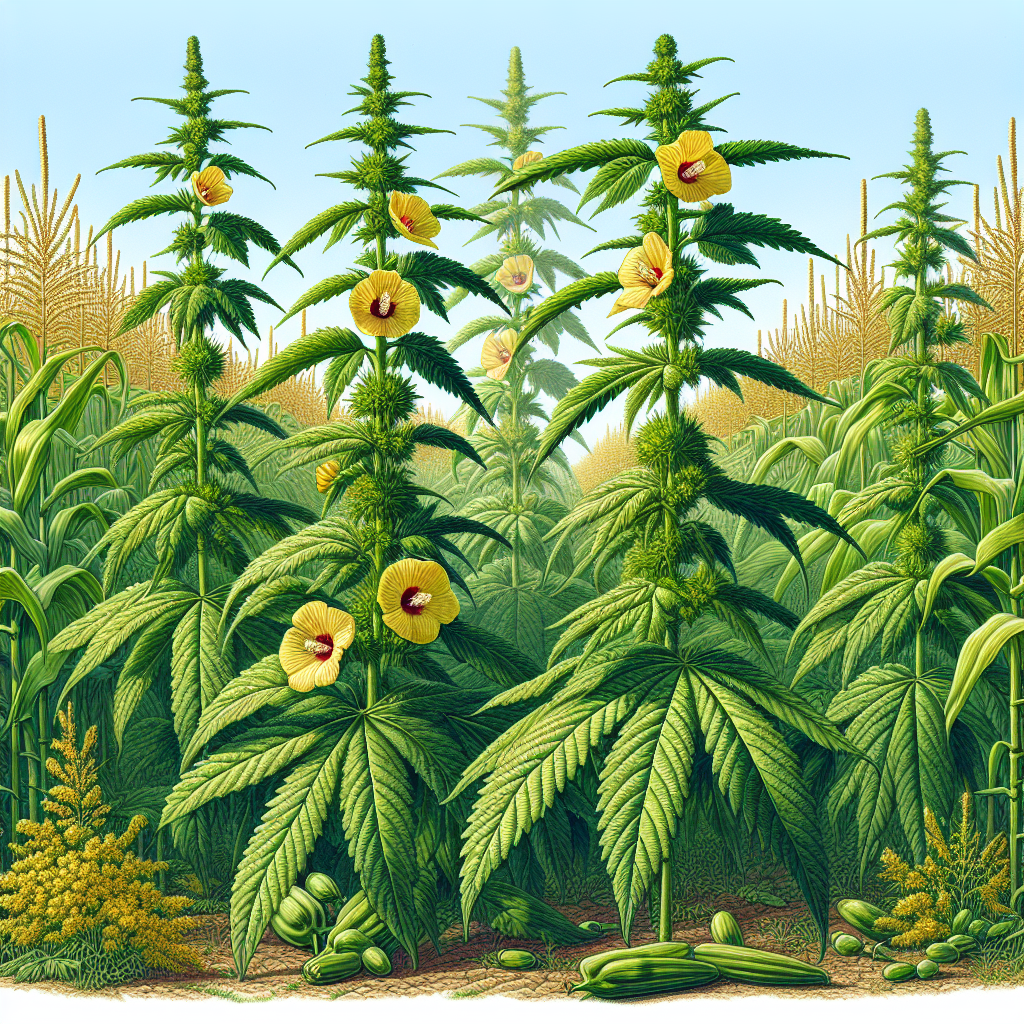
Introduction to kenaf
Kenaf, scientifically known as Hibiscus cannabinus L., is a versatile but problematic plant species that serves as a significant agricultural pest in many tropical and subtropical regions. While cultivated intentionally for fiber production in paper, textiles, and biofuels—similar to its relative jute—kenaf becomes a noxious weed when it escapes cultivation or invades crop fields. This tall, upright annual can reach heights of 3-6 meters (10-20 feet) in a single growing season, featuring large, deeply lobed leaves and yellow flowers with deep red centers. Farmers often encounter kenaf as an invasive competitor that outgrows and overshadows primary crops, leading to substantial yield losses.
Originating from Africa, kenaf thrives in warm climates and has spread globally through seed dispersal via wind, water, machinery, and contaminated fodder. Its pest status stems from prolific seed production—up to 20,000 seeds per plant—and allelopathic properties that inhibit nearby plant growth. In the United States, it's listed as a weed in states like Florida, Texas, and Hawaii, where it invades pastures, roadsides, and row crops. For more on integrated weed management, check this Spring Pest Patrol blog post. Early detection and proactive control are crucial, as mature stands are difficult to eradicate without heavy machinery or chemicals. This guide provides comprehensive diagnostics, lifecycle insights, and organic management strategies to help farmers reclaim their fields from kenaf infestations.
Identifying Symptoms & Damage
Kenaf infestations are easy to spot once established, but early symptoms mimic other broadleaf weeds. Initial signs include clusters of fast-growing seedlings with heart-shaped cotyledons and serrated, palmate leaves emerging 2-4 weeks after planting season. Young plants have a distinctive musky odor when crushed, aiding field identification.
Visible damage progresses rapidly: kenaf stems grow upright and woody, forming dense thickets that shade out crops like corn, soybeans, and sorghum. Crop stunting occurs as kenaf competes for sunlight, water, and nutrients—nitrogen uptake by kenaf can exceed 200 kg/ha, starving neighbors. In row crops, kenaf causes lodging by physically supporting itself on weaker plants. Seedlings may show chlorosis or wilting near kenaf due to allelopathy, where root exudates suppress germination.
Advanced damage includes reduced harvest efficiency; kenaf tangles in combines, contaminating grain with fibrous stems and seeds. Economic losses average 20-50% in heavily infested fields, with fiber contamination lowering market value. Differentiate from similar pests like Helicoverpa species (which cause chewing damage) or aphids (sucking pests)—kenaf is a plant competitor, not an insect. Scout fields weekly during warm months, using quadrats to count stems per square meter; thresholds exceed 2-5 plants/m² for intervention.
Lifecycle and Progression of kenaf
Kenaf follows a typical annual lifecycle adapted to hot, humid environments. Seeds germinate in spring when soil temperatures reach 20-25°C (68-77°F), producing 4-6 true leaves within 2 weeks. Vegetative growth dominates for 60-90 days, with stems elongating rapidly under high light and moisture.
Flowering begins 70-100 days post-emergence, peaking in late summer. Each flower lasts one day, producing 10-50 seeds per capsule; a single plant yields 5,000-20,000 viable seeds, remaining dormant in soil for 5+ years. Maturity occurs in 120-180 days, followed by senescence as seeds shatter.
Progression varies by climate: in tropics, multiple generations occur annually; in subtropics, one cycle with volunteer seedlings. Overwintering seeds ensure recurrence. Lifecycle stages offer control windows—pre-emergence for seeds, vegetative for mechanical removal, reproductive for seedhead destruction. Compared to jute, kenaf is more cold-tolerant, extending its range northward.
Environmental Triggers & Risk Factors
Kenaf flourishes in disturbed, fertile soils with pH 5.5-7.5 and adequate moisture (500-1000 mm rainfall). Triggers include warm temperatures (>25°C daytime), high humidity, and full sun; it tolerates drought once established but explodes in irrigated fields. Poor tillage leaves seeds near surface, promoting germination.
Risk factors: contaminated equipment from kenaf-growing areas, flooding dispersing seeds, and crop rotations favoring broadleaves like cotton or sugarcane. Monocultures of rice or wheat heighten vulnerability due to shared habitats. Climate change extends suitable zones, with models predicting northward spread. Over-fertilization with nitrogen boosts kenaf vigor over crops. Fields near roadsides or pastures face higher infestation from seed rain. Monitor weather data for germination forecasts; avoid planting in known hotspots.
Organic Control & Treatment Plans
Organic management emphasizes prevention and multi-tactic integration. Cultural Controls: Rotate with suppressants like clover or hairy vetch, which smother seedlings. Cover crops build soil cover, reducing bare ground.
Mechanical: Mow at 10-15 cm height pre-flowering to exhaust reserves; repeat every 2-3 weeks. Hand-pull seedlings (<30 cm) in small areas; tillage buries seeds deeper than 5 cm viability limit. Flame weeding targets rosettes effectively.
Biological: Encourage natural enemies like leaf-feeding beetles or grazing livestock (goats excel at kenaf). Introduce bioherbicides from fungi like Colletotrichum gloeosporioides. Mulching with straw (10 cm thick) suppresses 80-90% emergence.
Treatment Plan: Week 1: Scout and map. Week 2-4: Mechanical removal + mulch. Monitor monthly; spot-treat regrowth. Solarization in off-season kills seedbank. Combine with marigold borders for nematode suppression if co-occurring with root-knot nematodes. Success rates exceed 90% with consistency; avoid tillage post-rain to prevent spread.
Preventing kenaf in the Future
Long-term prevention hinges on sanitation and vigilance. Clean equipment thoroughly after field work; use seed-free inputs. Establish buffer zones with competitive grasses around perimeters. Soil testing guides balanced fertility, denying kenaf nitrogen edge.
Implement integrated weed management (IWM): diverse rotations, precise planting, and cover cropping. Scout early, using apps for ID. Eradicate satellite plants promptly. For high-risk fields, pre-emergent organic mulches or solarization deplete seedbanks over 2-3 years. Educate workers on kenaf ID. Track via field journals; thresholds under 1 plant/10 m² maintain clean fields. Pair with companion planting strategies from this Companion Planting blog. Sustainable practices ensure kenaf-free production.
Crops Most Affected by kenaf
Kenaf severely impacts warm-season field crops due to overlapping growth habits. Corn suffers 30-50% yield loss from shading and nutrient theft. Soybeans face pod contamination and stunting. Cotton fibers tangle with kenaf stems, complicating harvest.
Sugarcane and sorghum compete directly in tropics, with kenaf reducing cane tonnage by 20%. Pasture grasses decline under invasion, affecting livestock forage. Vegetable crops like tomato, cucumber, and okra in shared regions show similar suppression. Fiber crops ironically host volunteers. Mitigation via rotation protects these staples.