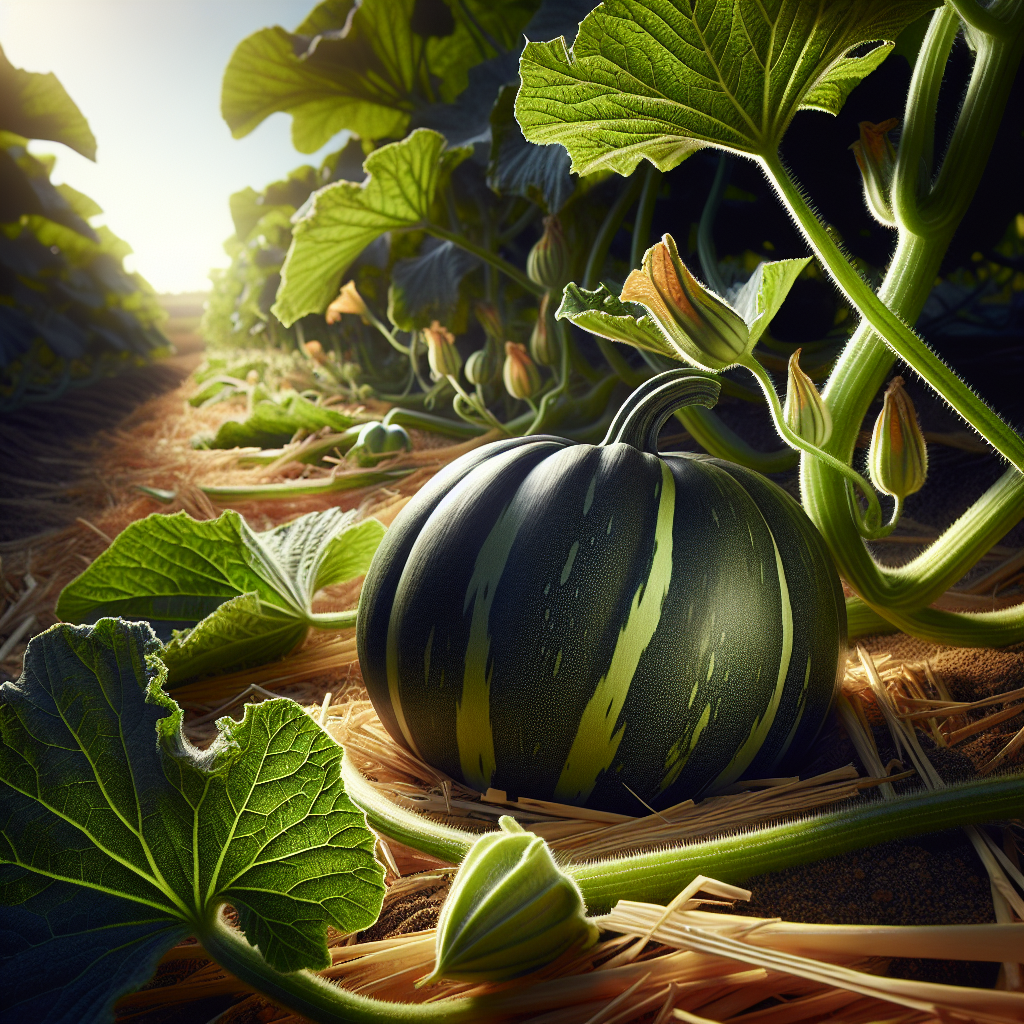
Introduction to Kabocha Squash
Often called Japanese pumpkin, this winter squash is grown for its deeply sweet, dry-textured flesh and typically dark green rind, though some cultivars mature gray, striped, or red-orange. It belongs to the species Cucurbita maxima, the same species group that includes hubbard- and buttercup-type squashes, and it is especially valued because it combines rich eating quality with relatively compact fruits and strong storage potential.
Kabocha is thought to have emerged through Japanese selection from squash types introduced centuries ago, eventually becoming distinct for its flattened shape, hard rind, and dense orange to yellow-orange flesh. In many markets, the name is used broadly, but true kabocha types generally share a dry matter-rich interior, a small seed cavity relative to fruit size, and a flavor that improves after a short postharvest rest. Compared with watery squash, kabocha is notably starchier at harvest and converts more of that starch to sugars during storage.
From a grower’s perspective, kabocha is rewarding but not carefree. It requires warm soil, uninterrupted growth, adequate pollination, and disciplined disease prevention. Fruit set may be lower than on some summer squash because vines invest heavily in fewer, higher-value fruits. Where management is good, however, yields are dependable and fruit quality can be exceptional. If you are comparing winter squash species, see our Squash guide.
Botanical Profile of Kabocha Squash
This crop is an annual, frost-sensitive, vining cucurbit with a sprawling growth habit. Most kabocha varieties produce long runners from a central crown, though semi-bush selections also exist. Stems are angular and prickly, leaves are broad and slightly lobed, and tendrils help stabilize vine growth across the soil surface. The root system is relatively shallow in the topsoil but wide-ranging, which is why steady moisture and mulch often improve performance dramatically.
As a Cucurbita maxima type, it differs from Cucurbita pepo squashes such as zucchini in several useful ways. Seeds are typically plumper, stems are often softer and more rounded than the sharply ridged stems of many pumpkins, and fruits are usually better suited for long storage. Flowers are monoecious, meaning the same plant bears separate male and female blooms. Male flowers appear first, often by several days to two weeks, followed by female flowers identifiable by the immature ovary behind the petals.
Pollination is insect-mediated, primarily by bees. Because flowers open for only a short morning window, poor bee activity during cool, rainy, windy, or pesticide-disrupted weather can sharply reduce fruit set. A single vine may produce many flowers but mature only a limited number of marketable fruits, especially under low fertility or drought stress. Fruit shape is usually flattened to round, commonly 2 to 5 pounds, though larger cultivars exist. Rind color can be deep forest green with faint striping, slate blue-green, or orange depending on the cultivar.
Well-known commercial and garden strains include green kabocha, red kuri-adjacent selections sometimes marketed loosely as kabocha, and buttercup-derived lines with a turban-like blossom end button. The best eating types tend to have high dry matter, thick flesh, and relatively small seed cavities. For culinary growers, this high solids content is one of the defining traits that separates premium kabocha from generic winter squash.
Soil, pH, and Climate Requirements for Kabocha Squash
This crop performs best in fertile, well-drained loam or sandy loam with strong organic matter content and a soil pH of 6.0 to 6.8. It will tolerate slightly wider conditions, roughly 5.8 to 7.2, but nutrient uptake is most balanced in the mildly acidic range. Below pH 5.8, calcium and magnesium availability often declines and plant vigor may suffer. Above about 7.2, micronutrient lock-up, especially iron and manganese, can lead to interveinal chlorosis on young growth.
Drainage matters as much as fertility. Kabocha roots need oxygen, and soils that remain saturated after rainfall often trigger root stress, slow growth, and higher risk of damping-off, Phytophthora, and Fusarium-related decline. A good field should drain enough that standing water disappears within 24 hours after heavy rain. Raised beds or hills are especially useful in clay soils or humid climates.
Organic matter of 3% to 6% is ideal for balancing water retention with aeration. Excessively rich, heavily manured soils can push rampant vine growth at the expense of flowering and fruit maturity, particularly if nitrogen is high and potassium is limited. Before planting, incorporate finished compost rather than fresh manure. Fresh manure can contribute salts, unstable nitrogen, and food safety concerns.
Temperature is critical. Seeds germinate best when soil temperatures are 25 to 32°C (77 to 90°F), though they can sprout more slowly at 18 to 21°C (64 to 70°F). Below 15°C (59°F), emergence becomes erratic and seedlings are more vulnerable to rot. Vegetative growth is strongest in daytime temperatures of 24 to 30°C (75 to 86°F) with nights above 16°C (61°F). Growth slows significantly in cool weather, and even light frost can kill vines.
Kabocha needs a long frost-free season, generally 90 to 120 days depending on cultivar and climate. In cool-short-season regions, transplants, black plastic mulch, row covers, or low tunnels are often necessary for dependable maturity. In very hot climates, fruit set may drop when daytime highs remain above 35°C (95°F), especially if nights stay hot and pollinator activity falls. Consistent soil moisture and mulching help reduce heat stress.
Light requirements are full sun, ideally 8 or more hours daily. Partial shade lowers carbohydrate production, encourages foliar disease by prolonging leaf wetness, and often results in bland fruit with lower dry matter. Good air circulation is equally important; sprawling vines should not be overcrowded.
For broader fertility planning, the principles in Soil health strategies apply especially well to winter squash fields.
Step-by-Step Planting & Propagation
Propagation is almost always by seed. Direct seeding is preferred in warm regions because cucurbits dislike root disturbance, but transplanting is highly effective when used carefully in short growing seasons.
Prepare the bed 2 to 3 weeks before planting. Work in 2 to 3 inches of finished compost and shape beds or hills. If using hills, make them 12 to 18 inches wide and slightly raised to improve drainage and soil warmth.
Wait for warm soil. Direct sow only after all frost risk has passed and the top 2 inches of soil are at least 18°C (65°F), preferably warmer. Cold soil is the fastest route to poor stands.
Seed depth and spacing. Sow seeds 1 to 1.5 inches deep. In hills, place 3 to 4 seeds per hill, then thin to the strongest 1 or 2 plants. In rows, space plants 24 to 36 inches apart with 6 to 10 feet between rows depending on vine length. Compact semi-vining types can be planted tighter; aggressive long-vine cultivars need the full spacing.
Starting transplants. Sow indoors 2 to 3 weeks before field planting in 3- to 4-inch biodegradable or deep cell pots. Maintain 24 to 29°C (75 to 85°F) for germination, then provide bright light and moderate fertility. Transplant when plants have 1 to 2 true leaves, before they become root-bound. Harden off for 5 to 7 days but protect from chilling.
Transplant carefully. Set transplants at the same depth they were growing in the pot. Avoid breaking the root ball. Water in immediately with enough moisture to settle soil around roots.
Thin and protect. After emergence, thin direct-seeded hills to the strongest seedlings. Use floating row cover early in the season to exclude Striped Cucumber Beetles, removing at flowering unless hand-pollinating.
Pollination support. If bee activity is low, hand-pollinate in the morning by transferring pollen from male to female flowers using a brush or by touching anthers directly to the stigma.
Avoid planting near other Cucurbita maxima if you plan to save seed, because cross-pollination is common. Fruit quality in the current season will not change, but saved seed may not come true.
Care & Maintenance regimes for Kabocha Squash
Water management should be deliberate rather than casual. The crop generally needs 1 to 1.5 inches of water per week, but actual demand rises during rapid vine growth, flowering, and fruit fill. The goal is even soil moisture in the root zone, roughly the top 8 to 12 inches, without prolonged saturation. A useful field standard is to irrigate when the top 2 inches of soil are dry but the soil below still feels slightly cool and faintly moist. Tensiometer targets around 20 to 30 centibars in loam often work well; beyond 40 to 50 centibars during flowering and fruit sizing, plants may abort fruit or produce undersized squash.
Signs of underwatering include midday wilting that persists into evening, dull blue-green leaves, slowed runner extension, flower drop, and fruit that stop enlarging. Signs of overwatering include persistent wilting despite wet soil, yellowing lower leaves, sour-smelling soil, edema-like blisters, and increased crown or root rot. Drip irrigation is strongly preferred because it keeps foliage dry and reduces foliar disease pressure.
Mulching with straw or leaf mulch after soil has warmed helps in three ways: moderating moisture swings, suppressing weeds, and keeping fruit cleaner. Organic mulch should be applied loosely, not packed against stems. Plastic mulch is useful for warming soil and accelerating maturity but requires careful irrigation under the film.
Nutrient management should emphasize balance. Kabocha is a moderately heavy feeder, especially for potassium, which supports sugar accumulation, rind strength, and storage quality. A common approach is to apply a balanced preplant fertilizer, then side-dress when vines begin to run and again at early fruit set if growth is pale or soil fertility is modest. Excess nitrogen late in the season is undesirable because it delays ripening, encourages lush disease-prone foliage, and can reduce storage performance.
A rough nutrient program for many garden soils is:
- Preplant: compost plus a balanced organic amendment.
- Vine-run stage: side-dress with nitrogen in modest amounts.
- Early fruit set: emphasize potassium and calcium availability rather than more nitrogen.
Weed control is most important in the first 4 to 6 weeks, before vines canopy the ground. Shallow cultivation is safer than deep hoeing because feeder roots occupy the upper soil profile. Once vines spread, hand removal of large weeds is preferable to disturbing roots.
Pruning is usually unnecessary in field culture, but some growers pinch terminal growth after 3 to 5 fruits have set per plant to concentrate resources into ripening. This works best in short seasons or when oversized vine growth threatens manageability. Do not over-prune foliage; leaves are the carbohydrate factory that sweetens fruit.
In areas with poor pollination, plantings near Corn can act as windbreaks but should not shade the crop. More importantly, maintain pollinator habitat and avoid spraying even organic insecticides when flowers are open.
Pests, Diseases & Organic Management
The major insect pests are Striped Cucumber Beetles, Squash Bugs, Vine Borers in some regions, Aphids, and occasionally Spider Mites. Of these, cucumber beetles are often most damaging early because they feed on cotyledons and young leaves while also transmitting Bacterial Wilt in susceptible cucurbits. Kabocha is not always the most sensitive cucurbit, but heavy feeding can still destroy seedlings.
For cucumber beetles, use row cover immediately after planting, remove it at bloom, rotate fields, eliminate nearby cucurbit volunteers, and use yellow sticky monitoring cards at field edges. Kaolin clay can help reduce feeding pressure. Hand-picking is practical in small plots during cool mornings.
Squash Bugs cluster on leaf undersides and stems, sucking sap and causing stippling, wilting, and vine collapse under heavy pressure. Crush bronze egg masses on leaf undersides, vacuum or hand-collect adults in the morning, and use boards or shingles as traps where bugs shelter overnight. Maintain weed control around field borders, because unmanaged margins often harbor populations.
Squash Vine Borer is less commonly devastating on C. maxima than on some summer squash, but regional pressure varies. Look for entry holes, sawdust-like frass, and sudden vine wilt. Exclusion netting before bloom, timely planting, and burying portions of vine nodes to encourage secondary rooting can reduce losses.
Aphids and Whiteflies may spread viruses such as Zucchini Yellow Mosaic Virus, Cucumber Mosaic Virus, or Watermelon Mosaic Virus. Viral symptoms include mottling, distorted leaves, blistering, stunting, and misshapen fruit. There is no cure, so prevention depends on weed control, reflective mulch in high-pressure areas, prompt rogueing of infected plants, and vector suppression early.
Disease pressure is often driven by humidity, overhead irrigation, and crowding. Powdery Mildew is the most common late-season foliar problem, appearing as white talc-like growth on leaves. It reduces photosynthesis and can prevent full fruit maturity if it arrives early. Improve spacing, irrigate at soil level, and apply organic protectants such as sulfur or potassium bicarbonate at first detection, following local label guidance and temperature restrictions.
Downy Mildew causes angular yellow lesions and gray-purple sporulation on leaf undersides, often appearing rapidly in humid weather. Good airflow, resistant cultivars where available, and timely organic fungicide programs based on copper or biofungicides are helpful, though sanitation alone rarely stops it once regional pressure is high.
Bacterial and fungal rots often begin with fruit-soil contact, insect injury, or wounds. Rest fruit on straw or boards in wet climates, avoid bruising, and never harvest when fruits are muddy if they are destined for long storage. Crop rotation is essential: avoid planting any cucurbit in the same ground for at least 3 years where disease has been serious.
Harvesting, Curing & Optimal Storage
Harvest timing determines eating quality and shelf life. Kabocha should be harvested when rind color has fully developed, the skin is hard enough to resist a fingernail, and the stem has started to cork or dry. Immature fruit may look full size but usually have bland flavor, lower dry matter, and poor storage potential. Most cultivars need 45 to 55 days from fruit set to full maturity, though this varies.
Use pruners or a sharp knife to cut fruits with 2 to 4 inches of stem attached. Never lift by the stem; detached stems create direct entry points for rot organisms. Handle fruits gently because even minor bruising shortens storage life.
If frost threatens, harvest all mature and nearly mature fruit. Light frost can scar rinds; hard frost damages flesh and ruins storage potential. Fruits harvested slightly early may still be edible, but they should be used first.
Curing improves rind hardness and healing of superficial wounds. Cure at 25 to 30°C (77 to 86°F) with good ventilation for 10 to 14 days if conditions allow. In humid climates, slightly cooler curing with strong airflow is safer than hot, stagnant air. After curing, move fruits to storage at 10 to 15°C (50 to 59°F) with 50% to 70% relative humidity. Lower temperatures can cause chilling injury; higher humidity increases mold risk if airflow is poor.
Under proper conditions, many kabocha fruits store 2 to 4 months, and some well-cured lots last longer. Flavor often improves after several weeks as starch converts to sugars. Inspect stored fruit weekly and remove any with soft spots, stem mold, or rind collapse. Do not stack too deeply; pressure bruising and reduced airflow accelerate losses.
Companion Planting for Kabocha Squash
The most effective companions are those that support pollination, ground-level ecology, and early pest suppression rather than simply sharing space. Nasturtium is useful nearby as a trap and distraction plant for some sap-feeding pests and as a flowering resource for beneficial insects. Thyme can occupy path edges and bed margins where its low habit does not compete heavily with vines, while also attracting small beneficial insects when flowering. Sunflower can serve as a pollinator beacon and light windbreak if positioned so it does not shade the crop. Clover works best as a managed living mulch in alleys or off-season cover, not directly in the crown zone where competition for moisture can be too intense.
The classic polyculture principle of combining squash with upright structural crops and legumes can be adapted carefully, but spacing must remain generous. If using companions, keep the squash root zone open during establishment and prioritize airflow. Avoid pairing with crops that create dense shade or that host the same major disease problems in crowded conditions.
Good companions do not replace crop rotation, sanitation, or irrigation management, but they can make a meaningful difference in pollinator traffic and biological resilience when integrated into a professional growing system.