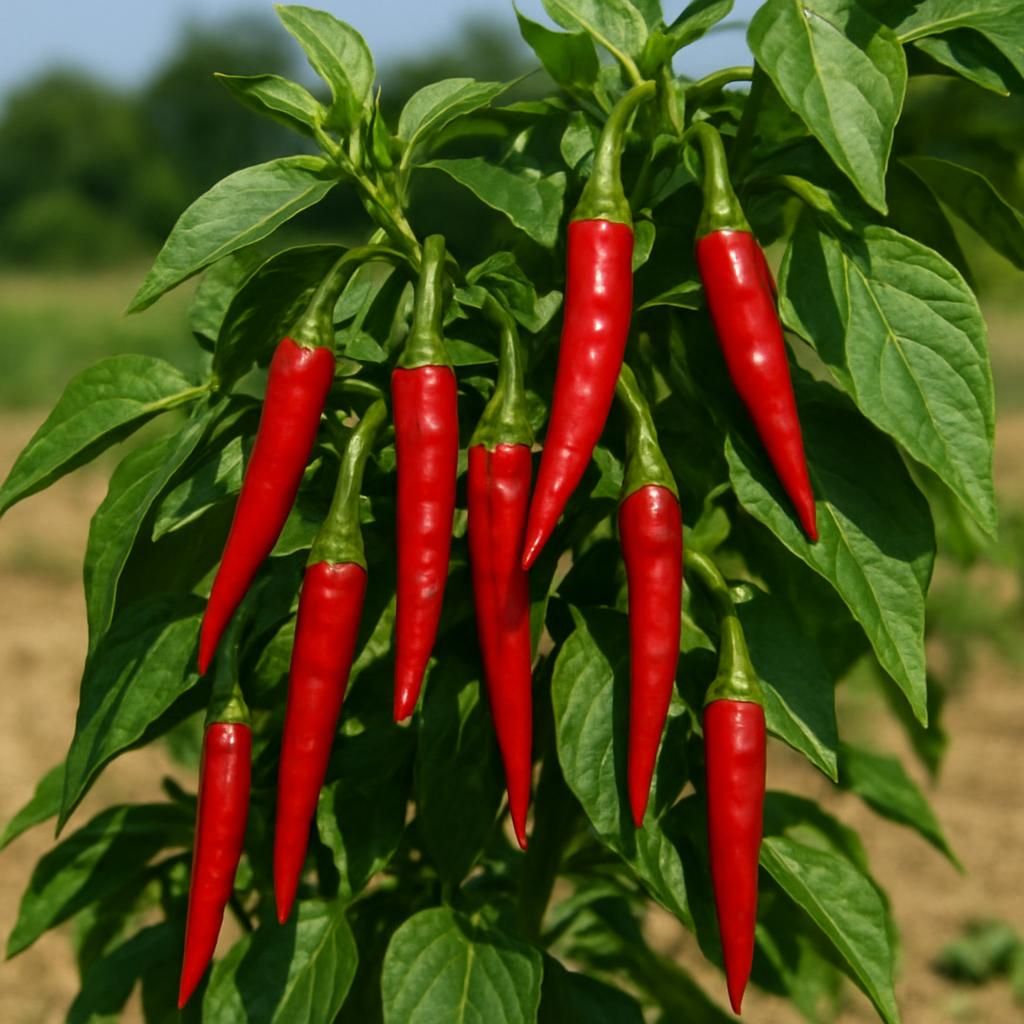
Introduction to Jwala Chili
Jwala Chili (Capsicum annuum 'Jwala') is one of the most popular hot pepper varieties in India, valued for its prolific fruiting, slender pods, and consistent pungency. Farmers and home gardeners appreciate its adaptability to tropical and subtropical conditions, making it a reliable choice for both commercial and kitchen gardens. The cultivar matures in approximately 75–85 days from transplant and produces thin-walled fruits that dry quickly for storage and spice processing.
Botanical Profile of Jwala Chili
Jwala Chili belongs to the Solanaceae family and is classified as an annual herbaceous plant. It exhibits an upright, bushy growth habit reaching 60–90 cm in height with multiple branching stems. The leaves are ovate to lanceolate, dark green, and slightly glossy. Flowers are small, white, and typically self-pollinating, though insect activity can enhance fruit set. The fruits are slender, tapered, 7–10 cm long, and 0.8–1.2 cm wide, turning from green to deep red at maturity. The thin pericarp allows rapid moisture loss during sun-drying, a key trait for commercial spice production.
Soil, pH, and Climate Requirements for Jwala Chili
Jwala Chili performs best in well-drained sandy loam to loam soils rich in organic matter. Heavy clay soils should be amended with compost or raised beds to improve aeration and prevent waterlogging. The crop is highly sensitive to both water stress and excess moisture, requiring consistent irrigation without saturation. Ideal growing temperatures range from 20–32 °C during the day with nighttime lows above 15 °C. Prolonged exposure below 15 °C slows growth and reduces fruit set, while temperatures above 35 °C can cause flower drop.
| Parameter | Ideal Range | Notes |
|---|---|---|
| Soil Type | Sandy loam to loam | Well-drained; avoid heavy clay |
| Soil pH | 6.0–7.0 | Slightly acidic to neutral |
| Temperature (Day) | 20–32 °C | Optimal fruit set and growth |
| Temperature (Night) | 15–22 °C | Below 15 °C reduces flowering |
| Annual Rainfall | 600–1200 mm | Supplemental irrigation needed in dry periods |
| Sunlight | Full sun (6–8 hours) | Essential for high yields and color |
| Elevation | Up to 1500 m | Performs well in mid-hill regions |
Step-by-Step Planting & Propagation
Start seeds indoors or in a protected nursery 6–8 weeks before the last expected frost or monsoon onset. Sow seeds 0.5 cm deep in seed trays filled with sterile seed-starting mix. Maintain soil temperature at 25–28 °C for rapid germination, which occurs in 7–12 days. Harden off seedlings for 7–10 days before transplanting. Transplant when seedlings have 4–6 true leaves and soil temperature exceeds 18 °C. Space plants 45 cm apart in rows 60–75 cm apart to allow airflow and ease of harvest. Apply a starter solution of diluted fish emulsion or seaweed extract at transplant to reduce transplant shock.
Care & Maintenance regimes for Jwala Chili
Consistent moisture is critical during flowering and fruit development. Drip irrigation or soaker hoses delivering 25–40 mm of water per week prevent blossom-end issues and maintain fruit quality. Mulch with straw or dried leaves to conserve moisture, suppress weeds, and moderate soil temperature. Side-dress with well-rotted compost or balanced organic fertilizer (N-P-K 5-5-5) every 3–4 weeks during active growth. Prune lower leaves and suckers to improve airflow and reduce disease incidence. Support plants with stakes or string in windy areas to prevent lodging.
| Growth Stage | Watering Schedule | Fertilizer Application | Pruning Action |
|---|---|---|---|
| Seedling (0–4 weeks) | Keep evenly moist; 10–15 mm daily | Light compost tea weekly | Remove damaged cotyledons |
| Vegetative (4–8 weeks) | 20–30 mm every 3 days | Balanced NPK every 3 weeks | Pinch growing tip at 30 cm height |
| Flowering & Fruit Set | 25–40 mm weekly | Low-nitrogen, high-potassium every 2 weeks | Remove lower leaves below first branch |
| Fruit Development | Consistent; avoid water stress | Compost or aged manure monthly | Light tipping of vigorous shoots |
| Pre-Harvest (last 2 weeks) | Reduce to 15–20 mm weekly | Cease nitrogen applications | Remove diseased foliage |
Pests, Diseases & Organic Management
Common insect pests include Aphids, Thrips, and Spider Mites. Monitor weekly and apply insecticidal soap or neem oil at the first sign of infestation. Fruit and shoot borers can be managed with pheromone traps and timely removal of affected fruits. Fungal diseases such as Anthracnose, Powdery mildew, and Phytophthora blight are prevalent in humid conditions. Practice crop rotation, avoid overhead watering, and apply copper-based fungicides or Bacillus subtilis products preventively. Viral diseases transmitted by whiteflies and aphids are best controlled through reflective mulches and removal of infected plants.
Harvesting, Curing & Optimal Storage
Harvest green Jwala Chilies 60–70 days after transplant when pods reach full size but remain firm. For red dried chilies, allow fruits to mature fully on the plant until deep red and slightly wrinkled. Pick in the early morning to minimize moisture content. Sun-dry harvested pods on clean mats for 5–7 days, turning regularly until moisture drops below 10 %. Store dried chilies in airtight containers away from light and humidity. Properly dried and stored chilies retain pungency and color for 12–18 months. For fresh use, refrigerate unwashed pods in perforated bags for up to two weeks.
Companion Planting for Jwala Chili
Jwala Chili benefits from strategic pairings that enhance pollination, deter pests, and improve soil health. Marigold planted at row ends repels nematodes and attracts beneficial insects. Thai Basil interplanted every third row improves flavor perception and masks chili volatiles from pests. Tomato and Eggplant are compatible in rotation but should not be planted adjacent due to shared disease susceptibility. Coriander sown as a border crop attracts parasitic wasps that control aphids. Avoid planting near Fennel or members of the Brassicaceae family, which can inhibit chili growth. Rotate with legumes such as Chickpeas to naturally replenish soil nitrogen between chili cycles.
For further reading on companion planting strategies, see Summer Companion Planting: 10 Organic Pairings to Boost Small Farm Resilience. Additional botanical details are available at Chili Pepper.