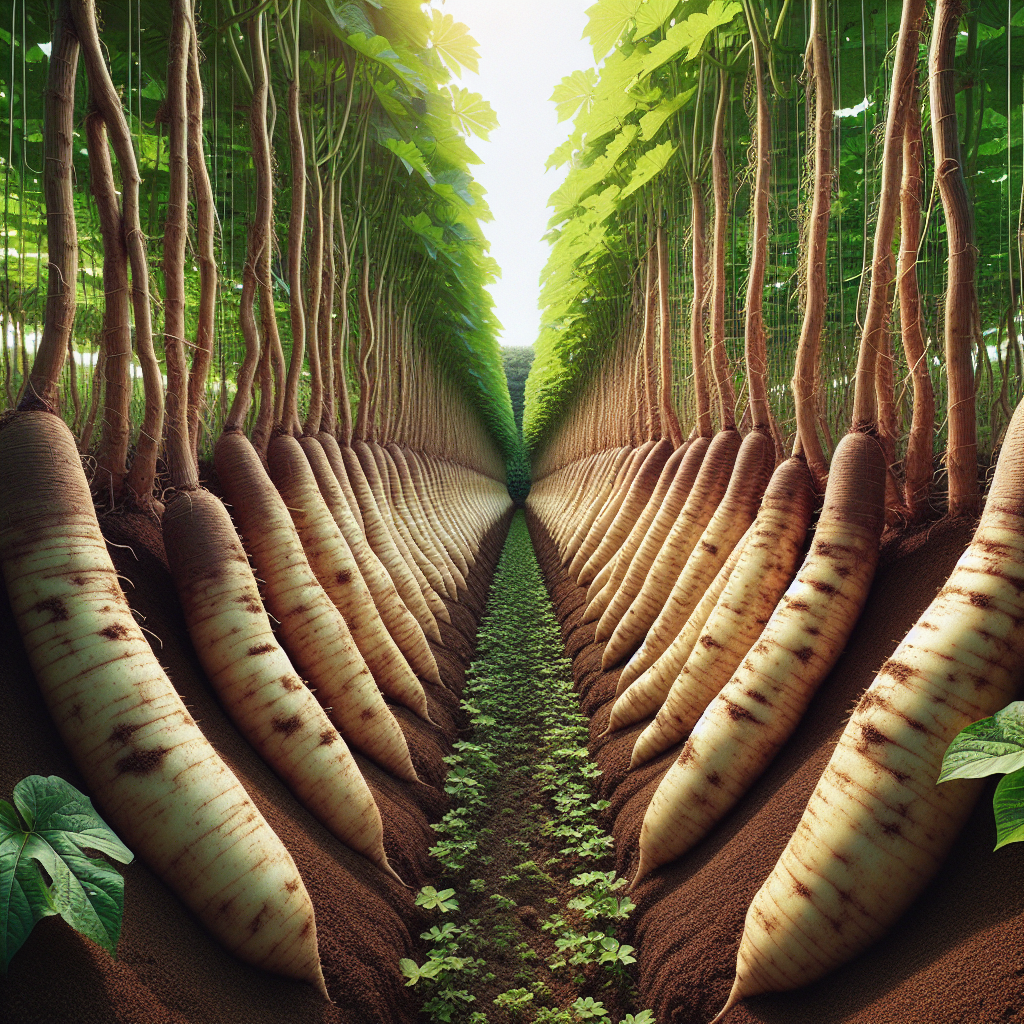
Introduction to Japanese Yam (Nagaimo)
A distinctive cultivated yam of East Asia, nagaimo is grown for its elongated underground tuber and belongs to the genus Dioscorea, not to the true potato family and not to the sweet potato group. It has been cultivated for centuries in China, Korea, and Japan, where it is valued both as a staple and as a culinary specialty. In Japanese food culture, grated nagaimo is known for its slippery, frothy texture and is used in soups, noodle dishes, okonomiyaki, and rice preparations.
From a production standpoint, this crop is unusual because the marketable tuber may extend 30 to 100 cm or more into the soil profile, depending on cultivar, soil depth, and management. That single trait determines nearly every agronomic decision: soil must be friable far below normal garden depth, drainage must be excellent, and harvesting must be patient and precise. Growers who treat it like a shallow root crop often end up with forked, stunted, or broken tubers.
Nagaimo is also more temperate-adapted than many other yams. It can tolerate cooler growing regions better than tropical yam species, though it still requires a long frost-free season for best tuber development. In suitable sites, it rewards the grower with high-value harvests, good storage life, and a crop niche that differs from Potato in both culinary use and production method. For broader rotation and soil-building ideas, see soil health strategies.
Botanical Profile of Japanese Yam (Nagaimo)
This species is most commonly classified as Dioscorea polystachya and is sometimes encountered in older literature as Dioscorea opposita or Dioscorea batatas. It is a perennial vine grown agriculturally as an annual for its storage organ. The plant produces twining vines that may reach 1.5 to 3 m or more, depending on fertility, spacing, and support. Twining direction can help with identification in the field, as Dioscorea species often have characteristic vine behavior.
Leaves are usually opposite or sub-opposite in cultivated forms, though variation can occur along the vine. They are generally heart-shaped to broad lanceolate, medium green, and smooth. The plant may produce small aerial bulbils in leaf axils, especially in some lines and under stress or late-season maturity. These bulbils can be used for propagation, but they usually require an extra season or more to reach productive tuber size.
The edible portion is a true tuber rather than a stem tuber like potato. In nagaimo, the tuber is often cylindrical, narrow, and fragile-skinned, with pale flesh and a tan to light brown exterior. Flesh texture is crisp when sliced raw, but once grated it releases mucilage, a normal botanical and culinary trait rather than a sign of spoilage. This mucilage is associated with polysaccharides and glycoprotein-like compounds that give nagaimo its famous slipperiness.
Cultivar differences matter. Some selections produce longer, pencil-straight tubers for premium fresh market sales, while others are somewhat shorter or thicker and better suited to heavier soils. Growers in marginal soils often prefer forms less prone to breakage, though the highest-priced market types are usually the longest and most uniform. Commercial growers also select for low branching, smooth skin, reduced cracking, and predictable dormancy.
Soil, pH, and Climate Requirements for Japanese Yam (Nagaimo)
Deep soil preparation is the single most important factor in successful production. Nagaimo performs best in sandy loam to light loam that is loose, well-drained, and free of stones, hardpan, undecomposed organic debris, and compaction layers for at least 45 to 75 cm, and preferably deeper. If the tuber encounters resistance, it often forks, curls, or swells irregularly. In compact or gravelly ground, market quality declines sharply.
Ideal soil pH is typically 5.5 to 6.8, with the sweet spot around 6.0 to 6.5. Slight acidity supports nutrient availability and helps reduce some soil-borne disease pressures. Strongly acidic soils below about pH 5.2 may restrict growth and nutrient uptake, especially calcium and magnesium availability. Alkaline soils above about pH 7.2 can increase micronutrient imbalance and lead to weaker vine growth and poorer tuber finish.
Drainage must be excellent but not droughty. Nagaimo dislikes waterlogging, especially in cool soils. Saturated soil for even 24 to 48 hours can trigger tuber rot, root death, and secondary infections. At the same time, extended drying in the upper and mid-root zone reduces vine vigor and causes fibrous, undersized tubers. The target is consistent moderate moisture: soil should feel cool and slightly damp at 10 to 20 cm depth, never sticky-sodden and never powder-dry.
A practical irrigation benchmark is to maintain roughly 60 to 75% of field capacity during active vine growth and tuber bulking. In small-scale production, that means watering when the top 3 to 5 cm begins to dry but before the soil below 10 cm loses its pliable, moist feel. In sandy beds this may require 2 to 3 irrigations per week in hot weather; in loams, once weekly or every 5 to 7 days may suffice. Overwatering symptoms include yellowing lower leaves despite wet soil, slowed vine extension, a sour soil smell, and eventual soft tuber rot. Underwatering symptoms include dull foliage, midday wilting that persists into evening, shortened internodes, rough tuber skin, and reduced final length.
Climatically, nagaimo prefers temperate to warm-temperate conditions. It grows well with daytime temperatures of 20 to 28°C and nighttime temperatures of 12 to 20°C. Emergence is slow in cold soil below 12°C, and growth is weak when temperatures remain below 15°C for long periods. High heat above 32°C is tolerated if soil moisture is steady, but very hot nights can reduce plant efficiency and increase mite or disease pressure.
The crop requires a long frost-free season, generally 140 to 180 days depending on propagule size and cultivar. It is more cold-hardy than many yams in storage and overwintering structures, but field vines are frost-sensitive. Even a light frost can collapse top growth and prematurely halt bulking. In windy sites, trellising must be especially sturdy because broken vines reduce carbohydrate transfer to the tuber.
Raised ridges or deep trenches are often used to reconcile drainage with root depth. In heavy soils, production in tall ridges, deep boxes, or vertically prepared columns can markedly improve tuber shape. Fresh manure is unsuitable because it promotes branching and deformity; use only well-matured compost incorporated months ahead of planting.
Step-by-Step Planting & Propagation
Propagation is usually by seed tuber pieces, small whole tubers, or aerial bulbils. For commercial consistency, tuber pieces are most common. Each planting piece should be healthy, firm, and disease-free, typically weighing 30 to 80 g, with at least one viable bud or eye. Larger pieces generally emerge more vigorously and produce stronger early vines, but they increase planting cost.
Select the site well before planting. Choose a bed with full sun to light afternoon shade, excellent drainage, and no recent history of Root-knot nematodes or tuber rot. Avoid fields where other root crops have shown unexplained decline.
Deep-prepare the soil. Loosen the planting zone to at least 45 cm, ideally 60 cm or more. Remove stones, clods, and woody debris. On farms using ridges, form ridges 25 to 40 cm high and wide enough to support straight downward growth.
Incorporate base fertility modestly. Apply mature compost at light to moderate rates. Excess nitrogen before establishment causes lush vines at the expense of tuber quality. A balanced preplant fertility program emphasizing phosphorus, potassium, calcium, and trace minerals is preferable to heavy soluble nitrogen.
Prepare planting material. If cutting tubers, use sanitized blades. Allow cut surfaces to dry and suberize for 1 to 3 days in a shaded, airy place before planting. Dusting with an approved biological fungicide or wood ash is sometimes used in traditional systems, but sanitation and dryness are more important than additives.
Plant after soil warms. Set pieces when soil temperature at 10 cm depth is consistently above 12 to 14°C and frost risk is low. Planting too early into cold, wet soil invites decay.
Spacing. Place plants 20 to 30 cm apart within rows for home and intensive production, or 30 to 45 cm for larger tuber development. Rows are often spaced 90 to 150 cm apart depending on trellis design and harvest equipment.
Depth. Plant 5 to 10 cm deep in lighter soils and slightly shallower in heavier soils. The goal is to anchor the propagule while allowing rapid warming and emergence.
Install support early. Nagaimo is a climbing vine and should not be left to sprawl if premium tuber yields are desired. Use netting, strings, bamboo poles, or fence-style trellises 1.8 to 2.4 m high. Install before vines begin running to avoid root disturbance later.
Mulch after emergence. A light organic mulch helps stabilize moisture and reduce splash-borne disease, but keep the crown area open enough to prevent prolonged wetness directly over the planting point.
Bulbil propagation is useful for multiplying rare or clean stock. Sow bulbils in nursery beds or containers, then transplant or grow on for one or more seasons. They are slower to establish but can reduce transmission of some tuber-borne issues when sourced cleanly.
Care & Maintenance regimes for Japanese Yam (Nagaimo)
Early growth is often deceptively slow. During the first 3 to 5 weeks after planting, the crop is establishing roots and buds beneath the surface. Avoid aggressive hoeing that could damage emerging shoots. Once vines elongate, train them gently onto supports. Untrained vines that coil on the soil surface are more prone to slug damage, foliar disease, and inefficient light capture.
Nutrient management should be restrained and staged. Nagaimo does not respond well to excessive nitrogen. A typical program uses moderate fertility at planting, followed by one or two light side-dressings once vines are actively climbing and again at early tuber bulking. Too much nitrogen results in dark, lush foliage, delayed tuber filling, softer tissues, and greater disease susceptibility. Potassium is particularly important for tuber development, dry matter balance, and storage quality.
Calcium availability also matters because elongated tubers are prone to skin defects and internal quality decline in unbalanced soils. If calcium is low and pH permits, gypsum is often preferable to lime when pH adjustment is not needed. Magnesium should be balanced, not excessive, because overly high magnesium can tighten soil structure in some clay-loam systems.
Weed control is critical early, before the canopy closes. Because the tuber grows deeply and straight, avoid deep cultivation near the plant line. Use shallow hand weeding, stale seedbed techniques, mulch, or carefully managed mechanical cultivation between rows only. Once the vines fully occupy the trellis, the crop becomes more competitive.
Moisture management changes by stage:
- Establishment: keep the seed zone evenly moist but never saturated; frequent light irrigation may be better than deep soaking in cold soils.
- Vining stage: maintain uniform moisture to support leaf area development and uninterrupted climbing.
- Tuber bulking: prioritize deep, steady moisture. Wide swings from dry to wet can lead to cracking, misshapen growth, and reduced texture quality.
- Pre-harvest: slightly reduce irrigation 7 to 14 days before digging if conditions are wet, but do not let soil harden excessively or harvest breakage will increase.
Pruning is usually minimal. Remove only dead, diseased, or severely tangled growth. Heavy pruning reduces photosynthetic capacity and directly lowers yield. In high-pressure disease environments, selective thinning of lower congested foliage can improve air movement, but this should be conservative.
Where seasons are short, black plastic mulch or pre-warmed beds may speed establishment. In longer-season regions, excessive heat at the soil surface under plastic can be counterproductive unless irrigation is precise. Organic mulches such as straw are safer for moisture buffering, though they may shelter slugs if overapplied.
Crop rotation should be at least 3 years away from susceptible root and tuber crops if disease or nematodes are present. Rotating with cereals, non-host cover crops, and selected legumes can reduce pest carryover and improve soil tilth.
Pests, Diseases & Organic Management
Japanese yam is not usually the most pest-ridden crop in a diversified farm, but when problems occur they often affect marketability more than outright yield. The biggest agronomic threats are soil-borne rots, nematodes, and damage that disfigures the tuber.
Root-knot nematodes can cause swelling, rough skin, stunting, and malformed tubers. Infested plants may have weak vines and poor bulking even when fertility seems adequate. Prevention is far more effective than treatment: use clean planting stock, rotate with non-host grasses or cereals, solarize small beds where practical, and incorporate biofumigant cover crops cautiously and well ahead of planting.
Tuber and root rots are commonly associated with poor drainage, cold wet planting conditions, or injuries during cultivation. Fungal and oomycete complexes may be involved rather than a single pathogen. Symptoms include delayed emergence, yellowing vines, soft or discolored tuber tissue, and collapse near maturity. Best organic management includes excellent drainage, sanitized cutting tools, cured seed pieces, and strict avoidance of saturated soil.
Anthracnose and Foliar leaf spots may develop in humid weather, particularly where trellising is crowded. Lesions on leaves reduce photosynthetic area and can accelerate premature vine decline. Improve air circulation, avoid overhead irrigation late in the day, remove heavily infected residues, and rotate out of the field.
Slugs and snails damage emerging shoots and low-hanging foliage, especially under thick mulch. Use traps, habitat reduction, iron phosphate bait where permitted, and irrigation timing that allows the soil surface to dry before nightfall.
Aphids and Mites occasionally infest vines in dry or protected conditions. Aphids can distort tender growth and vector viruses; Mites cause stippling and bronzing. Strong plant vigor, avoidance of excess nitrogen, and conservation of beneficial insects are foundational controls. In outbreaks, insecticidal soap or horticultural oils can be used carefully, with good coverage and attention to temperature conditions.
Wireworms and Soil insects may scar young tubers. Fields coming out of pasture or weedy sod are highest risk. Pre-plant monitoring with bait stations and delaying planting after sod termination can reduce pressure.
For organic management, the hierarchy should be: clean propagules, deep well-drained soil, long rotation, careful irrigation, trellised airflow, and gentle harvest handling. Reactive spraying is far less effective than cultural prevention in nagaimo production.
Harvesting, Curing & Optimal Storage
Harvest timing is usually based on vine senescence and seasonal temperature. Tubers are typically ready in autumn after the vines yellow and begin to die back naturally, signaling that carbohydrates have moved downward and skin strength has improved. Waiting until after light top dieback often improves storage quality, but do not leave the crop in ground that is becoming cold, waterlogged, or likely to freeze.
This is one of the easiest crops to damage at harvest. Because tubers are long, brittle, and often descend nearly vertically, straight pulling almost never works. Loosen soil from the side of the row or trench deeply beside the plant, then remove soil gradually by hand or with digging tools kept well away from the expected tuber line. In commercial systems, specialized trenching or undercutting methods are used to reduce breakage.
A broken tuber is still edible, but storage life drops sharply and premium market value is lost. Handle gently; even skin abrasions can become storage entry points for rot. Brush off loose soil but do not wash if long storage is intended unless the tubers can be dried thoroughly afterward.
Curing is lighter than with some other root crops. Hold freshly harvested tubers for several days in a shaded, well-ventilated area at about 15 to 20°C to let minor surface injuries dry. Avoid hot curing conditions; nagaimo skins are delicate and dehydrate easily.
For storage, aim for cool, stable conditions around 4 to 10°C with relatively high humidity, ideally 85 to 90%. Lower humidity leads to shriveling; excessive humidity with condensation promotes mold. Store in perforated crates, boxes of slightly damp sand, or breathable packing material that cushions the tubers and limits moisture loss. Keep them dark to reduce physiological stress.
Do not store damaged tubers with sound ones. Inspect regularly and remove any showing soft spots, off-odors, or darkened wounds. Properly handled nagaimo can store for several months, but temperature fluctuations are especially harmful because they encourage condensation and decay.
If saving planting stock, select true-to-type tubers from vigorous, disease-free vines and separate them from culinary stock. Maintain labeling by line or field section so you can cull poor-performing strains over time.
Companion Planting for Japanese Yam (Nagaimo)
The best companions are those that improve the field environment without competing aggressively with the deep, vertically developing tuber. Since nagaimo depends on loose subsoil and adequate airflow around its vine canopy, companion crops should be chosen for shallow rooting, pest deterrence, or nitrogen support rather than dense ground domination.
Nasturtium is useful along bed edges because it attracts Aphids and some chewing pests away from the main crop while also supporting pollinators and beneficial insects. Keep it at the margins rather than directly at the crown so it does not trap excess humidity around the yam stems.
Clover can function as a living mulch in row middles if managed low. It helps protect soil structure, reduces erosion, and can contribute modest nitrogen cycling, but it must be mowed or suppressed regularly so it does not compete for moisture during tuber bulking.
Daikon Radish is especially valuable in rotations preceding nagaimo rather than as a tight in-season companion. Its deep taproot can help open compacted layers and improve the vertical pathway needed for straight tuber development. If used in the same broad system, keep it well separated and terminated before the yam begins serious bulking.
Garlic can be planted at field edges or in nearby beds as part of an integrated pest-management layout. Its strong odor does not magically repel all pests, but diversified plantings with alliums can reduce the monocrop effect and fit well in rotations around yam blocks.
Avoid pairing nagaimo with large, hungry climbers or sprawling cucurbits that compete for trellis space, light, and water. Also avoid dense companions planted directly over the root zone, since any need for repeated cultivation increases the chance of tuber injury.
In practice, the strongest companion strategy for nagaimo is not crowding the row with many species, but designing a biologically active system around it: edge flowers for beneficials, managed living covers in alleys, and rotational deep-rooters that improve soil profile before planting.