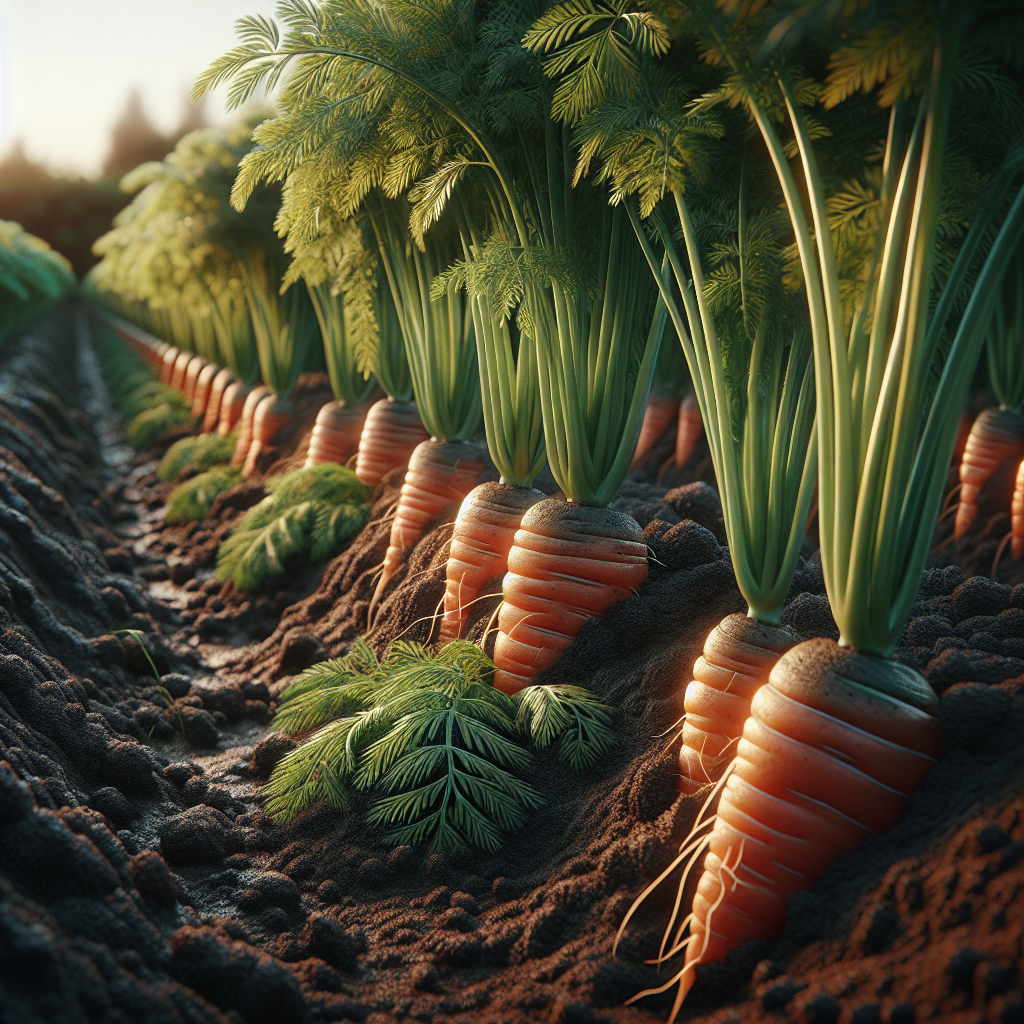
Introduction to Imperator Carrot
Among cultivated carrots, this type is best known for the long, tapered, elegant root shape associated with supermarket bunching and cello-pack carrots. The term “Imperator” refers both to a market class and to named cultivars bred within that class, generally selected for length, smooth shoulders, bright orange internal color, and a relatively small core when grown under favorable conditions. Compared with blockier Chantenay types or cylindrical Nantes types, Imperator selections are usually longer and more demanding of soil preparation.
This carrot is typically grown for fresh eating, juicing, slicing, and bunching, with roots often reaching 20-30 cm (8-12 in) or more when soil depth and moisture are ideal. Its high visual quality can be outstanding, but that same length makes it less forgiving in compacted or rocky beds. For growers seeking premium root quality, the main challenge is consistency: even moisture, low-residue seedbeds, careful thinning, and controlled nitrogen are what separate straight, sweet roots from forked, hairy, or cracked ones.
Historically, modern orange carrots emerged from centuries of selection in Europe from the species Daucus carota, a domesticated form of wild carrot. The Imperator class became especially important in commercial production because it matched the fresh-market demand for long, attractive roots with good shipping quality. In practical terms, it represents a carrot for growers willing to manage details well.
For a broader crop overview, see our Carrot guide. Good root development also depends heavily on bed structure and organic matter management, and the principles in soil health strategies are especially relevant for this crop.
Botanical Profile of Imperator Carrot
This plant belongs to the Apiaceae family, alongside parsley, celery, dill, fennel, and parsnip. It is a biennial by life cycle, though it is grown as an annual root crop. In the first season, it forms a rosette of finely divided leaves and a swollen taproot that stores carbohydrates. If exposed to sufficient cold followed by warming, and left in the ground or replanted, it will bolt in the second season and produce umbels of small white flowers.
Key morphological traits of the Imperator type include:
- Long, narrow, tapered roots, typically more slender than Nantes or Danvers forms
- Smooth exterior when grown in ideal soil
- Strong orange pigmentation due to carotenoids, especially beta-carotene
- Upright to semi-upright feathery foliage that can support bunch harvest in some cultivars
- Fine feeder roots that proliferate under uneven watering or soil compaction
The edible root is not a true tuber but an enlarged taproot combined with hypocotyl tissue. Root shape is highly influenced by physical soil conditions in the top 25-35 cm (10-14 in). If the taproot tip encounters dense layers, stones, undecomposed manure, or clods, it commonly splits or branches. This is more pronounced in Imperator than in shorter-rooted types because the root is genetically programmed to extend deeper.
Seed is small, irregularly shaped, and often slow to germinate. Under cool but favorable conditions, emergence usually takes 10-21 days. During this period, the crop is extremely vulnerable to crusting, drying, weed competition, and washout. Seedlings have delicate cotyledons and are easy to lose in poorly timed irrigation or during aggressive hoeing.
Flavor develops from a balance of sugars, terpenoids, and texture. Cool finishing temperatures generally improve sweetness and reduce harshness. Excessive heat, erratic moisture, or overmaturity can increase woody texture or produce stronger flavors, especially in stressed soils.
Soil, pH, and Climate Requirements for Imperator Carrot
Deep, friable, stone-free sandy loam or silt loam is ideal. The best seedbeds are loose enough for straight root penetration but not so fluffy that they dry excessively at the surface. A workable target is a fine tilth in the top 5-8 cm (2-3 in) for germination and a uniformly loosened profile to at least 30 cm (12 in) for root elongation. Raised beds are often preferred because they improve drainage, reduce compaction, and create a deeper zone of penetrable soil.
Optimal soil pH is generally 6.0-6.8, with 6.3-6.6 especially reliable for nutrient availability and root quality. Below pH 5.8, growth may slow and nutrient imbalances become more likely. Above pH 7.2, micronutrient availability, especially boron and iron, can become less efficient, though carrots still tolerate mildly alkaline conditions if soil structure is excellent.
A moderate level of organic matter is beneficial, but it must be fully decomposed. Fresh manure is one of the classic causes of forked carrots because it creates nutrient hot spots and physical obstacles. Apply compost in the previous season when possible, or use mature, screened compost at low to moderate rates before bed formation. Heavy, sticky clay soils can produce acceptable crops only if deeply amended over time and never worked wet.
Climate preference is cool to mild temperate weather. Ideal growth occurs with daytime temperatures around 16-24°C (61-75°F) and cooler nights. Seed germinates in soils from roughly 7-29°C (45-85°F), but the most uniform emergence usually occurs around 10-24°C (50-75°F). In hot weather, germination becomes erratic, surface drying accelerates, and roots may become pale, bitter, or fibrous.
For moisture, the key is consistency rather than saturation. The root zone should remain evenly moist, especially during germination and the first 6 weeks. As a practical benchmark, the top 2-3 cm (about 1 in) should never be allowed to fully dry during emergence. Later in growth, soil should feel slightly cool and moist at 7-10 cm (3-4 in) depth, not sticky, swampy, or powder dry. Overwatering signs include yellowing lower foliage, sluggish growth despite wet soil, algae or moss on the bed surface, and a sour smell in poorly drained ground. Chronic excess moisture can predispose the crop to root rots and oxygen stress, reducing sweetness and causing blunt or rough roots.
Underwatering is equally damaging. Drought stress leads to delayed germination, uneven stands, strong flavors, reduced root diameter, and cracking when heavy irrigation resumes. Alternating dry and wet cycles are especially risky in Imperator carrots because long roots expand rapidly once water returns, often splitting longitudinally.
Step-by-Step Planting & Propagation
Propagation is by seed only. Direct sowing is standard because transplanting disrupts the taproot and almost always causes deformation.
Prepare the bed thoroughly. Remove stones, clods, roots, and undecomposed residue from the top 30 cm (12 in). If using raised beds, shape them firmly enough to hold moisture but loose enough for easy root penetration.
Pre-irrigate if the soil is dry. The seedbed should be evenly moist before sowing so seeds are not placed into dry dust.
Sow shallowly. Plant seed about 6-12 mm (1/4-1/2 in) deep. In heavier soils, stay on the shallower end. In sandy soils or warm weather, slightly deeper placement may help retain moisture.
Space rows according to harvest style. For hand harvest and garden production, rows 25-30 cm (10-12 in) apart are common. In bed systems, multiple close rows across a 75-100 cm (30-40 in) bed can maximize yield while preserving weeding access.
Aim for final in-row spacing of 2.5-5 cm (1-2 in), depending on desired root diameter. Baby carrots can be grown more densely; large full-size roots need more space.
Keep the surface continuously moist until emergence. Light, frequent irrigation is usually better than deep soaking during this stage. In warm or windy weather, growers may irrigate once or twice daily with very gentle application to avoid crusting.
Thin in stages if seed was broadcast thickly. First thinning can begin when seedlings are large enough to handle, reducing crowding early. Final thinning is best completed before roots begin to swell significantly.
Control weeds early. Carrots are weak competitors during establishment. Flame weeding just before emergence is a classic professional technique where appropriate.
Succession sowing every 2-3 weeks during the suitable season provides a continuous harvest. In warm regions, best sowing windows are often late summer through fall for winter harvest, or very early spring for late spring harvest. In cooler regions, sow from early spring into midsummer depending on heat intensity and frost timing.
Seed priming, pelleted seed, or using a light cover such as burlap until germination can improve stand establishment in challenging conditions, but covers must be removed as soon as seedlings emerge to prevent distortion and damping issues.
Care & Maintenance regimes for Imperator Carrot
Nutrient management should favor steady, balanced growth. Excess nitrogen is one of the most common mistakes. It pushes lush tops at the expense of root quality and may produce hairy roots, delayed maturity, and reduced storage performance. A moderate fertility program with emphasis on phosphorus, potassium, calcium balance, and trace boron where deficient is usually more effective than heavy feeding.
As a practical approach, apply most fertility pre-plant based on soil testing. If soils are already fertile, carrots may need little supplemental feeding. If side-dressing is needed, use light applications early, before roots begin major enlargement. Avoid concentrated bands too close to the row.
Irrigation should change with crop stage:
- Germination phase: maintain constant surface moisture, often with light daily irrigation in dry weather.
- Seedling phase: water deeply enough to moisten the upper root zone, then reapply before the top 5-7 cm (2-3 in) dries completely.
- Root bulking phase: maintain even moisture to roughly 15-20 cm (6-8 in) depth. In many mineral soils, this may mean about 2.5 cm (1 in) of water per week, sometimes more in sand and less in cool weather.
- Pre-harvest phase: avoid severe drying, but do not swing from drought to saturation.
A useful field test is to squeeze soil from root depth. It should form a weak ball that breaks apart with light pressure, not ooze water and not crumble instantly into dust. Tensiometers or soil moisture probes are especially valuable in larger plantings; carrots generally perform well when moisture is kept in the moderate available-water range rather than at repeated extremes.
Weed control is critical in the first 4-8 weeks. Shallow cultivation is safest because deeper hoeing can prune roots and deform the crop. Organic mulches can help later in the season, but they are less commonly used at sowing because they interfere with tiny seed emergence.
Hilling is usually unnecessary, though a slight covering of exposed shoulders can prevent greening if roots push above the soil line. Green shoulders are caused by light exposure and may taste bitter.
Bolting risk increases when young plants experience prolonged chilling after partial establishment, especially if followed by warm weather. This is more relevant in early sowings. Stressed plants may also split, produce rough skin, or develop internal defects. Uniform growth is the central management goal.
Crop rotation matters. Avoid planting after other Apiaceae crops when disease or nematode pressure is suspected. A 3-4 year rotation away from carrot, celery, parsley, parsnip, or dill is sound practice in intensively used ground.
Pests, Diseases & Organic Management
The most important insect pest in many regions is Carrot rust fly, whose larvae tunnel into roots and make them unmarketable. Protection relies on exclusion, timing, sanitation, and rotation. Fine insect netting or row cover installed immediately after sowing and sealed at the edges is highly effective where this pest is established. Delayed sowing until after peak flight can also help in some climates. Remove cull roots and crop debris promptly because they attract egg-laying adults.
Aphids may colonize foliage, especially under dry, lush-top conditions. They can distort growth and transmit pathogens. Encourage natural enemies and avoid excess nitrogen. Strong water sprays, insecticidal soaps, or neem-based products can suppress outbreaks when used carefully.
Wireworms and Root-knot nematodes can damage roots below ground. Wireworms leave holes and tunnels; nematodes cause stunting, branching, and galling. Good rotation, soil solarization in warm climates, cover cropping, and avoiding infested fields are the main organic tools.
Disease pressure is usually highest under poor airflow, overhead irrigation, and repeated carrot-family plantings. Major issues include:
- Alternaria leaf blight: dark lesions on foliage and petioles, often starting in humid conditions
- Cercospora leaf blight: tan to gray lesions with defined margins, reducing top vigor
- Powdery mildew: white coating on foliage in dry late-season conditions with humid nights
- Cavity spot and other root blemishes: more common in poorly balanced soils and wet conditions
- Bacterial soft rots: especially after injury, waterlogging, or poor storage sanitation
Organic management depends first on prevention:
- Use clean seed and disease-free fields
- Rotate for at least 3 years where leaf blights are common
- Avoid overhead irrigation late in the day
- Keep plant spacing adequate for air movement
- Prevent prolonged leaf wetness
- Remove heavily infected residue after harvest
For foliar disease suppression, copper-based products or biological fungicides may help when used preventively and according to local regulations, but they work best as part of a broader program rather than as rescue tools.
Physiological disorders are often mistaken for disease. Forking usually points to compaction, stones, fresh organic matter, or root injury. Cracking usually indicates moisture swings. Bitter or harsh flavor may come from heat or stress. Pale roots may reflect immaturity, shading, or poor cultivar expression under hot conditions.
Harvesting, Curing & Optimal Storage
Harvest timing depends on market goal. Baby roots may be pulled early at finger size, while full-size Imperator roots are usually harvested once they reach the expected cultivar diameter and length, often 65-85 days from sowing under favorable conditions, sometimes longer in cool weather. The best roots are firm, brightly colored, and smooth-skinned, with shoulders filled out but not overgrown.
Before harvest, irrigate lightly if the soil is very dry so roots pull cleanly without snapping. In heavier soils, undercutting with a fork or blade is often necessary. Handle gently; bruises and abrasion invite storage rots.
Trim tops soon after harvest if roots will be stored. Foliage continues to respire and draw moisture from the root. Cut tops to about 1-2 cm (1/2 in) above the crown rather than tearing them off, which can wound the shoulder.
Unlike curing crops such as onion or sweet potato, carrots do not require a warm curing period. Instead, they need rapid field heat removal and high-humidity cold storage. Wash only if necessary and if roots can be dried superficially before packing; excessive free water on stored roots increases rot risk.
Ideal storage conditions are 0-1°C (32-34°F) and 95-98% relative humidity. Under these conditions, high-quality roots can store for several months. The objective is to minimize moisture loss without allowing condensation and decay. Imperator carrots stored too dry become limp and rubbery; stored too warm, they sprout, lose sugars, and deteriorate quickly.
Signs of poor storage conditions include:
- White blush on the surface from dehydration
- Soft, limp roots from moisture loss
- Slimy tissue from bacterial breakdown
- Black or sunken lesions from fungal issues
- Bitter, strong taste after warm storage
For home-scale storage, perforated bags in a refrigerator crisper work well. For farm scale, hydrocooled or shaded, rapidly chilled roots in clean crates or bins are preferable. Never store damaged, cracked, insect-tunneled, or diseased roots with sound ones.
Companion Planting for Imperator Carrot
The best companions are those that either confuse key pests, occupy a different rooting zone, or mature quickly without heavily competing for light and water. Onion is one of the most useful partners because its pungent foliage is traditionally used to help confuse Carrot rust fly and other pests. Lettuce pairs well because it has shallow roots, matures early, and can shade the soil surface lightly without seriously crowding the carrot row. Radish can serve as a quick marker crop because it germinates faster, helping define rows before carrots emerge. Thyme is also valued in mixed plantings for its aromatic presence and attraction of beneficial insects.
When interplanting, maintain enough spacing that companion crops do not create dense shade over young carrot seedlings. Fast leafy crops should be positioned so they are harvested before carrot roots need full bulking space. Avoid pairing with large, sprawling, or heavy-feeding species that disturb the soil during harvest.
Less suitable neighbors include crops that demand repeated deep cultivation, those that create dense canopy humidity, or those with aggressive root systems. The best companion strategy for Imperator carrots is modest and functional: use aromatic alliums nearby, quick shallow-rooted greens between rows, and beneficial insect plants at bed edges rather than crowding the root zone itself.