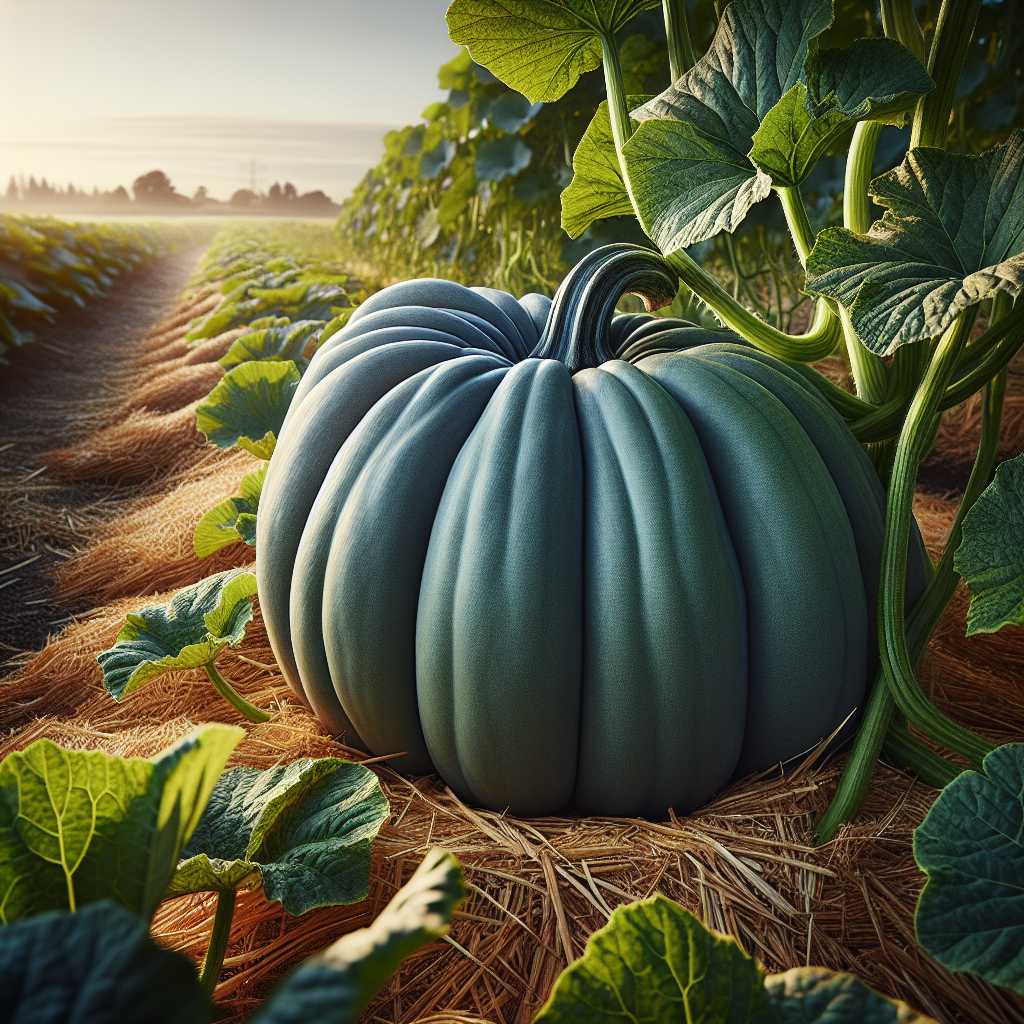
Introduction to Hubbard Squash
A traditional winter squash with deep culinary and historical significance, this crop belongs to the species Cucurbita maxima, the same species that includes several large-fruited storage squashes. Hubbard types are especially valued for their thick rind, dry orange flesh, and exceptional postharvest longevity. The fruits are often tear-drop to oval in shape, with colors ranging from slate blue and blue-green to dark green, orange, or bronze depending on the strain.
Hubbard squash became widely established in North American gardening and market production in the 19th century, and it remains one of the benchmark storage squashes for homesteads and diversified vegetable farms. Compared with many tender summer squash types, it has a much longer season, stronger vines, and a more deliberate maturity process. Growers choose it not for quick harvests, but for high-value storage fruit that can remain usable for months after harvest.
Its flavor profile improves with time. Freshly harvested fruits can be starchy and somewhat flat, while properly cured fruits develop sweeter, richer flesh with a chestnut-like depth. That makes Hubbard especially useful for soups, roasting, purees, baking, livestock feed supplementation, and winter market sales. If you already grow other cucurbits, review general species-level habits in this Squash guide.
Botanical Profile of Hubbard Squash
This crop is a frost-sensitive, warm-season annual vine in the family Cucurbitaceae. Like other Cucurbita maxima types, Hubbard squash typically forms long, coarse, sprawling vines with broad leaves, vigorous tendrils, and separate male and female flowers borne on the same plant. The species differs from Cucurbita pepo and Cucurbita moschata in fruit morphology, stem texture, and often in its tolerance patterns. Hubbard fruits generally have a corky, rounded stem that is not sharply ridged like many pepo squashes.
Plants begin by producing male flowers first, followed later by female flowers identifiable by the miniature swollen ovary behind the bloom. Pollination is primarily insect-mediated, especially by bees. Poor bee activity, extended rainy weather, or insecticide exposure during bloom often leads to misshapen fruit or fruit abortion.
Hubbard vines are robust and can easily spread 8-15 feet or more depending on soil fertility and cultivar vigor. Fruits are often large, commonly 5-15 pounds, though some strains exceed that substantially. Blue Hubbard is among the most recognized forms, producing large blue-gray fruit with hard skin and bright orange flesh. Golden and green strains also exist, each with slightly different maturation color, flesh density, and storage behavior.
Botanically, the crop is typically direct-seeded because cucurbits dislike root disturbance, though transplants can be used when carefully hardened and planted young. The root system is relatively shallow in its upper feeding zone but extensive laterally, which is why even moisture and wide nutrient availability matter more than deep but infrequent fertility pulses.
Soil, pH, and Climate Requirements for Hubbard Squash
This crop performs best in deep, well-drained, biologically active loam or sandy loam with high organic matter and strong moisture-holding capacity without waterlogging. Ideal soil pH is 6.0-6.8, though plants can perform acceptably up to about 7.2 if micronutrient availability remains adequate. Below pH 5.8, growth commonly slows and nutrient uptake becomes less efficient, especially calcium, magnesium, and phosphorus availability.
The most productive fields are those that combine drainage with steady water retention. Hubbard squash resents saturated soil, especially in cool weather. When soils remain anaerobic, roots lose oxygen, feeder roots die back, and plants begin showing pale leaves, slowed vine extension, and wilting during the heat of the day despite wet ground. That “wet wilt” is a classic warning sign of root stress rather than drought. Conversely, prolonged dryness during flowering and fruit fill causes poor fruit set, blossom drop, smaller fruit, and reduced flesh quality.
A practical target is to keep soil moisture in the root zone consistently around 60-80% of field capacity. For growers without instruments, the hand-feel method is reliable: soil taken from 4-6 inches deep should feel cool and slightly moist, forming a weak ball in the hand but not releasing free water. If it becomes powdery at that depth, irrigation is overdue. If it smears, looks glossy, or stays sticky for days, drainage or irrigation frequency is excessive.
Hubbard squash needs a long warm growing season, generally 100-120 frost-free days depending on cultivar and local conditions. Optimal air temperature for growth is roughly 65-85°F (18-29°C). Germination is strongest when soil temperature is 70-95°F (21-35°C), with slow and uneven emergence below 60°F (16°C). Extended exposure to temperatures under 50°F (10°C) can stunt young plants, and even light frost will damage or kill them.
Full sun is essential. Aim for at least 8 hours of direct light daily. In cloudy maritime climates or crowded plantings, reduced light often leads to excessive vegetative growth, delayed ripening, and poorer rind hardening. Wind shelter can be helpful in exposed sites, since large leaves transpire heavily and can shred under persistent desiccating wind.
Before planting, incorporate 2-4 inches of mature compost or well-finished manure into the top 8-12 inches of soil. For growers focused on soil building, see soil health strategies. Avoid fresh manure immediately before planting because it can push overly lush vine growth, increase disease pressure, and create imbalanced nitrogen availability.
Step-by-Step Planting & Propagation
Direct seeding is usually the best method where the season is long enough. Wait until all frost danger has passed and soil is thoroughly warm. A minimum soil temperature of 65°F (18°C) is workable, but 70°F (21°C) or higher produces much faster and more uniform emergence.
Prepare broad planting basins, hills, or rows rather than small holes. “Hills” do not need to be raised mounds; in dry climates they may be slightly flattened to hold irrigation, while in wet climates they should be gently elevated to improve drainage. Space hills 6-8 feet apart in all directions for large vining strains. In rows, leave 8-12 feet between rows and 3-5 feet between plants, depending on whether vines are allowed to run fully or are lightly trained.
Sow 3-5 seeds per hill, 1-1.5 inches deep. Once seedlings reach the first true-leaf stage and are growing strongly, thin to the best 1-2 plants per hill. Thinning matters because overcrowding increases humidity within the canopy and intensifies competition for nitrogen, water, and pollination access.
For transplant production in short-season regions, start seeds indoors 2-3 weeks before the last frost in biodegradable pots or deep cells to minimize root disturbance. Maintain germination temperatures around 80-90°F (27-32°C). Transplant when seedlings have 1-2 true leaves and are still young; older cucurbit transplants often stall after planting. Harden them off over 5-7 days, protecting from wind and cold nights.
At planting, irrigate deeply to settle soil around seeds or roots. Many commercial and serious home growers use black plastic mulch or biodegradable mulch to warm the soil, suppress weeds, and reduce fruit-soil contact. Drip irrigation beneath mulch is ideal because it keeps foliage dry and delivers water directly to the root zone.
A typical fertility framework at planting includes moderate nitrogen, strong phosphorus availability, and adequate potassium. Excess early nitrogen can produce impressive vines but disappointing fruit set. If using organic amendments, a balanced preplant fertility program followed by sidedressing at vining and again after initial fruit set often works well.
Pollination planning is often overlooked. Because female flowers may open before bee populations are active in some areas, flowering strips or companion species nearby can improve fruit set. Hand pollination is also possible on small plantings: pick a freshly opened male flower in the morning, remove petals, and brush pollen onto the stigma of a newly opened female flower.
Care & Maintenance regimes for Hubbard Squash
Once vines begin running, the crop’s success depends on steady moisture, nutrient balance, weed suppression, and disease prevention. The ideal irrigation pattern is deep and regular rather than shallow and frequent. Most plantings need about 1-1.5 inches of water per week, increasing to 1.5-2 inches in hot weather or on sandy soils during fruit sizing. The key is consistency. Sharp swings from dry to saturated conditions can cause fruit growth checks, irregular shape, and poor flavor development.
Water early in the day whenever possible. Drip irrigation is preferable to overhead irrigation because wet leaves and prolonged canopy humidity strongly favor foliar disease. If overhead watering is unavoidable, do it at dawn so leaves dry quickly.
Signs of underwatering include midday wilting that persists into evening, dull blue-green leaves, reduced new growth, small fruit, and blossom drop. Signs of overwatering include persistent leaf yellowing, soft lush growth, slowed vine extension despite adequate fertility, fungus gnats in constantly wet soil, and fruits with poor rind hardening. In severe cases roots may brown and plants suddenly collapse.
Mulch helps stabilize the root zone. Clean straw applied once the soil has warmed can reduce evaporation, suppress weeds, and minimize soil splash that spreads disease spores. Keep mulch a few inches away from the crown to reduce stem rot risk.
Nutritionally, Hubbard squash benefits from a staged feeding approach. Early in growth, moderate nitrogen supports leaf area development. As plants shift toward flowering and fruiting, potassium demand rises because it supports water regulation, sugar movement, and fruit quality. A deficiency often shows as marginal scorching or chlorosis on older leaves and poor fruit fill. Calcium shortages are less common in well-managed field soils but can contribute to weak tissues where pH is off or irrigation is erratic.
Weed control is critical in the first 4-6 weeks before vines cover the ground. After canopy closure, vigorous plants usually outcompete later weeds. Cultivate shallowly to avoid damaging surface roots. Once vines start running, avoid aggressive hoeing near the plants.
Pruning is generally unnecessary in field production, but limited vine repositioning can improve access and airflow. Do not repeatedly step on vines or rotate fruits excessively, as this can crack stems or disturb fruit attachment. Some growers place boards, straw, or flat stones under developing fruit in humid climates to reduce ground contact and improve rind finish.
If fruit set is excessive on small plants, thinning to 2-4 fruits per plant can improve final size and uniformity, especially for exhibition or premium market production. However, for general food use, many plants will size what they set if fertility and moisture are adequate.
Pests, Diseases & Organic Management
The most important insect pests are Squash Vine Borer in affected regions, Squash Bugs, Cucumber Beetles, Aphids, and occasionally Pickleworms in warm climates. Hubbard squash, as a C. maxima, may show different relative susceptibility than zucchini or pumpkins, but no crop should be assumed safe without monitoring.
Squash Bugs feed by piercing leaves and stems, causing stippling, yellowing, and eventual tissue collapse. Eggs are typically laid in bronze clusters on leaf undersides. Hand removal of eggs, trap boards, timely cultivation of crop residues, and row covers early in the season are effective nonchemical methods. Heavy infestations weaken vines and reduce storage quality.
Cucumber Beetles are especially dangerous not only for feeding injury but also because they spread Bacterial Wilt. Young plants are most vulnerable. Exclusion with row cover until flowering is one of the most reliable organic strategies, provided covers are removed in time for pollination. Yellow sticky traps can help monitor pressure but are not sufficient as stand-alone control.
Aphids often build on leaf undersides during warm, dry weather. They can distort new growth and vector viruses such as Cucumber Mosaic Virus or Zucchini Yellow Mosaic Virus. Strong water sprays, preservation of beneficial insects, and avoiding excess nitrogen all help suppress aphid outbreaks.
Common diseases include Powdery Mildew, Downy Mildew, Anthracnose, Gummy Stem Blight, and various Root Rots. Powdery Mildew is especially common late in the season. It appears as white powdery colonies on upper leaf surfaces, gradually reducing photosynthesis and weakening fruit maturation. Good spacing, full sun, resistant genetics where available, and sulfur or potassium bicarbonate sprays applied early can help in organic systems.
Downy Mildew is more aggressive under humid conditions and appears as angular yellow lesions often bounded by leaf veins, with gray-purple sporulation on the underside in moist weather. It can defoliate plantings rapidly. Excellent airflow, prompt removal of heavily infected tissue, and preventive biofungicide programs are useful, though severe outbreaks can still progress quickly.
Root and crown problems are strongly tied to drainage. If lower stems become soft, dark, or constricted and plants wilt despite moist soil, suspect Crown Rot or root disease. The best management is preventive: crop rotation of at least 3-4 years out of cucurbits, raised beds in wet areas, clean irrigation water, and residue sanitation.
Organic pest management should be integrated rather than reactive. Use floating row covers early, rotate crops, destroy infested residues promptly after harvest, avoid planting cucurbits in the same ground year after year, and encourage pollinators and predatory insects with border plantings. Sanitation and monitoring often do more than any single spray program.
Harvesting, Curing & Optimal Storage
Maturity is determined by rind hardness, full varietal color, drying of the stem, and days from sowing. Hubbard squash should be harvested when the skin is too hard to pierce with a thumbnail and the stem has turned corky and dry. Immature fruit may look large but store poorly, develop bland flavor, and are more susceptible to shriveling or rot.
Use pruners or a knife to cut fruit from the vine, leaving 2-4 inches of stem attached. Never carry fruits by the stem alone, because stem breakage creates an immediate entry point for decay organisms. Handle fruits gently; bruising on hard-rind squash may not show immediately but can become a storage rot center weeks later.
Harvest before frost if possible. A very light frost may only damage exposed leaves, but freezing injury to fruit ruins storage life. If a cold event threatens, prioritize cutting all mature fruit and curing them under cover.
Curing improves both storage performance and eating quality. Hold fruits for 10-14 days at about 80-85°F (27-29°C) with good air movement if conditions allow. Lower curing temperatures around 70-75°F (21-24°C) can still help, though rind toughening and wound healing may be slower. Relative humidity around 50-70% is ideal: too humid encourages mold, too dry promotes excessive moisture loss.
After curing, store at 50-55°F (10-13°C) with 50-70% relative humidity and steady ventilation. Do not refrigerate. Temperatures below about 50°F can cause chilling injury in many winter squash, leading to poor flavor and internal breakdown. Stack fruits in a single layer if possible, or at least avoid deep piles that trap heat and humidity.
Inspect stored fruit every 1-2 weeks. Remove any fruit showing soft spots, stem mold, water-soaked lesions, or collapsing tissue. Properly matured and cured Hubbard squash often stores 4-6 months, and some lots keep longer under excellent conditions. Flavor often peaks several weeks after harvest, once starches begin converting and flesh texture settles.
Companion Planting for Hubbard Squash
The most time-tested partnership is the traditional “Three Sisters” concept, where Corn provides vertical structure and wind buffering, while beans contribute nitrogen cycling and living ground coverage. For Hubbard squash specifically, the main value is not that the vines climb corn like beans do, but that the broad leaves shade soil, reducing evaporation and suppressing weeds around the planting.
Flowering insectary companions are also highly beneficial. Nasturtium can help attract pollinators and may draw Aphids away from the crop in some gardens, while Sunflower supports beneficial insects and creates habitat diversity on field margins. These companions are best placed at borders or nearby strips rather than directly crowding the squash crown.
Leguminous companions such as pole or bush beans can fit into wider systems, but spacing must remain generous so Hubbard vines are not shaded or tangled excessively during their rapid summer expansion. Avoid placing thirsty or nutrient-demanding crops too close to the hill, because Hubbard squash is a heavy feeder with substantial lateral root spread.
Also avoid close association with crops that require frequent foliar irrigation or dense airflow-restricting canopies. The goal of companion planting here is improved pollination, moderated weed pressure, and better beneficial insect activity without increasing humidity around the vines.
In practical terms, the best companions are those that support bees, help diversify the field edge, and do not compete aggressively in the root zone during early establishment.