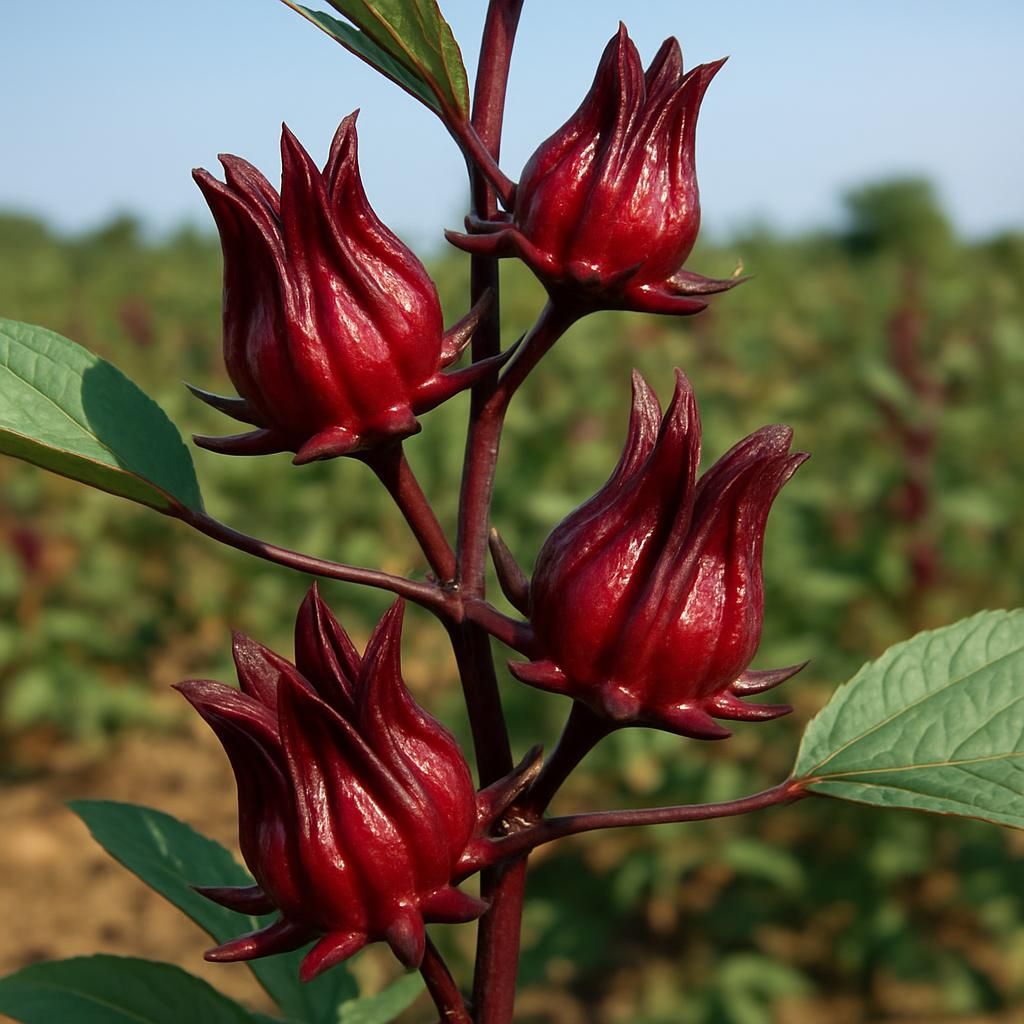
Introduction to Hibiscus (Roselle)
Hibiscus sabdariffa, widely recognized as Roselle, is a versatile annual herbaceous shrub belonging to the Malvaceae family. Grown primarily for its fleshy, crimson calyces, the plant also yields leaves, seeds, and fiber with multiple commercial applications. The calyces are prized worldwide for their tart flavor and deep red color, forming the basis of popular beverages such as agua de Jamaica, karkade tea, and natural food colorants. Beyond culinary uses, Roselle has gained attention for its antioxidant-rich profile, including high levels of anthocyanins, vitamin C, and organic acids.
Roselle cultivation offers excellent opportunities for smallholder farmers and commercial growers seeking high-value, low-input crops suited to warm climates. The plant matures rapidly, typically reaching harvest readiness within 4–6 months, and tolerates marginal soils when provided with adequate drainage and organic matter. Its dual-purpose nature—providing both edible calyces and bast fiber—enhances its economic viability in diverse agroecosystems.
Botanical Profile of Hibiscus (Roselle)
Hibiscus sabdariffa is an erect, branched annual growing 1.5–3 meters tall with a woody base at maturity. The stems are reddish-purple, cylindrical, and glabrous, supporting alternate, deeply lobed leaves that resemble those of Okra. The plant produces solitary, axillary flowers with five petals that range from pale yellow to pink; the prominent feature is the fleshy, cup-shaped calyx that enlarges dramatically after petal drop.
The calyces, composed of five large, fleshy sepals, turn bright red to deep burgundy at maturity and contain the valuable organic acids responsible for the characteristic tart taste. Each plant can produce 20–80 calyces depending on variety, spacing, and management. Seeds are borne in five-chambered capsules that dehisce at full ripeness, releasing small, kidney-shaped seeds with high oil content. The root system is relatively shallow but fibrous, making the crop sensitive to waterlogging yet responsive to consistent moisture.
Soil, pH, and Climate Requirements for Hibiscus (Roselle)
Roselle performs best in well-drained, fertile loamy soils rich in organic matter. Heavy clay soils should be amended with compost or raised beds to prevent water stagnation. The crop is moderately tolerant of poor soils but yields significantly decline under nutrient deficiency or compaction.
| Parameter | Ideal Range | Notes |
|---|---|---|
| Soil Type | Sandy loam to loam | Well-drained; avoid heavy clays |
| Soil pH | 5.5–7.0 | Slightly acidic to neutral preferred |
| Temperature | 20–35 °C (68–95 °F) | Frost-sensitive; optimal 25–30 °C |
| Annual Rainfall | 600–2000 mm | Requires consistent moisture during growth |
| Altitude | 0–1500 m | Best below 1000 m for maximum calyx size |
| Sunlight | Full sun (6–8 hours) | Essential for anthocyanin development |
Step-by-Step Planting & Propagation
Roselle is primarily propagated from seed, though stem cuttings can be used for selected varieties. Begin by preparing the field or beds 2–3 weeks before planting. Incorporate 10–15 tons/ha of well-rotted compost or farmyard manure to improve soil structure and nutrient content. Sow seeds directly in rows 60–90 cm apart with 45–60 cm between plants, at a depth of 1–2 cm. Germination occurs within 5–10 days at soil temperatures above 20 °C.
For transplanting, start seedlings in nursery beds or trays 4–6 weeks before the last expected frost or at the onset of the rainy season. Harden off seedlings for 7–10 days prior to field transplanting. In regions with short growing seasons, use black plastic mulch or row covers to accelerate early growth. Maintain soil moisture at 60–70% field capacity during establishment.
Care & Maintenance regimes for Hibiscus (Roselle)
Roselle requires moderate but consistent attention to water, fertility, and canopy management to maximize calyx production. The following table outlines recommended schedules for irrigation, fertilization, and pruning throughout the crop cycle.
| Growth Stage | Watering Schedule | Fertilizer Application | Pruning Schedule |
|---|---|---|---|
| Seedling (0–4 weeks) | Light, frequent irrigation (every 2–3 days) | 10-10-10 NPK at 50 kg/ha at transplant | Pinch apical growth at 30 cm height |
| Vegetative (4–10 weeks) | 25–30 mm/week; maintain even moisture | Side-dress with 40 kg N/ha at 6 weeks | Remove lower leaves and suckers |
| Flowering (10–16 weeks) | Reduce to 20 mm/week; avoid overhead | Apply 20 kg K/ha and micronutrients (Zn, B) | Light tipping to encourage branching |
| Calyx Development (16–20 weeks) | Consistent 25 mm/week until harvest | No additional N; maintain K levels | Remove diseased or damaged branches |
Mulching with organic materials such as straw or wood chips helps conserve moisture, suppress weeds, and moderate soil temperature. Weed control is critical during the first 6–8 weeks; hand weeding or shallow cultivation is preferred over herbicides. Monitor for nutrient deficiencies—yellowing leaves often indicate nitrogen shortage, while purpling may signal phosphorus deficiency.
Pests, Diseases & Organic Management
Common pests of Roselle include Aphids, Whiteflies, Spider Mites, and various caterpillars. Aphids and whiteflies can transmit viral diseases and excrete honeydew that promotes sooty mold. Spider mites become problematic during hot, dry periods. Organic management begins with regular scouting and the release of beneficial insects such as lady beetles and lacewings. Neem oil or insecticidal soaps provide effective knockdown while preserving natural enemies.
Major diseases include Powdery Mildew, Cercospora leaf spot, Root rot, and Fusarium wilt. Improve air circulation through proper spacing and pruning to reduce fungal pressure. Drip irrigation minimizes leaf wetness compared to overhead systems. Soil solarization and crop rotation with non-host crops such as Corn or Sorghum help manage soil-borne pathogens. Copper-based fungicides or bio-fungicides containing Bacillus subtilis can be applied preventively during humid periods.
Harvesting, Curing & Optimal Storage
Harvest calyces when they reach full size, turn deep red, and begin to feel slightly leathery but before they become overly fibrous. This stage typically occurs 15–25 days after flowering. Pick by hand, twisting the calyx at the base to avoid damaging the plant. Regular harvesting every 3–5 days encourages continued production.
Post-harvest, remove seeds and dry the calyces in shaded, well-ventilated areas or using low-temperature dehydrators (40–50 °C) to preserve color and bioactive compounds. Target final moisture content of 10–12% for long-term storage. Store dried calyces in airtight containers away from light and moisture. Properly dried and packaged product maintains quality for 12–18 months. Fresh calyces can be refrigerated for up to 7 days or frozen after blanching.
Companion Planting for Hibiscus (Roselle)
Roselle integrates well with several companion species that enhance biodiversity and pest management. Marigold and Nasturtium deter nematodes and aphids while attracting pollinators. Thai Basil and other aromatic herbs improve flavor profiles of nearby crops and repel whiteflies. Leguminous companions such as Cowpea or Pigeon pea fix nitrogen and provide ground cover that reduces soil erosion.
Avoid planting Roselle near Tomato or other solanaceous crops that share similar disease susceptibilities. Intercropping with Okra can maximize land use efficiency while sharing similar cultural requirements. Strategic placement near Sesame or Sunflower creates habitat for beneficial insects and improves overall farm resilience.
For more on building resilient systems, explore Summer Companion Planting: 10 Organic Pairings to Boost Small Farm Resilience.