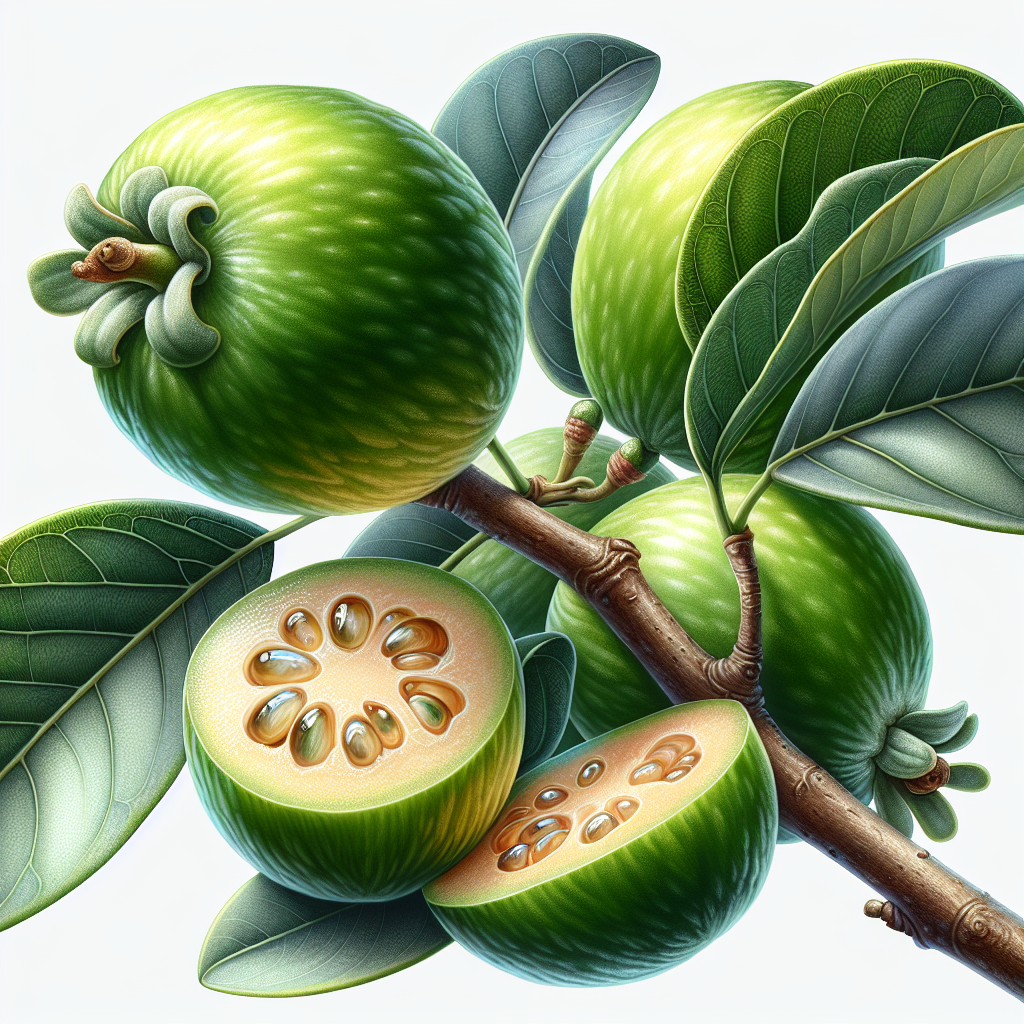
Introduction to Guava (Pineapple Guava - Nazemetz)
Guava (Pineapple Guava - Nazemetz), scientifically known as Acca sellowiana 'Nazemetz', stands out as one of the most rewarding fruit shrubs for home gardeners and small-scale farmers. Native to the highlands of southern Brazil, Uruguay, Paraguay, and Argentina, this cultivar is a superior selection bred for exceptional fruit quality, heavy cropping, and disease resistance. The fruits boast an exquisite flavor profile blending pineapple, strawberry, and guava notes, encased in thick, edible green skin that protects the sweet, juicy, seed-filled flesh inside.
Pineapple guava shrubs are incredibly versatile, serving triple duty as fruit producers, evergreen hedges, or ornamental specimens with striking crimson anthered flowers in spring. 'Nazemetz' specifically excels with self-fertile flowers that ensure reliable pollination without needing a companion plant, unlike many feijoa varieties. Mature plants can reach 10-15 feet tall and wide, producing 50-100 pounds of fruit per bush annually under optimal conditions. This guide provides professional-grade, step-by-step advice for cultivating Nazemetz from propagation to harvest, optimized for maximum yields in diverse climates. For more on related tropical fruits, see the Apple Guava (crop) page.
Ideal for USDA zones 8-11, Nazemetz tolerates light frost down to 10°F (-12°C), making it suitable for cooler regions than true tropical guavas. Its drought resistance once established reduces irrigation needs, while the fruits store exceptionally well post-harvest. Whether you're establishing a backyard orchard or integrating into a permaculture system, this deep-dive covers soil preparation, pest management, and advanced care techniques to unlock Nazemetz's full potential. Check out this Fall Companion Planting Guide: Boost Yields and Soil Health for Small Farms and Gardens for synergistic planting ideas.
Botanical Profile of Guava (Pineapple Guava - Nazemetz)
Acca sellowiana 'Nazemetz' belongs to the Myrtaceae family, distinguishing it from tropical Guava (crop) (Psidium guajava). This evergreen shrub or small tree features silvery-green, elliptical leaves (2-3 inches long) with a fuzzy underside, creating a textured, attractive foliage. In spring (April-May in the Northern Hemisphere), it bursts into showy, hermaphroditic flowers: 1-2 inches wide with thick, red petals and a cluster of bright crimson stamens that attract pollinators like bees.
Fruits develop from these flowers, maturing in fall (October-November), measuring 2-3 inches long by 1.5 inches wide, weighing 2-4 ounces each. The skin is thick, waxy, and green-to-purple when ripe, protecting the gelatinous, translucent flesh surrounding a central core of edible seeds. Flavor peaks when fruit drops naturally or is gently squeezed—firm fruits ripen off the bush. 'Nazemetz' is a heavy producer, with superior flavor and size compared to standard feijoa varieties like 'Coolidge' or 'Apollo'.
Growth habit is upright and bushy, with multiple stems from the base, ideal for hedging. Roots are fibrous and non-invasive, extending 2-3 times the canopy width. Plants are dioecious in wild forms but 'Nazemetz' is reliably self-fruitful, though cross-pollination with varieties like 'Den's Choice' boosts yields by 20-30%. Lifespan exceeds 30 years with proper care, with peak production from years 5-15.
Soil, pH, and Climate Requirements for Guava (Pineapple Guava - Nazemetz)
Pineapple guava 'Nazemetz' adapts to a wide range of soils but thrives in well-drained, loamy or sandy loam with 5-20% organic matter. Heavy clay soils lead to root rot (disease), so amend with 30-50% compost or aged pine bark for aeration. Optimal pH is 6.0-7.5; test soil and adjust with dolomite lime if below 6.0 or elemental sulfur if above 7.5. Avoid waterlogged sites—raised beds (12-18 inches high) are essential in poorly drained areas.
Climate-wise, Nazemetz prefers mild winters and warm summers: USDA 8b-11, with chill hours 100-300 for best flowering. It withstands brief freezes to 10°F but protect young plants with frost cloth. Summer heat above 100°F is tolerated if irrigated, but mulch heavily (4-6 inches organic) to retain moisture. Annual rainfall of 30-50 inches suits it; supplement with 1 inch/week during fruit swell. Coastal areas benefit from salt tolerance, while inland sites need windbreaks. Full sun (6-8+ hours) maximizes fruit set; light shade reduces yields by 40%.
Soil preparation: Till to 18 inches deep, incorporate 2-4 inches compost, and pre-plant with mycorrhizal inoculants for root establishment. In arid zones, integrate drip irrigation emitters 12 inches from trunk. Monitor EC (electrical conductivity) below 2.0 dS/m to prevent salinity stress.
Step-by-Step Planting & Propagation
Propagation
Propagate 'Nazemetz' via semi-hardwood cuttings (most reliable) or seeds (for rootstock). Cuttings: In late summer, take 6-inch stems with 2-3 nodes, dip in 0.2% IBA rooting hormone, plant in 1:1 perlite:vermiculite under mist (75-80°F bottom heat). Roots in 4-8 weeks, 80% success rate. Seeds: Scarify, sow in sterile mix at 70°F, germinate in 3-4 weeks—but seedlings vary in quality.
Planting
Plant in early spring or fall. Dig holes 2x wider than root ball, 6-12 inches deeper than nursery pot. Space 10-15 feet apart for trees, 6-8 feet for hedges. Backfill with native soil + 20% compost, stake if needed. Water deeply (2-3 gallons) immediately, then weekly for first year. Mulch to 4 inches, keeping 6 inches from trunk.
For container growing: Use 15-25 gallon pots with citrus mix; repot every 2-3 years. In-ground plants establish faster, yielding first fruits in 2-3 years vs. 4-5 in pots.
Care & Maintenance regimes for Guava (Pineapple Guava - Nazemetz)
Water young plants weekly (1-2 inches), reducing to biweekly once established—drought stress improves flavor but prolonged dry spells drop fruit. Fertilize in spring with 10-10-10 or citrus formula (1-2 lbs per mature bush, split applications), emphasizing potassium for fruit quality. Prune post-harvest: Remove 20-30% dead/crossing wood, shape to open center for light penetration.
Weed control: Mulch suppresses 90% growth; hand-pull around base. Support heavy crops with props. Thin crowded fruits to 4-6 inches apart for larger sizes. Winter care: In zone 8, mound soil 12 inches high on trunks.
Advanced: Apply micronutrients (zinc, iron) via foliar spray if chlorosis appears on alkaline soils. Companion with Thai Basil (crop) for pest deterrence.
Pests, Diseases & Organic Management
Common pests: Mealybugs (pest) on new growth—hose off or neem oil (1% solution weekly). Scale insects (pest) controlled with horticultural oil in dormant season. Birds love ripe fruit—net bushes from September. Rare issues: Guava fruit fly in warm climates, trapped with protein baits.
Diseases: Phytophthora root rot from overwatering—ensure drainage, apply phosphonate drenches. Powdery mildew (disease) in humid areas: sulfur sprays preventatively. Organic IPM: Introduce predatory beetles, rotate copper fungicides sparingly. Healthy, unstressed plants resist 95% of issues.
Harvesting, Curing & Optimal Storage
Harvest when fruits naturally drop or detach easily (October-December). Yield: 50+ lbs/bush. Twist gently; avoid skin punctures. Fruits ripen off-plant at 55-65°F. Store at 32-40°F, 85-90% humidity up to 4 weeks—longer than most berries. For processing: Puree for ice cream, dehydrate slices, or ferment into vinegar.
Companion Planting for Guava (Pineapple Guava - Nazemetz)
Pair Nazemetz with lemon (crop) for nitrogen fixing and pest repulsion; marigold (crop) deters nematodes. Avoid potato (crop) due to root competition. Nasturtium (crop) attracts beneficials, boosts pollination. Integrate with thyme (crop) for groundcover suppressing weeds while enhancing flavor.