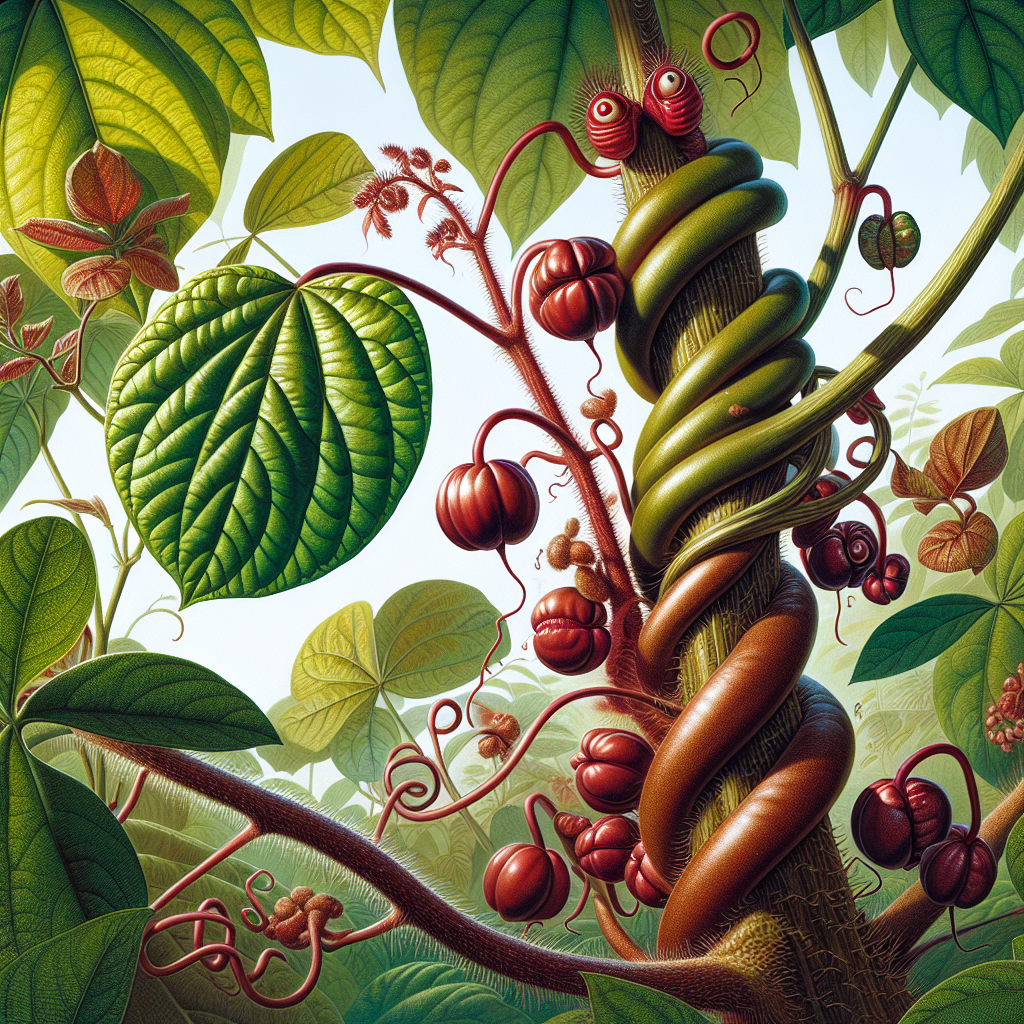
Introduction to guarana
Guarana, scientifically known as Paullinia cupana, is a fast-growing perennial climbing vine belonging to the Sapindaceae family, native to the lush rainforests of the Brazilian Amazon and surrounding regions in South America. While revered in its homeland for its caffeine-rich seeds used in energy drinks and traditional medicine, guarana transforms into a formidable agricultural pest when introduced to non-native tropical and subtropical farming systems. Its aggressive climbing habit allows it to smother host plants, blocking sunlight and physically weighing down crops, leading to reduced yields and structural damage.
In agricultural contexts, guarana invades orchards, plantations, and mixed cropping systems, particularly those with support structures like trellises or shade trees. It spreads rapidly via seeds dispersed by birds, water, and human activity, thriving in humid, fertile soils with partial shade. Early detection is crucial, as mature vines can produce thousands of seeds annually, perpetuating infestations. This comprehensive guide equips farmers, agronomists, and growers with professional-grade diagnostics, lifecycle knowledge, and organic management protocols to combat guarana effectively. By understanding its biology and implementing integrated strategies, you can safeguard your high-value crops from this insidious invader. For more on common tropical pests, see our detailed entry on aphids.
Guarana's pest status stems from its ecological adaptability and lack of natural enemies outside its native range. In regions like Southeast Asia, Central America, and parts of Africa where similar tropical crops are grown, it has escaped cultivation and naturalized aggressively. Yield losses can exceed 30-50% in unmanaged coffee or cacao plantations, underscoring the need for proactive control. This guide draws from field trials, extension services, and botanical research to deliver actionable advice optimized for small to medium-scale farms.
Identifying Symptoms & Damage
Diagnosing guarana infestations requires keen observation of both above-ground and subtle early signs. Initial symptoms appear as fast-growing, tendril-bearing vines emerging from soil or fence lines, with compound leaves resembling those of its crop hosts. Vines can extend 10-20 meters in a single season, twining clockwise around stems, branches, and trunks.
Key Diagnostic Indicators:
- Vine Overgrowth: Glossy, pinnate leaves (5-9 leaflets) with serrated edges climb aggressively, forming dense mats that shade out host foliage. Look for reddish-brown stems with prominent lenticels.
- Physical Damage: Weight of vines causes branch breakage, especially in young trees. Smothering leads to leaf yellowing, premature drop, and dieback.
- Seed Pods: Mature plants produce clusters of round, black seeds encased in red arils, resembling eyeballs—highly visible from July to October in the Northern Hemisphere.
- Secondary Effects: Reduced photosynthesis results in smaller fruits, delayed maturity, and up to 40% yield loss in affected mango or banana crops. Stressed plants become susceptible to powdery mildew and other opportunists.
To confirm, cut a stem: Guarana exudes a milky sap and has a caffeine-bitter taste. Differentiate from similar climbers like passionfruit by the characteristic trifoliate tendrils and seed pod morphology. Scout perimeters weekly during wet seasons, using a 10x hand lens for seedling identification. Early intervention prevents establishment; mature vines are woody and harder to eradicate.
Lifecycle and Progression of guarana
Understanding guarana's lifecycle is essential for timing interventions. It completes its cycle in 1-3 years but persists indefinitely via reseeding.
Egg/Seed Stage (0-3 months): Seeds germinate readily in warm, moist soil (25-30°C), sprouting within 10-20 days. Hypocotyls elongate rapidly, seeking light.
Vegetative Growth (3-12 months): Vines climb vigorously, reaching 5-10m. Roots form extensive mats, competing for water and nutrients.
Flowering and Fruiting (12-24 months): Small white flowers bloom in clusters (March-May), pollinated by bees. Fruits ripen 4-6 months later, each pod containing 1-3 seeds viable for 2+ years.
Dormancy and Spread: Vines persist year-round in tropics, with peak growth during rains. Birds devour arils, dispersing seeds up to 1km. Human-mediated spread via contaminated machinery is common.
Progression accelerates in fertile, disturbed soils; drought slows it but doesn't halt. One vine can produce 200-500 pods/year, equating to 1,000+ seedlings. Monitor for synchronized fruiting to preempt seed rain. Check out this insightful blog on Why 90% of Small Farms Fail at Pest Management - And 8 Organic Fixes That Actually Work for broader strategies.
Environmental Triggers & Risk Factors
Guarana thrives under specific conditions, making certain farms prime targets.
Climate Preferences: Optimal at 24-30°C with 1,500-2,500mm annual rainfall. Humidity >70% promotes tendril growth; frost kills it below -2°C.
Soil Factors: Prefers well-drained, acidic loams (pH 4.5-6.0) rich in organic matter. Poorly managed fields with crop residues provide ideal germination sites.
Risk Amplifiers:
- Proximity to native forests or ornamental plantings.
- Over-mature orchards with gaps for seedling establishment.
- Wet seasons following land clearing.
- Lack of canopy management in coconut or avocado groves.
High-risk periods: Post-monsoon (June-August) and after floods. Companion crops like legumes inadvertently nurse seedlings. Climate change extends its range northward, threatening subtropical zones.
Organic Control & Treatment Plans
Organic management emphasizes prevention, mechanical removal, and biological aids, avoiding synthetics for certified farms.
Immediate Actions:
- Manual Removal: Cut vines at base and 1.5m height; uproot seedlings. Repeat biweekly to starve roots.
- Mulching: Solarize soil with clear plastic (4-6 weeks) to kill germinants.
Biological Controls:
- Introduce guarana-specific pathogens like Colletotrichum spp. (consult local extension).
- Encourage birds that eat pods but deter seed dispersers with netting.
Cultural Practices:
- Maintain clean borders with mowed grass or cover crops.
- Prune hosts annually to reduce climbing surfaces.
- Apply corn gluten meal (pre-emergent) at 20g/m².
Organic Sprays:
- Vinegar (20% acetic acid) on foliage, reapplied after rain.
- Neem oil (2ml/L) disrupts growth; safe for pollinators.
Integrated Plan: Scout weekly, remove mechanically, mulch aggressively. Expect 80-90% control in 6 months. Monitor for root-knot nematodes exacerbated by vine decay.
Preventing guarana in the Future
Long-term prevention hinges on farm hygiene and monitoring.
Site Preparation: Clear invasives pre-planting; use weed-free mulch.
Monitoring Protocol: Weekly perimeter walks; photo logs for trends.
Barriers: Install 1m gravel borders; fence off high-risk zones.
Crop Rotation: Avoid perennials in infested fields; interplant with suppressants like marigold.
Seed Management: Bag pods before maturity; compost off-site at high heat (>60°C).
Community Efforts: Coordinate with neighbors for area-wide control. Resistant rootstocks in papaya show promise. Annual audits prevent re-infestation.
Crops Most Affected by guarana
Guarana targets climbing-friendly tropicals:
- Primary Hosts: Coffee, cacao, black pepper—yield losses up to 50%.
- Orchards: Mango, avocado, citrus—branch breakage common.
- Vines/Bananas: Banana, [passionfruit]—total smothering.
- Others: Coconut, sugarcane, shade-grown tea.
Small farms in humid tropics suffer most; diversify to reduce risk.