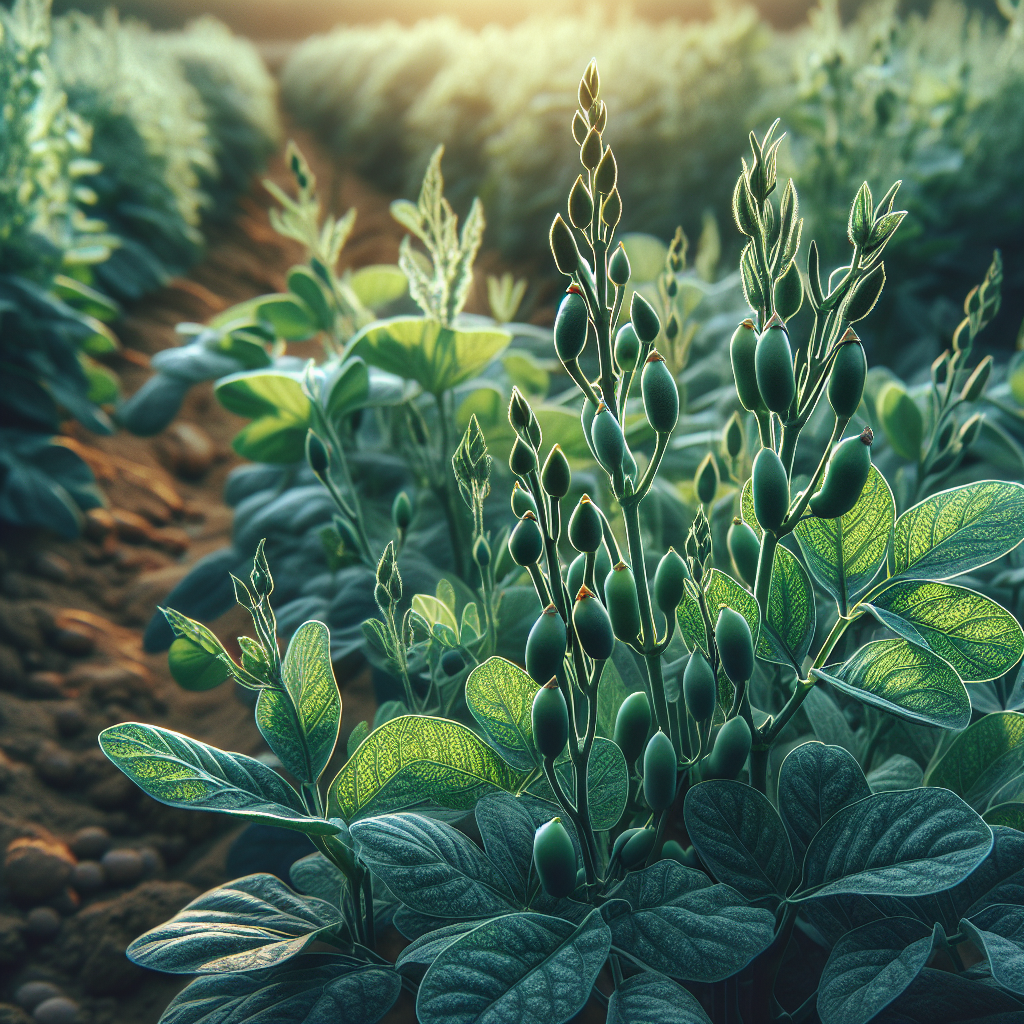
Introduction to Green Lentils (Puy)
Originating from the volcanic soils around Le Puy-en-Velay in south-central France, this lentil type is internationally valued for a distinctive mineral-rich flavor, dark green to slate-green marbling, and a firm texture that remains intact after cooking. In culinary markets, “Puy” often refers either to true French lentils from that protected geographic region or to closely related green lentil types grown elsewhere with similar seed size and cooking quality. From a grower’s perspective, these lentils are a cool-season pulse with relatively low biomass, modest nutrient demand, and a strong preference for dry-down conditions as pods mature.
Compared with larger common green lentils, Puy-type lentils are usually smaller seeded, slower to become mushy in the kitchen, and often more marketable in specialty dry bean and pulse channels. They are also agronomically interesting because, like other legumes, they form symbiotic associations with Rhizobium bacteria that fix atmospheric nitrogen. For growers building rotations, that means the crop can contribute to soil fertility when managed well, though the real benefit depends on nodulation success, residue handling, and how much nitrogen is removed in harvested seed. For a broader pulse comparison, see Lentils. If you want deeper context on rotation and fertility principles, read soil health strategies.
Puy-type lentils are especially suitable for small farms, market gardens with dry bean programs, and diversified grain-pulse rotations where spring soil moisture is available but summers are not excessively humid. They are less forgiving than vigorous bush beans and far less tolerant of waterlogging than many cereal crops. Success depends on choosing a clean field, sowing early into cool soils, maintaining moderate but not lush growth, and protecting the crop from lodging, weeds, and late harvest weather.
Botanical Profile of Green Lentils (Puy)
This crop belongs to the Fabaceae family and is an annual, self-pollinating grain legume. Plants are typically slender and semi-erect to weakly vining, usually reaching about 25 to 45 cm in height depending on fertility, moisture, and cultivar selection. The stems are angular and delicate rather than robust, which explains why excessive nitrogen or dense weed competition often causes leaning or lodging. Leaves are alternate and pinnate with multiple narrow leaflets, and the terminal leaflet may be replaced by a tendril-like structure in some forms.
Flowers are small, papilionaceous, and usually white, pale blue, or faintly lavender, arising singly or in pairs from leaf axils. Pollination is predominantly selfing, so varietal purity is generally easy to maintain in seed production. Pods are small, flattened, and usually contain one or two seeds. Seed coat color in Puy-type lentils is characteristically green with blue-gray or black mottling, a trait linked to their visual market identity. Cotyledons are typically yellow to greenish depending on type.
The root system is relatively fine and not deeply aggressive compared with larger pulses. That makes early root establishment critical and explains why crusted soils, compaction, or standing water sharply reduce performance. Effective nodulation usually appears as pinkish nodules on roots once the symbiosis is active; white or greenish nodules are generally inactive. Development proceeds from emergence to vegetative growth, flowering, pod set, seed fill, and then whole-plant senescence. Under favorable spring-sown temperate conditions, crop duration is often 90 to 110 days, though heat, drought, and variety can shift that by one to three weeks.
Puy-type lentils are prized not only for appearance but also for a relatively high seed coat integrity and balanced starch-protein structure, which is why they retain shape in soups, salads, and pilaf-style dishes. That quality can be diminished in the field by weathering, repeated wetting and drying near harvest, or rough mechanical threshing that cracks the seed coat.
Soil, pH, and Climate Requirements for Green Lentils (Puy)
The ideal soil is a well-drained loam, silt loam, or light clay loam with good structure, low salinity, and no tendency to pond after rain. Lentils perform poorly in compacted, poorly aerated ground because their roots are sensitive to oxygen deprivation. If water remains on the surface more than 24 hours after a moderate rain, the site is risky. Sandy soils can work if fertility and moisture are managed carefully, but they often reduce yield unless spring moisture is reliable. Heavy clays can produce good crops only where drainage is excellent and the seedbed can be prepared finely without smearing.
A target pH of 6.0 to 7.5 is optimal, with best nodulation and nutrient availability usually in the 6.2 to 7.2 range. Below pH 5.8, Rhizobium activity and phosphorus availability may decline enough to reduce vigor and yield. Above pH 7.8, micronutrient tie-up, especially zinc or iron, may appear in calcareous soils. Lentils are moderately sensitive to salinity; avoid fields with a history of white salt crusting or irrigation water of poor quality.
Climate-wise, this is a cool-season temperate crop. Germination begins in cool soil, often from about 4 to 5°C, but more uniform emergence occurs from 8 to 12°C. Vegetative growth is best under mild conditions around 15 to 22°C. Flowering and seed fill benefit from warm days and relatively dry air, while temperatures above 28 to 30°C during flowering can reduce pod set, especially if coupled with moisture stress. Persistent humidity and rainfall during late flowering and pod maturation increase disease pressure and complicate harvest.
For moisture, lentils need enough stored soil water or rainfall for establishment and early branching, but they strongly prefer drying conditions as they approach maturity. A useful practical benchmark is to maintain evenly moist but never saturated soil through emergence and early vegetative stages. In hand-feel terms, the top 5 to 8 cm should feel cool and slightly damp, not muddy, and should crumble rather than smear. Overwatered fields show yellowing lower leaves, stunting, root browning, and patchy areas where plants suddenly collapse. Underwatered fields during early growth show delayed branching, short plants, and flower abortion later on.
Avoid planting after heavily manured vegetables or high-nitrogen cover crops unless the field has been balanced with a carbonaceous residue or a preceding cereal. Excess nitrogen promotes lush foliage, delayed maturity, and lodging. Lentils are often excellent after cereals such as Wheat, especially where straw has decomposed and weed pressure is low.
Step-by-Step Planting & Propagation
Propagation is by seed only, and direct sowing is standard. Transplanting is not recommended because lentils dislike root disturbance and are too low-value per plant to justify nursery handling.
Choose a clean field with low weed pressure. Lentils are poor competitors in the seedling stage, so fields infested with wild mustard, lambsquarters, pigweed, or grassy annuals are problematic.
Prepare a fine, firm seedbed. The surface should be level enough for low pod harvest, because the lowest pods often form close to the ground. Clods create uneven emergence and increase harvest losses.
Inoculate seed if lentils or compatible pulses have not been grown recently. Use a lentil-specific or pulse-appropriate Rhizobium inoculant. Fresh inoculation is especially important in new ground, acidic soils, or fields with a long break since the last pulse crop.
Sow early in spring as soon as the soil can be worked without compaction. Early planting lets the crop exploit cool temperatures and residual soil moisture. In Mediterranean or mild winter regions, late winter to very early spring sowing may be possible.
Place seed 2.5 to 4 cm deep in moisture. In heavier or cooler soils, stay closer to 2.5 cm; in lighter, drier seedbeds, 4 to 5 cm may be acceptable if emergence can still be prompt. Deeper sowing delays emergence and weakens seedlings.
Use row spacing based on weed management and harvest equipment. For dense canopy closure, 15 to 20 cm rows work well in field production. On small farms using hand tools, 20 to 30 cm may be more manageable. In wider rows, inter-row cultivation is possible but canopy closure is slower.
Aim for a final stand of roughly 120 to 180 plants per square meter, adjusting for seed size and field conditions. Smaller-seeded Puy types generally require less seed by weight than larger lentils to achieve equivalent populations.
After sowing, avoid over-irrigating. If rainfall is lacking, apply just enough water to moisten the germination zone without creating crusting. A light irrigation is preferable to a heavy soaking on fine-textured soil.
Seedlings normally emerge in 7 to 14 days depending on soil temperature. Emergence should be even and compact. If seedlings are stretched, pale, or patchy, investigate crusting, seed rot, deep planting, or poor inoculant viability.
Care & Maintenance regimes for Green Lentils (Puy)
Nutrient management should be restrained and evidence-based. Lentils usually need little or no added nitrogen if nodulation is functioning. Applying 40 kg N/ha or more to a field with good nodulation often creates excess vegetative growth and delays dry-down. In very poor soils, a small starter dose of 10 to 20 kg N/ha may help early establishment, but only where inoculation success is doubtful. Phosphorus is the most common limiting nutrient for root development and nodulation; soils testing low should be corrected before sowing or banded conservatively near, not in direct contact with, the seed. Potassium needs are modest unless soils are deficient.
Monitor nodulation about 4 to 6 weeks after emergence. Uproot several plants carefully, wash roots, and slice nodules open. Pink or reddish interiors indicate active nitrogen fixation. If nodulation is poor and plants are pale, a very light rescue nitrogen feeding may be considered, but this is usually less effective than preventing the problem before planting.
Water management is the central maintenance skill. In rainfed systems, the objective is to conserve spring moisture and avoid unnecessary stress before flowering. In irrigated systems, use limited, strategic irrigation rather than frequent shallow watering. Keep soil moisture moderate through branching and early bloom, ideally around 60 to 75% of field capacity in the root zone. Once pod set is established, begin tapering water. By late seed fill, the crop should be drying naturally. Continued irrigation at this stage increases disease, delays maturity, and can stain seed coats.
Visual irrigation cues are useful. Water stress before flowering appears as dull gray-green foliage, shortened internodes, and slowed new growth. Severe stress at flowering causes blossom drop and poor pod numbers. Overwatering shows as soft, excessively lush plants, yellow lower leaves, increased lodging, and sometimes an algal sheen or sour smell on wet soil. If you squeeze a handful of soil from 10 cm depth and it forms a sticky ribbon rather than a crumbly ball, conditions are too wet for lentils.
Weed control is most important from emergence to canopy closure. Use stale seedbed techniques, shallow pre-emergence disturbance where appropriate, and timely inter-row cultivation in wider spacings. Once lentils begin to branch, avoid aggressive cultivation that breaks stems. Mulching is uncommon in broadacre systems but can help in garden-scale plantings if kept thin and dry around stems to prevent excess humidity.
Lodging prevention depends on moderate fertility, appropriate plant population, and avoiding excessive irrigation. Because pods sit low, lodged crops are harder to combine cleanly and more prone to staining or rot. In windy sites, sheltered blocks or gentle airflow-reducing windbreaks can help, provided they do not trap humidity.
Pests, Diseases & Organic Management
The most common production losses come from disease complexes encouraged by poor rotation, dense canopy humidity, and wet finishing weather. Ascochyta blight is a major concern in lentils, producing tan to brown lesions on leaves, stems, and pods, often with darker margins or tiny fruiting bodies. Anthracnose, Botrytis gray mold, and Sclerotinia stem rot can also occur, especially under humid conditions. Root rots caused by Fusarium, Rhizoctonia, or Pythium become serious where drainage is poor or pulses are planted too frequently.
Organic disease management starts with rotation. Avoid returning lentils or other susceptible pulses to the same field for at least 3 to 4 years, longer if blight pressure has been severe. Use clean seed, resistant or tolerant strains when available, and avoid overhead irrigation during flowering and pod fill. Promote rapid canopy drying with reasonable spacing and weed control. Remove volunteer pulse plants and infected residues where practical, or incorporate residues only when decomposition conditions are good.
Insect pests vary by region but often include aphids, cutworms, seedcorn maggot, thrips, lygus bugs, and occasionally bruchid-type storage pests after harvest. aphids damage plants directly by sap feeding and indirectly by vectoring viruses. Monitor terminals and undersides of leaves, especially in warm, calm weather. Beneficial insects usually suppress moderate populations, so avoid broad-spectrum interventions unless thresholds are clearly exceeded. Strong plant vigor, balanced fertility, and flowering border plantings can support predators and parasitoids.
cutworms clip seedlings at or just below the soil line, creating gaps in stands. Preventive measures include controlling weeds before sowing and avoiding planting directly into decomposing sod. seedcorn maggot risk increases in cool soils rich in undecomposed organic matter. Delay sowing slightly or allow cover crop residues to break down if the field is high risk.
For organic management, prioritize sanitation, rotation, biological balance, and environmental control rather than rescue sprays. Approved copper or biological products may provide partial suppression of foliar disease in some systems, but their performance is inconsistent unless combined with strong preventive agronomy. The most effective organic lever is keeping foliage dry and rotations long.
Harvesting, Curing & Optimal Storage
Harvest timing is critical because Puy-type lentils command premium quality only when seed color remains bright, coats are intact, and moisture is low enough for safe storage. Plants are ready when the majority of pods have turned tan-brown, seeds rattle in the pod, and the whole plant is yellowing to straw colored. A few upper pods may still be slightly green, but waiting for complete uniformity often increases shattering and weather damage.
Target seed moisture at harvest is typically around 14 to 18% for combining, followed by drying down to about 12% or slightly lower for storage. If harvesting by hand, pull or cut plants in the cool of morning when pods are less brittle. Windrow or bundle them in a dry, airy place out of direct rain until fully cured, then thresh gently. In mechanized systems, reel speed and cylinder settings should be kept as gentle as possible to reduce cracking and seed coat abrasion.
Because pods form low, harvest losses from cutter height can be substantial. A level field and low cutting setup are essential. If weeds are green at harvest, they can raise grain moisture and stain the sample. In small-scale production, rogue late weeds before maturity if practical.
After threshing, clean the seed thoroughly to remove chaff, split seed, stones, and diseased material. For food-grade storage, dry seed to around 11 to 12% moisture. Below this range, seed becomes more brittle; above it, the risk of mold and heating rises sharply. Properly dried lentils should feel hard, not dent easily under thumbnail pressure, and flow freely without clumping.
Store in cool, dark, dry conditions, ideally below 15°C and under 60% relative humidity. Use sealed bins, food-safe buckets, or woven sacks lined against moisture migration. Monitor for condensation, musty odor, webbing, or insect activity. In long storage, protect from repeated temperature swings, which drive moisture movement and can cause localized spoilage. Seed intended for planting should be stored slightly cooler and handled more gently than culinary stock to preserve germination.
Companion Planting for Green Lentils (Puy)
In garden and small-farm settings, the best companions are species that either improve pest balance, make efficient use of nearby space without heavy shading, or support overall soil and pollinator ecology without competing aggressively for nitrogen. Carrot works well nearby because it has a relatively narrow upright canopy and roots at a different soil profile than lentils, reducing direct competition. Radish can serve as a quick early intercrop or border crop, helping mark rows and opening the surface slightly without demanding heavy fertility. Thyme is useful on bed edges because its aromatic foliage can support beneficial insect activity and it stays low, dry, and non-competitive.
Another excellent companion is Yarrow, especially along margins rather than within the lentil stand. It attracts parasitoid wasps and predatory insects and contributes to beneficial habitat without creating dense shade over the crop. The key principle is restraint: companions should remain on borders or in deliberately planned adjacent rows. Dense mixed planting inside the lentil canopy can trap humidity, hinder harvest, and increase foliar disease pressure.
Avoid pairing lentils with tall, heavy-feeding crops such as corn or sprawling cucurbits in the same immediate space. Also avoid neighboring crops that require frequent irrigation once lentils enter pod fill, because the extra moisture can prolong vegetative growth and increase disease. The most successful companion strategy for this crop is not crowding it, but surrounding it with low-competition, beneficial-border species that support ecology while preserving airflow and harvest access.