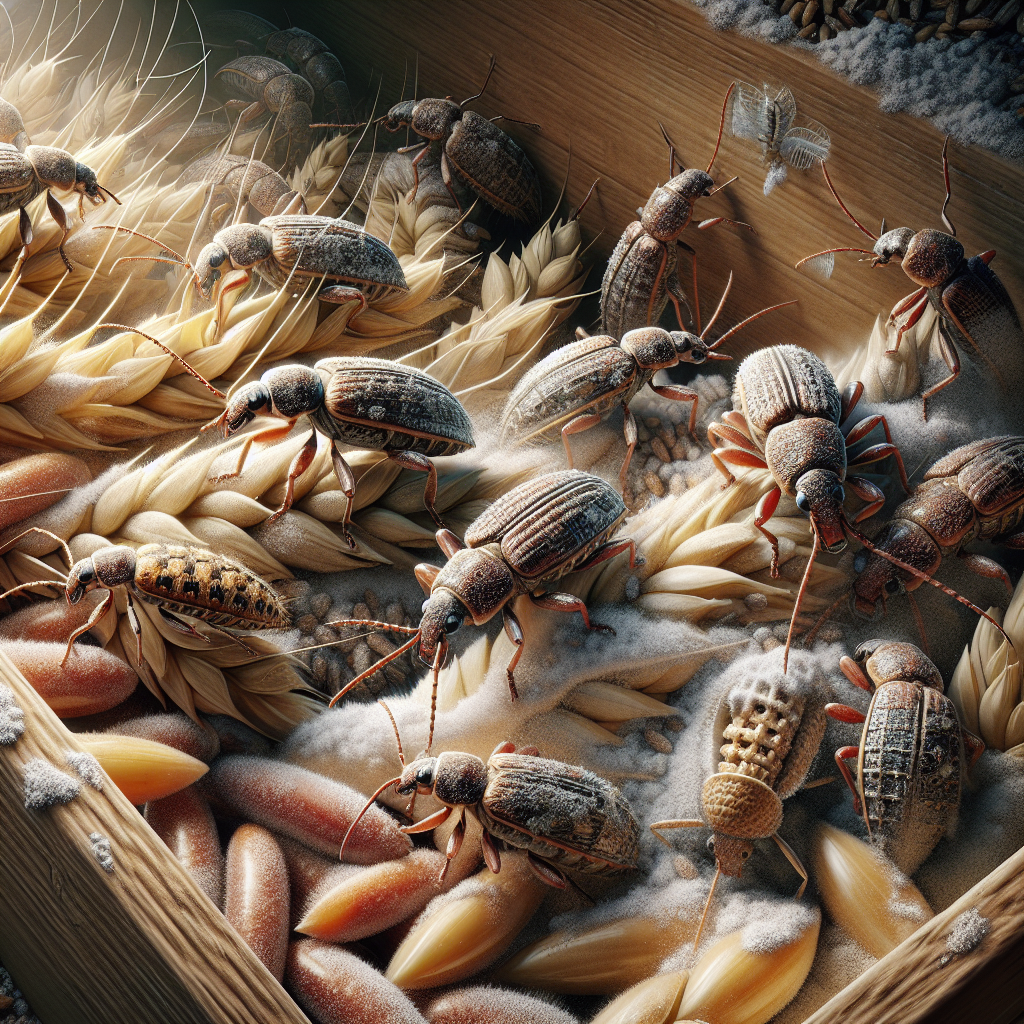
Introduction to grain-feeding insects
Grain-feeding insects represent one of the most devastating threats to global agriculture, particularly in post-harvest storage systems. These pests, including weevils, beetles, and moths, target stored grains such as wheat, rice, corn, and other cereals, leading to losses estimated at 10-20% of global production annually. Unlike field pests that attack growing crops, grain-feeders thrive in silos, bins, warehouses, and even household pantries, where warm, humid conditions allow rapid population explosions.
Key species include the granary weevil (Sitophilus granarius), rice weevil (Sitophilus oryzae), lesser grain borer (Rhyzopertha dominica), red flour beetle (Tribolium castaneum), and Indian meal moth (Plodia interpunctella). These insects don't just consume grain; they contaminate it with frass (insect waste), cast skins, and webbing, fostering mold growth and mycotoxin production like aflatoxins, which pose serious health risks. Farmers and storers must prioritize integrated pest management (IPM) to safeguard food security. For more on storage threats, check this comprehensive guide on Spring Pest Patrol: Organic AI Strategies to Shield Your Crops from Common Invaders.
Understanding these pests' biology is crucial for prevention. They can reduce grain weight by up to 30%, downgrade quality, and spread via infested seeds or equipment. Climate change exacerbates risks by extending warm seasons, allowing more generations per year. This guide provides diagnostic tools, lifecycle insights, and proven organic strategies to minimize damage.
Identifying Symptoms & Damage
Early detection is vital for controlling grain-feeding insects before infestations spiral. Look for these hallmark signs:
- Powdery Frass and Dust: Fine, flour-like residue at the bottom of storage containers signals beetle activity, especially from flour beetles or borers.
- Webbing and Silk: Moths like the Indian meal moth produce sticky webbing that binds grains together, often visible on surfaces.
- Holes in Kernels: Weevils bore neat, round exit holes (1-2mm) in grains; infested kernels appear shriveled or hollow.
- Musty Odor: A pungent, acrid smell indicates active feeding and fungal growth triggered by insect damage.
- Live Insects: Adults crawling on walls or flying near lights; larvae (white, legless grubs) inside grains.
- Discoloration and Mold: Grains turn grayish or develop greenish mold from moisture introduced by feeding.
Damage progresses from superficial to total loss. Initial feeding creates entry points for pathogens, leading to heating (hot spots >40°C) that accelerates spoilage. Inspect bins weekly using probes or traps. Differentiate from similar pests like storage beetles by frass texture—grain-feeders produce smoother powder versus chunky debris.
Quantitative assessment: Shake samples into trays; count >1 insect per kg signals infestation. Use berlese funnels for hidden larvae. Undetected, populations double every 30-60 days, destroying 1-5% grain monthly.
Lifecycle and Progression of grain-feeding insects
Grain-feeding insects exhibit complete metamorphosis (egg-larva-pupa-adult), with lifecycles varying by species and temperature. Optimal conditions: 25-35°C, 60-70% RH.
- Granary Weevil: Eggs laid inside kernels (up to 200/female). Larvae develop 4-6 weeks, pupate inside, emerge leaving exit holes. Lifecycle: 7-10 weeks; 3-4 generations/year.
- Rice Weevil: Similar but flies; prefers softer grains like rice.
- Lesser Grain Borer: Larvae bore deeply, reducing grain to dust. Lifecycle: 25-35 days at 35°C.
- Flour Beetles: Larvae wander externally, thriving in fines/flour. Lifecycle: 8-12 weeks.
- Indian Meal Moth: Eggs on surfaces; larvae spin webs while feeding. Pupae in silken cocoons; adults live 1-2 weeks. Lifecycle: 4-6 weeks.
Progression: Infestations start with females laying eggs in undisturbed grain. Larvae feed voraciously (80% damage phase), pupate, adults emerge to reinfest. Overwinter as diapausing larvae/adults. High humidity shortens cycles, amplifying damage in tropical storage.
Environmental Triggers & Risk Factors
Grain-feeders exploit specific conditions:
- Temperature: Above 15°C triggers activity; peaks at 30°C.
- Humidity: >12% grain moisture ideal; dockage (broken grains) raises local RH.
- Poor Sanitation: Residue from prior harvests harbors pests.
- Infested Seed: Buying unclean seed introduces weevils.
- Ventilation Issues: Sealed bins trap heat/moisture.
- Proximity to Fields: Spillages near corn or wheat fields invite migration.
Risk peaks post-harvest (September-November in temperate zones). Dusty environments from machinery aid dispersal. Global trade spreads resistant strains. Mitigate by drying grain to <12% moisture and cooling to <15°C.
Organic Control & Treatment Plans
Organic management emphasizes non-chemical IPM:
- Sanitation: Clean bins thoroughly; remove old grain, webs, debris. Vacuum cracks; use heat (60°C for 1hr) or cold (-18°C for 3 days) for infested lots.
- Physical Barriers: Screens on vents; diatomaceous earth (DE) at 1-2g/kg coats insects, causing desiccation.
- Traps & Monitoring: Pheromone traps (e.g., for flour beetles) detect early; probe samples biweekly.
- Biological Controls: Introduce parasitoids like Anisopteromalus calandrae for weevils or Habrobracon hebetor for moths.
- Temperature Manipulation: Aerate to cool grain; solarization (black plastic bags in sun) kills larvae.
- Botanicals: Neem oil (azadirachtin) repels at 1%; essential oils (thyme, rosemary) as fumigants.
- Beneficials: For detailed IPM, see Storage Beetles (pest).
Treatment Protocol: Infest >2 insects/kg? Remove/reject lot. Treat via DE + aeration. Rotate methods to prevent resistance. Success rates: 90% with vigilant IPM.
Preventing grain-feeding insects in the Future
Prevention beats cure:
- Harvest Promptly: Dry to 12% moisture immediately.
- Storage Hygiene: Hermetic bags (PICS) or metal silos; elevate off ground.
- Seed Cleaning: Hot water dip or cryogenic treatment.
- Monitoring Systems: Install CO2/probe sensors for early alerts.
- Crop Rotation: Avoid consecutive grains; interplant with repellents like sorghum.
- Resistant Varieties: Choose harder-kernel cultivars.
Annual protocols reduce incidence 80%. Educate workers; quarantine new grain.
Crops Most Affected by grain-feeding insects
Grain-feeders target staples:
- Cereals: Wheat, barley, oats, rye—weevils dominate.
- Maize: Corn—borers, beetles.
- Rice: Rice—rice weevils.
- Pseudocereals: Quinoa, amaranth.
- Legumes: Soybeans, chickpeas—bruchids.
Global hotspots: Developing nations' on-farm storage loses 20-50%. Protect these to ensure food security.